 Ozikoro
Ethnohistory · Published history
Ikot Ishie: An Igbo Diasporic Settlement in Calabar
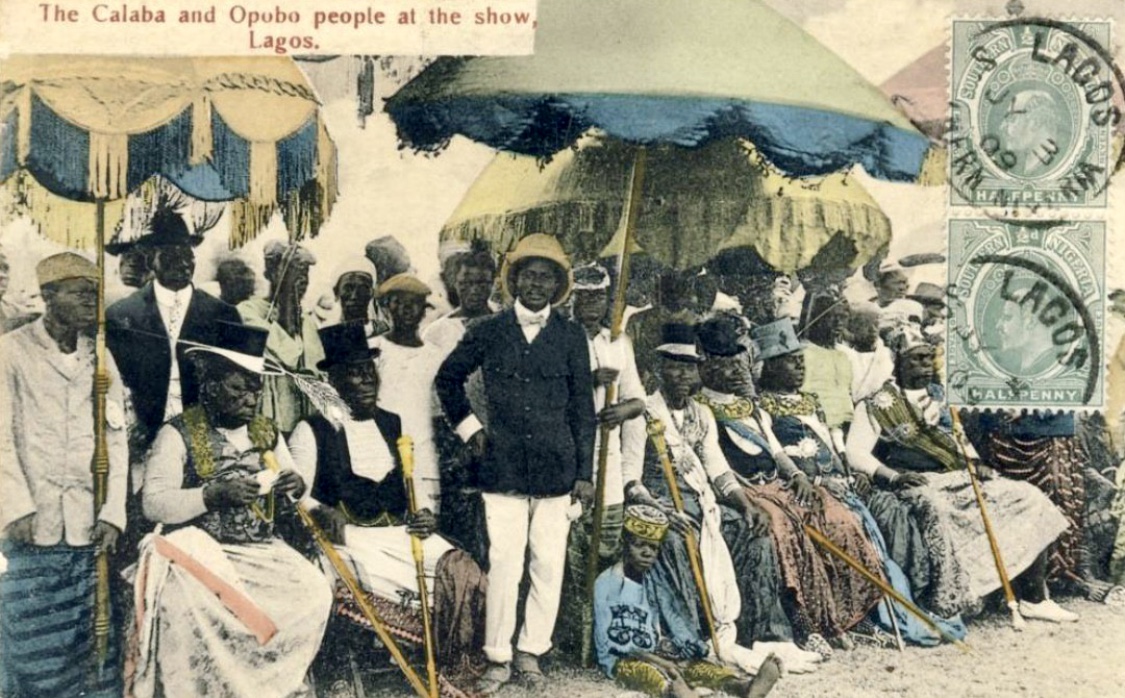
Ikot Ishie, a town in Calabar, has a unique history rooted in the Igbo diaspora. It was named after Ishie Offiong Okoho, an Igbo man who was once enslaved but later gained freedom and established his own settlement. Oral traditions tell the story of Ishie, who was purchased as a youth by Chief Offiong Okoho of Archibong House in Duke Town. He grew up in his master’s household, where he was adopted and given the name Offiong Okoho. Through years of loyal service, he earned his freedom and was granted a large expanse of land, what is now known as Ikot Ishie to build his own community.
The written record
Historical context
Introduction
During the height of the transatlantic slave trade, Ishie Offiong Okoho became a wealthy trader. He participated in the regional trade networks, acquiring enslaved individuals from the Igbo interior and bringing them to Ikot Ishie. This suggests that he transitioned from being a former slave to a significant figure in the local economy. His story reflects the complex and often paradoxical nature of slavery in West Africa, where former slaves could rise to positions of power and influence.
Slavery, Household Integration, and Modern Legacies
Unlike the large scale plantation slavery seen in the Americas, slavery in the interior of the Bight of Biafra often resembled a system of indentured servitude. Enslaved individuals were frequently absorbed into their owner’s households, sometimes adopting the family name and becoming part of the lineage. Over generations, these servant-master relationships contributed to the diverse ancestry of present-day populations.
This form of servitude did not entirely disappear with the abolition of the transatlantic slave trade. Instead, it evolved into other social structures, such as the practice of employing houseboys and housegirls domestic servants who often live with the families they serve. These arrangements, while different from historical slavery, reflect a continuity in social hierarchies and labor relations.
The Historical Significance of Ikot Ishie
Ikot Ishie stands as a testament to the resilience and adaptation of Igbo people who were forcibly relocated due to slavery. The town represents how former slaves, once integrated into new societies, could carve out spaces for themselves and their descendants. Today, it remains a significant part of Calabar’s cultural landscape, showcasing the lasting impact of Igbo migration and settlement in southeastern Nigeria.
Understanding the history of places like Ikot Ishie allows for a deeper appreciation of the interconnected histories of different ethnic groups in Nigeria. It also highlights how forced migration shaped societies, creating complex identities that persist into the modern era.
Sources and references
- Akoda, W. E. (2005). The socio-economic impact of stranger communities in Calabar: A study of the Igbo and Hausa since 1900. In History and Citizenship: Essays in Honour of Okon Edet Uya (pp. 160-161). University of Calabar Press.
Cite this article
Discussion
Sign in to join the discussion
Comments are checked by an editor before they appear. Leave a source or a correction and it is read first.
Continue reading
Related histories
 EthnohistoryGbam, Chai, Ewo: How Igbo Expressions Became the Language of Nigerian Pop CultureRead history →
 EthnohistoryAro Merchant Network: Historical Trade Integration in the Cross-Niger RegionRead history →
 EthnohistoryTransition to Commodities in the aro confederacy(e.g., Palm Oil, Ivory, Cloth)Read history →
No comments yet
Nothing has been approved on this record yet. Comments are checked by an editor before they appear, so one written now shows on this page after that check.