 Ozikoro
 Ethnohistory · Published history
Itsekiri Marriage Rites: The Cultural Significance of the “Omi-Eghare” (Payment of Dowry)
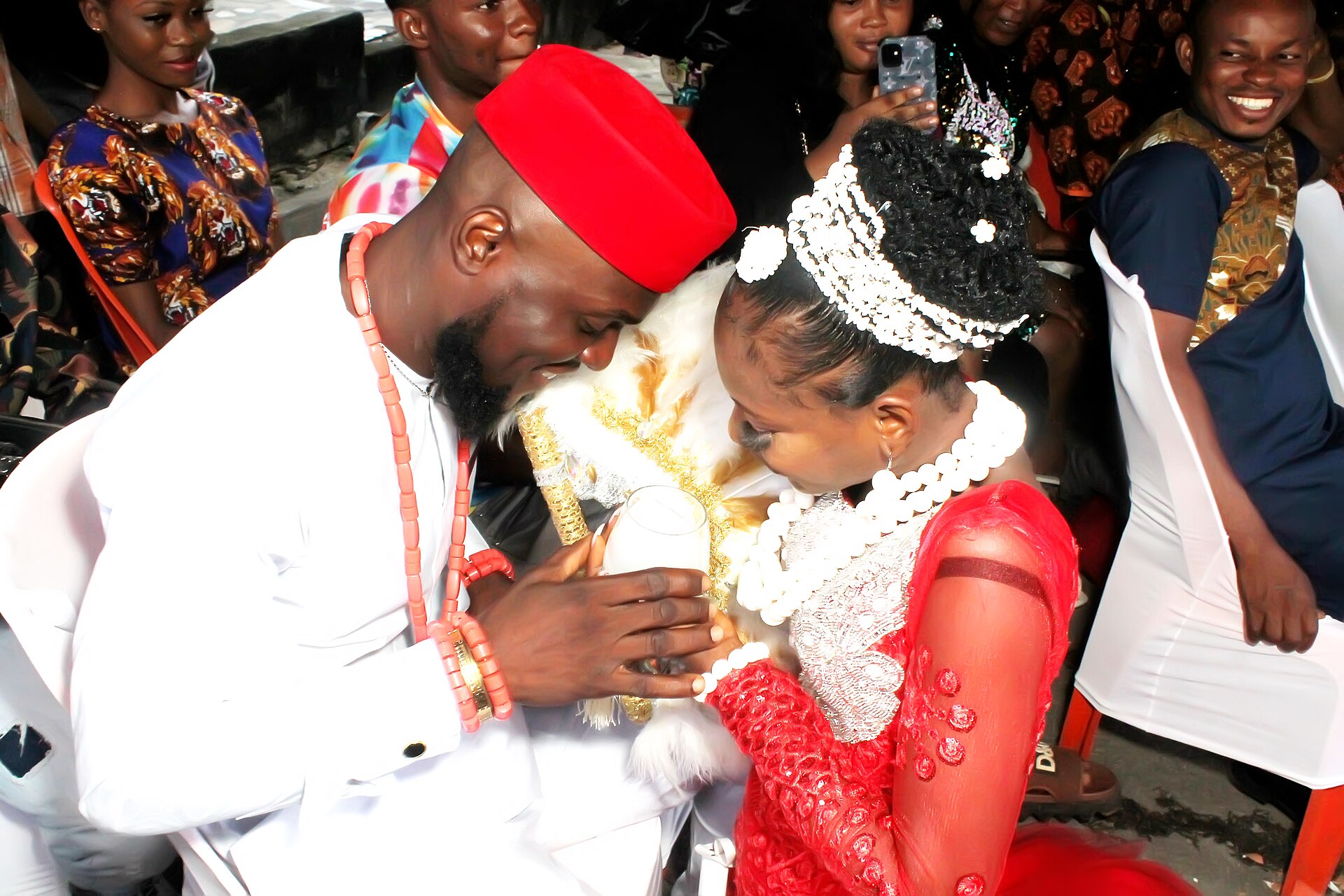
Marriage among the Itsekiri of the Niger Delta is not merely a social union; it is a sacred, communal, and economic alliance that binds two extended families together. One of the most important aspects of this process is the “Omi-Eghare”, the traditional payment of bride-wealth, commonly translated as “dowry” but more accurately understood as a symbolic transfer of honor, appreciation, and responsibility. As noted in several articles about(“Itsekiri people”), marriage rites form a cornerstone of Itsekiri identity, blending indigenous customs with influences from centuries of contact with the Portuguese and neighboring peoples.
The written record
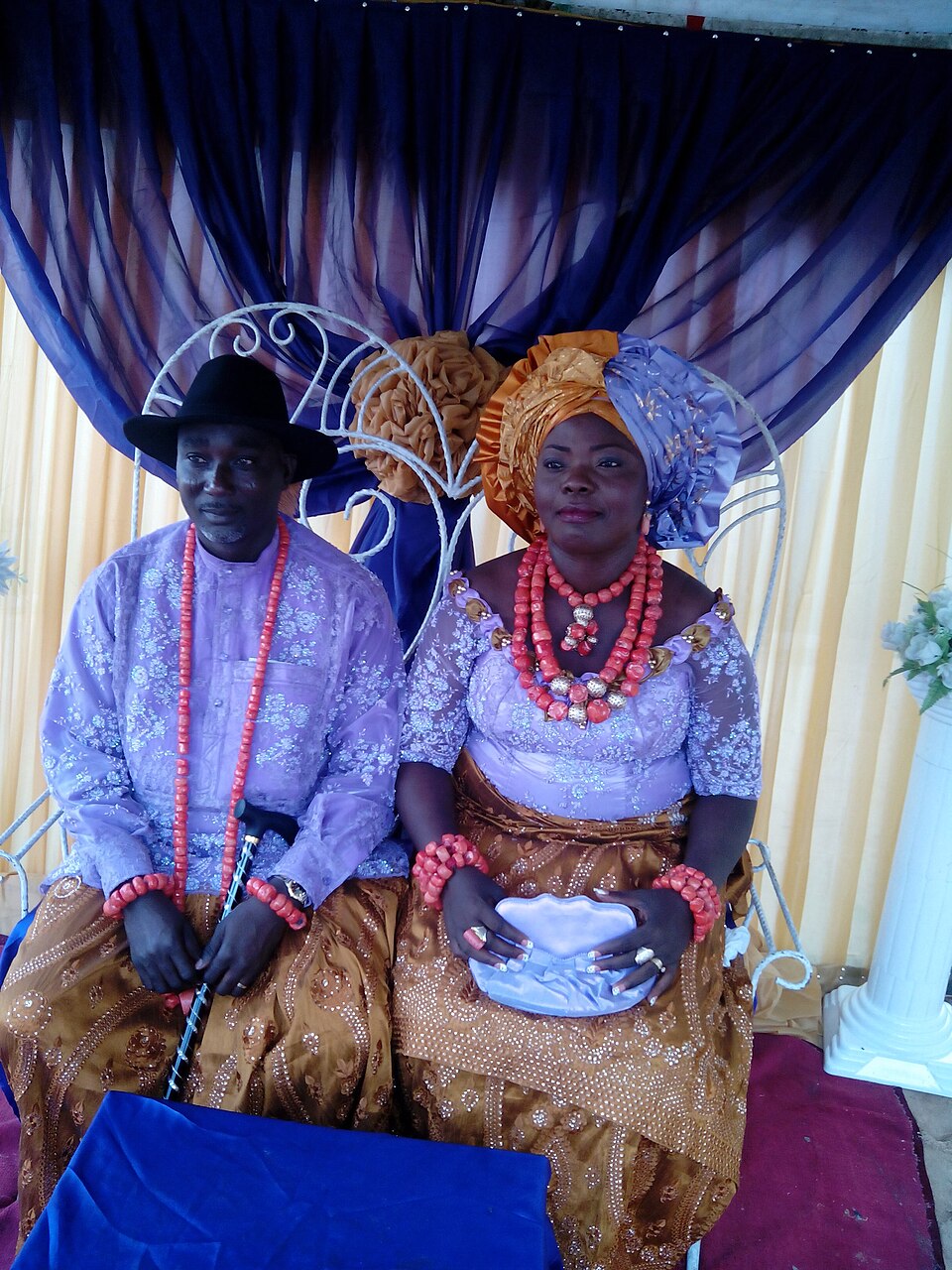
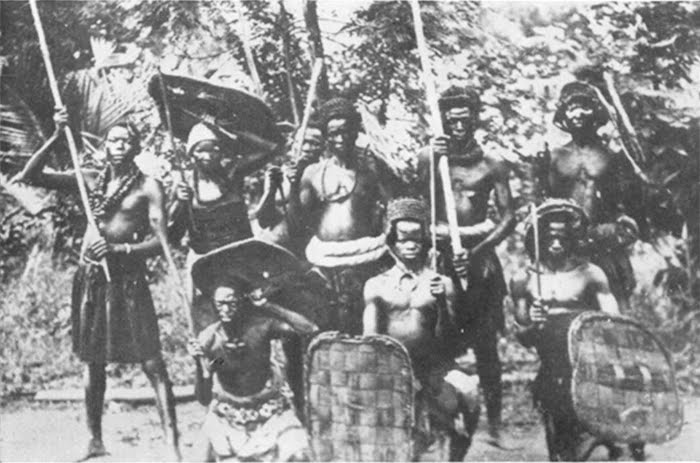
Photo credit: Stanleyatigbin via Wikimedia Commons.
The Omi-Eghare is not a commercial purchase of a bride but a deeply meaningful act that affirms familial unity, expresses gratitude to the bride’s parents, and validates the marriage before the community and ancestors.
Historical context
Historical Background of Itsekiri Marriage Customs
- Pre-Colonial Foundations
Long before European contact, Itsekiri marriage rites revolved around kinship networks and lineage alliances. Marriage was an institution that strengthened political ties between different Houses (extended families), facilitated economic cooperation, and ensured generational continuity. The Omi-Eghare emerged as an integral part of these networks because it formalized the union and protected the rights of both families.
- Portuguese Contact and Changing Social Influences
According to scholars of Delta history, early Portuguese contact in the 16th century introduced Christian elements and new forms of ceremonial exchange. While Itsekiri marriage rites remained fundamentally indigenous, cultural interchange with Catholic missionaries influenced aspects of wedding celebrations especially the introduction of church weddings in later centuries. However, the Omi-Eghare remained untouched, preserving its cultural essence despite external influences.
- Colonial-Era Documentation
Colonial anthropologists such as P. A. Talbot described the dowry system of Delta peoples as a “symbol of societal acknowledgment rather than commodification.” This description aligns closely with Itsekiri traditions, where the Omi-Eghare signifies respect, not purchase.
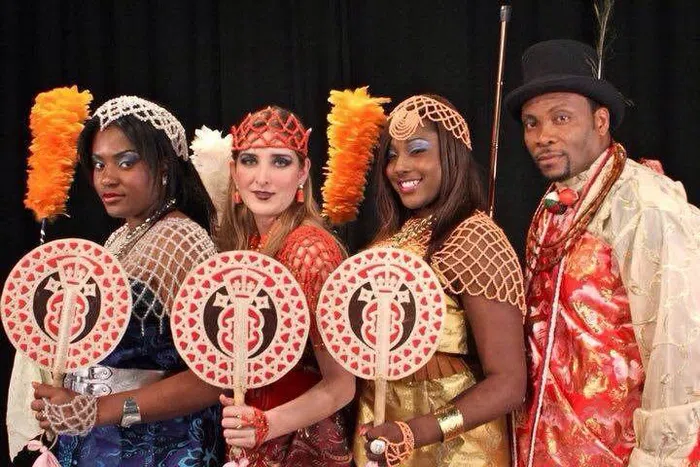
The Meaning and Symbolism of the Omi-Eghare
- Expression of Gratitude
The Omi-Eghare is primarily a gesture of appreciation from the groom’s family to the bride’s parents. It acknowledges the effort invested in raising the bride into a respectful, industrious, and honorable woman. It is essentially a “thank you” gift, not a bride-price.
- Recognition of Parental Authority and Blessing
The dowry ceremony demonstrates that the groom recognizes the authority of the bride’s lineage. Without Omi-Eghare, the marriage is not fully recognized in traditional Itsekiri customary law. The acceptance of the dowry symbolizes the bride’s family’s approval and their blessing upon the union.
- Binding of Lineages
Anthropologically, bridewealth across West Africa functions as a mechanism for creating durable relationships between families. In the Itsekiri context, Omi-Eghare effectively binds the two houses into a long-term alliance, ensuring mutual respect and obligations.
- Spiritual and Ancestral Validation
The Itsekiri see marriage as not only a social contract but also a spiritual one. The dowry symbolizes the union’s acceptance by ancestral spirits, who are believed to oversee family continuity. Thus, Omi-Eghare is a bridge between the living and the departed.
Components and Items of the Omi-Eghare
- Monetary Components
The monetary aspect of the dowry varies depending on:
The House’s status,
Agreements between both families. Local traditions within Warri, Koko, Ugborodo, and other Itsekiri communities. Despite variations, the monetary payment is usually modest, emphasizing symbolism over material value.
- Traditional Items
The Omi-Eghare often includes items such as Bottles of gin, Kolanuts, Salt, Yams, Cloth (sometimes George or lace), Jewelry for the bride. Each item carries traditional symbolism. For instance:
- Kolanuts represent hospitality and sacred blessing.
- Yams symbolize fertility and abundance.
- Cloth signifies dignity and beauty.
These items reinforce cultural values embedded in marriage.
- “Ewere” Symbolic Leaf
During the ceremony, the bride may be blessed with Ewere leaves (symbol of purity and good fortune), demonstrating how plants play ritual roles in Itsekiri marriage rites.
Procedures of the Omi-Eghare Ceremony
- Family Negotiations (Imaran Rere)
Before the dowry is paid, both families meet to discuss terms. This negotiation process emphasizes respectful dialogue, mutual understanding, and establishing expectations for married life.
This aligns with the Itsekiri emphasis on diplomacy, which is historically reflected in their role as coastal traders and intermediaries.
- Presentation of the Dowry
On the wedding day, the groom’s family formally presents the Omi-Eghare. The bride’s father or representative accepts it with a declaration such as:
“We receive this in goodwill. May the marriage prosper.” This acceptance marks the legal and customary recognition of the marriage.
- Public Acknowledgment and Blessings
After the exchange, elders bless the couple with prayers invoking both God (Oritse) and the ancestors. This demonstrates the syncretism characteristic of modern Itsekiri spirituality Christian prayer intertwined with ancient customs.
- Integration of the Bride Into Her Husband’s House
The final step is the symbolic “handover” of the bride, which may involve leading her gently into the groom’s family compound. This act represents her transition into a new lineage while still maintaining ties to her birth family.
Contemporary Evolution of the Omi-Eghare
- Influence of Christianity
While Christian marriages are now widespread among the Itsekiri, most families still perform the Omi-Eghare as a cultural requirement before or during church weddings. It is not seen as contradictory but complementary.
- Modern Economic Adjustments
In order to avoid financial burden, many communities have standardized dowry requirements to ensure that the ceremony remains accessible. This modernization prevents commercialization and maintains cultural integrity.
- Diaspora Adaptations
Among the Itsekiri diaspora, the dowry ceremony is often performed symbolically in Nigeria or replicated abroad in simplified form. This ensures cultural continuity even outside the homeland.
The Omi-Eghare remains one of the most significant elements of Itsekiri marriage rites, representing gratitude, lineage unity, spiritual approval, and cultural continuity. Despite changes brought by religion, modernization, and globalization, Itsekiri families continue to honor the ceremony as a sacred tradition. Its endurance demonstrates the strength of Itsekiri identity and the cultural value placed on marriage as a communal and spiritual institution.
Sources and references
- Eicher, J. B. (1976). African Dress and Social Meaning. Indiana University Press.
- Ekeh, P. P. (2008). Warri City and British Colonial Rule in the Western Niger Delta. Urhobo Historical Society.
- Falola, T. (2020). Culture and Customs of Nigeria. Greenwood Press.
- Talbot, P. A. (1926). The Peoples of Southern Nigeria. Oxford University Press.
Cite this article
Discussion
Sign in to join the discussion
Comments are checked by an editor before they appear. Leave a source or a correction and it is read first.
Continue reading
Related histories
 EthnohistoryGbam, Chai, Ewo: How Igbo Expressions Became the Language of Nigerian Pop CultureRead history →
 EthnohistoryAro Merchant Network: Historical Trade Integration in the Cross-Niger RegionRead history →
 EthnohistoryTransition to Commodities in the aro confederacy(e.g., Palm Oil, Ivory, Cloth)Read history →
No comments yet
Nothing has been approved on this record yet. Comments are checked by an editor before they appear, so one written now shows on this page after that check.