 Ozikoro
 Cultural Heritage · Published history
Iwele Deity in Umuoba Anam: Guardianship, Ancestry, and Spiritual Identity

Within the cultural and religious landscape of Igbo communities in the Anambra River basin, the people of Umuoba Anam hold a distinctive spiritual identity centred around the Iwele deity. Revered as a divine guardian, ancestral protector, and regulator of morality, Iwele represents both the unity and the historical memory of the Umuoba Anam people.
The written record
Historical context
Historical Background of Iwele
The origins of Iwele in Umuoba Anam are rooted in oral tradition. According to community elders, Iwele descended from the early ancestors of the Anam people who settled along the banks of the Omambala River. Oral histories describe Iwele as a “guardian spirit entrusted with the survival and cohesion of the lineage”.
Unlike some Igbo deities adopted through migration or intermarriage, Iwele is understood as an indigenous divinity, one believed to have emerged from within the ancestral lineage of Umuoba Anam. Its connection to land, fertility, and protection reflects the socio-economic realities of a riverine community dependent on farming, fishing, and river trade.
Sacred Symbolism and Representation
Iwele is represented through a combination of sacred objects, shrines, and ritual symbols. The primary shrine, usually located in a central compound or sacred grove, contains sacred pots (ọdu), consecrated stones (oke omimi), ritual staffs and symbolic animal motifs (especially relating to river spirits)
These symbols embody the deity’s presence and authority.
The Iwele deity is considered a “custodian of truth, justice, and communal purity”, a spiritual force that protects the community and punishes moral transgressions such as false oaths, incest, theft, and betrayal.

Rituals and Worship Practices
Worship of Iwele includes both informal household rituals and formal ceremonies led by the priesthood. Daily offerings may involve kola nut, palm wine, or prayers spoken in ancestral language.
Seasonal rituals, however, are more elaborate. These include:
1. Annual Iwele Festival (Ogwugwu/Iwele Day):
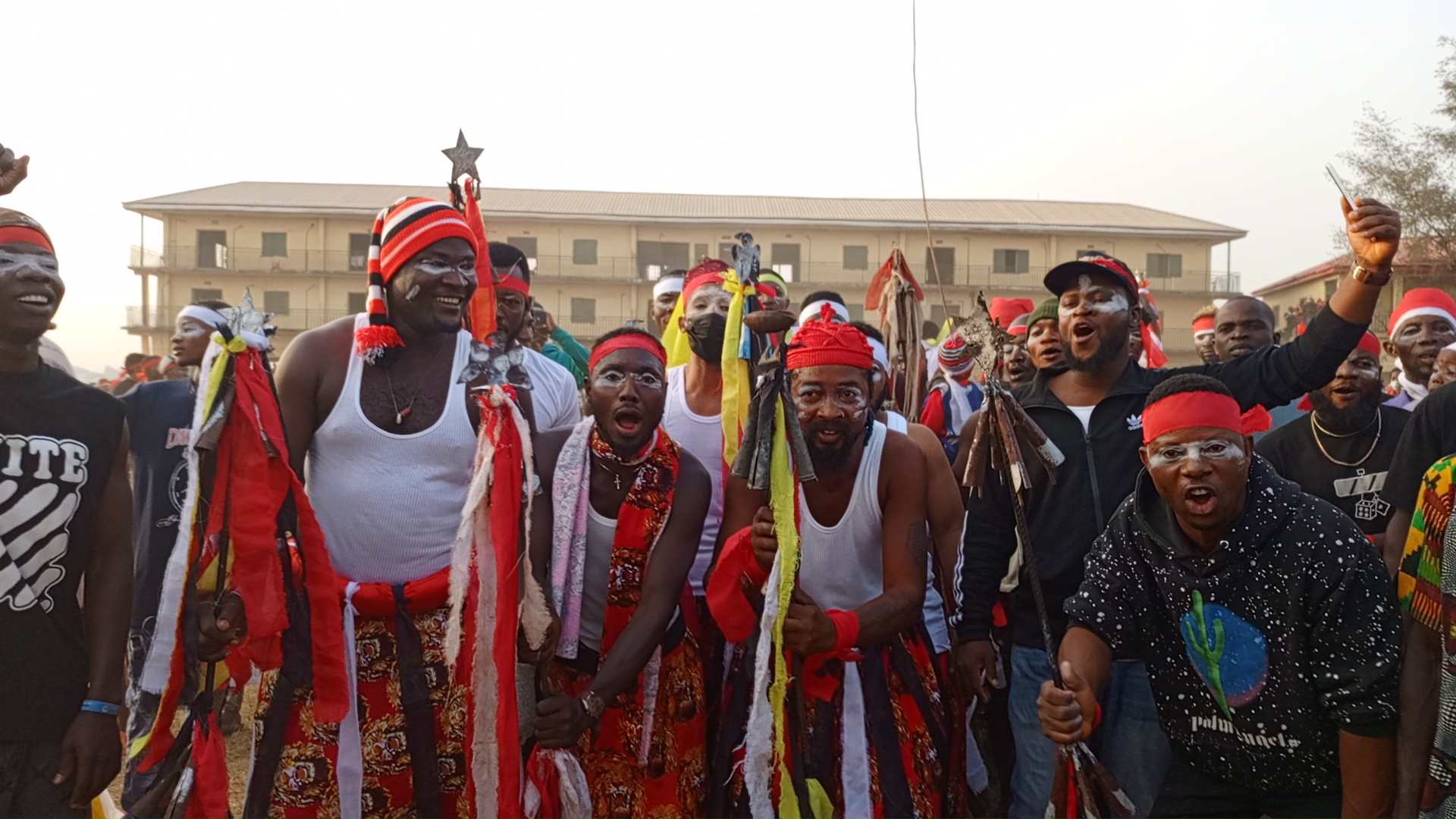
A major celebration marked by communal feasting, masquerade performances, renewal of oaths, ancestral invocation, and purification rites.

2. New Yam Blessings:
Although not solely an Iwele ritual, the deity is invoked for agricultural protection and the blessing of new harvests.
3. River-related Ceremonies:
Reflecting the Omambala environment, rituals may involve libations at the riverbank, symbolizing cleansing and the renewal of spiritual energy.
The priest of Iwele (Dibia Iwele) is regarded as the spiritual mediator. His responsibilities include interpreting the will of the deity, conducting oath-taking ceremonies, performing purification rites, settling disputes and safeguarding sacred objects.
His authority is respected across age-grades and lineages, reinforcing Iwele’s central role in social governance.
Taboos and Moral Expectations
Iwele enforces a number of taboos (nso), believed to uphold communal morality. Violations invite spiritual consequences, often described as “Ihe Iwele anaghị ekwe ka o mee” (“what Iwele does not permit cannot be done”). Common taboos include incest and sexual misconduct, false oaths sworn before the deity, defilement of sacred land or river spaces, malicious witchcraft, betrayal of clan unity. These taboos demonstrate how religion functions as a moral compass within traditional Igbo societies.
Beyond spirituality, Iwele has historically served as an instrument of social order in Umuoba Anam. Individuals involved in disputes or communal conflicts may be required to swear an oath before Iwele to prove innocence. Such oaths were taken seriously because the deity was believed to mete out punishment to liars.
Iwele also played a role in community decision-making, especially during pre-colonial and early colonial times. Important matters such as land disputes, marriage negotiations, and inter-village alliances, were spiritually validated through the deity.
Iwele and Anam Identity
Spiritual identity among the Anam people is closely tied to the land and river environment. The Iwele deity symbolizes this connection and reinforces the communal ideology of unity, bravery, and integrity. Many elders describe Iwele as “the soul of Umuoba”, a phrase that highlights the deity’s centrality to collective identity.
The rituals also promote inter-family cooperation, since different lineages contribute resources and participate in festival planning, reaffirming the bonds that hold Umuoba Anam together.
With the arrival of Christian missionaries in the late 19th and early 20th centuries, traditional practices associated with Iwele faced decline. Many shrines were destroyed, and some rituals were suppressed.
However, Iwele survived partly because it remained deeply woven into the moral and ancestral fabric of the people.
Today, many families identify as Christian while still recognizing Iwele as a cultural heritage deity rather than an object of direct worship. This duality reflects the adaptive nature of Igbo spirituality, where tradition and modernity coexist.
Contemporary Relevance
In contemporary Umuoba Anam, Iwele continues to hold cultural significance. The deity is invoked during community festivals, heritage events, ancestral remembrance rites, land disputes, cultural research and documentation etc.
Younger generations increasingly view Iwele not only as a religious figure, but as a symbol of identity, heritage preservation, and communal pride.
There is also growing academic interest in documenting the deity’s history as part of a broader revival of indigenous knowledge in Eastern Nigeria.
The Iwele deity of Umuoba Anam represents far more than a traditional spiritual figure. It embodies the moral code, ancestral memory, environmental harmony, and communal identity of the people. While modern influences have altered worship patterns, Iwele remains a cultural anchor, linking the past with the present and ensuring that the heritage of Umuoba Anam continues to thrive.
Because Iwele is primarily preserved through oral tradition, most sources are ethnographic and historical texts related to Anam communities and Igbo religion.
Sources and references
- Afigbo, A. E. (1981). Ropes of sand: Studies in Igbo history and culture. University Press.
- Arinze, F. A. (1970). A survey of Igbo beliefs and practices. Pacifika Press.
- Basden, G. T. (1966). Among the Ibos of Nigeria. Frank Cass.
- Edeh, C. (1990). Igbo traditional religion and cultural identity. Nigerian Heritage Press.
- Nwankwo, O. (2004). The Anam people: History, culture and identity. Anambra Heritage Publications.
- Okafor, S. O. (1992). Igbo institutions and cosmology. Fourth Dimension Publishers.
Cite this article
Discussion
Sign in to join the discussion
Comments are checked by an editor before they appear. Leave a source or a correction and it is read first.
Continue reading
Related histories
 Cultural HeritageEleven Days of Nwafor Ogidi: Inside the Festival Keeping an Old Igbo Tradition AliveRead history →
 Cultural HeritageIli Ji Nkpor Obododike: The Indigenous Agricultural Ritual CycleRead history →
 Cultural HeritageMusic and Drum Traditions: Tracing the “Igbo Drum” in the AmericasRead history →
No comments yet
Nothing has been approved on this record yet. Comments are checked by an editor before they appear, so one written now shows on this page after that check.