 Ozikoro
 Biography · Published history
James “Jim” Lawson Jr.: Architect of Nonviolent Resistance in the American Civil Rights Movement.
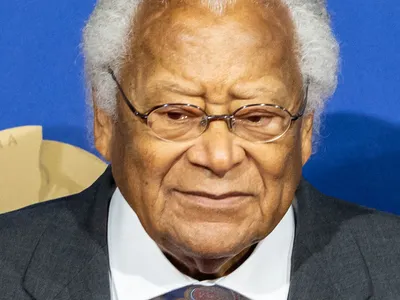
James “Jim” Lawson Jr. stands as one of the most intellectually influential yet often underappreciated figures of the American Civil Rights Movement. While names like Martin Luther King Jr. and Malcolm X dominate public memory, Lawson was the movement’s chief strategist of nonviolent direct action. A Methodist minister, philosopher, and activist, Lawson provided the theoretical and practical framework that guided many of the most effective civil rights campaigns of the 1950s and 1960s. His teachings shaped a generation of student activists and helped define nonviolence as both a moral principle and a disciplined method of social change.
The written record
Historical context
Early Life and Formation of Nonviolent Philosophy
James Morris Lawson Jr. was born on September 22, 1928, in Uniontown, Pennsylvania. Raised in a deeply religious household, Lawson was influenced early by Christian ethics emphasizing justice, compassion, and moral responsibility. His intellectual development accelerated during his studies at Baldwin-Wallace College and later at Oberlin College.
A defining period in Lawson’s life came when he spent several years in India as a missionary. There, he studied the philosophy and methods of Mahatma Gandhi, particularly Gandhian nonviolence (ahimsa) and civil disobedience. Lawson later described nonviolence not as passivity, but as “a powerful instrument for social transformation”. This period laid the foundation for his lifelong commitment to nonviolent resistance.
Commitment to Nonviolence and Conscientious Objection
Lawson’s dedication to nonviolence was tested early when he refused to serve in the U.S. military during the Korean War, citing moral and religious objections. As a conscientious objector, he was imprisoned for over a year. Rather than weakening his resolve, incarceration deepened his belief that moral courage and disciplined resistance were essential tools against injustice.
This experience sharpened Lawson’s conviction that systemic violence whether through war, segregation, or state power could only be dismantled through organized, principled nonviolence.
Lawson and the Civil Rights Movement
Upon returning to the United States in the mid-1950s, Lawson became actively involved in the growing civil rights struggle. After meeting Martin Luther King Jr., who urged him to bring his expertise to the American South, Lawson enrolled at Vanderbilt University’s Divinity School in Nashville, Tennessee.
In Nashville, Lawson began conducting workshops on nonviolent direct action. These sessions were not abstract lectures; they were rigorous training programs that taught discipline, emotional control, strategic planning, and moral clarity. Participants learned how to endure verbal abuse, physical attacks, and arrest without retaliating.
The Nashville Student Movement
Lawson’s workshops directly led to the Nashville sit-ins of 1960, one of the most successful desegregation campaigns of the civil rights era. Students trained by Lawson, many of whom later became national leaders, organized coordinated sit-ins at segregated lunch counters. The movement’s success lay in its strict adherence to nonviolence, even in the face of violence.
Notable figures trained by Lawson included:
John Lewis
Diane Nash
James Bevel
Bernard Lafayette
Marion Barry
These activists later played major roles in the Student Nonviolent Coordinating Committee (SNCC) and other civil rights organizations. Historian Taylor Branch described Lawson as “the movement’s chief tactician of nonviolence”.
Conflict with Institutions and Expulsion from Vanderbilt
Lawson’s activism came at a cost. Vanderbilt University expelled him in 1960 for his involvement in civil rights protests, citing concerns about “disruption.” The decision sparked national outrage and later came to be viewed as a grave institutional mistake. Decades later, Vanderbilt formally apologized and honored Lawson for his contributions.
This episode highlighted the tension between moral leadership and institutional conservatism during the civil rights era.
James Lawson being led to a police wagon, Nashville, March 5, 1960. Lawson was expelled from the Divinity School at Vanderbilt University for his off-campus leadership of Nashville’s civil rights movement, in which he encouraged protesters to defy local laws. Photo credit; britannica.com
Role in SNCC and National Campaigns
Lawson was instrumental in shaping the ideology of the Student Nonviolent Coordinating Committee (SNCC). Although he avoided personal prominence, his influence permeated the organization’s early philosophy. He emphasized nonviolence as both a strategy and a way of life, warning that abandoning it would undermine the moral legitimacy of the movement.
Lawson also contributed to major campaigns, including the Freedom Rides, the Birmingham Campaign, and the Memphis sanitation workers’ strike of 1968.
In Memphis, Lawson worked closely with Martin Luther King Jr. during King’s final campaign. King was assassinated while supporting this strike, a moment Lawson later described as both devastating and galvanizing.
Ministry, Teaching, and Global Activism
After the height of the civil rights movement, Lawson continued his work as a Methodist minister and educator. He served congregations in Tennessee and California, where he linked racial justice to broader struggles against poverty, militarism, and economic exploitation.
Lawson became a leading voice in anti-war activism, particularly opposing the Vietnam War. He argued that racism, militarism, and economic injustice were interconnected forms of violence. His later activism reflected a global human rights perspective rooted in nonviolence.
Legacy and Historical Significance
James Lawson’s legacy lies not in mass popularity, but in intellectual and moral influence. He provided the civil rights movement with its most sophisticated theory of nonviolent action. Without Lawson’s training and strategic guidance, many landmark victories of the movement might not have occurred or might have turned violent, with disastrous consequences.
Today, Lawson is widely recognized by scholars as a central architect of nonviolent resistance in the United States. His methods continue to influence movements for social justice worldwide, from labor organizing to climate activism.
James “Jim” Lawson Jr. was the quiet strategist behind some of the most transformative moments in American history. By translating Gandhian philosophy into practical action, he equipped ordinary people with extraordinary moral power. His life demonstrates that lasting social change requires not only courage and protest, but also discipline, ethical clarity, and strategic thought. In the story of civil rights, Lawson remains the movement’s teacher, a man who showed that nonviolence, when rigorously practiced, can reshape the world.
Sources and references
- Branch, T. (1988). Parting the waters: America in the King years, 1954–63. Simon & Schuster.
- Carson, C. (1981). In struggle: SNCC and the Black awakening of the 1960s. Harvard University Press.
- Lawson, J. M. (2013). Nonviolence and social transformation. Vanderbilt University Press.
- King, M. L., Jr. (1963). Strength to love. Harpe r & Row.
- Morris, A. D. (1984). The origins of the civil rights movement. Free Press.
Cite this article
Discussion
Sign in to join the discussion
Comments are checked by an editor before they appear. Leave a source or a correction and it is read first.
Continue reading
No comments yet
Nothing has been approved on this record yet. Comments are checked by an editor before they appear, so one written now shows on this page after that check.