 Ozikoro
 Cultural Heritage · Published history
Life in the Royal Court of the Benin Kingdom
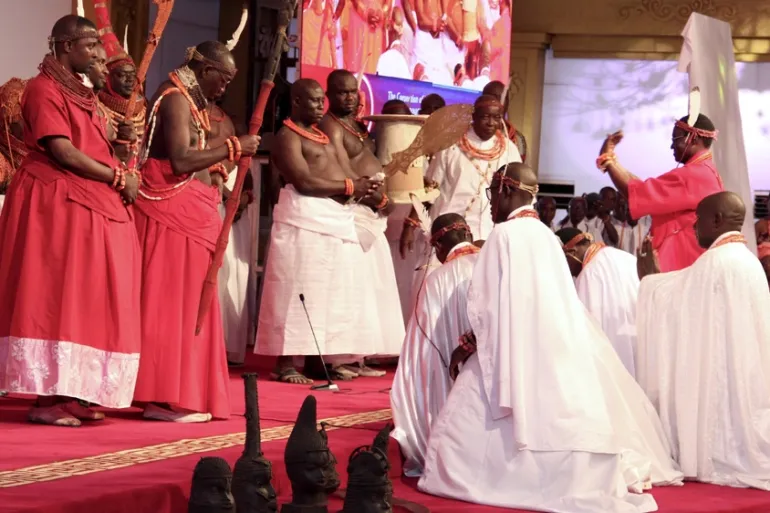
The Benin Kingdom, one of the most sophisticated precolonial African states, developed a highly organized political, cultural, and social system centered around the royal palace. Life in the royal court was defined by elaborate rituals, hierarchical administrative structures, artistic innovation, and strict laws governing conduct and duty. The Oba, the divine monarch, stood at the center of this world, surrounded by chiefs, palace guilds, courtiers, and spiritual specialists who collectively sustained the grandeur and continuity of the kingdom.
The written record
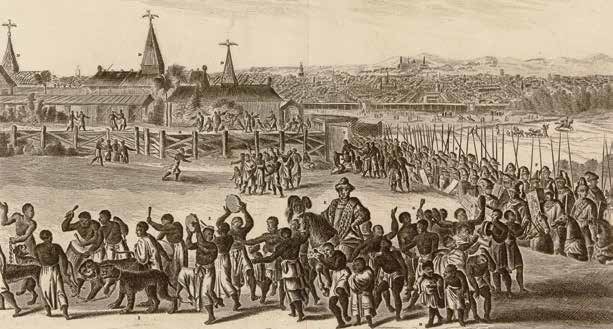
Historical context
The Central Authority of the Oba
Divine Kingship;
The Oba of Benin was revered as a semi-divine figure whose authority rested on ancestral legitimacy and spiritual power. According to Edo tradition, the Oba derived sacred authority from the lineage of Oranmiyan and his successor Eweka I, forming the basis of hereditary rulership. The Oba embodied the unity of the kingdom, mediated between the people and the gods, and performed rituals essential to the well-being of the land.
Political and Judicial Power;
In the royal court, the Oba exercised supreme political control. He presided over judicial hearings, controlled military decisions, and adjudicated disputes brought before him. No major event, war, trade negotiations, or ritual festival could occur without his approval. His judgments were considered final and were often reinforced through sacred oaths.
The Hierarchy of Chiefs and Palace Administration
The Uzama, Eghaevbo, and Palace Chiefs
Life in the royal court was highly structured, with a tripartite system of chiefs:
Uzama N’Ihinron (Kingmakers): ancient hereditary chiefs who played a role in crowning a new Oba.
Eghaevbo N’Ore (Town Chiefs): administrators who governed Benin City and surrounding territories.
Eghaevbo N’Ogbe (Palace Chiefs): senior officials who lived in or near the palace and executed the Oba’s commands.
Each chief had specific responsibilities, and their positions were tied to lineage, ritual obligations, and palace service.
Palace Bureaucracy and Daily Functions
The palace functioned as the political nerve center of the kingdom, with various officials managing taxation and tribute collection, diplomacy with European visitors, land allocation, military organization, and legal matters.
Records of decisions were preserved through oral historians and guild custodians.
The Guild System and Artistic Production
Specialized Guilds (Igueghae);
A remarkable feature of palace life was the guild system of highly specialized professional associations responsible for producing art, maintaining palace structures, and performing rituals. The most famous guilds included:
Igun-Eronmwon (Bronze Casters)
Igbesanmwan (Ivory Carvers)
Iwebo (Royal Regalia Keepers)
Ibiwe (Palace administrators and the queen mother’s attendants)
These guilds lived within designated palace quarters, working exclusively for the Oba.
Bronze, Ivory, and Coral Art;
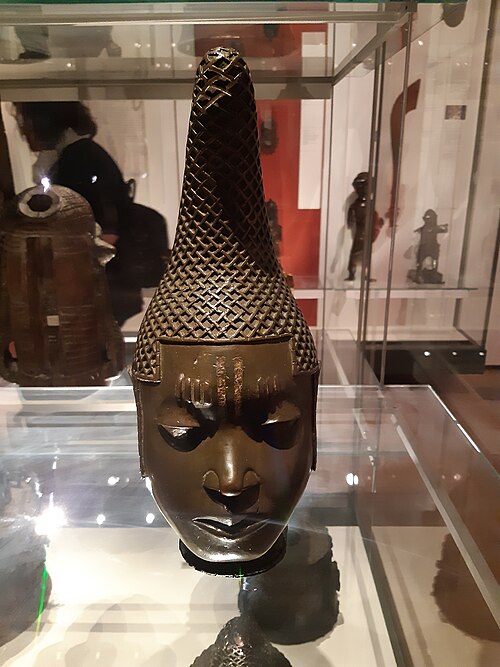
Benin’s court art was not merely decorative, it was a political language. Bronze plaques recorded historical events, royal achievements, and court rituals. Ivory carvings expressed spiritual power, while coral beads symbolized kingship and sacred authority. The production of these artworks gave the palace its iconic visual identity.
Women in the Royal Court
The Queen Mother (Iyoba);
The Iyoba held the highest female title in the kingdom. She played political and spiritual roles, oversaw her own court at Uselu, and participated in key rituals. The elevation of the Iyoba began during the reign of Oba Esigie, who honored his mother, Idia, for her role in securing his throne.
Palace Women and Their Duties;
Thousands of women lived within the palace, organized into wards according to lineage, duties, rank, and marital ties to the Oba.
These women prepared ritual offerings, maintained palace courtyards, performed songs and dances, and assisted in ceremonies. Their lives were governed by strict codes of conduct, reflecting the sacredness of palace space.
Rituals, Festivals, and Court Ceremonial Life
Annual Festivals and Ritual Cycles;
Life in the Benin royal court was punctuated by elaborate festivals, the most important being Igue, the annual ceremony of renewal. During Igue, the Oba underwent rituals to strengthen his spiritual power and bless the kingdom.
Other major ceremonies included Ugie Erha Oba (Royal Ancestors Festival), Ague (Ritual of Purification), Uzizin (Ceremony for royal messengers)
Ceremonial Court Etiquette
Courtiers observed strict rules of behavior when interacting with the Oba. They approached him prostrate, avoided direct eye contact, and used formalized speech. These customs symbolized reverence and reinforced the sacred nature of kingship.
Palace Architecture and Daily Life
Layout of the Palace
The Benin Royal Palace was a vast architectural complex comprising courtyards, shrines, workshops, and residences. Portuguese accounts from the 15th and 16th centuries describe the palace as larger than many European royal compounds, featuring decorated columns, bronze plaques, and carved ivory.
Daily life in the palace involved meetings with chiefs, oversight of artisans, adjudicating disputes, receiving foreign visitors, preparing for rituals, and maintaining ancestral shrines.
The palace never slept; it was always alive with activity, music, processions, and political deliberations.
European Contact and Its Effects on Court Life
The arrival of Portuguese traders in the late 15th century introduced new trade goods, especially brass manillas used for casting bronzes. European contact enhanced the artistic wealth of the palace but also intensified political tensions, eventually contributing to the 1897 British invasion.
The destruction of the palace and looting of its artworks marked a dramatic end to an era but also revealed to the world the sophistication of Benin culture.
Life in the royal court of the Benin Kingdom was a complex fusion of political authority, spiritual power, artistic mastery, and social hierarchy. The palace was the heart of the kingdom, symbolizing its unity, wealth, and cultural sophistication. Through its guild system, ritual practices, and structured governance, the Benin court developed one of the most remarkable administrative and artistic traditions in African history. Though disrupted by colonial invasion, its legacy continues to thrive in modern Edo culture and in global appreciation of Benin’s artistic heritage.
Sources and references
- Ben-Amos, P. (1995). The Art of Benin. London: Thames and Hudson.
- Bradbury, R. E. (1957). The Benin Kingdom and the Edo-speaking peoples of southwestern Nigeria. Ethnographic Survey of Africa, 1(3), 1–132.
- Egharevba, J. (1968). A Short History of Benin. I badan University Press.
- Ryder, A. F. C. (1969). Benin and the Europeans, 1485–1897. Longman.
Cite this article
Discussion
Sign in to join the discussion
Comments are checked by an editor before they appear. Leave a source or a correction and it is read first.
Continue reading
Related histories
 Cultural HeritageEleven Days of Nwafor Ogidi: Inside the Festival Keeping an Old Igbo Tradition AliveRead history →
 Cultural HeritageIli Ji Nkpor Obododike: The Indigenous Agricultural Ritual CycleRead history →
 Cultural HeritageMusic and Drum Traditions: Tracing the “Igbo Drum” in the AmericasRead history →
No comments yet
Nothing has been approved on this record yet. Comments are checked by an editor before they appear, so one written now shows on this page after that check.