 Ozikoro
 Biography · Published history
Liz Obi, Who Was One of the Driving Forces of the British Black Power Movement and Worked Closely with Egbuna
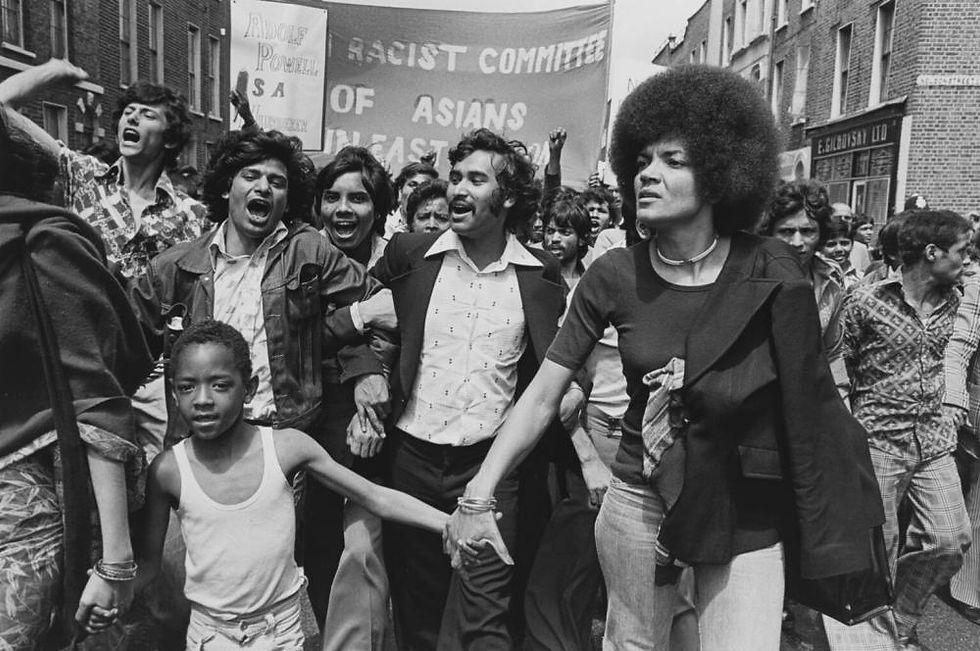
Liz Obi occupies an essential place in the history of Black British political activism. As one of the early leaders of the British Black Power movement, she worked alongside pioneering activists such as Obi Egbuna, playing a central role in shaping radical grassroots resistance to racism, police brutality, and social marginalization in Britain during the late 1960s and early 1970s. Unlike some of her male contemporaries whose contributions have been more widely documented, Liz Obi’s legacy has often been overlooked, despite her pivotal involvement in movement-building, political education, and community organization. This essay examines her activism, her role in the Universal Coloured People’s Association (UCPA), her collaboration with Egbuna, and her enduring significance in Black British history.
The written record
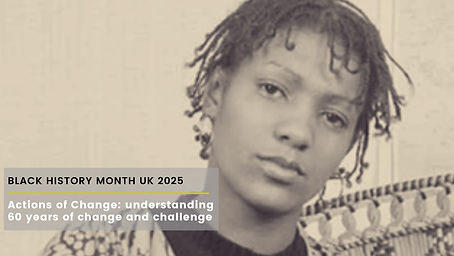
Photo credits; Neil Kenlock, 1973.
Historical context
Early Life and Entry into Black Activism
Liz Obi was born in Nigeria and moved to Britain as a young girl. Like many Black migrants and children of migrants in Britain in the 1960s, she grew up in a society rife with racial inequalities: discriminatory housing policies, employment barriers, and hostile policing practices shaped everyday life for African and Caribbean communities. These experiences laid the foundation for Obi’s political awakening. Her involvement in activism emerged during her teenage years, when she came into contact with radical Black intellectual circles in London. She soon met Obi Egbuna, who would become a mentor, collaborator, and ideological influence on her political development.
According to the Black Cultural Archives, Obi was inspired by the global rise of anti-colonial liberation movements, as well as the writings of Black revolutionaries from the United States, the Caribbean, and Africa.
Working with Obi Egbuna and the Rise of Black Power in Britain
When Egbuna founded the Universal Coloured People’s Association (UCPA) in 1967 the first formal Black Power organisation in the United Kingdom, Liz Obi joined immediately and became one of its central organizers.
Her responsibilities included:
- Organizing political education sessions
- Mobilizing young Black people
- Coordinating meetings and rallies
- Managing communications and recruitment
- Supporting community self-defense and welfare initiatives.
The UCPA represented a new phase of Black activism in Britain, moving beyond quiet appeals for civil rights toward a more assertive and uncompromising demand for Black self-determination, anti-imperialism, and economic justice. Liz Obi worked closely with Egbuna in producing Black Power Speaks, the organization’s political journal, which challenged the British public’s assumptions about racism, colonialism, and police power. Liz Obi’s activism helped anchor the movement’s grassroots legitimacy among Black youth, especially young women who saw themselves reflected in her leadership.
Liz Obi and the 1968 Protests Against Police Harassment
One of the defining events in Obi’s activism was the campaign surrounding the arrest of Obi Egbuna in 1968. Egbuna was charged with “incitement to murder” following the publication of an article condemning racism in Britain. The case was widely viewed by Black activists as a deliberate attempt by the British state to crush the growing Black Power movement. Liz Obi became one of the primary organizers of protests demanding Egbuna’s release, demonstrating not only her loyalty to her comrade but also her political conviction that the British legal system was intentionally targeting Black radicals.
According to the Black Cultural Archives, Obi coordinated demonstrations outside the Old Bailey, the courts, and police stations, often confronting aggressive policing with steadfast calm. Her leadership reflected the movement’s broader critique of how British society weaponized the criminal justice system to suppress resistance.
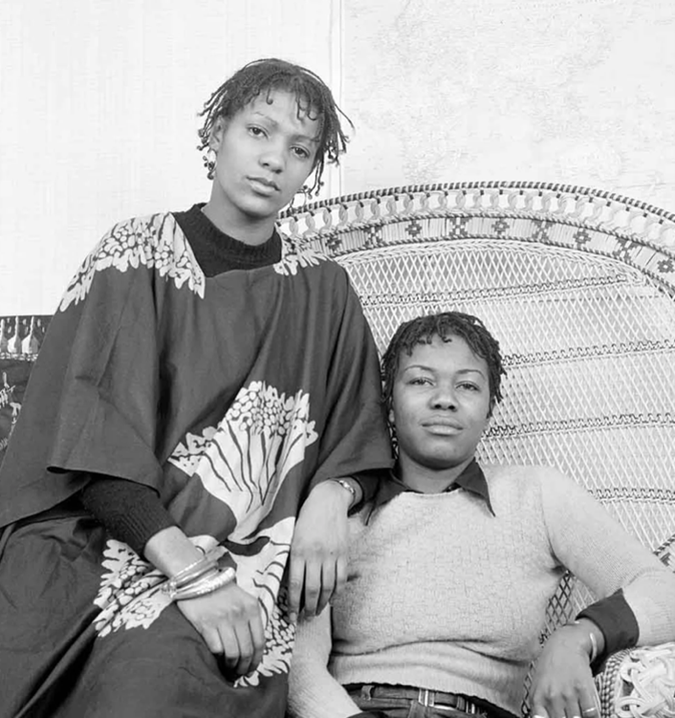
Photo credits; Neil Kenlock
Role in Women-Led Black Liberation Work
It was through this movement that she met Olive Morris, forming a close partnership grounded in shared purpose and radical vision. Together, they campaigned against housing discrimination, police harassment, and institutional racism, while also addressing sexism within the broader Black Power movement.
Liz Obi’s activism was also groundbreaking because it challenged the gender dynamics within Black liberation movements. While many histories focus on male leaders, Obi and women like Olive Morris, Kathleen Wrasama, and Farrukh Dhondy played central roles in building Britain’s anti-racist infrastructure.
Liz Obi, in particular, was instrumental in integrating feminist perspectives into Black Power, emphasizing:
- The importance of women’s political education
- Equal treatment within activist organizations
- Recognition of Black women’s double oppression, racism and sexism
She co-founded grassroots projects aimed at empowering Black women through political literacy, community childcare, and legal self-defense against discriminatory policing. Obi’s activism helped ensure that Black Power in the UK was not simply a male-led movement but a more inclusive force that recognized Black women’s central role in the struggle.
Beyond the UCPA: Continuing Activism and Community Organizing
After the dissolution of the UCPA in the early 1970s, Liz Obi continued her activism with Community self-help groups, housing rights campaigns, anti-police-brutality committees and cultural organizations promoting African identity. She worked closely with activists connected to the British Black Panthers, the Race Today Collective, and local youth groups in Brixton and Notting Hill neighborhoods central to Black resistance.
Researchers at the Institute of Race Relations note that Obi acted as a bridge between older activists from the 1960s and new generations of young Black Britons who faced Thatcher-era policing, inner-city neglect, and rising far-right violence. Her influence endured long after Black Power organizations formally dissolved.
Legacy and Historical Significance
Liz Obi’s legacy is both powerful and multi-dimensional.
1. A Female Pioneer of British Black Power
Her activism ensured that women were not erased from the history of Black radicalism in Britain.
2. A Central Organizer and Political Educator
Obi played a crucial role in the growth of ideological training within the UCPA, helping shape Britain’s Black political language.
3. A Link Between African, Caribbean, and British Movements. Her Pan-African perspective helped unify diverse Black communities under a shared political vision.
4. An Architect of Youth Mobilization
Her leadership style inspired young Black Britons who would later become activists, artists, and advocates.
5. A Guardian of Black Historical Memory
Her work documented the experiences of Black radicals and preserved their struggles for future scholars and organizers.
Today, Liz Obi is recognized not only as a collaborator of Obi Egbuna but as a leader in her own right, one whose courage and contributions shaped the course of Black British political development.
Liz Obi’s story is essential to understanding the full picture of Britain’s Black Power movement. Her activism, leadership, and courage helped define a generation of anti-racist resistance and inspired future activists who continue the struggle for racial justice today. Working alongside figures like Obi Egbuna, she left a legacy that transcends her era, one built on political clarity, community commitment, and the belief that oppressed people can resist and transform society. Her contributions remain indispensable to the political and cultural history of Black Britain.
Sources and references
- Baker, E. (n.d.). Elizabeth Obi and Olive Morris. University of Bristol History Department.
- International Black Women’s History Museum. (2021, October 17). Liz Obi: A quiet force behind Britain’s Black feminist movement.
Cite this article
Discussion
Sign in to join the discussion
Comments are checked by an editor before they appear. Leave a source or a correction and it is read first.
Continue reading
No comments yet
Nothing has been approved on this record yet. Comments are checked by an editor before they appear, so one written now shows on this page after that check.