 Ozikoro
 Biography · Published history
Louis Odimegwu Ojukwu and the Founding of the Nigerian Road Transport Business
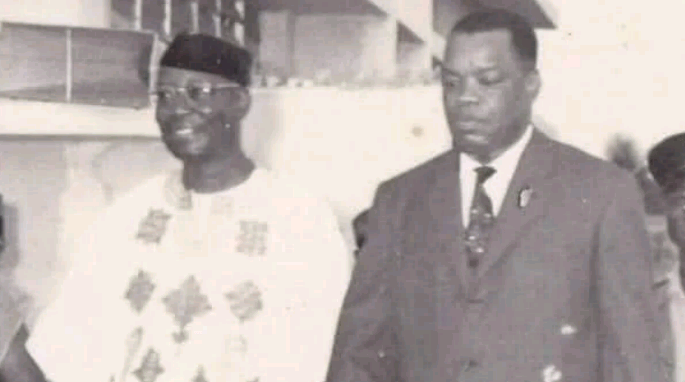
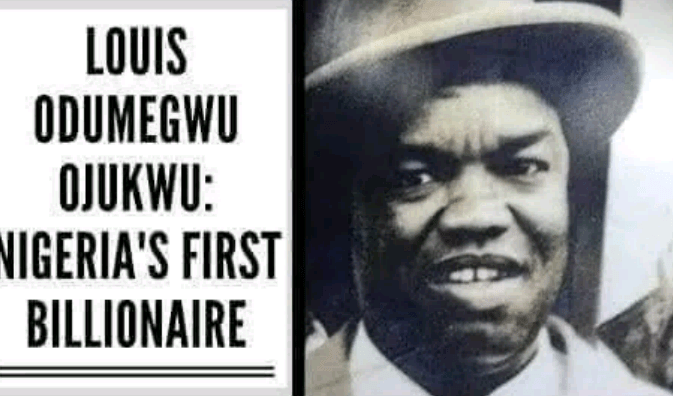
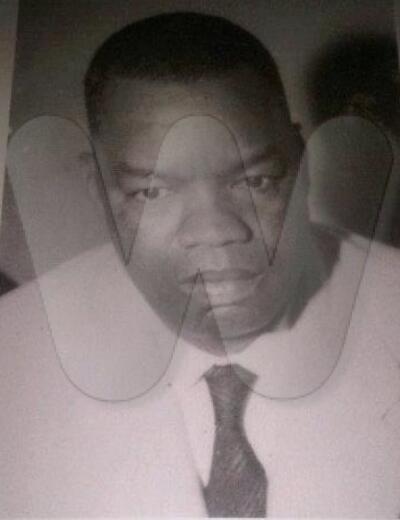
The development of modern road transport in Nigeria was not just an infrastructural achievement but also a story of entrepreneurial vision. Central to this narrative is Sir Louis Phillip Odumegwu Ojukwu (1909–1966), a pioneering businessman whose transport enterprise, Ojukwu Transport Company, became the backbone of commercial logistics during the colonial era and into the early years of independence. Often described as Nigeria’s first indigenous transport magnate and by some accounts the country’s first billionaire Ojukwu’s rise from modest beginnings to a dominant figure in road transport and commerce reflects the intertwining of trade, infrastructure, and economic transformation.
The written record
Historical context
Early Life and Commercial Beginnings
Born in Nnewi, Anambra State in 1909, Louis Odimegwu Ojukwu received his early education at Government Primary School, Asaba, and later at the prestigious Hope Waddell Training Institute in Calabar before entering the workforce. His first formal employment came in 1929 as a tyre sales clerk for John Holt & Co. Ltd in Lagos. It was during this period that Ojukwu’s entrepreneurial instincts began to develop critically. Observing that Igbo traders journeying to Lagos frequently purchased not only tyres but also textiles and other goods, he identified an opportunity that lay beyond seasonal trading: the movement of goods themselves.
Acting on this insight, Ojukwu travelled to Onitsha, where he established his first business venture, Ojukwu Stores, importing textiles and meeting direct demand among eastern traders. While still formally employed, he coordinated the shipment of textiles from Lagos to Onitsha through hired transport, laying groundwork for his next phase: owning and operating his own vehicles.
Founding of Ojukwu Transport Company
By 1930, Ojukwu used his modest savings to purchase a second‑hand truck, which he employed to move his merchandise, textiles and trade goods between Lagos and the Eastern Region. This act marked the founding of the Ojukwu Transport Company, a business that began as a practical solution to a logistical challenge and quickly evolved into a major commercial transporter.
Ojukwu Transport quickly expanded its operations. By the late 1930s, he had grown the company into a key transporter along Nigeria’s East‑West road network, connecting major markets and commercial hubs. By the 1950s, his fleet was one of the largest in West Africa, reportedly numbering over 200 trucks, making Ojukwu Transport not only a regional but a continental logistics force. Such scale was virtually unprecedented in a period when road infrastructure was rudimentary, distances were vast, and long‑distance travel relied heavily on improvised routes and fragmented colonial support systems.
Role During World War II and Economic Expansion
The outbreak of World War II in 1939 transformed global trade patterns, and West Africa found itself supplying raw materials to the British war effort. The British colonial administration requisitioned local resources to sustain the war industry, creating heightened demand for transportation of goods. Ojukwu agreed to make his fleet available for this cause, thus integrating his operations into wartime logistics.
Following the end of the war in 1945, international demand for West African commodities such as palm oil, rubber, cocoa, and groundnuts increased dramatically. Ojukwu Transport was strategically positioned to benefit from this boom, transporting raw materials from interior production zones to export points on the coast. The fleet’s capacity to move large volumes reliably helped stimulate trade, knit regions together, and create an economic infrastructure that supported Nigeria’s later transition toward independence.
This expansion and service to the colonial economy also earned Ojukwu recognition from British authorities. He was honoured as an Officer of the British Empire (OBE) and later knighted, highlighting not just his commercial success but his strategic importance to colonial supply chains.
Contribution to Nigerian Commerce and National Development
Louis Odimegwu Ojukwu’s impact extended far beyond road transportation. The success of Ojukwu Transport enabled him to diversify into:
- Textile and retail trading (Ojukwu Textiles and Ojukwu Stores)
- Stockfish imports, a pioneering market entry in Nigeria
- Real estate investments, acquiring properties in Lagos and other urban centres
- Membership on boards of major corporations, including Shell D’Arcy Petroleum, Guinness Nigeria, Nigerian Coal Corporation, and others.
His diversified interests gave him influence in both the private and public economic sectors, while his role as the first president of the Nigerian Stock Exchange in 1960 cemented his legacy as a foundational figure in Nigeria’s financial landscape.
Moreover, Ojukwu’s transport business helped facilitate commercial integration across ethnic and regional lines, enabling small traders, farmers, and artisans to access distant markets. In doing so, he contributed to the early economic interconnectivity that would later underpin Nigeria’s national economy.
Entrepreneurial Mentorship and Legacy
Ojukwu’s influence extended into the careers of other transport entrepreneurs. Accounts suggest that some of his earliest drivers and transport staff went on to establish their own companies, including names such as Chief Ilodibe and Chief Izuchukwu (Izuchukwu Transport), who became significant transport magnates in their own right.
This mentorship effect illustrates how Ojukwu’s enterprise not only built infrastructure but also nurtured human capital, creating a generation of indigenous transport professionals who continued to shape road logistics even after his death in 1966. Louis Odimegwu Ojukwu’s life and career represent a transformative chapter in Nigerian economic history. From a young clerk with meagre savings, he became one of the first indigenous transport magnates in West Africa, founded a transport company that bridged regions, and helped lay the foundations of organized road logistics in Nigeria. Ojukwu’s vision anticipated the centrality of road transport to economic development, long before modern infrastructure programs and state‑led planning. His work demonstrates the power of private enterprise to create national networks of commerce, support market integration, and contribute to economic modernization. Today, Ojukwu’s legacy lives on not only in the history of Nigerian transport but in the larger story of entrepreneurial innovation in Africa.
Sources and references
- IgboPeople.org. (n.d.). “Sir Louis Phillip Odumegwu OJUKWU OBE 1909–1966”. Igbo Heritage and Genealogy Foundation.
- NewsWireNGR. (2022, July 18). “Sir, Louis Odumegwu Ojukwu, First Nigerian Billionaire”.
- Pulse Nigeria. (2025, April 15). “Before Dangote, there was Ojukwu: The story of Nigeria’s first billionaire”.
- ThisDayLive. (2016, May 8). “In Quest of Perpetuity: The Ojukwu Nigerians Didn’t Know”.
Cite this article
Discussion
Sign in to join the discussion
Comments are checked by an editor before they appear. Leave a source or a correction and it is read first.
Continue reading
No comments yet
Nothing has been approved on this record yet. Comments are checked by an editor before they appear, so one written now shows on this page after that check.