 Ozikoro
Cultural Heritage · Published history
Mazi F. C. Ogbalu and the Birth of Modern Igbo Language and Literature
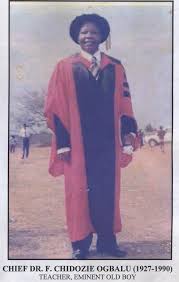
Asụsụ bụ mkpụrụ obi nke mmadụ ( Language is the soul of a people). In the decades after World War II, Nigeria was alive with political awakening. Yet among the Igbo, another revolution was quietly taking place, not on the battlefield or in parliament, but in the classroom and on the printed page.
The written record
At its heart stood Mazi F. C. Ogbalu (1927 – 1990), teacher, writer, and cultural visionary. Born in Onitsha, Ogbalu’s childhood unfolded along the banks of the River Niger, where trade mixed languages daily, Igbo, Hausa, Yoruba, English, and Pidgin. He noticed how easily English-dominated speech was among students, while Igbo was treated as “vernacular,” something to be punished if spoken in school (Echeruo, 1973).
As he grew into teaching, he began to ask a simple but radical question: Why should a people be ashamed of their own tongue?
Historical context
Building a Movement of Words
In 1949, Ogbalu founded the Society for Promoting Igbo Language and Culture (SPILC) in Onitsha. It began as a teachers’ association dedicated to standardizing Igbo orthography and producing learning materials for schools (Ogbalu, 1952).
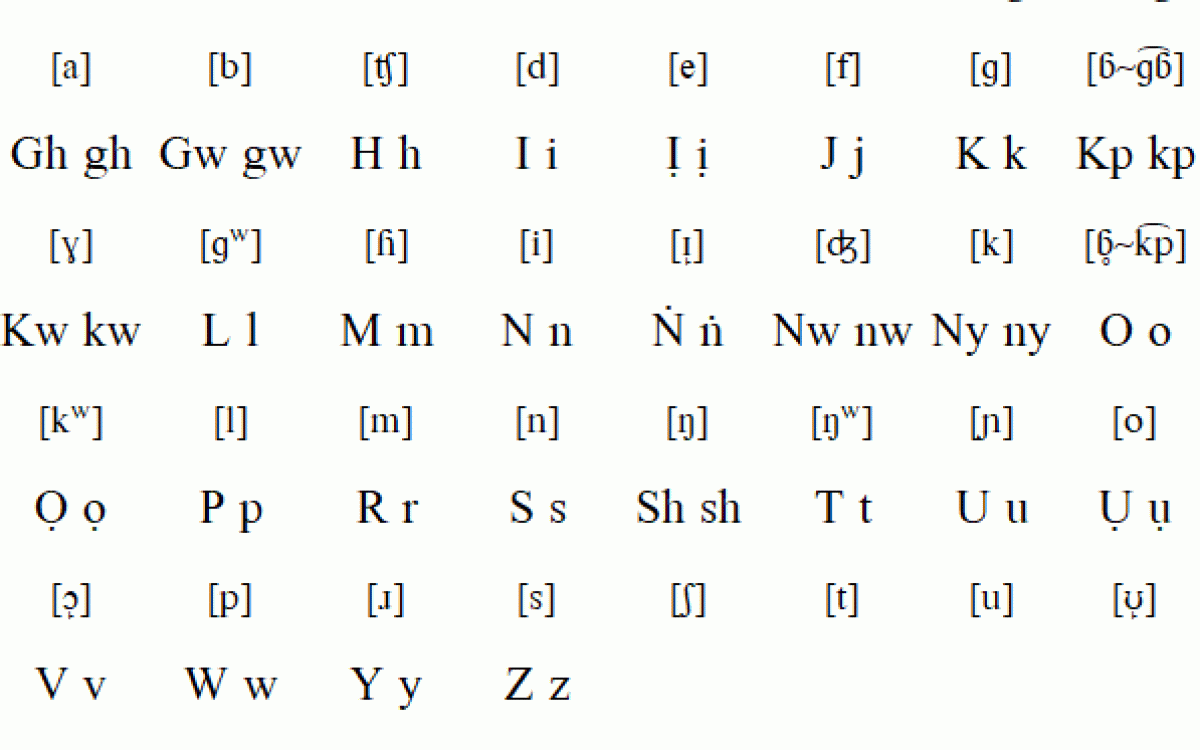
At the time, written Igbo was fragmented. Missionaries from different denominations had developed competing spelling systems ,a single word could appear in three or four forms. Ogbalu believed unity of writing was essential for the survival of the language. He organized conferences bringing together linguists, writers, and priests, eventually helping to produce the 1953 Onwu Orthography, which remains the basis of modern written Igbo (Onwu, 1961). Okwu bụ ndụ mmadụ(Speech is the life of man).
Through SPILC, Ogbalu trained a generation of teachers to use Igbo as a language of education and not just translation. He published grammars, readers, dictionaries, and schoolbooks, ensuring that children could learn mathematics and science in their mother tongue.
His movement inspired the first wave of Onitsha Market Literature, inexpensive booklets and pamphlets that captured the rhythm of everyday life. From love stories to moral fables and political satires, these works gave voice to the humor and wisdom of the streets (Lindfors, 1970).
The Teacher of a Nation
When the University of Nigeria, Nsukka opened in 1960, Ogbalu joined its Department of African Languages. There, he mentored students who would become future writers and broadcasters. He emphasized that the Igbo language could serve as a medium for science, philosophy, and modern governance (Achebe, 1975).
Ogbalu’s efforts coincided with Nigeria’s early post-independence years, when questions of identity and nationhood filled the air. He argued that preserving indigenous languages was not tribalism but patriotism, a way to secure cultural balance in a multilingual country.
Even during the Nigerian Civil War (1967–1970), when schools were disrupted, he continued producing handwritten textbooks for refugee teachers. To him, the loss of language was the loss of memory. Ihe na-eme ka mmadụ dị ndụ bụ asụsụ(What keeps a man alive is his language).
Legacy of the Word-Bearer
Ogbalu died in 1990, but his legacy breathes in every Igbo classroom, radio broadcast, and newspaper column. His society, SPILC, continues to operate, organizing annual language festivals and awards for Igbo writers.
He laid the groundwork for modern Igbo linguistics and literature, the path later followed by writers like Chinua Achebe, Pita Nwanna, and Tony Ubesie. His dream was not only to preserve the language but to prove that a people can modernize without losing themselves.
Today, phrases like Ka ọdị! and Ndeewo! resound across media, schools, and digital platforms, carrying Ogbalu’s quiet revolution forward. A sị na asụsụ gaghị ada, onye kwuru ya adịghịkwa ada( If a language does not die, its speakers will not perish).
Sources and references
- Achebe, C. (1975). Morning yet on creation day: Essays. Heinemann.
- Echeruo, M. J. C. (1973). Victorian Lagos: Aspects of nineteenth-century Lagos life. Macmillan.
- Lindfors, B. (1970). “Popular literature in Onitsha.” African Arts, 3(4), 52–59. https://doi.org/10.2307/3334403
- Ogbalu, F. C. (1952). Igbo grammar for schools. University Press, Ibadan.
- Onwu, S. C. (1961). Igbo orthography: Report of the Committee on Standardization of Igbo Spelling. Eastern Nigerian Government Press.
- Uchendu, V. C. (1965). The Igbo of Southeast Nigeria. Holt, Rinehart and Winston.
Cite this article
Discussion
Sign in to join the discussion
Comments are checked by an editor before they appear. Leave a source or a correction and it is read first.
Continue reading
Related histories
 Cultural HeritageEleven Days of Nwafor Ogidi: Inside the Festival Keeping an Old Igbo Tradition AliveRead history →
 Cultural HeritageIli Ji Nkpor Obododike: The Indigenous Agricultural Ritual CycleRead history →
 Cultural HeritageMusic and Drum Traditions: Tracing the “Igbo Drum” in the AmericasRead history →
No comments yet
Nothing has been approved on this record yet. Comments are checked by an editor before they appear, so one written now shows on this page after that check.