 Ozikoro
 Cultural Heritage · Published history
Modern Educational Foundations: The Building of the First Government and Mission Colleges in Warri
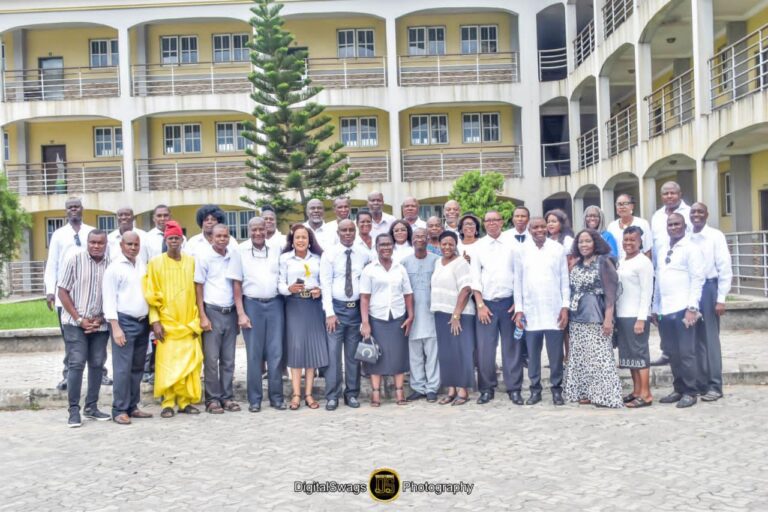
The transformation of Warri from a riverine commercial outpost into a preeminent intellectual hub of the Niger Delta was facilitated by a deliberate “educational revolution” that began in the early 20th century. While the 17th-century Portuguese palace schools provided a foundation for royal literacy, the modern educational era was defined by the establishment of formal secondary institutions. This period saw a unique collaboration and competition between the British colonial government and Christian missionary bodies. The founding of schools such as Government College, Warri, and Hussey College did more than provide literacy; it created a standardized “meritocratic pipeline” that produced the first generation of Nigerian doctors, lawyers, and nationalist leaders. These colleges served as the “Modern Educational Foundations” of the Warri Kingdom, cementing the Itsekiri and their neighbors’ reputation as a highly literate and professional elite within the Nigerian state.
The written record
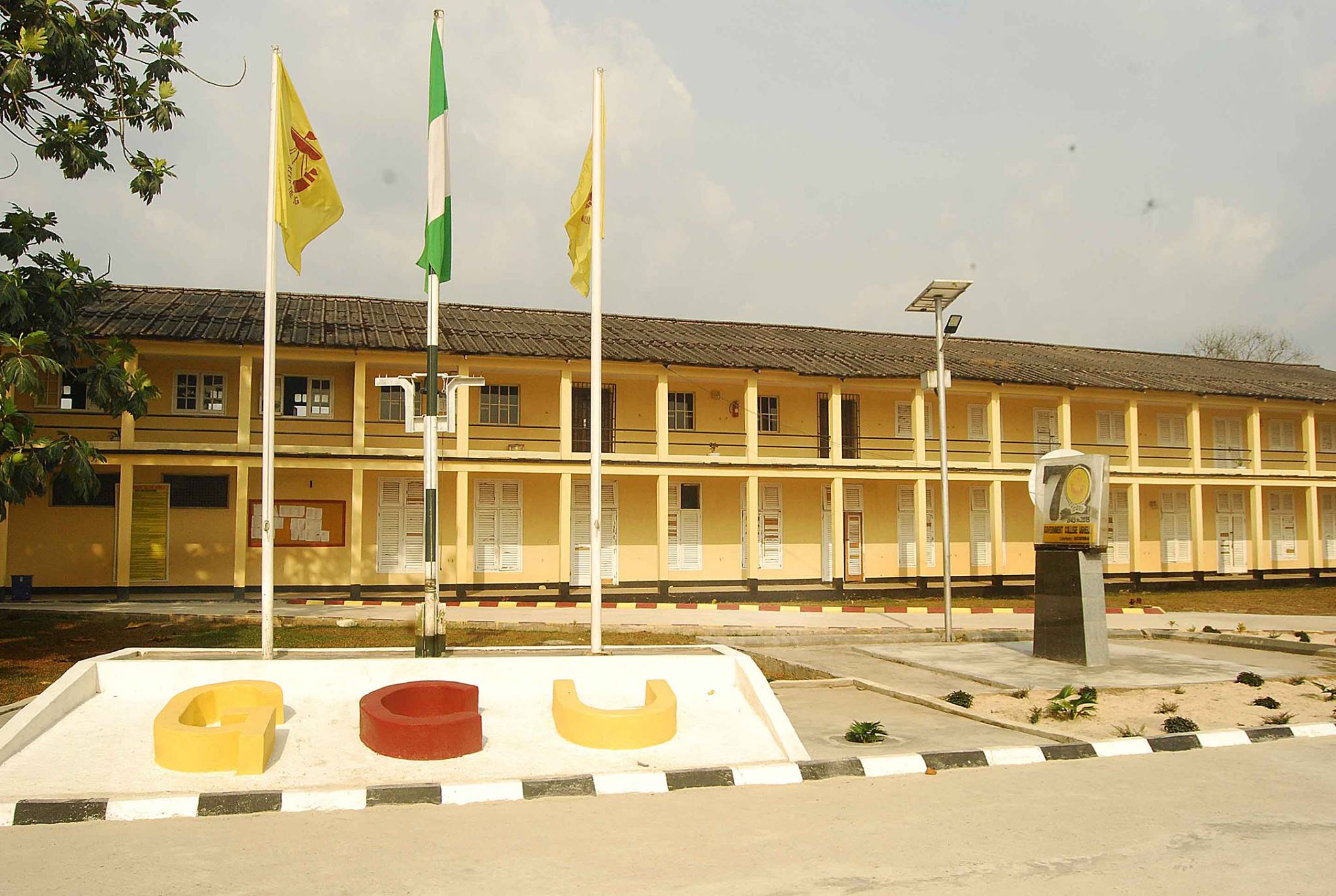
Photo Credit: Old Boys Association of Government College Ughelli (GCUOBA) / National Archives of Nigeria.
Historical context
The Genesis of Government College, Warri (GCW)
The establishment of Government College, Warri, in 1945 represented the British colonial government’s commitment to high-level secondary education in the Southern Protectorate;
A Model of Excellence: GCW was modeled after the British public school system. It was designed to be a “regional center of excellence” for the Warri Province, selecting only the most academically gifted students from across the Niger Delta.
Strategic Location: Originally founded in Ahwiam (near Ughelli) before moving to its permanent site in Warri, the college provided a centralized campus where children from diverse ethnic backgrounds Itsekiri, Urhobo, Ijaw, Isoko, and Edo could interact under a unified academic rigour.
The “Old Boys” Network: The college fostered a sense of “intellectual brotherhood.” The rigorous curriculum in the sciences and humanities ensured that its graduates were prepared for university education in the United Kingdom or the newly established University College, Ibadan.
Hussey College: A Vision of Indigenous and Private Initiative
While government schools were prestigious, they were often limited in capacity. Hussey College, founded in 1947, emerged as a landmark private-communal initiative that addressed the growing demand for “mass secondary education”;
The Name and Legacy: The college was named after E.R.J. Hussey, the first Director of Education in Nigeria. Its founding was a collaborative effort involving prominent Itsekiri and non-Itsekiri entrepreneurs, most notably Chief O.N. Rewane and Chief Elliot Begho.
The “Tri-Lateral” Identity: Hussey College was unique because it was “inter-ethnic” and “multi-religious” from its inception. It provided a platform for the Itsekiri elite to demonstrate their administrative independence, proving that they could run world-class institutions without direct missionary or government control.
Sports and Academic Prowess: Hussey College became famous across West Africa for its “sporting excellence,” particularly in athletics and football, proving that the modern Itsekiri intellectual was also a “well-rounded individual.”
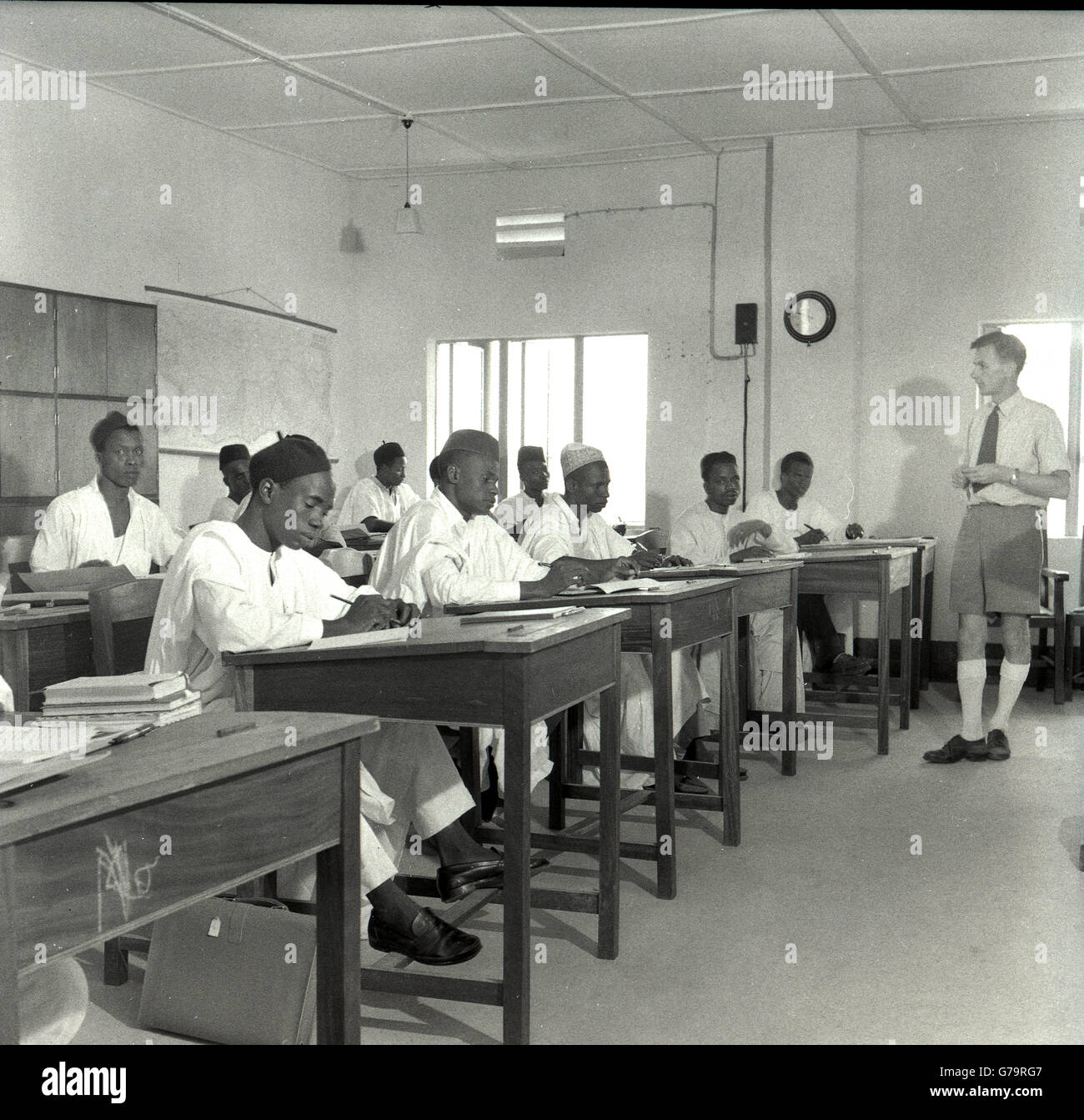
Photo Credit: The National Archives (UK) / CO Photographic Collection.
The Missionary Bastions: Roman Catholic and Anglican Colleges
Parallel to government and private initiatives, the “Mission Colleges” played a pivotal role in shaping the moral and academic character of the Warri youth;
St. Gregory’s and the Catholic Influence: The Roman Catholic Mission (RCM) established several schools in and around Warri. Their focus on “discipline and Latinate education” appealed to Itsekiri’s historical connection to Catholicism dating back to the 16th century.
Anglican (CMS) Contributions: The Church Missionary Society continued its legacy by upgrading primary foundations into secondary colleges. These schools were essential in producing the “clerks and civil servants” who managed the administrative machinery of the Warri port and the colonial district offices.
The “Girls’ Education” Milestone: Missionaries were the pioneers of female secondary education in Warri. By establishing girls’ colleges, they challenged the traditional view that “high-level intellectualism” was a male preserve, leading to the rise of the first generation of Itsekiri female professionals.
Curriculum and the Rise of the “Professional Elite”
The “Modern Educational Foundations” of Warri were characterized by a curriculum that prioritized “Global Competitiveness”;
The Classical and Scientific Balance: Students were drilled in English Literature, History, and Latin, as well as Mathematics and the Physical Sciences. This dual focus allowed Warri graduates to excel in “liberal professions” such as Law and in the emerging “technical sectors” of the oil and maritime industries.
Literary Societies and Debating Clubs: These colleges were incubators for “intellectual discourse.” Debating societies taught students the art of “rhetoric and logic,” skills that would later prove invaluable during the Nigerian nationalist movements and the subsequent political negotiations of the post-colonial era.
Examination Standards: By adhering to the Cambridge and West African Examination Council (WAEC) standards, Warri colleges ensured that their “intellectual output” was recognized globally, facilitating the migration of Itsekiri scholars to prestigious overseas universities.
Social Impacts: Education as a “Cultural Commodity”
In Warri, education became more than a tool for employment; it became a “mark of status” and a core component of the “modern Itsekiri identity”;
The Erosion of Class Barriers: The competitive entrance exams of Government College and Hussey College meant that the son of a “palm oil tapper” could sit beside the son of a “Chief.” Education became the “great equalizer” in the Delta.
Political Consciousness: These colleges were “hotbeds of nationalism.” The literate elite produced by these schools began to question the “monopoly of British authority,” leading to the formation of cultural and political unions that advocated for the rights of the Itsekiri and other Niger Delta minorities.
Urbanization and the “College Town” Effect: The presence of these institutions turned Warri into a “cosmopolitan melting pot.” Teachers and students from across Nigeria flocked to the city, contributing to a vibrant “intellectual and social nightlife” that defined Warri in the 1950s and 60s.
The Enduring Legacy of the Warri Colleges
The building of the first government and mission colleges in Warri was the “final cornerstone” in the construction of the Itsekiri commercial and intellectual empire. These institutions transformed the “monarchy-based literacy” of the 17th century into a “broad-based professional culture” that survives today. The graduates of Government College Warri, Hussey College, and the mission schools became the “human capital” that navigated Nigeria through its early years of independence. Even as the economy of Warri shifted toward petroleum, the “educational foundations” laid in the mid-20th century ensured that the people of the Benin River remained “intellectual gatekeepers,” proving that the most valuable resource of the Niger Delta was never just the oil beneath the ground, but the “knowledge cultivated in the classroom.”
Sources and references
- Adedapo, A. O. (1992). The History of the Baptist Mission in Nigeria. Baptist Press.
- Ajayi, J. F. A. (1965). Christian Missions in Nigeria, 1841-1891: The Making of a New Elite. Longman.
- Ayandele, E. A. (1966). The Missionary Impact on Modern Nigeria, 1842-1914. Longmans.
- Ikime, O. (1969). Niger Delta Rivalry: Itsekiri-Urhobo Relations and the European Presence 1884-1936. Longmans.
- Lloyd, P. C. (1963). The Itsekiri. International African Institute.
- Nair, K. K. (1972). Politics and Society in South Eastern Nigeria, 1841-1906. Cass.
- Sagay, I. (1980). The Itsekiri: A History of the Warri Kingdom. Togbi Press.
Cite this article
Discussion
Sign in to join the discussion
Comments are checked by an editor before they appear. Leave a source or a correction and it is read first.
Continue reading
Related histories
 Cultural HeritageEleven Days of Nwafor Ogidi: Inside the Festival Keeping an Old Igbo Tradition AliveRead history →
 Cultural HeritageIli Ji Nkpor Obododike: The Indigenous Agricultural Ritual CycleRead history →
 Cultural HeritageMusic and Drum Traditions: Tracing the “Igbo Drum” in the AmericasRead history →
No comments yet
Nothing has been approved on this record yet. Comments are checked by an editor before they appear, so one written now shows on this page after that check.