 Ozikoro
 Biography · Published history
Nathan Nwachukwu, Maxwell Maduka and Terrahaptix Industries and why Ndiigbo should invest in defense technology
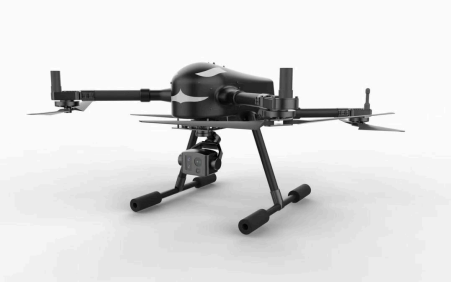
In the contemporary global landscape, the intersection of sovereignty, economic prosperity, and technological advancement is increasingly defined by a nation’s ability to defend its interests through innovation. For the Igbo people (Ndiigbo) of Southeastern Nigeria, a group historically characterized by “industrial ingenuity and a republican spirit,” the shift toward high-tech manufacturing is not a luxury but a necessity for survival. At the forefront of this new frontier are visionary entrepreneurs like Nathan Nwachukwu and Maxwell Maduka, the founders of Terrahaptix Industries. Their venture into the defense sector represents a “paradigm shift” from traditional trade and commerce toward the high-stakes world of autonomous weaponry and military hardware. This article examines the rise of Terrahaptix, the profiles of its founders, and the strategic imperative for Ndiigbo to pivot their vast investment capital toward defense technology as a means of ensuring regional stability and global relevance.
The written record

Photo Credit: Terrahaptix Industries / Press Room.
Historical context
The Architects of Innovation: Nathan Nwachukwu and Maxwell Maduka
The story of Terrahaptix is inextricably linked to the personal “ambition and technical prowess” of its founders, who represent a new generation of Igbo tech-pioneers;
Nathan Nwachukwu’s Vision: As the Chief Executive Officer of Terrahaptix, Nathan Nwachukwu has demonstrated a precocious understanding of the “global robotics market.” His approach is rooted in the belief that Africa should not merely be a consumer of defense tech but a primary manufacturer. His leadership focuses on the “democratization of autonomous systems,” making advanced defense tools accessible to local and international markets.
Maxwell Maduka’s Engineering Mastery: Serving as the technical backbone of the enterprise, Maxwell Maduka brings the “precision of modern engineering” to the table. His work involves the integration of Artificial Intelligence (AI) with physical hardware, ensuring that Terrahaptix products are not only durable but “intellectually superior” to traditional manual systems.
A Shared Heritage of Resilience: Both founders draw from the Igbo tradition of Igba-Boi (apprenticeship) and Nka na Uzụ (artistry and smithing), adapting these ancient concepts to the “digital and kinetic requirements” of the 21st-century defense industry.
Terrahaptix Industries: Transforming the Defense Landscape
Terrahaptix Industries is not just a startup; it is a “strategic asset” designed to solve complex security challenges through indigenous robotics;
- Autonomous Systems and Robotics: Terrahaptix specializes in the production of unmanned aerial vehicles (UAVs) and unmanned ground vehicles (UGVs). These systems are designed for “surveillance, reconnaissance, and tactical engagement,” reducing human risk in high-conflict zones.
- Low-Cost, High-Impact Manufacturing: One of the company’s core strengths is its ability to manufacture locally. By utilizing local supply chains and “modular design,” Terrahaptix can produce defense hardware at a fraction of the cost of Western counterparts, making it a “disruptive force” in the African defense market.
- AI Integration: The use of AI allows Terrahaptix platforms to operate in “GPS-denied environments.” This is crucial for modern warfare where electronic jamming is common, positioning the company at the cutting edge of “kinetic technology.”
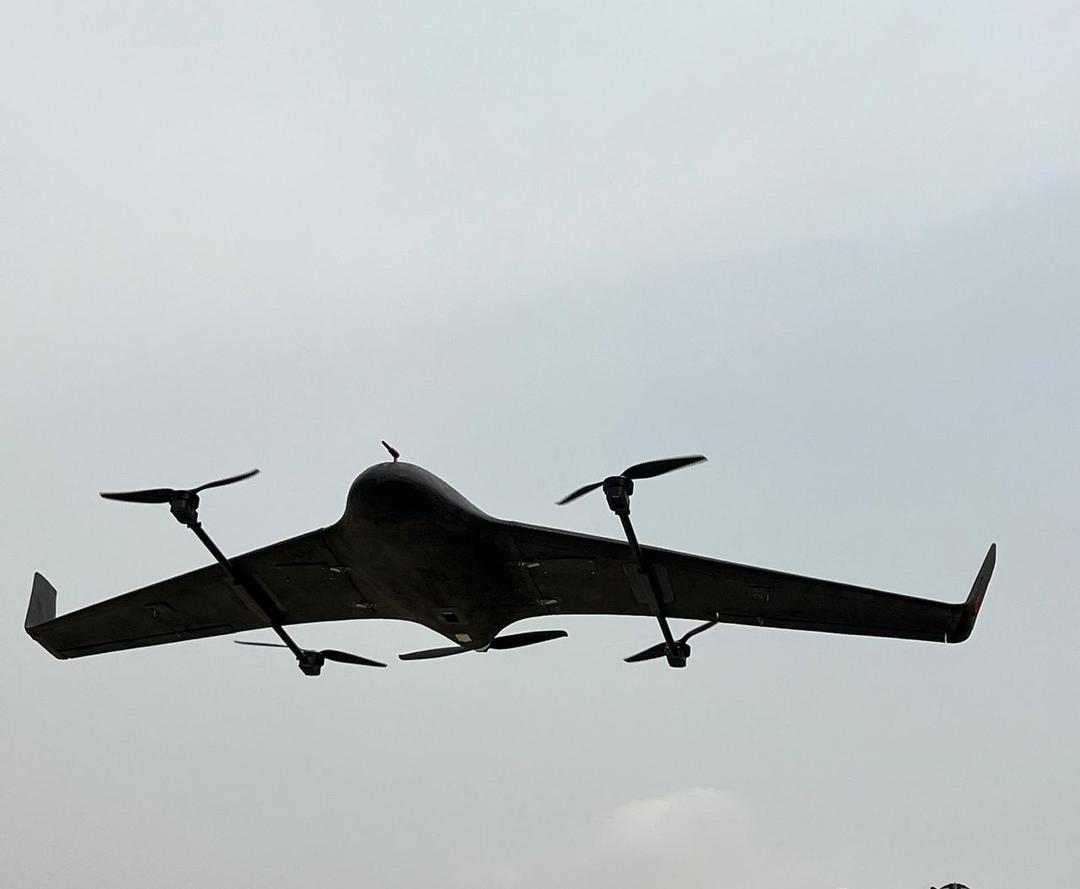
Photo Credit: Terrahaptix Industries / Operational Gallery.
The Strategic Imperative: Why Ndiigbo Should Invest in Defense Technology
For Ndiigbo, investing in defense technology is a “rational response” to the historical and current geopolitical realities of the Nigerian state and the broader African continent;
- Security as a Precondition for Development: No amount of investment in real estate or retail can survive in an environment of “chronic insecurity.” By funding defense tech, the Igbo business class (Ndi-Isi-Ichie) ensures that their regional investments are protected by “indigenous technological deterrents.”
- The Tradition of Military Engineering: During the Nigerian Civil War, Igbo scientists at the Research and Production (RAP) unit created the Ogbunigwe, a “legendary feat of improvised military engineering.” Investing in Terrahaptix and similar firms is a “restoration of this heritage,” moving from improvisation to standardized, global-scale production.
- Economic Diversification: The global defense market is worth trillions of dollars. For Ndiigbo to maintain their “economic dominance,” they must move beyond “import-export” and enter the “military-industrial complex,” which offers higher margins and long-term intellectual property (IP) value.
Defense Tech as a Catalyst for Regional Industrialization
Investment in companies like Terrahaptix has a “multiplier effect” on the broader economy of the Southeast;
- Job Creation for Engineers: The defense sector requires “high-skilled labor.” A thriving defense industry would stem the “brain drain” of Igbo engineers to Europe and America, providing them with high-paying roles in robotics, software development, and material science.
- Infrastructure Development: Defense manufacturing requires “consistent power and advanced logistics.” Investment in this sector naturally pulls along the development of smart factories and specialized industrial zones in cities like Aba, Nnewi, and Enugu.
- Technological Spillovers: Technologies developed for defense, such as “advanced sensors and robust telecommunications,” can be adapted for civilian use in agriculture, healthcare, and disaster management, creating a “virtuous cycle of innovation.”
Overcoming the “Trader Mentality”: A Call to Long-Term Capital
The greatest challenge to this transition is the “short-termism” prevalent in traditional Igbo commerce;
- From Turnover to R&D: Defense technology requires “long gestation periods” and heavy investment in Research and Development (R&D). Investors must understand that the “dividend of security” and IP ownership outweighs the quick profit of a container shipment.
- The Power of Syndicates: The Umunna and Imobi investment models can be modernized into “Venture Capital funds” specifically for defense. By pooling resources, Ndiigbo can fund the “capital-intensive” requirements of firms like Terrahaptix without relying on foreign debt.
- Policy Advocacy: Ndiigbo must use their “collective influence” to ensure that the regulatory environment in Nigeria supports indigenous defense firms, preventing the “bureaucratic strangulation” that often faces innovative startups.
The rise of Nathan Nwachukwu, Maxwell Maduka, and Terrahaptix Industries is a “clarion call” for a new era of Igbo excellence. It signals a move from being “merchants of the world” to being “architects of security.” For Ndiigbo, the choice is clear: continue to invest in vulnerable assets or build the “technological shield” that guarantees the safety of those assets. Defense technology is the “new oil,” and Terrahaptix is the prototype for a regional resurgence. By backing these young visionaries, Ndiigbo can ensure that their “legacy of ingenuity” is translated into “sustainable power.” The future belongs to those who can defend it, and through defense technology, Ndiigbo can secure a “sovereign and prosperous tomorrow.”
Sources and references
- Achebe, C. (1958). “Things Fall Apart”. London: Heinemann. (Contextualizing the traditional Igbo value for bravery and self-defense).
- Isichei, E. (1976). “A History of the Igbo People”. London: Macmillan.
- Nzimiro, I. (1972). “Studies in Ibo Political Systems: Chieftaincy and Politics in Four Niger States”. University of California Press. (For historical context on Igbo socio-political resilience).
- Ogbudinkpa, R. N. (1985). “The Economics of the Nigerian Civil War and Its Prospects for National Development”. Fourth Dimension Publishers. (Discussing the RAP unit and the Ogbunigwe).
- Terrahaptix Industries. (2025). “Official Company Profile and Robotic Capabilities Report”.
- Uche, C. U. (2001). “The Youth and Economic Growth in Igboland”. Journal of Modern African Studies.
Cite this article
Discussion
Sign in to join the discussion
Comments are checked by an editor before they appear. Leave a source or a correction and it is read first.
Continue reading



No comments yet
Nothing has been approved on this record yet. Comments are checked by an editor before they appear, so one written now shows on this page after that check.