 Ozikoro
 Ethnohistory · Published history
Nsibidi: The Ancient Ideographic Script of the Eastern Igboid and Cross River Peoples
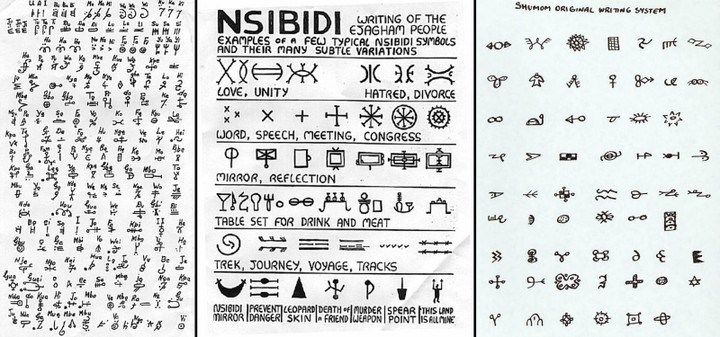
When people talk about African writing systems, they often jump straight to “hieroglyphics” or the Ethiopian “Ge’ez” script. But long before Western contact and long before many African societies adopted alphabetic writing, the Eastern Igboid and Cross River peoples had their own complex visual communication system known as Nsibidi (sometimes spelled Nchibiddi or Nshibiri). This ancient ideographic script used by groups such as the Ejagham, Efik, Ibibio, and some Igbo communities, was more than just writing. It was a full cultural system tied to law, spirituality, aesthetics, and secret societies.
The written record
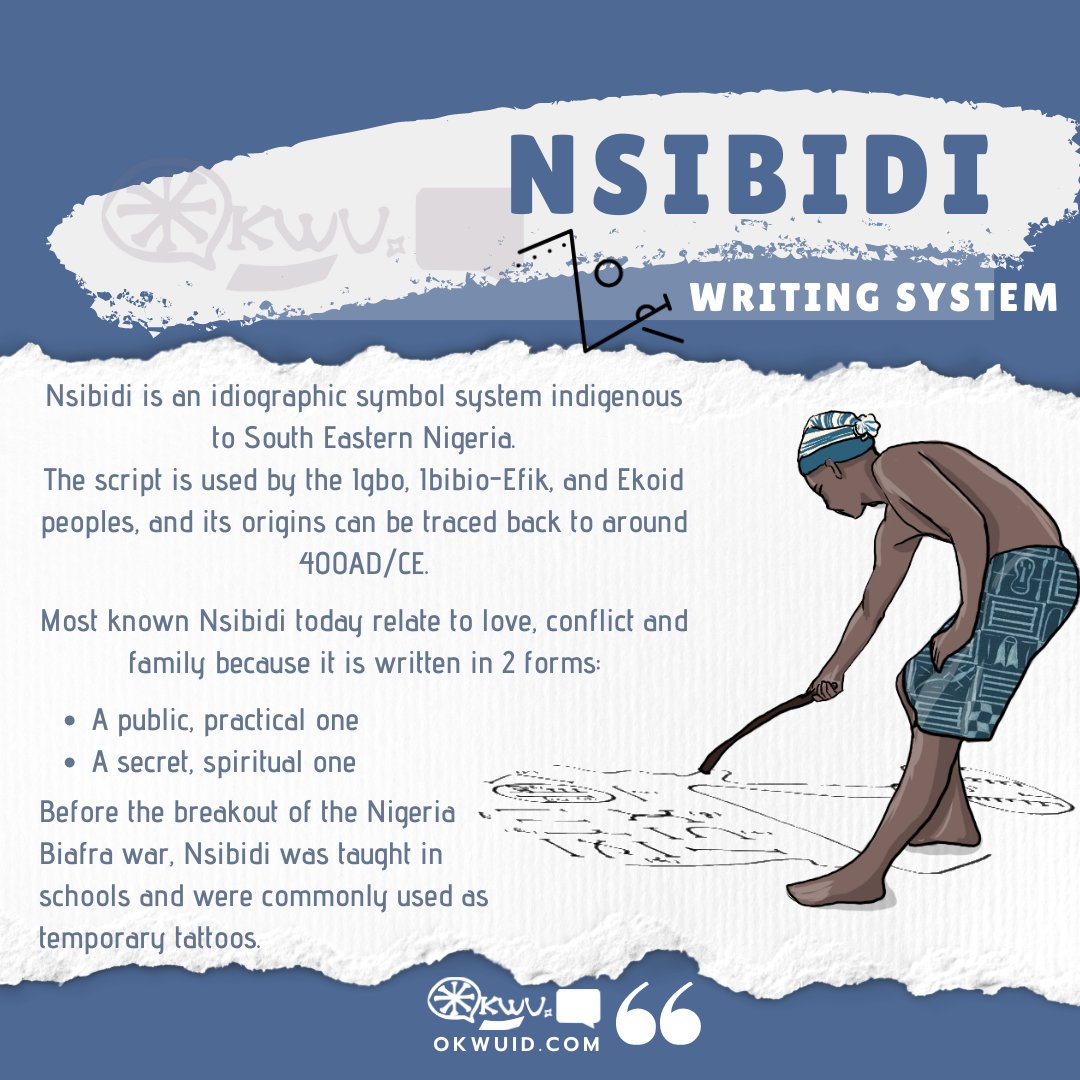
Today, Nsibidi has become a symbol of cultural recovery. It appears in fashion, research, entertainment, murals, tattoos, and even in global pop culture. But behind the modern revival lies a centuries-old tradition with deep meaning.
Origins of Nsibidi
Historical context
Most scholars trace Nsibidi to the Ejagham people of present-day Cross River, Cameroon, and parts of southeastern Nigeria. From there, it spread across neighboring ethnic groups, Efik, Ibibio, and into the Eastern Igboid communities such as Abiriba, Ohafia, and Arochukwu.
There is no universally agreed date of origin, but archaeological and oral traditions suggest it existed before the 16th century, long predating European arrival. Some researchers even argue that Nsibidi may be more than a thousand years old, based on its complexity and wide diffusion.
In these societies, Nsibidi was not merely decorative. It was a system for recording relationships, documenting legal agreements, marking sacred spaces, and expressing emotions visually. Early colonial officers who observed it called it “the native writing of the secret societies”, though this label doesn’t fully capture its richness.
A lot of people think Nsibidi is an alphabet. It’s not.
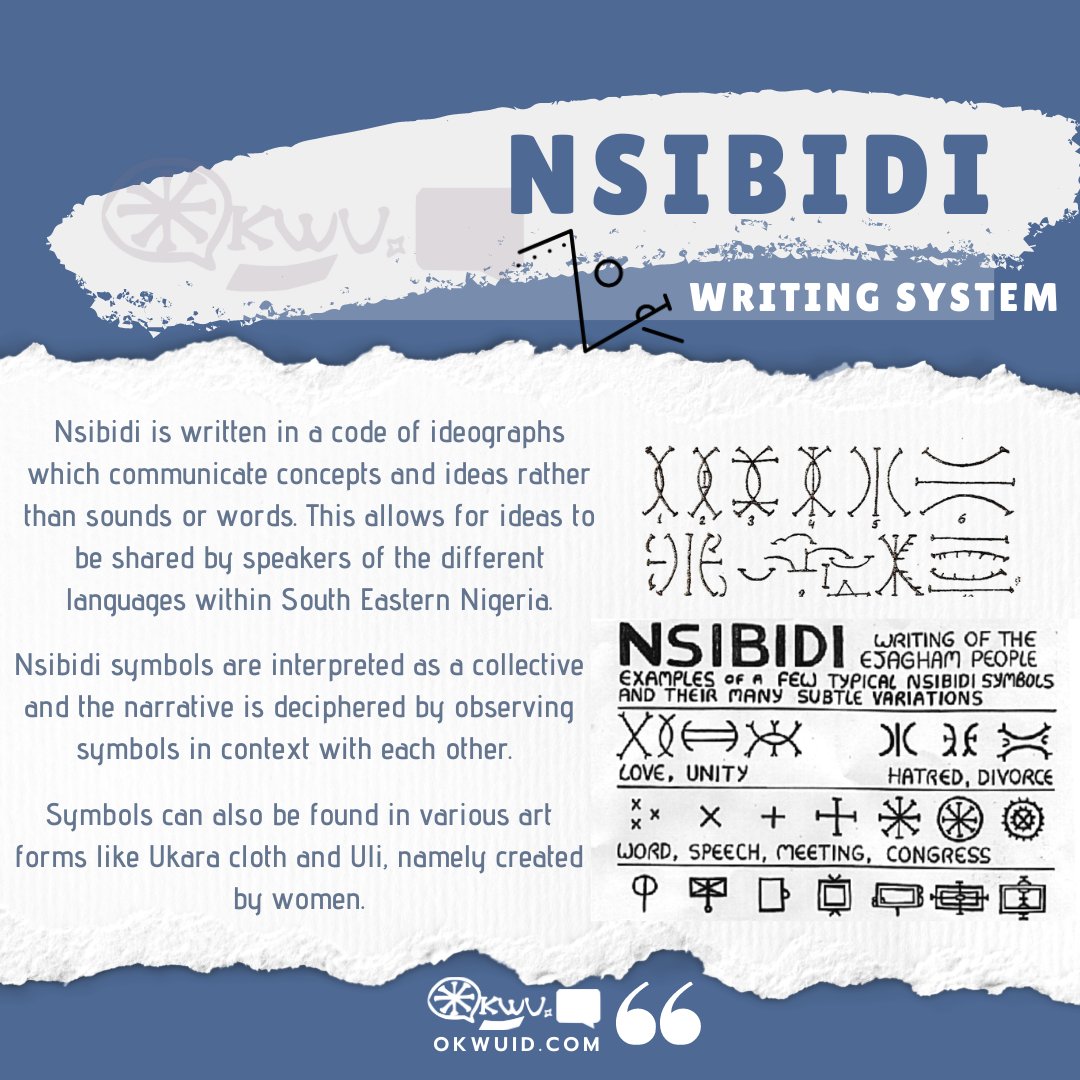
Nsibidi is an ideographic and pictographic system, meaning its signs represent ideas, actions, objects, or symbolic concepts and not letters or sounds.
Some signs are literal, such as:
The sign for “two people meeting”
The sign for “house”
The sign for “love between a man and woman”
Others are abstract, such as:
Symbols representing judgment or settlement of disputes
Symbols used in initiation rites
Symbols marking oaths, declarations, or alliances, Interestingly, many Nsibidi signs are animated, they show motion or action. For example, a sign might depict two figures shaking hands, dancing, or disputing.
One reason Nsibidi didn’t become a mass literacy tool was because much of it was controlled by secret societies, especially the Ekpe (Ngbe/Ukpe) society of the Cross River region.
The Ekpe society used Nsibidi for:
Initiation
Record-keeping
Laws and judgments
Communication among members
Ceremonial performances.
Some forms of Nsibidi were public, used in everyday settings and accessible to anyone in the community. But the deeper, spiritual, and esoteric versions were restricted. These might represent coded rituals, punishments, secret laws, or messages only members could interpret.
Because colonial governments misunderstood these societies, Nsibidi was sometimes described as “magic writing,” which gave it a mysterious aura but also contributed to its decline.
But beyond the secret societies, Nsibidi played a role in everyday communication:
1. Courtship and Relationships
Lovers exchanged messages written on calabashes, walls, mats, or even on their bodies. Some signs expressed affection, jealousy, promises, or heartbreak.
2. Clothing and Body Art
Nsibidi signs appeared on textiles, masquerade costumes, pottery, and ceremonial body paintings. In some communities, women used Nsibidi during special dances or festivals.
3. Architecture and Decoration
Compound walls, shrines, meeting houses, and gates were decorated with Nsibidi motifs. These were often used to mark authority, blessings, or protection.
4. Legal Agreements
Some communities used Nsibidi to mark land boundaries or record marriages, debts, or settlements, acting almost like “contracts.”
5. Performance Art
Masquerades reenacted Nsibidi signs through dance movements, turning the script into a live performance.
Colonial Suppression and Decline
The arrival of European missionaries and colonial institutions had a major impact. Because Nsibidi was closely tied to indigenous religion, Europeans considered it “pagan” or “fetish” and discouraged its use. The Ekpe society was pressured, and public display of Nsibidi declined.
Western alphabetic literacy eventually replaced many indigenous art-writing traditions. By the late 20th century, Nsibidi had become endangered, but not lost.
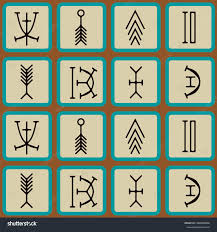
photo-credit-shutterstock
Nsibidi’s Revival in Modern Times
The last 20 years have seen a beautiful resurgence of interest in Nsibidi.
1. Academic Research
Scholars of African linguistics, semiotics, and archaeology now study Nsibidi as part of pre-colonial African intellectual history. Universities in Nigeria and abroad include it in African studies programs.
2. Popular Culture
Nsibidi appears in:
Nollywood films
Murals and embroidery
Tattoos
Book covers
Cultural festivals
Contemporary artworks
Notably, the Ekpe-like “Dora Milaje” symbols in Black Panther sparked new global curiosity.
3. Cultural Preservation Movements
Igbo, Efik, and Ejagham groups across West Africa and the diaspora now hold workshops and exhibitions to teach Nsibidi, stressing that it is part of a shared regional heritage.
4. Digital Archiving
African artists and programmers have developed Nsibidi apps, typefaces, and digital libraries. Some are campaigning for Nsibidi to be added to Unicode so it can be typed on computers and smartphones globally.
For many young Africans, Nsibidi is not just an ancient script, it’s a reminder of cultural sophistication.
It represents:
A pre-colonial knowledge system that survived centuries
A visual language that told stories about love, law, society, and spirituality
A symbol of identity, especially for Igbo, Efik, Ibibio, Ejagham, and other Cross River peoples
A challenge to the myth that “Africans had no writing before Europeans came”
Most importantly, Nsibidi shows that African societies had systems for documentation, justice, creativity, and communication long before Western contact. It is both historical and contemporary, a bridge between past and present.
Nsibidi is one of Africa’s most fascinating indigenous writing systems which is rich, symbolic, and layered with meaning. From its origins among the Ejagham to its adoption by Igbo and Cross River communities, it served as a visual archive of life, law, conflict, love, and spirituality. Although colonialism pushed it underground, the script is now experiencing a renaissance. Its revival shows a growing awareness that African knowledge systems matter and deserve preservation.
Ultimately, Nsibidi is more than a script. It is a cultural memory, a philosophy written in symbols, and a testimony to the creativity of the Eastern Igboid and Cross River peoples.
Sources and references
- Afigbo, A. E. (1981). Ropes of sand: Studies in Igbo history and culture. Oxford University Press.
- Macgregor, O. (1909). Some notes on Nsibidi. Journal of the Royal Anthropological Institute, 39(1), 209–219.
- Nair, K. (1972). Politics and society in sout heastern Nigeria, 1841–1906. Frank Cass.
- Talbot, P. A. (1912). The life and work of Ibibio. Oxford University Press.
Cite this article
Continue reading
Related histories
 EthnohistoryGbam, Chai, Ewo: How Igbo Expressions Became the Language of Nigerian Pop CultureRead history →
 EthnohistoryAro Merchant Network: Historical Trade Integration in the Cross-Niger RegionRead history →
 EthnohistoryTransition to Commodities in the aro confederacy(e.g., Palm Oil, Ivory, Cloth)Read history →
No comments yet
Nothing has been approved on this record yet. Comments are checked by an editor before they appear, so one written now shows on this page after that check.