 Ozikoro
Cultural Heritage · Published history
Odinani and the Igboid Cosmos: The Traditional Religious Worldview
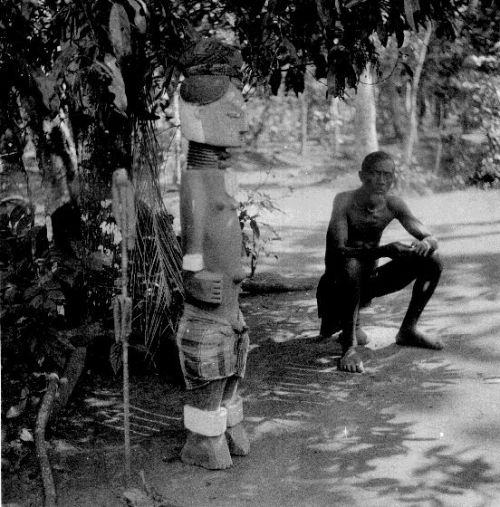
Odinani is the indigenous religious and philosophical worldview of the Igbo people of southeastern Nigeria. More than a religion, it is a holistic system that weaves together spirituality, morality, cosmology, natural law, and community identity. The Igbo see existence as a dynamic interaction between the physical and metaphysical realms, with humans playing a central role as participants in a morally ordered universe.
The written record
Historical context
The Supreme Being: Chukwu/Chiukwu
At the heart of the Igbo worldview is Chukwu (or “Chiukwu”), the Almighty and transcendent creator. The name derives from “Chi” (spirit/source) and “Ukwu” (great), signifying “The Great Source.” Chukwu is believed to have created the universe, moral order, time, and life itself. Unlike in some hierarchical religions, Chukwu is often perceived as too vast and supreme for constant, direct interaction, which is why spiritual intermediaries play vital roles in daily life.
Though transcendent, Chukwu manifests through different aspects, such as:
Chineke – “The Creator God,” associated with creation.
Chi – the personal divine fragment given to each individual.
Okike – the creative power and principle of existence.
In this worldview, humans are not separate from the divine; rather, they live in cooperation with divine forces through moral behavior and spiritual alignment.
The Igboid Cosmos: Structure of Reality
The Igbo cosmos is typically divided into three interrelated realms, all interconnected through spiritual pathways:
1. Eluigwe (The Sky/Heavenly Realm);
This is the abode of Chukwu and major deities. It is also the origin of human destiny. Many Igbo myths describe how spirits and humans once lived in close communication with Eluigwe before cosmic separation occurred through moral offenses.
2. Ala (The Earthly Realm);
Ala (the Earth) is both a physical space and a goddess. She is the guardian of morality, fertility, kinship, and justice. The earthly realm is where humans live out their destinies (akaraka) and where moral actions produce consequences. Everything that concerns community, land, and life falls under Ala’s jurisdiction.
3. Ani Mmuo (The Spirit World);
This invisible world houses ancestors, spirits, and various metaphysical forces. It mirrors the human world and interacts with it constantly. The spirit realm is neither distant nor abstract; it is immediately accessible through divination, dreams, intuition, or spiritual sensitivity.
Chi: The Personal Divine Essence;
One of the most distinctive ideas in Odinani is the concept of Chi, often called “personal god,” “spirit double,” or “individual destiny.” Chi is the unique spark of Chukwu implanted in each person before birth. It determines a person’s purpose, potential, and life path.
The Igbo adage “Onye kwe, Chi ya ekwe” (“If one agrees, his personal god agrees”) expresses the balance between personal effort and divine support. The Igbo believe success comes from cooperation between human will and one’s Chi, while misalignment results in confusion, misfortune, or lack of progress.
Divinities (Alusi) and Spiritual Forces
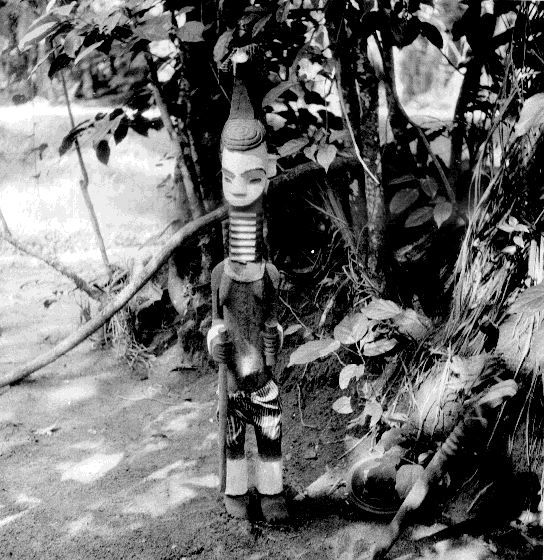
To maintain harmony between humans and the divine order, Odinani recognizes a complex pantheon of Alusi (also called Arusi or Mmụọ). These are spiritual beings created by Chukwu to govern various aspects of life and nature. Some major Alusi include:
Ala – Earth goddess of morality, fertility, and justice.
Amadioha – god of thunder, justice, and truth; enforcer of moral order.
Idemili – guardian of water, purity, and sacred oaths.
Agwu – spirit of divination, creativity, illness, and madness.
Ekwensu – spirit of negotiation, strategy, and chaos (not the “devil,” contrary to colonial reinterpretations).
These divinities act as intermediaries between humans and the Supreme Being, ensuring the balance of cosmic forces.
Ancestors (Ndichie) and the Living–Dead
In the Igbo worldview, death does not end existence; it transforms it. Honored ancestors (Ndichie) continue as active members of the family and community. They are believed to protect the living, guide moral behavior, and transmit blessings. To qualify as an ancestor, one must have lived a morally upright life, died a good death, and received the proper burial rites.
The relationship between the living and the ancestors reinforces the Igbo principle that community extends across both visible and invisible realms.
Moral Order: Omenala and Ofo Na Ogu
Odinani has a strong moral foundation grounded in Omenala,the customs, norms, and moral rules of the society. These laws reflect the will of Ala and the ancestors. Concepts like Ofo na Ogu (truth and innocence) guarantee justice and provide spiritual protection to those who speak truthfully.
Violations of major moral laws (nso ala) such as incest, murder, sacrilege, or desecrating farmland, are seen as offenses against Ala and threaten the wellbeing of the entire community. Such acts require public cleansing and reconciliation.
Thus, morality in Odinani is not merely personal; it is communal, cosmic, and spiritually binding.
Divination and Communication with the Spirit World
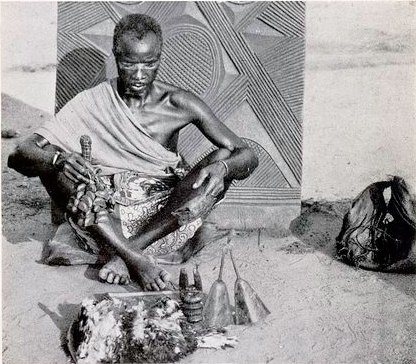
Because the cosmos is interconnected, communication between realms is both possible and necessary. Divination, especially through the Dibia (sacred healer/diviner) is central to Odinani. The Dibia communicates with spirits to diagnose problems, interpret destiny, prescribe sacrifices, or offer spiritual remedies.
Some tools used in divination include:
Afa or Iha – oracle or divination system
Kolanut (oji) – for prayers and communion
Sacred objects or symbols
Dream interpretation
Divination ensures that human actions remain aligned with cosmic expectations.
Sacred Places, Shrines, and Rituals
Odinani includes a variety of sacred spaces, such as:
Mba Alusi – shrines of divinities
Sacred groves and forests
Riverbanks and waterfalls
Ancestral compounds
Market squares used for community rituals. Rituals often involve offerings, prayers, dances, masquerades (mmanwụ), and festival celebrations honoring gods, ancestors, or community events. These practices reinforce harmony between humans, nature, and the supernatural world.
Odinani remains one of Africa’s most profound indigenous religious systems, offering a sophisticated understanding of the universe and humanity’s role within it. The Igboid cosmos is built on balance between spirit and matter, humans and ancestors, morality and destiny. Though modernity and globalization have influenced Igbo life, the principles of Odinani continue to shape identity, ethics, and spirituality across Igboland and the diaspora. Its emphasis on personal destiny, communal responsibility, and cosmic harmony reflects a worldview that remains deeply relevant in contemporary society.
Sources and references
- Arinze, F. A. (1970). Sacrifice in Igbo religion. University Press.
- Metuh, E. I. (1981). God and man in African religion. Geoffrey Chapman.
- Nwoga, D. I. (1984). The supreme God in Igbo traditional religion. Journal of Religion in Africa, 15(1), 1–27.
- Uchendu, V. C. (1965). The Igbo of Southeast Nigeria. Holt, Rinehart and Winston.
Cite this article
Discussion
Sign in to join the discussion
Comments are checked by an editor before they appear. Leave a source or a correction and it is read first.
Continue reading
Related histories
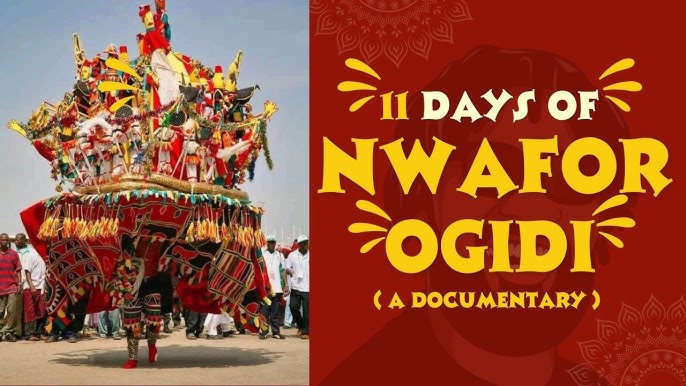 Cultural HeritageEleven Days of Nwafor Ogidi: Inside the Festival Keeping an Old Igbo Tradition AliveRead history →
 Cultural HeritageIli Ji Nkpor Obododike: The Indigenous Agricultural Ritual CycleRead history →
 Cultural HeritageMusic and Drum Traditions: Tracing the “Igbo Drum” in the AmericasRead history →
No comments yet
Nothing has been approved on this record yet. Comments are checked by an editor before they appear, so one written now shows on this page after that check.