 Ozikoro
Cultural Heritage · Published history
Oil and Tradition: Navigating Modernity in the Kalabari Communities
The Kalabari people of the Niger Delta region of Nigeria have long been recognized for their rich cultural heritage, complex kinship systems, and historically significant maritime economy. However, the discovery and expansion of oil exploration in Rivers State have dramatically reshaped their economic landscape, cultural values, and social structures. As the forces of modernization accelerate, the Kalabari communities find themselves negotiating the tension between preserving traditional practices and adapting to the demands of a rapidly changing world.
The written record
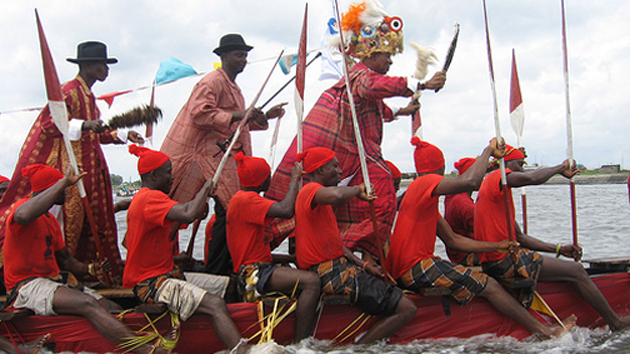
Photo credit: The guardian Nigerian News.
Historical context
Historical Overview of Kalabari Culture
The Kalabari Kingdom, with key towns such as Buguma, Abonnema, and Bakana, has historically built its economy around fishing, canoe-building, salt production, and long-distance trade. Traditional institutions such as the Amanyanabo (king), the Opu-Ogbo (council of chiefs), and various age-grade systems have played central roles in governance and dispute resolution.
Cultural practices ranging from elaborate marriage rites to masquerade performances and festivals, have preserved communal values for generations. These traditions have served as what Finnegan describes as “the living archive of a people,” embedding history, spirituality, and moral principles within everyday life.
The Rise of Oil and Economic Transformation
The discovery of crude oil in the Niger Delta in the late 1950s brought sweeping economic opportunities but also created profound challenges for indigenous communities. Oil companies established operations around Kalabari waterways, resulting in employment, increased government presence, and new infrastructures. For many locals, the oil industry introduced modern occupations and lifestyles previously unattainable in traditional fishing economies.
However, the promise of wealth also created disparities. According to Watts, oil development in the Niger Delta has often resulted in “growth without development,” producing revenue but undermining local livelihoods. In Kalabari communities, this paradox is deeply felt: while some families become connected to the oil economy, many others struggle with the decline of traditional occupations.
Environmental Impacts and Cultural Displacement
Perhaps the most significant challenge posed by oil exploration is environmental degradation. Kalabari communities depend heavily on fishing creeks, mangroves, and rivers for food and cultural activities. Oil spills, gas flaring, and industrial waste have damaged these ecosystems, reducing fish populations and contaminating water sources.
As a result, traditional fishing, the backbone of Kalabari identity, is under threat. Children grow up with fewer opportunities to learn ancestral fishing techniques, canoe-carving skills, or water-based rituals that have historically defined their heritage. Joab-Peterside notes that many Niger Delta communities experience cultural “unrooting” as environmental changes disrupt the practices tied to place and memory.
Shifts in Traditional Governance and Leadership
Modernization driven by oil wealth has also affected Kalabari leadership structures. Traditionally, the authority of the Amanyanabo and chieftaincy councils was grounded in lineage, ritual knowledge, and communal respect. Today, political influence, economic power, and connections to multinational corporations sometimes overshadow these traditional criteria.
Oil-related conflicts, especially disputes over land rights, compensation, and local contracts, frequently challenge the authority of chiefs. The monetization of community decisions has led to a shift from consensus-based governance to politically influenced negotiations. As Ikelegbe argues, oil extraction in Nigeria often transforms traditional authority into “intermediaries between the state and corporations,” weakening their cultural legitimacy.

Photo credit: BellaNaija Weddings
Cultural Continuity in the Midst of Change
Despite the pressures of modernity, Kalabari traditions continue to demonstrate resilience. Key cultural practices remain strongly observed:
1. Traditional Marriage Rites: Kalabari marriage ceremonies, rich with rituals, gifts, and symbolic foods, continue to thrive. Even families with strong modern or Western influence still uphold the traditional stages, emphasizing kinship bonds and communal involvement.
2. Festivals and Masquerades: Festivals such as Ekine and Ogbo remain vital. They reinforce identity and provide a platform for performing oral histories, songs, and sacred dances.
3. Language Preservation: Although English increasingly dominates formal communication, Kalabari language continues to be spoken in homes, markets, and cultural gatherings. Efforts to document and teach the language in community settings further strengthen its continuity. These elements show that culture, while evolving, retains its core even within a modern petroleum-powered environment.
Youth, Identity, and Modern Aspirations
Young people in Kalabari communities are at the heart of the negotiation between tradition and modernization. Exposure to global media, education, and urban lifestyles shapes their aspirations, often pulling them away from traditional occupations. Many youths prefer careers in government, oil companies, entertainment, or technology to fishing or trading.
Yet, there is also a growing cultural revival movement among Kalabari youth. Social media campaigns, digital storytelling, and cultural clubs have emerged to celebrate identity. These modern platforms allow the younger generation to reimagine tradition in ways that feel relevant while still honoring ancestral values.
To effectively navigate the clash between oil-driven modernity and traditional values, several approaches are recommended:
1. Community-Centered Environmental Policies: Stricter environmental regulations and transparent compensation systems must be implemented to protect Kalabari waterways and livelihoods.
2. Strengthening Cultural Education: Schools in Kalabari areas should incorporate local history, language, and traditions into their curriculum to bridge generational gaps.
3. Inclusive Governance: Traditional leaders, youth groups, women, and local activists should be included in oil-development negotiations to ensure fair representation.
4. Promoting Sustainable Livelihoods: Programs that support eco-friendly fishing, local crafts, and tourism can reduce overdependence on oil and preserve cultural practices.
5. Digital Documentation: Creating digital archives, recording elders, and online platforms for cultural expression can help preserve heritage for future generations. These strategies align with broader global efforts to protect indigenous communities navigating the complexities of modernizations.
Kalabari communities stand at a crossroads where tradition and modernity intersect, collide, and reshape one another. Oil development has brought new opportunities but also substantial cultural and environmental challenges. Yet the resilience of Kalabari traditions, expressed through language, festivals, marriage rites, and governance demonstrates that culture is not static but adaptive.
To safeguard the identity of the Kalabari people, deliberate efforts are needed to harmonize the economic realities of the oil age with the values embedded in their rich heritage. Ultimately, the future of the Kalabari lies not in choosing between oil and tradition but in crafting a balanced path where modern progress reinforces, rather than replaces, cultural continuity.
Sources and references
- Finnegan, R. (201:2). Oral literature in Africa. Open Book Publishers
- Ikelegbe, A. (2005). The economy of conflict in the oil-rich Niger Delta region of Nigeria. Nordic Journal of African Studies, 14(2), 208–234.
- Joab-Peterside, S. (2013). The paradox of “local” resistance: Oil, land rights, autonomy, and resistance in the Niger Delta. African Affairs, 112(448), 1–23.
- Watts, M. (2008). Curse of the black gold: 50 years of oil in the Niger Delta. Powerhouse Books.
Cite this article
Discussion
Sign in to join the discussion
Comments are checked by an editor before they appear. Leave a source or a correction and it is read first.
Continue reading
Related histories
 Cultural HeritageEleven Days of Nwafor Ogidi: Inside the Festival Keeping an Old Igbo Tradition AliveRead history →
 Cultural HeritageIli Ji Nkpor Obododike: The Indigenous Agricultural Ritual CycleRead history →
 Cultural HeritageMusic and Drum Traditions: Tracing the “Igbo Drum” in the AmericasRead history →
No comments yet
Nothing has been approved on this record yet. Comments are checked by an editor before they appear, so one written now shows on this page after that check.