 Ozikoro
Cultural Heritage · Published history
Ọjị Ndigbo: The Symbolism of the Kola Nut in Igbo Weddings
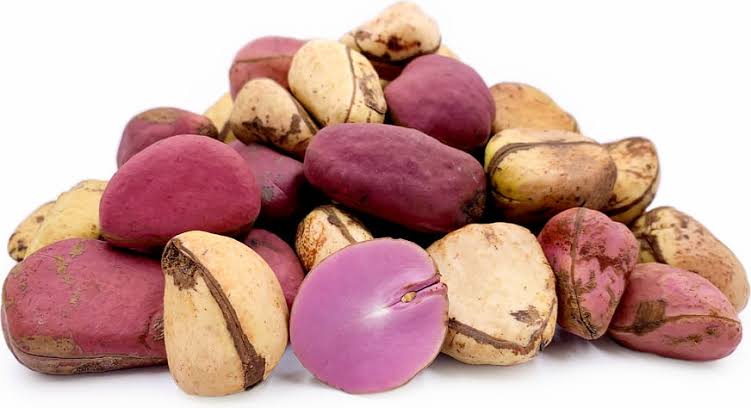
In every traditional Igbo gathering, from weddings to festivals, one symbol stands above all: ọjị (the kola nut). It is more than a fruit; it is the heart of Igbo hospitality, a token of peace, unity, and ancestral blessing. No ceremony, especially a marriage, begins without it. As the elders say: “Onye wetara ọjị, wetara ndụ” (He who brings kola brings life).
The written record
Historical context
The Ritual of Welcome
In Igbo weddings, the first act of any visit or negotiation begins with the presentation of the kola nut. Before words are exchanged, ọjị opens the path to peace. It is typically presented by the bride’s family, often by the eldest man or the father of the bride, as a gesture of honour and hospitality.
The kola nut is offered alongside alligator pepper (ose oji), garden egg (añara), and palm wine, each symbolising joy, truth, and abundance. Once presented, an elder blesses it, invoking Chukwu (God), the ancestors (ndichie), and the spirits of the land (mmụọ ala). This prayer sanctifies the union between two families, reminding everyone that marriage in Igbo tradition is not just between two individuals but between two umunna (lineages).
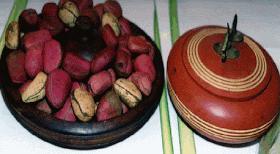
Source: www.oraukwu.com
The Breaking of Ọjị
After the prayers, the elder raises the kola nut and declares:
“Ọjị eze di n’aka eze.”
(The king’s kola nut belongs to the king.)
He then breaks the nut carefully, paying attention to the number of lobes, as each carries symbolic meaning:
- Four lobes – completeness and balance
- Five lobes – fertility and prosperity
- Six lobes – divine favour (a rare blessing)
The kola is then shared first with the groom’s family, then with other guests. This act represents the sharing of goodwill and the creation of unity. As the kola moves from hand to hand, strangers become kin, and the ceremony officially begins.
“Mmanya ahụ bụ nke anyị niile.”
(This wine belongs to us all.)
The kola nut and palm wine together bind everyone into the sacred web of community.
Sacred Symbolism
To the Igbo, ọjị embodies ndu, udo na njikọta (life, peace, and unity). Its breaking sanctifies every gathering and signals sincerity. During traditional weddings, the kola nut reminds both families that love must be grounded in peace and mutual respect. “Ọjị anaghi eri n’ike; ọ na eri n’udo” (The kola nut is not eaten in haste, but in peace). Accepting kolanut means accepting goodwill. Refusing it, however, is considered a grave insult; a rejection of peace.
During ịgba nkwụ (traditional marriage), the kola nut remains at the centre of the ceremony, symbolising the continuity of life, respect, and cultural heritage.
Ancestral Roots and Modern Relevance
Even in modern Igbo weddings, whether held in Enugu, Abuja, or the diaspora, the ritual of the kola nut endures. It connects present generations to their ancestors and reminds couples that every home must begin with peace.
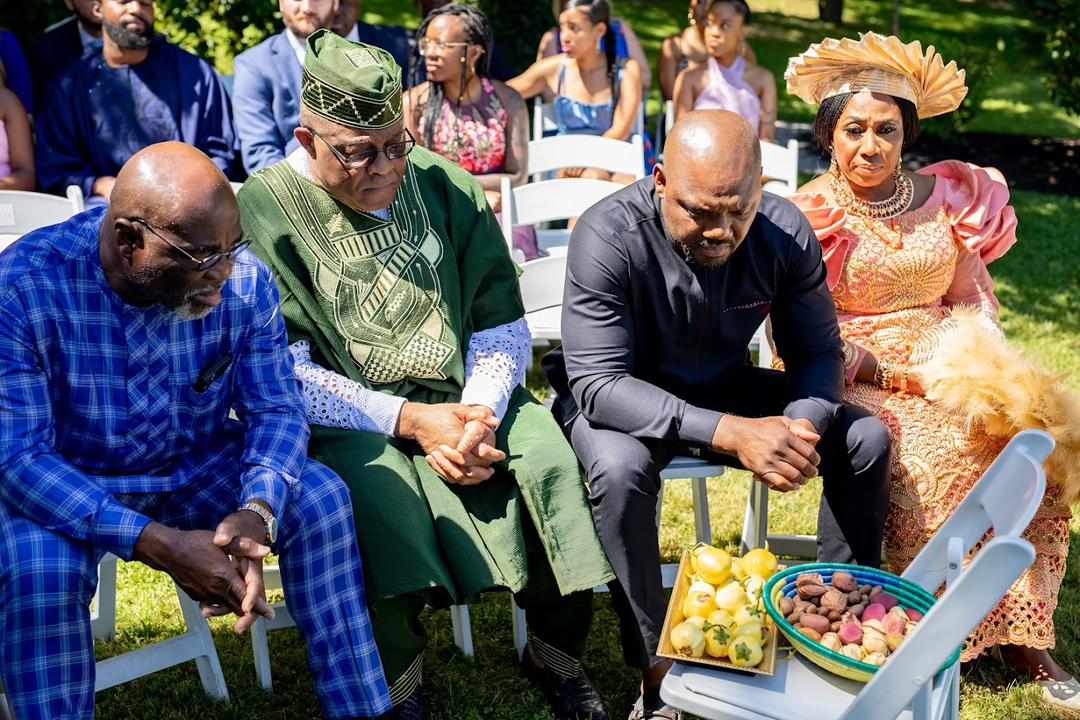
Photo Credit: EventDesignByBE.
Some families still keep a small plate of kola nuts in their homes as a sign that goodwill and life reside there. “Ọjị bụ ọjị n’agbanyeghị ebe e ji ya” (Kola nut remains kola nut, no matter where it is broken). The tradition may evolve, but its essence, unity, respect, and community remain timeless.
Ọjị Ndigbo is more than a ritual object; it is a philosophy. It teaches that every bond must begin with peace, that love must be shared, and that family is sacred. When elders break kola and call on Chukwu to bless a new couple, they reaffirm that marriage is both earthly and divine. “Nwoke ruru ogo, ọjị ekpughekwara ya” (When a man attains honour, the kola nut reveals it).
In every Igbo wedding, the kola nut speaks; a silent reminder that to love, to host, and to unite is to live in the true spirit of the Igbo people.
Sources and references
- Event Design by BE. (2023). Exploring Igbo wedding traditions: The sacred role of the kola nut. Retrieved from https://www.eventdesignbybe.com/exploring-igbo-wedding-traditions-the-sacred-role-of-the-kola-nut/
- Echeruo, M. J. C. (1979). Igbo traditional hospitality: Meaning and practice. University of Nigeria Press.
- Nwoga, D. I. (1984). The symbols of unity in Igbo culture. Nsukka: Fourth Dimension Publishers.
Cite this article
Discussion
Sign in to join the discussion
Comments are checked by an editor before they appear. Leave a source or a correction and it is read first.
Continue reading
Related histories
 Cultural HeritageEleven Days of Nwafor Ogidi: Inside the Festival Keeping an Old Igbo Tradition AliveRead history →
 Cultural HeritageIli Ji Nkpor Obododike: The Indigenous Agricultural Ritual CycleRead history →
 Cultural HeritageMusic and Drum Traditions: Tracing the “Igbo Drum” in the AmericasRead history →
No comments yet
Nothing has been approved on this record yet. Comments are checked by an editor before they appear, so one written now shows on this page after that check.