 Ozikoro
Cultural Heritage · Published history
Okigbo at Makerere: Poetry, Power, and the CIA’s Cultural Cold War
A na-agba ọsọ ndụ, ma onye na-agba ọsọ n’ezie, bụ onye maara ebe ọ na-aga(In the race of life, only he who knows his destination truly runs).
The written record
Historical context
The Stage at Makerere, 1962
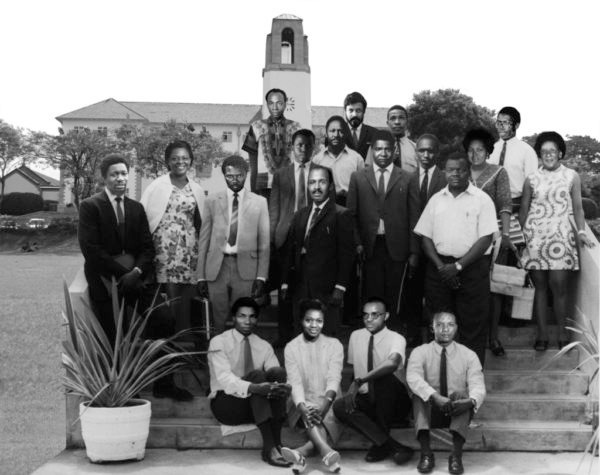
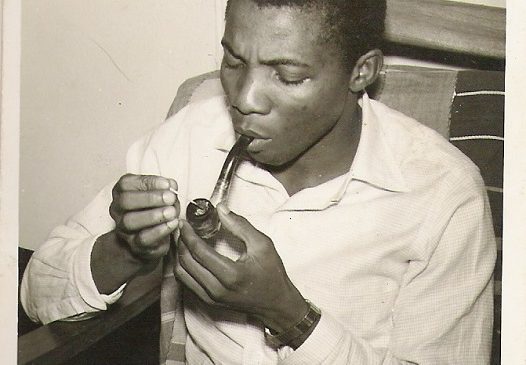
In June 1962, the Makerere Writers’ Conference in Kampala gathered the brightest young minds of a newly decolonized Africa. Among them stood a quiet, sharp-faced Nigerian poet Christopher Ifekandu Okigbo, a man who spoke few words but whose poetry thundered with rhythm and rebellion.
Makerere, the intellectual heart of East Africa, became the crossroads where African writers debated what it meant to be both modern and African. Chinua Achebe, Ngũgĩ wa Thiong’o (then James Ngugi), Ezekiel Mphahlele, and others came armed with ideas that would shape postcolonial thought.
But what no one in that audience could have known was that behind the cultural exchange and fiery discussions, another invisible hand, the CIA’s cultural arm, the Congress for Cultural Freedom (CCF) quietly sponsored much of it.
The American Cold War strategy sought to win the hearts of African intellectuals by financing conferences, journals, and art programs that promoted “freedom of expression” over Soviet-style collectivism.
Okigbo, ever the intuitive artist, sensed the undertones of manipulation. Yet, as he read his poems, he wasn’t thinking of politics only of art, myth, and the fate of his beloved Nigeria.
Poetry in the Shadow of Empire
Okigbo’s poetry was never meant for the crowd; it was a dialogue with gods, rivers, and ghosts. His verses merged classical imagery with Igbo spirituality, his hometown, Ojoto, and the Idoto River became sacred symbols of identity.
In “Heavensgate” and “Limits”, he confronted the tension between colonial education and ancestral call, a struggle that mirrored the African continent’s search for authenticity amid imported ideologies.
While others sought to define “African literature” through English realism, Okigbo pursued transcendence, the poet as priest, not propagandist.
When questioned at Makerere about writing in English, he replied: The medium doesn’t enslave the spirit, it only bends to it.”
But the irony lingered. Even as he spoke of creative freedom, the CCF-funded venues and journals, Black Orpheus, Transition, Presence Africaine, were subtly curated to shape the global image of African modernism. He who owns the drum decides the rhythm.
The CIA’s Invisible Hand
Declassified documents decades later confirmed that the Congress for Cultural Freedom, through front organizations like the Farfield Foundation, had bankrolled cultural projects across Africa and Europe.
Magazines that published Okigbo’s contemporaries from Transition in Uganda to Encounter in London, received covert U.S. funding meant to align artists with “liberal democracy.” But this manipulation could not contain the African soul.
Okigbo, Achebe, and their peers used those same platforms to speak against colonial arrogance and postcolonial corruption. In a way, the CIA financed a revolution it could never control.
Makerere and the Fire of Freedom
At Makerere, Okigbo’s performance left the audience spellbound. He invoked Idoto, the water goddess, as if she stood beside him. Achebe later recalled that Okigbo’s presence felt “almost priestly, like a man half in this world and half elsewhere.”
That conference marked a turning point, a symbolic baptism of African literature into the world stage. Yet the contradictions remained: African artists were funded by Western interests even as they sought to free themselves from Western control.
When Okigbo returned home, Nigeria was sliding into political chaos. By 1966, he had joined the Biafran cause. Two years later, he died on the battlefield at Nsukka, the poet who wrote of rivers had become one with the earth.
Ọbụ mmadụ ka e ji ama mmadụ, ma ọ bụ ihe na-eme ya ka e ji amata ya(A person is known not by his name, but by what he does).
The Legacy of Makerere
Okigbo’s death turned him into a mythic figure, the fallen poet-soldier. His Makerere years now stand as a symbol of Africa’s intellectual awakening amid global manipulation.
Today, scholars revisit those Cold War years not to diminish the poets, but to understand the complexity of their world, how art, politics, and propaganda intertwined in the making of African modernism.
Sources and references
- Achebe, C. (1988). Hopes and Impediments: Selected Essays. Anchor Books.
- Apter, A. (2002). The Pan-African Nation: Oil and the Spectacle of Culture in Nigeria. University of Chicago Press.
- Grubbs, L. (2019). Cultural Cold War in Africa: CIA and the Politics of Art. Oxford University Press.
- Makerere University Archives. (1962). Makerere Writers’ Conference Proceedings. Kampala: Makerere Press.
- Obiwu. (2010). Christopher Okigbo: Thirsting for Sunlight. Africa World Press.
- Transition Magazine. (1962). African Writers Conference Reports. Kampala.
Cite this article
Discussion
Sign in to join the discussion
Comments are checked by an editor before they appear. Leave a source or a correction and it is read first.
Continue reading
Related histories
 Cultural HeritageEleven Days of Nwafor Ogidi: Inside the Festival Keeping an Old Igbo Tradition AliveRead history →
 Cultural HeritageIli Ji Nkpor Obododike: The Indigenous Agricultural Ritual CycleRead history →
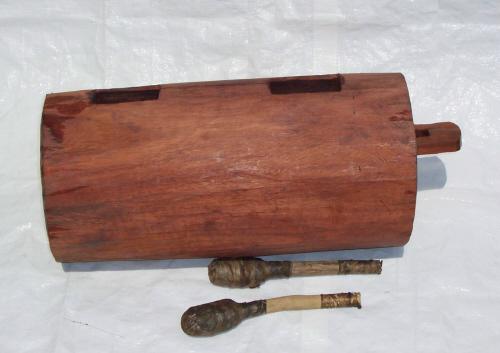 Cultural HeritageMusic and Drum Traditions: Tracing the “Igbo Drum” in the AmericasRead history →
No comments yet
Nothing has been approved on this record yet. Comments are checked by an editor before they appear, so one written now shows on this page after that check.