 Ozikoro
Biography · Published history
Okwui Enwezor: The Igbo Curator Who Globalised African Art
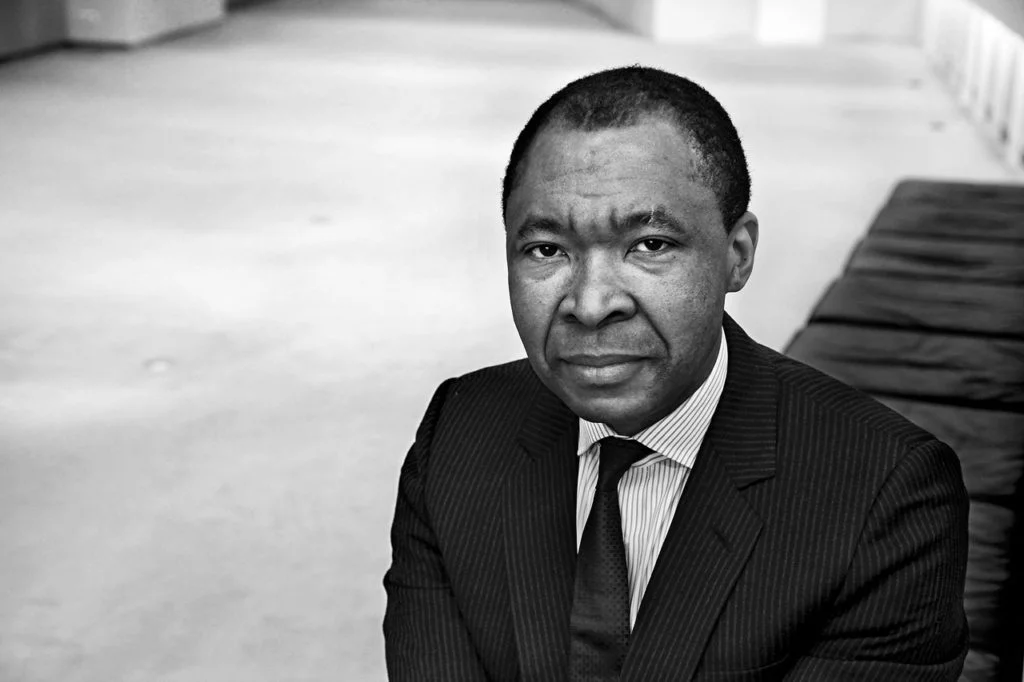
In the bustling world of contemporary art, few names evoke as much reverence and intellectual depth as Okwui Enwezor. Born in 1963 in Awkuzu, Anambra State, Enwezor’s story began far from the grand museums of Europe or the art biennales of Venice. Yet, through vision and conviction, this Igbo son rose to become one of the most influential curators of the 21st century, a man who redefined how the world sees Africa and how Africa sees itself.
The written record
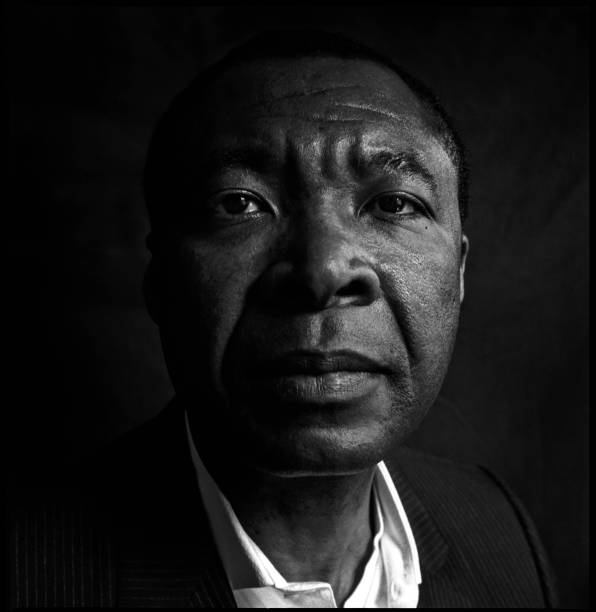
As the elders say, “Onye kwe, Chi ya ekwe.” (When one believes, their personal god agrees). For Okwui Enwezor, belief was more than faith, it was resistance. He believed that African art did not need to be “discovered,” only acknowledged. His life’s work became a mission to reframe global art discourse by dismantling colonial hierarchies and making room for stories told through African eyes.
Historical context
Early Life and Roots in Ala Igbo
Born into a middle-class Igbo family, Okwui grew up in the vibrant cultural ecosystem of postcolonial Nigeria, a time when identity and modernity were in constant negotiation. His parents, devout yet progressive, nurtured his curiosity for language, culture, and aesthetics.
After the Nigerian Civil War, his generation witnessed the rebuilding of both land and spirit, a moment that quietly shaped his later commitment to representation and justice. In Igbo cosmology, the artist is not just a creator but a custodian of truth. Enwezor carried this ethos with him when he left for the United States in 1982, initially to study political science at New Jersey City University. Yet, the pull of art, especially art as cultural memory, was irresistible.
He once reflected that his work was not about “discovering African art,” but about reclaiming the archive that had long been distorted or excluded. “E jiri mara onye bụ onye, bụ ihe ọ hapụrụ n’azụ.” (A person is known by what they leave behind).
The Curator Who Rewrote Global Exhibitions
Okwui’s curatorial rise was meteoric but grounded in intellectual rigour. In 1996, he co-founded Nka: Journal of Contemporary African Art, a platform dedicated to bridging African and diasporic creativity. From there, he ascended to global prominence, curating landmark exhibitions such as:
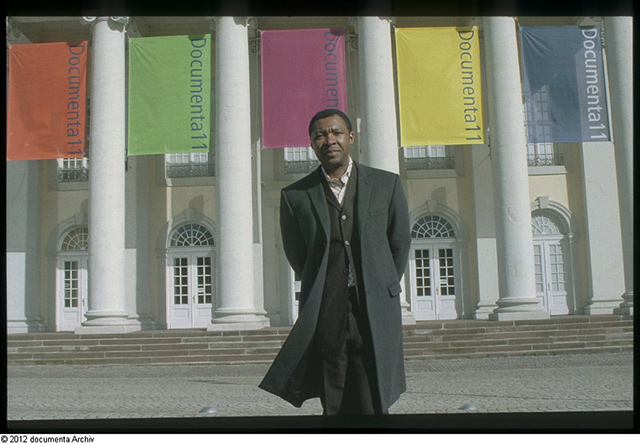
- Documenta 11 (2002, Germany) — a groundbreaking global project that included platforms in Lagos, New Delhi, and St. Lucia, decentralising the narrative of art from Western capitals.
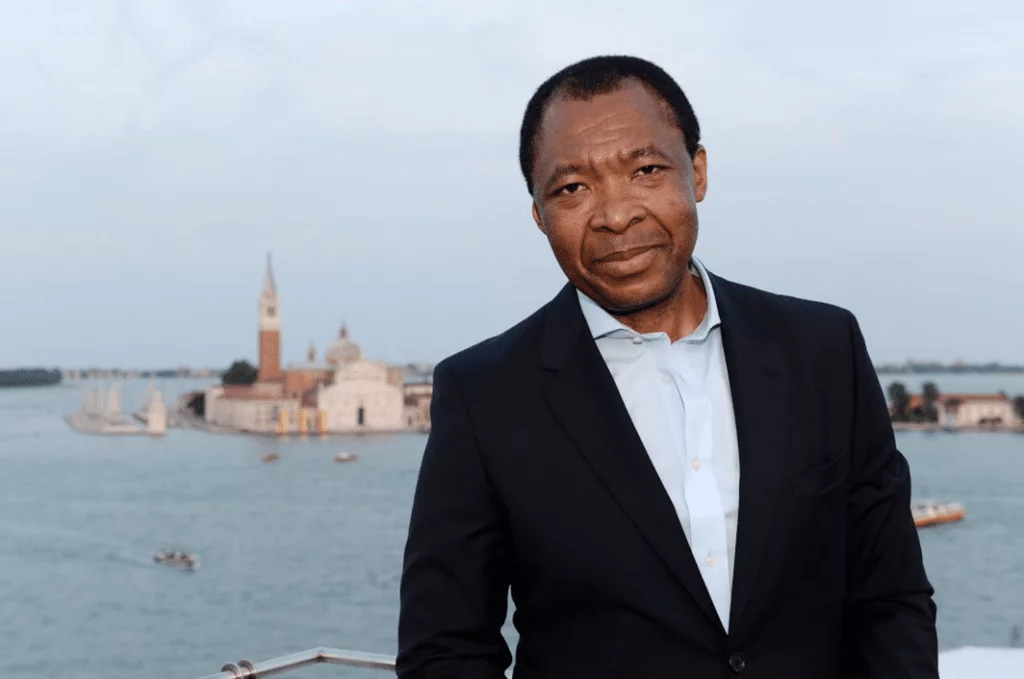
- Venice Biennale (2015) — where he became the first African-born artistic director, using the theme “All the World’s Futures” to critique capitalism, migration, and postcolonial memory.
- Haus der Kunst (Munich) — as director, he challenged institutional amnesia by mounting exhibitions that celebrated non-Western modernities.
In each of these, Enwezor’s curatorial approach was both political and poetic. He transformed exhibitions into intellectual conversations, bringing together historians, filmmakers, philosophers, and poets alongside visual artists. He insisted that art was not isolated beauty; it was evidence, a witness to history’s wounds and humanity’s dreams.
Igbo Philosophy in Global Art
At the heart of Enwezor’s philosophy was something profoundly Igbo—the idea of communal vision. In Igbo thought, truth is not monopolised; it is shared. His exhibitions reflected this idea of plurality, creating space for multiple histories and languages to coexist.
He saw art as a conversation across boundaries, much like the Igbo concept of ụmụnna, the collective that gives meaning to individual existence. “Ọ bụ mmadụ ka e ji ama mmadụ.” (It is through people that one is known). This relational philosophy shaped his view of global art.
Enwezor refused to separate Africa from the world or to accept the narrow label of “tribal art.” Instead, he insisted that African modernity was part of the world’s modernity, not its shadow. In doing so, he reclaimed the dignity of African creativity and demanded that museums and biennales confront their own colonial blind spots.
Scholar, Critic, Visionary
Beyond exhibitions, Enwezor’s scholarship deepened the intellectual backbone of global art studies. His writings on postcolonial theory, photography, and diaspora aesthetics continue to shape the field.
He collaborated with icons like Chinua Achebe, El Anatsui, and Yinka Shonibare, curating exhibitions that blurred the line between art and activism.
At the University of Nigeria, Nsukka, his connection to the Nsukka Art School reaffirmed his belief that innovation must rise from within African soil. His curatorial practice often echoed Achebe’s own literary mission: to make the African worldview intelligible to the world without translation or apology. “A na-esi n’ala amụ nwa.” (A child’s strength is drawn from the soil of their land).
Legacy: The Igbo Mind That Globalised African Art
When Okwui Enwezor passed away in 2019, tributes poured in from across continents. The New York Times, Frieze Magazine, and The Guardian hailed him as a curator who “remapped the art world.” Yet, in Ala Igbo, he is remembered more intimately as a son who carried the wisdom of his ancestors onto the world stage.
His life reminds us that art is not just a mirror; it is a map. He gave African artists visibility, but more importantly, he gave Africa agency—the power to tell its story in its own idiom. Today, whether in Lagos, Berlin, or Venice, every exhibition that centres African narratives owes a quiet debt to Enwezor’s courage.
“Onye ji ndụ eme ihe ọma, agaghị efu aha ọma ya.” (He who uses his life to do good will never lose his good name.) Okwui Enwezor’s journey from Awkuzu to the global art capitals was not just a personal triumph; it was a revolution of perspective. He showed the world that the Igbo spirit, with its love of knowledge, community, and expression, could shape global consciousness.
Through him, the museum became a village square, where stories converged and humanity met itself anew. His legacy continues to inspire curators, artists, and thinkers across Africa and the diaspora. And as long as art seeks truth, Okwui Enwezor’s name will remain a light on the path. “Ihe onye mere n’ụwa, bụ ihe ga-ama ya mgbe ọ nwụsịrị.” (What one does in life becomes their memory after death).
Sources and references
- Enwezor, O. (2019). Okwui Enwezor: Biography. Igbo People Encyclopedia.
- Frieze Editors. (2019, March 21). How curator Okwui Enwezor changed the course of art. Frieze.
- ICOM. (2019). Okwui Enwezor: A curator who remapped the art world. International Council of Museums.
- Searle, A. (2019, March 22). Okwui Enwezor, Nigerian curator who confronted European art. The Guardian.
- The New York Times. (2019, March 18). Okwui Enwezor, curator who challenged Eurocentrism, dies at 55.
- Wikipedia contributors. (2024). Okwui Enwezor. In Wikipedia, The Free Encyclopedia.
Cite this article
Discussion
Sign in to join the discussion
Comments are checked by an editor before they appear. Leave a source or a correction and it is read first.
Continue reading
No comments yet
Nothing has been approved on this record yet. Comments are checked by an editor before they appear, so one written now shows on this page after that check.