 Ozikoro
 Biography · Published history
Onuora Nzekwu: Literature, Culture, and the Making of Modern Nigerian Storytelling
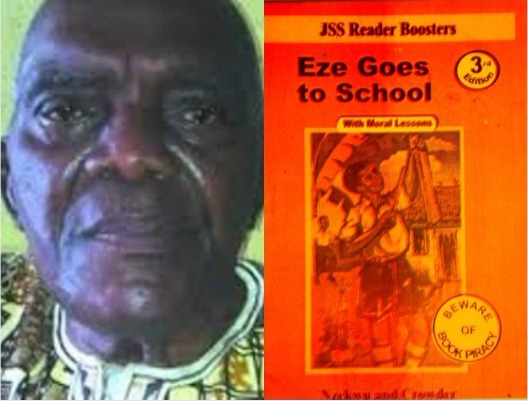
Onuora Nzekwu occupies an important place in the history of modern Nigerian literature as a novelist, educator, broadcaster, and cultural thinker. Emerging during the formative years of Nigerian literary nationalism, Nzekwu was among the first generation of writers who used fiction to interpret African society from an African perspective. His works focused on culture, colonial transition, generational conflict, and the tensions between tradition and modernity. Although sometimes overshadowed by contemporaries such as Chinua Achebe and Cyprian Ekwensi, Nzekwu’s contribution remains essential to understanding the development of Nigerian prose fiction and cultural discourse in the mid-twentieth century.
The written record

Historical context
Early Life and Education
Onuora Nzekwu was born in 1925 in southeastern Nigeria, within an Igbo cultural environment shaped by both indigenous traditions and colonial education. His early exposure to oral storytelling, communal values, and missionary schooling profoundly influenced his literary outlook. Like many writers of his generation, Nzekwu experienced the contradictions of colonial society firsthand, admiring Western education while remaining deeply rooted in African cultural systems.
He pursued higher education in Nigeria and later in the United Kingdom, a trajectory common among early Nigerian intellectuals. This dual exposure equipped him with the tools to critique colonial assumptions while articulating African experiences in English.
Entry into Writing and Literary Context
Nzekwu began writing at a time when African writers were seeking to reclaim narrative authority from colonial representations. The 1950s and 1960s marked a literary renaissance in Nigeria, driven by the desire to portray African life authentically and challenge stereotypes.
Unlike writers who focused heavily on political confrontation, Nzekwu’s fiction often explored cultural continuity, moral responsibility, and social change. His storytelling style was restrained, reflective, and attentive to everyday life. Scholars note that his work emphasized ethical dilemmas rather than dramatic political conflict.
Major Literary Works
Onuora Nzekwu is best known for his novel Wand of Noble Wood (1961), a work that examines leadership, tradition, and community values in a fictional Nigerian setting. The novel reflects the tension between inherited customs and emerging modern influences. Through symbolic imagery and moral conflict, Nzekwu interrogates what constitutes legitimate authority and cultural integrity.
He also co-authored Eze Goes to School (1966) with Michael Crowder, a children’s novel that became widely used in African schools. The book tells the story of a traditional ruler navigating formal Western education. While written for younger readers, the text subtly explores the meeting point of indigenous authority and colonial institutions.
These works positioned Nzekwu as a writer deeply invested in cultural education and intergenerational understanding.
Themes and Literary Style
Nzekwu’s writing is characterized by clarity, cultural sensitivity, and ethical reflection. His major themes include the preservation of African values, leadership and moral responsibility, the impact of Western education on traditional society, and the negotiation between old and new ways of life.
Rather than romanticizing tradition or demonizing modernity, Nzekwu presented both as complex systems requiring balance. His prose style is measured and accessible, making his work particularly effective for educational contexts.
Critics often describe his approach as didactic in the positive sense aimed at moral reflection rather than ideological confrontation.
Broadcasting and Cultural Administration
Beyond literature, Onuora Nzekwu played a significant role in Nigerian cultural life through broadcasting and public service. He worked with the Nigerian Broadcasting Corporation (NBC), where he contributed to cultural programming that promoted Nigerian arts, language, and storytelling.
Later, he served in administrative roles related to cultural development, including involvement with national arts institutions. These roles reflected his belief that culture should be actively preserved and promoted through public institutions, not only through books.
His work in broadcasting helped bring literature and cultural discussion to wider audiences, reinforcing the educational function of media in post-independence Nigeria.
Nzekwu and Nigerian Literary Nationalism
Onuora Nzekwu belonged to the generation of writers who laid the groundwork for Nigerian literary nationalism. Alongside figures such as Achebe, Soyinka, and Ekwensi, he contributed to the broader project of reclaiming African voices in global literature.
However, Nzekwu’s approach was less confrontational and more pedagogical. He focused on cultural continuity, ethical leadership, and social harmony. This has led some scholars to describe him as a “cultural mediator” rather than a literary radical.
His contributions remain especially important in children’s literature and cultural education, areas sometimes undervalued in literary criticism.
In his later years, Nzekwu withdrew somewhat from the literary spotlight but continued to be recognized for his foundational contributions. His works remain part of Nigerian and African literature curricula, particularly Wand of Noble Wood and Eze Goes to School.
Today, scholars reassess his legacy as part of a broader effort to recover lesser-celebrated voices of early African literature. His career demonstrates that nation-building through culture involves not only political protest but also education, storytelling, and ethical reflection.
Onuora Nzekwu was a writer, cultural administrator, and educator whose work contributed significantly to the formation of modern Nigerian literature. Through novels, children’s fiction, and broadcasting, he explored the challenges of cultural transition with sensitivity and moral depth. While not always at the center of literary canon debates, his influence persists in Nigerian education, cultural policy, and literary history. Nzekwu’s legacy reminds us that storytelling is not only an act of resistance but also one of preservation, instruction, and continuity.
Sources and references
- Irele, A. (2001). The African imagination: Literature in Africa and the Black diaspora. Oxford University Press.
- Julien, E. (2006). African novels and the question of orality. Indiana University Press.
- Killam, G. D., & Rowe, R. M. (2000). The companion to African literature. Indiana University Press.
- Nzekwu, O. (1961). Wand of noble wood. Heinemann
- Nze kwu, O., & Crowder, M. (1966). Eze goes to school. Oxford University Press.
Cite this article
Discussion
Sign in to join the discussion
Comments are checked by an editor before they appear. Leave a source or a correction and it is read first.
Continue reading
No comments yet
Nothing has been approved on this record yet. Comments are checked by an editor before they appear, so one written now shows on this page after that check.