 Ozikoro
Biography · Published history
Onyeka Onwenu: An Igbo Icon in Music and Culture
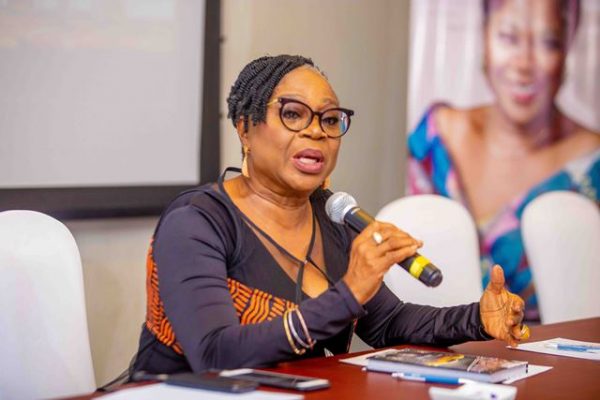
When you think of timeless Nigerian music, the kind that feels like poetry, pride, and power all in one; Onyeka Onwenu easily comes to mind. She’s not just a singer; she’s a storyteller, activist, actress, and proud daughter of the Igbo soil. Known fondly as the “Elegant Stallion”, Onyeka has carried Igbo culture on her voice, her stage, and her spirit for over four decades.
The written record
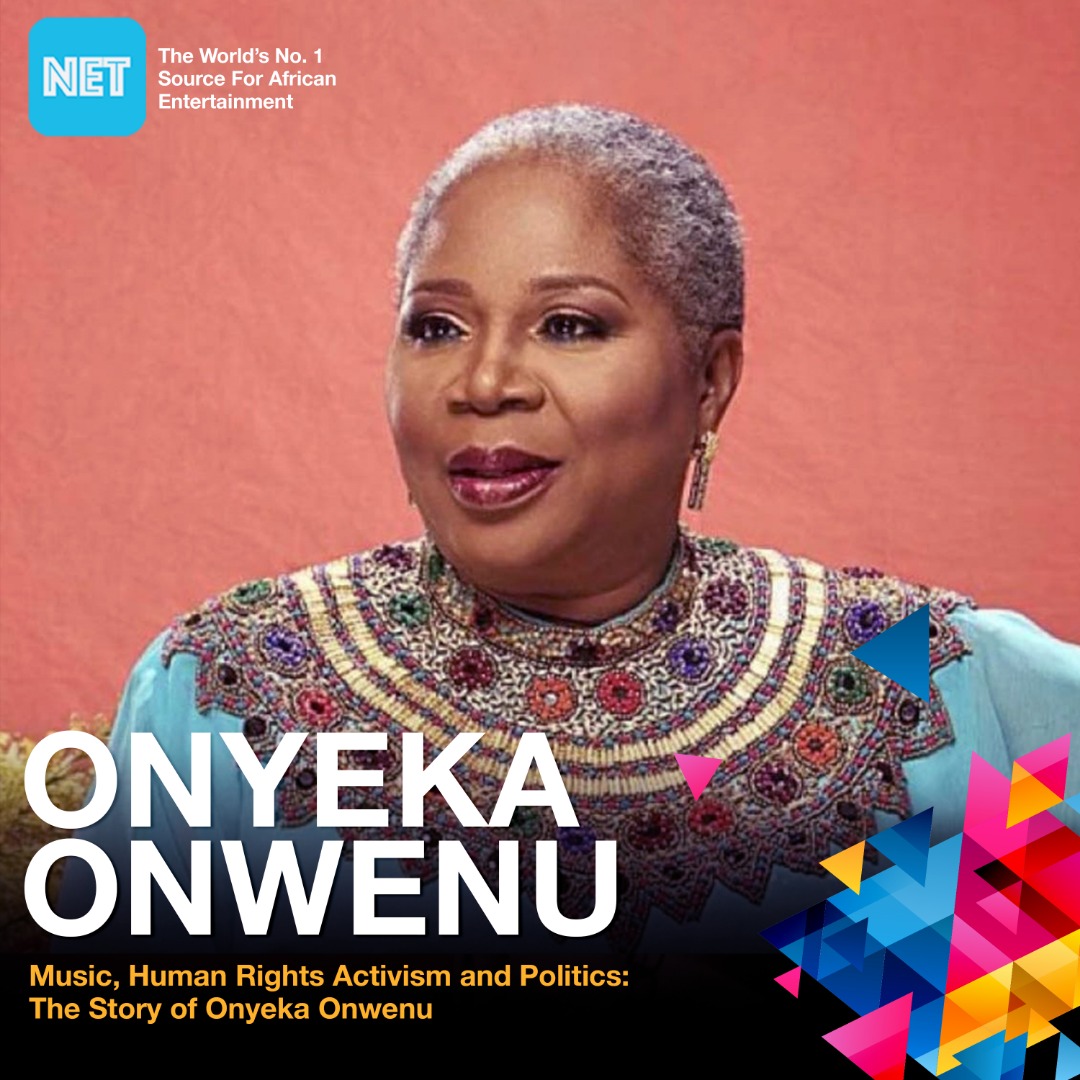
Onyeka Onwenu stands as a colossal figure in Nigerian public life, a true Igbo icon whose influence spans music, culture, journalism, and politics. Her career has been defined by a powerful voice, socially conscious lyrics, and an unwavering commitment to representing the richness of her Igbo heritage and the complexities of the Nigerian experience.
Historical context
Early Life and Emergence
She hailed from Arondizuogu, a big town in Ideato North, Imo State, southeastern Nigeria, but was born January 31, 1952 and was raised in Port Harcourt, the capital city of Rivers State, Nigeria. She was the youngest daughter of Nigerian educationist and politician D. K. Onwenu, who died when she was four years old in a traffic collision a week before his appointment as Minister for Education, leaving his widow, Hope, to raise five children alone after her husband’s family denied her access to his property. She was the youngest daughter of her parents. After losing her father at a young age, Onyeka’s journey was far from easy, but she grew up deeply aware of her heritage and the importance of representing her people with grace and intelligence.
Onwenu’s journey into the limelight began after completing her education, including a bachelor’s degree in International Relations from Wellesley College, Massachusetts, and a master’s degree in Media Studies from The New School for Social Research, New York. She initially gained prominence as a journalist and broadcaster with the Nigerian Television Authority (NTA), where her documentary work, notably “Nigeria: A Squandering of Riches,” courageously addressed the issue of corruption, setting the stage for her lifelong advocacy.
When she returned to Nigeria in the early 1980s to complete her mandatory one-year National Youth Service Corps (NYSC) with the Nigerian Television Authority (NTA), in Lagos, Nigeria. She wasn’t just coming home, she was bringing back global experience wrapped in local pride.
Finding Her Voice
Originally a secular artist, Onwenu made the transition to gospel music in the 90s, and most of her songs are self-penned. She wrote and sang about issues such as health (HIV/AIDS), peace and mutual coexistence, respect for women’s rights, and the plight of children. She began her recording career in 1981 while still with the NTA, releasing the album For the Love of You, a pop album which featured an orchestral cover of Johnny Nash’s “Hold Me Tight”, produced by Berkley Jones. Her second album was Endless Life, produced by Sonny Okosun, and included another cover, the Everley Brothers’ “Walk Right Back”. Both records were released under the EMI label
Before she even released her first record, Onyeka had already Kickstarted as a journalist and documentary producer with the Nigerian Television Authority (NTA). Her early documentary Nigeria: A Squandering of Riches (1981) shook the nation by addressing corruption and resource mismanagement. That courage to speak truth to power would later show up in her music too.
Her music career officially took off with her debut album Endless Life in 1981, followed by hits like One Love, Dancing in the Sun, and Iyogogo. Through her songs, Onyeka mixed soul, pop, and traditional Igbo sounds, blending languages effortlessly to reach both local and international audiences.
As Onyeka herself once said, “Music is my ministry, a way of healing, inspiring, and celebrating who we are”
Onwenu’s transition to music cemented her iconic status. Her musical style is a rich fusion that draws heavily on Igbo traditional rhythms while incorporating elements of pop, highlife, and reggae. This unique blend allowed her to transcend ethnic lines, making her music relatable across Nigeria and the African diaspora.
Her discography is marked by hits that are both commercially successful and deeply meaningful:
“One Love”: This timeless anthem is often cited for its message of national unity and peace, a poignant theme in a nation frequently facing internal divisions. The song’s widespread appeal highlights her role as a voice for cohesion.
“Ekwe”: A powerful track that directly references traditional Igbo musical instruments and language, showcasing her commitment to cultural preservation and the promotion of Igbo language and philosophy through a contemporary medium.
“Iyogogo” and “Bia Nulu”: These songs demonstrate her mastery of highlife and ballad styles, often using Igbo proverbs and imagery to tell stories of love, life, and hope. Her lyrics are frequently laden with social commentary, addressing issues like women’s rights, political accountability, and social justice. The use of the Igbo language in mainstream music helped to popularize and celebrate the language on a national stage.
Onwenu’s presence on stage, characterized by her vibrant traditional attire, further reinforced her cultural ambassador role. She consistently projected an image of a confident, articulate, and culturally grounded African woman, inspiring many.
Championing Igbo Culture and Womanhood
Onyeka’s artistry is deeply Igbo. You can hear it in her melodies, see it in her fashion, and feel it in her lyrics. She often sang in Igbo and English, drawing on proverbs and folktales that reflected the beauty and resilience of her people.
Songs like Iyogogo and Bia Nulu (Come and Hear) are steeped in Igbo rhythms and values, respect, love, and unity. As Ndukwe observed, “Onyeka’s music mirrors the Igbo woman’s strength, soft but powerful, nurturing yet assertive.”
She also used her platform to promote women’s rights, challenging stereotypes and encouraging Nigerian women to embrace education and independence. Her feminist message wasn’t loud or aggressive. It was graceful, like a mother teaching through song.
Beyond music, Onyeka became one of Nollywood’s beloved faces. She starred in classics like Half of a Yellow Sun (2013) and Lionheart (2018), where she portrayed characters full of wisdom and authority, much like herself in real life.
In the public sphere, she served as Director General of the National Centre for Women Development and was appointed Chairperson of the Imo State Council for Arts and Culture. Through these roles, she promoted cultural preservation, gender equality, and youth empowerment. This underscores her commitment to service and her belief in the capacity of women to lead
As she once said, “Art should never exist apart from purpose. For me, every performance, every role, every lyric must serve something greater”
Influence
Onyeka Onwenu’s legacy goes far beyond her songs. She represents a generation that believed in artistry with meaning, music that educates, uplifts, and connects. Her career inspired countless younger artists like Asa, Waje, and Nneka, who have followed her path of blending modern sound with cultural depth.
To this day, when you hear her sing “You and I will live as one” from her iconic song One Love, it feels less like a lyric and more like a prayer; one that still echoes across generations.
In essence, Onyeka Onwenu is more than just a musician; she is a cultural repository, a social critic, and a tireless advocate whose work has consistently celebrated the Igbo identity while championing the values of justice and unity for all Nigerians. Her legacy is secured as a foundational icon of modern Nigerian arts and culture.
Onyeka Onwenu is a national treasure, and a living symbol of purpose-driven art. Her story reminds us that identity and culture aren’t things to be hidden or simplified; they are things to be sung, celebrated, and passed on.
She once said, “I am proudly Igbo, proudly Nigerian, and proudly African. My art is my way of saying, “we are beautiful, and the world must see it.”
Onwenu kept her personal life private and was the mother of two sons, Tijani Charles and Abraham. On 30 July 2024, Onwenu passed away after performing at the 80th birthday party of The CEO Emzor Pharmaceuticals Stella Okoli in Lagos State. She was immediately taken to Reddington Hospital where she was confirmed dead. Onwenu was 72. Prior to her death, Onwenu wrote in an opinion piece on Premium Times in 2021 on how she would like to be buried: “Do it quickly, quietly and privately,” emphasising that her burial should be devoid of unnecessary fanfare,”Celebrate me with prayers, lunch or dinner afterwards. Share some jokes about me and laugh. Make merriment and then go about your business. If my friends want to celebrate me, they should do so while I am alive, so that I can enjoy it with them, not when I am gone and have no idea about this. That is me, Onyeka Onwenu,” she said.
Sources and references
- Adelakun, L. (2021). The Elegant Stallion: Cultural Iconography and Social Commentary in Nigerian Music. Journal of African Studies and Culture, 13(2), 45-62.
- Ejiogu, C. (2018). Voice of a Generation: Onyeka Onwenu’s Contributions to Nigerian Entertainment. West African Review of Arts and Culture, 9(1), 112-130.
- Nwafor, P. I. (2020). Onyeka Onwenu: The Convergence of Music, Media, and Identity. In O. C. Uche (Ed.), Icons of M odern Nigerian History (pp. 195-215). University Press PLC.
Cite this article
Discussion
Sign in to join the discussion
Comments are checked by an editor before they appear. Leave a source or a correction and it is read first.
Continue reading
No comments yet
Nothing has been approved on this record yet. Comments are checked by an editor before they appear, so one written now shows on this page after that check.