 Ozikoro
 Biography · Published history
Professor Barth Nnaji and the Miracle of Geometric Power
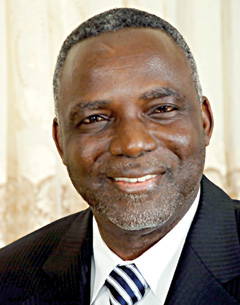
Professor Bartholomew (Bart) Nnaji is one of Nigeria’s most distinguished engineers, innovators, and energy experts. His remarkable life and work span cutting-edge engineering research, pioneering concepts in product design and robotics, and transformative efforts in the Nigerian power sector. Central to Nnaji’s legacy is what many describe as the “miracle of geometric power”, a combination of geometric reasoning, visionary engineering, and innovative power systems that has reshaped how electricity is generated and distributed in Nigeria. This essay explores Nnaji’s life, his contributions to geometric reasoning and engineering, and how his work, particularly through Geometric Power Limited, has had a tangible impact on both technological thought and Nigeria’s development trajectory.
The written record

Historical context
Early Life and Academic Foundations
Bartholomew Nnaji was born on July 13, 1956, in Enugu State, Nigeria. His early academic brilliance was apparent when he graduated as the best overall student in Physics at St. John’s University, New York, in 1980. He earned his Master’s and Ph.D. degrees in Industrial and Systems Engineering from Virginia Polytechnic Institute and State University, followed by a Post-Doctorate Certificate in Artificial Intelligence and Robotics from the Massachusetts Institute of Technology (MIT).
Nnaji’s academic career flourished in the United States, where he became a Professor of Mechanical and Industrial Engineering at the University of Massachusetts, Amherst and later the William Kepler Whiteford Professor of Engineering at the University of Pittsburgh. At the University of Pittsburgh, he founded the U.S. National Science Foundation Center for e-Design, a pioneering research centre that brought together multiple universities to advance computer-integrated design and engineering.
Geometric Reasoning: A Conceptual Breakthrough
One of Nnaji’s most influential contributions to engineering thought is his idea of “geometric reasoning”. This concept stems from the insight that many problems in design, robotics, and manufacturing can be understood, optimized, and solved by recognising the geometric structure of the systems involved. In simple terms, geometric reasoning holds that objects, assemblies, and mechanisms can be modelled fundamentally by their geometric relationships and that leveraging this understanding enhances efficiency, collaboration, and innovation in design.
Nnaji’s work in geometric reasoning also underpinned the development of e-Design, a revolutionary approach to collaborative product design where engineers in different locations can design, test, and refine products virtually using computer networks and shared geometric models. This foresaw modern practices in distributed design, cloud-based engineering, and remote product development, laying intellectual foundations for what is now standard in global engineering teams.
The “miracle” of geometric power is therefore not just a metaphor for physical electricity, but also a conceptual breakthrough: a paradigm that emphasises mathematics and geometry as keys to solving complex problems, whether in robotics, manufacturing, or infrastructure planning.
Return to Nigeria: Bridging Theory and Practice
Despite a stellar academic career abroad, Nnaji returned to Nigeria in 1993, demonstrating a commitment to applying his technical expertise to national challenges. He first served as Federal Minister of Science and Technology, bringing his global perspective to Nigeria’s emerging science landscape.
In 2000, he founded Geometric Power Limited (GPL), Nigeria’s first indigenous private power company, with the explicit goal of addressing the country’s perennial electricity problems through innovative design, engineering precision, and long-term infrastructure planning. The name “Geometric Power” itself embodies Nnaji’s belief that power systems, like all technical problems, require deep structural and analytical thinking, not merely short-term fixes.

Integrated Power Solutions: From Theory to Impact
Under Nnaji’s leadership, Geometric Power undertook several landmark projects that illustrate the practical “miracle” of geometric power: bringing reliable electricity to Nigerian communities through thoughtful engineering and long-term planning.
One of the most impactful of these is the Aba Integrated Power Project, a large-scale power plant and distribution network in Abia State, specifically designed to service the Aba region and surrounding local government areas. With an installed capacity of roughly 188 megawatts, the project represents a milestone in Nigeria’s energy landscape, providing consistent electrical power to commercial, industrial, and residential users in a region historically plagued by outages. The genesis of this project dates back to earlier work by Geometric Power, such as a 22 MW emergency power station in Abuja in 2001, which delivered reliable power to important government and business centres.
Nnaji has stated that the idea for the Aba project grew from discussions about Nigeria’s industrial potential, particularly for indigenous manufacturers and the critical role reliable electricity plays in economic growth and sustainability. Speaking at a leadership colloquium, he linked the project’s origins to the encouragement of economic planners and international partners, emphasising that “…once Geometric Power addresses the electricity challenge in nine out of 17 local government areas in Abia State fully, … not even the sky will be the limit…”.
Many commentators consider this undertaking a manifestation of Nnaji’s vision: one that integrates engineering acumen, economic foresight, and community development. It demonstrates a rare alignment of technical rigor and practical impact, rooted in the analytical mindset he developed through years of research in geometry-based engineering.
Political and Public Leadership
Nnaji’s influence extended beyond engineering into the realm of public sector reform and national policy. He served as Special Adviser to the President on Power, Chairman of the Presidential Task Force on Power, and later as Minister of Power from July 2011 until August 2012, a period during which he led crucial reforms including privatisation of the power sector and the restructuring of legacy institutions such as NEPA (the National Electric Power Authority). His leadership in this domain earned him national honours such as Officer of the Order of the Niger (OON), Commander of the Order of the Niger (CON), and the Nigerian National Order of Merit (NNOM).
Despite political challenges that led to his resignation as Minister, many analysts view his tenure as a high-water mark in Nigeria’s attempts at reforming electricity systems, because of his commitment to structural design rather than short-term fixes.
Legacy and Continuing Influence
Beyond power systems, Barth Nnaji continues to influence technology policy, education, and innovation. He has urged investment in artificial intelligence (AI) and teacher empowerment, advocating for computers in every public-school classroom to ensure Nigeria’s competitiveness in the global technological arena. He also chairs advisory and civic roles, including driving economic development committees aimed at industrialisation in regions such as Ebonyi State.
His work has been recognised with honorary doctorates, industry awards, and continued public invitations to speak on engineering excellence and national development.
Professor Barth Nnaji’s life and career illustrate both the power of geometric reasoning and its practical application in solving real-world problems. From leading research in robotics and e-design to transforming Nigeria’s energy infrastructure with the Aba Integrated Power Project, Nnaji embodies the rare fusion of academic brilliance and national development impact. The “miracle of geometric power” is not merely his ability to conceptualise complex ideas but his determination to apply them bridging abstract reasoning with concrete change. Whether through engineering innovation, policy reform, or advocacy for technological investment, Nnaji’s legacy continues to inspire engineers, policymakers, and citizens striving for a more reliable and prosperous future.
Sources and references
- Bullion Lecture: Barth Nnaji to deliver. (2025, April 2). New Telegraph.
- Prof. Barth Nnaji was appointed chairman of the economic team. (2025, September 2). Geometric Power.
- Prof. Barth Nnaji endorses an ETF in Enugu. (2025, March 21). Coal City Network.
- Barth Nnaji turns 69: Celebrating innovation. (2025, December 17). Men of Light.
- Honors and recognition for Barth Nnaji. (2024). Daily Blast.
- Nnaji urges AI and teacher investment. (2025, October 11). Guardian Nigeria.
Cite this article
Discussion
Sign in to join the discussion
Comments are checked by an editor before they appear. Leave a source or a correction and it is read first.
Continue reading


No comments yet
Nothing has been approved on this record yet. Comments are checked by an editor before they appear, so one written now shows on this page after that check.