 Ozikoro
 Biography · Published history
Rev. J. C. Taylor: Pioneer Missionary and the Apostle of Igboland

Rev. John Christopher Taylor occupies a unique place in Nigerian Christian and cultural history. Often called the “Apostle of Igboland,” Taylor played a major role in bringing Christianity and Western-style formal education to parts of southeastern Nigeria. Born to Igbo-descended ex-slaves in Sierra Leone, he returned to West Africa as part of the mid-19th-century missionary outreach. His work included evangelism, Bible translation, school founding, and cross-cultural innovation.
The written record
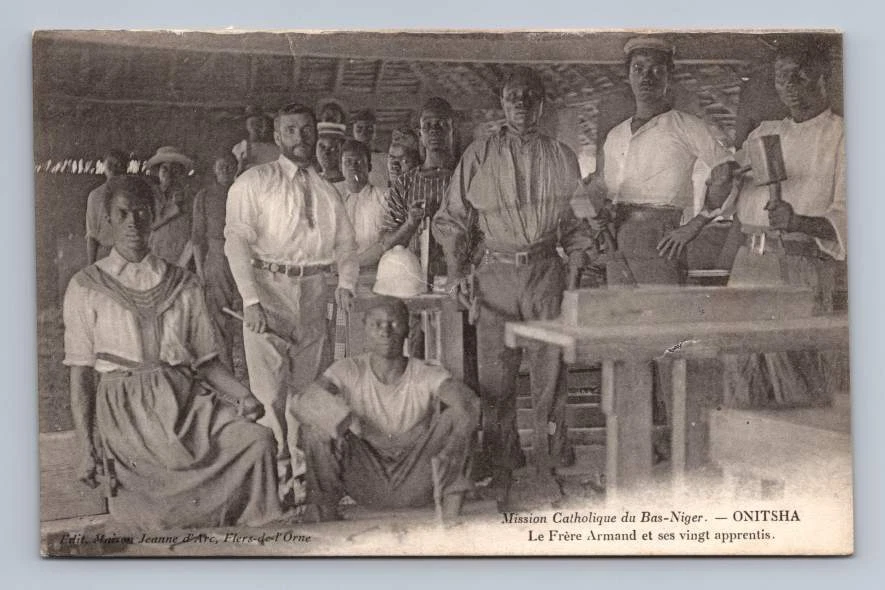
Photo credit: eBay.
Historical context
Background: Origins and Early Life
John Christopher Taylor was born in 1815 in Freetown, Sierra Leone. According to historical records, his parents were of Igbo descent, his father from Isuama and his mother from Arochukwu.
He received his early education at Charlotte Primary School and later at Fourah Bay Institution in Freetown, both prominent institutions that educated many Africans in the 19th century.
By 1841, Taylor was already working as a catechist in the Temne mission (Sierra Leone). His education, early ministry, and exposure to missionary discipline equipped him for greater challenges.
The 1857 Niger Expedition and the Founding of the Niger Mission
Call to the Niger
In 1857, the Church Missionary Society (CMS) organized a major expedition to open a mission along the Niger River aiming to evangelize the Niger Delta and Igboland. Taylor was selected alongside Samuel Ajayi Crowther and others to navigate the dangerous waters of the Niger and establish a permanent station.
Before departing from Bathurst (in what is now The Gambia), Taylor preached a farewell sermon to an overflowing congregation on April 26, 1857. On May 7, 1857, the expedition left Liverpool aboard the steamer Dayspring, finally arriving at Onitsha on July 25.
Establishment of Onitsha Mission
Upon arrival, Taylor and his team were officially welcomed by the traditional ruler of Onitsha, Obi Akazue, and his elders on July 27, 1857.
This date marks the beginning of the CMS mission in Igboland. Taylor became effectively the first resident missionary of the Onitsha station, with a catechist named Simon Jonas assisting him.
He led evangelistic and educational outreach, built mission houses, and laid the institutional foundations that would eventually form what is now the Diocese on the Niger.
Evangelism, Education, and Language Work
Taylor’s missionary work was energetic and fruitful. According to his personal journals, one afternoon service drew between 500 and 600 worshipers, remarkable given the cultural and linguistic barriers of the time.
He later established a school in Onitsha. Within a week, twelve children had enrolled, an early sign of the demand for formal education among converts and local youth.
The curriculum emphasized both religious instruction and basic literacy. Importantly, Taylor and his colleagues used vernacular (local Igbo dialect) in their teaching and catechism. This enhanced comprehension, facilitated conversion, and fostered cultural belonging among the indigenous people.
One of Taylor’s most enduring contributions was his effort to translate portions of the Scriptures and the catechism into Igbo. According to the biographical record, he translated the Gospels, Acts, and a significant portion of the Epistles into an Upper Niger / Onitsha dialect.
This translation work made Christianity more accessible and culturally resonant for Igbo speakers. It laid early foundations for the later full Igbo Bible translation.
Challenges, Conflicts, and Departure from Onitsha
Despite his successes, Taylor’s career faced serious challenges. In 1869 a significant crisis erupted following tensions over the leadership and structure of the mission. This crisis reportedly involved disputes around indigenization, authority, and the role of Black clergy. As a result, Taylor’s influence declined.
By the late 1860s, Taylor had effectively been displaced from his leadership position in Onitsha. Afterward, he returned to Sierra Leone where he trained other African missionaries at Fourah Bay Institution.
Although his role diminished, his earlier contributions continued to shape evangelism, education, and Christian social transformation in Igboland.
Legacy and Significance
The churches and institutions that Taylor helped found such as St. Christopher’s Church, the original mission house, and what became Christ Church Onitsha, stand as the progenitors of Christianity in Igboland. The Diocese on the Niger traces its origins to his 1857 mission.
Through his emphasis on schooling and Bible translation, Taylor facilitated the rise of a literate Christian laity. These early educated converts went on to become teachers, clerks, catechists, and administrators, playing crucial roles during missionary expansion and colonial administration.
By using Igbo language in preaching and teaching, Taylor set a precedent for a version of Christianity that respected and integrated indigenous identity. This approach helped Christianity take root in cultural soil rather than supplanting local realities.
Because of these contributions, many historians regard Taylor as the “Apostle of Igboland.”
Limitations and Controversies
While Taylor’s earlier work was bold and effective, his later career met controversy. The 1869 mission crisis disrupted his leadership, and his expulsion from prominent missionary roles reflects the internal politics and racial tensions of early missionary efforts.
Some scholars argue that Taylor’s influence was overshadowed by institutional shifts and the dominance of European missionaries who later reshaped the mission’s direction. Nonetheless, his early legacy remains foundational.
Rev. J. C. Taylor’s life and ministry form a crucial chapter in the history of Christianity in Igboland and the broader Niger Delta. As a pioneer missionary, educator, Bible translator, and cultural bridge between Sierra Leone and Southeastern Nigeria, he helped plant the seeds of a Christian and literate society in Igboland. Despite personal and institutional setbacks later in his life, his legacy survives in churches, schools, and the enduring Christian identity of millions of Igbo and Niger Delta Christians. His story underscores the power of cross-cultural mission when combined with respect for local languages and contexts and the enduring influence of committed individuals in shaping history.
Sources and references
- Anderson, G. H. (Ed.). (1998). Biographical Dictionary of Christian Missions. W.B. Eerdmans Publishing Company. (Entry “Taylor, John Christopher (D)”)
- Church Missionary Society. (1859). The Gospel on the Banks of the Niger: Journal of the Rev. J. C. Taylor at Onitsha. Cambridge University Press.
- Okeke, G. C. (2006). Christianity and Colonialism in Igboland. Abia State University Press.
- Obiekwe, I. (Writer). (n.d.). “Anglican Church: The Mother of All Ch urches in Eastern Nigeria.” Advent Cable Network Nigeria.
Cite this article
Discussion
Sign in to join the discussion
Comments are checked by an editor before they appear. Leave a source or a correction and it is read first.
Continue reading

No comments yet
Nothing has been approved on this record yet. Comments are checked by an editor before they appear, so one written now shows on this page after that check.