 Ozikoro
 Cultural Heritage · Published history
Royal Arsenals: The Role of the Igun Eronmwon Blacksmiths in Arming the Benin Resistance Against the 1897 British Punitive Expedition
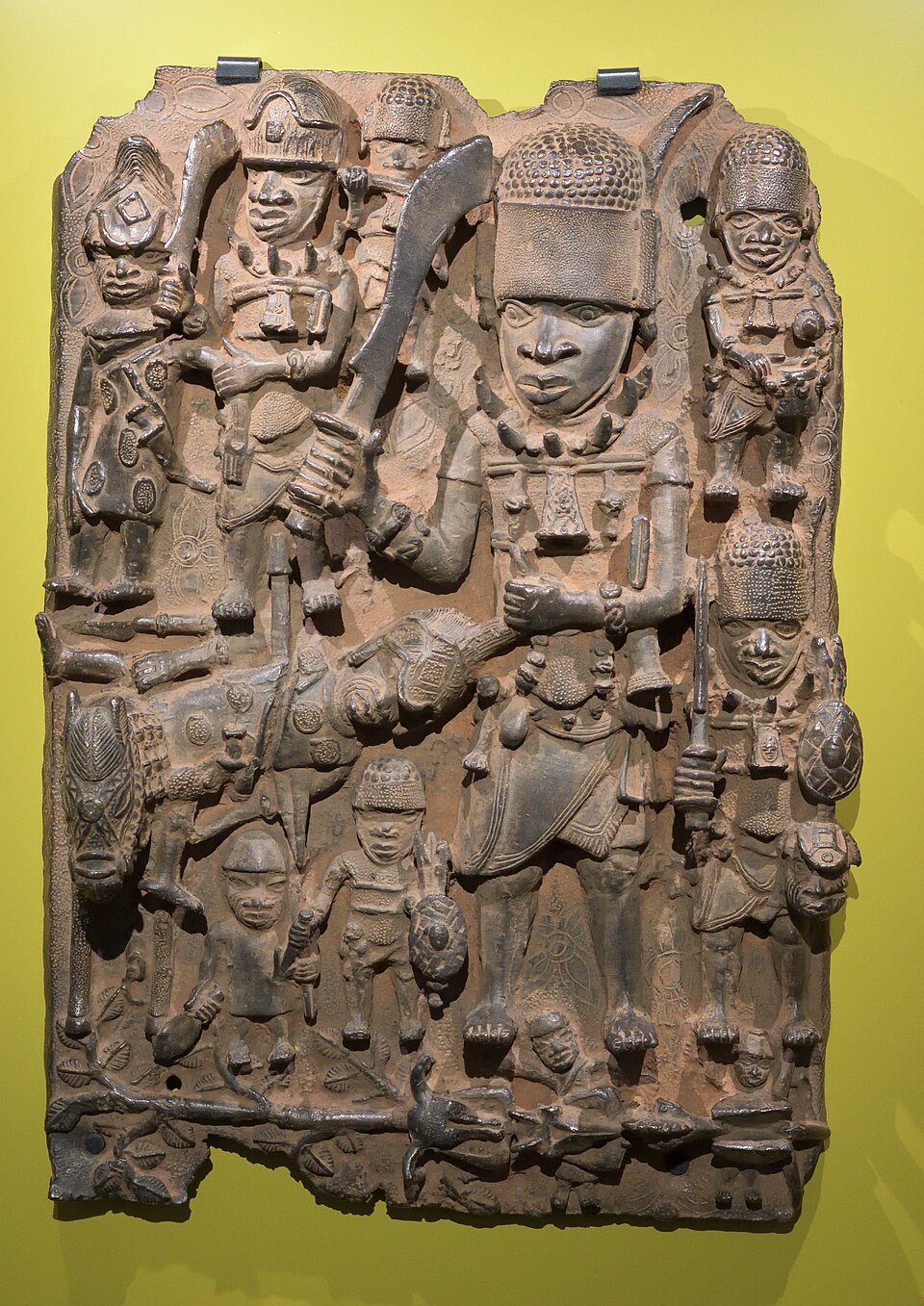
The fall of the Benin Kingdom in 1897 followed one of the most organized indigenous military defenses in West Africa. Central to this resistance were the Igun Eronmwon, the royal brass-casting and metalworking guilds of Benin. While the guild is popularly associated with the famous Benin Bronzes, their role extended far beyond artistic production: they were also responsible for forging weapons, armor, and ritual regalia for the Benin monarch. During the buildup to the Punitive Expedition in 1897, these blacksmiths formed the technical backbone of the kingdom’s arsenal. Their expertise allowed Benin to field locally manufactured muskets, metal-tipped spears, swords, and protective charms at a time when British forces were equipped with industrial-grade rifles and Maxim guns.
The written record
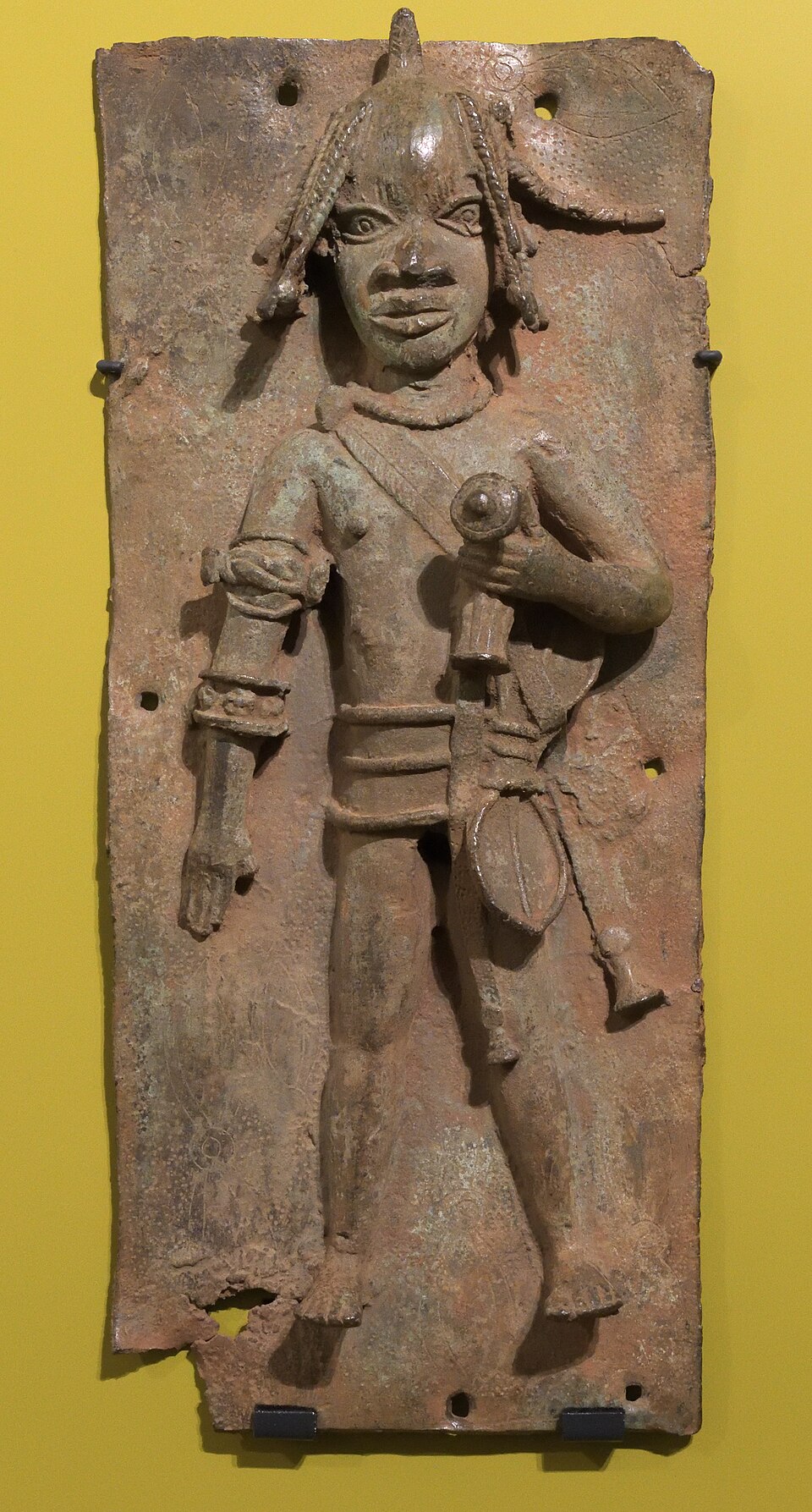
Photo credit:Andreas Franzkowiak, via Wikimedia Commons.
Historical context
The Igun Eronmwon: Origins and Guild Structure
The Igun Eronmwon, sometimes called the “brass-casters” or “royal smiths” formed one of the most prestigious guilds in the Benin Kingdom. According to the Benin Bronzes entries, the guild traces its origins to at least the 13th century and operated under strict hereditary regulations. Members lived in guild quarters near the Oba’s palace, where they worked under the supervision of Ineh N’Igun, the guild head.
While popularly known for lost-wax bronze casting, the guild’s portfolio historically included forging iron implements, producing brass and bronze ceremonial items, creating tools, bells, and weapons for palace officials, maintaining and repairing war equipment.
Scholars such as Bradbury and Roese note that the line between “artist” and “war-smith” in Benin was fluid because craftsmanship was tied to the political power of the Oba. Thus, the Igun Eronmwon had both artistic and military responsibilities.
Weaponry in the Benin Kingdom Before 1897
- Indigenous Arsenal
Before the arrival of Europeans, Benin warriors were equipped with weapons made by the Igun guild and neighboring smiths. These included iron swords (eben), double-edged knives, spears and javelins, metal-tipped arrows, shields reinforced with brass, and ceremonial war bells used for communication.
Iron smelting in Benin was well-developed, and while the Igun Enron specialized in brass and bronze, they often worked alongside iron smelters to assemble multi-component weapons.
- Firearms and Early Adaptation
From the 16th century onward, Benin obtained firearms matchlocks and flintlocks through Portuguese and later Dutch trade. Although locally forged guns could not reach European standards, Benin smiths became highly skilled in repairing damaged muskets, casting replacement parts, producing gunpowder and metal shot, assembling hybrid guns from imported and local components.
This capacity became vital in the 19th century as British control tightened and firearm access declined.
- The Political Tensions Leading to the 1897 Expedition
Historians agree that the 1897 Punitive Expedition emerged from a clash between British commercial ambitions and Benin’s political sovereignty. According to the Benin Expedition of 1897, officials of the Royal Niger Company sought to break Benin’s control of regional trade. When Acting Consul General James Phillips attempted to enter Benin despite religious prohibitions, his party was attacked, providing Britain the pretext for invasion.
In anticipation of conflict, the Oba and his chiefs mobilized the Igun Eronmwon to reinforce the arsenal, preparing defenses for what they understood to be an existential threat.
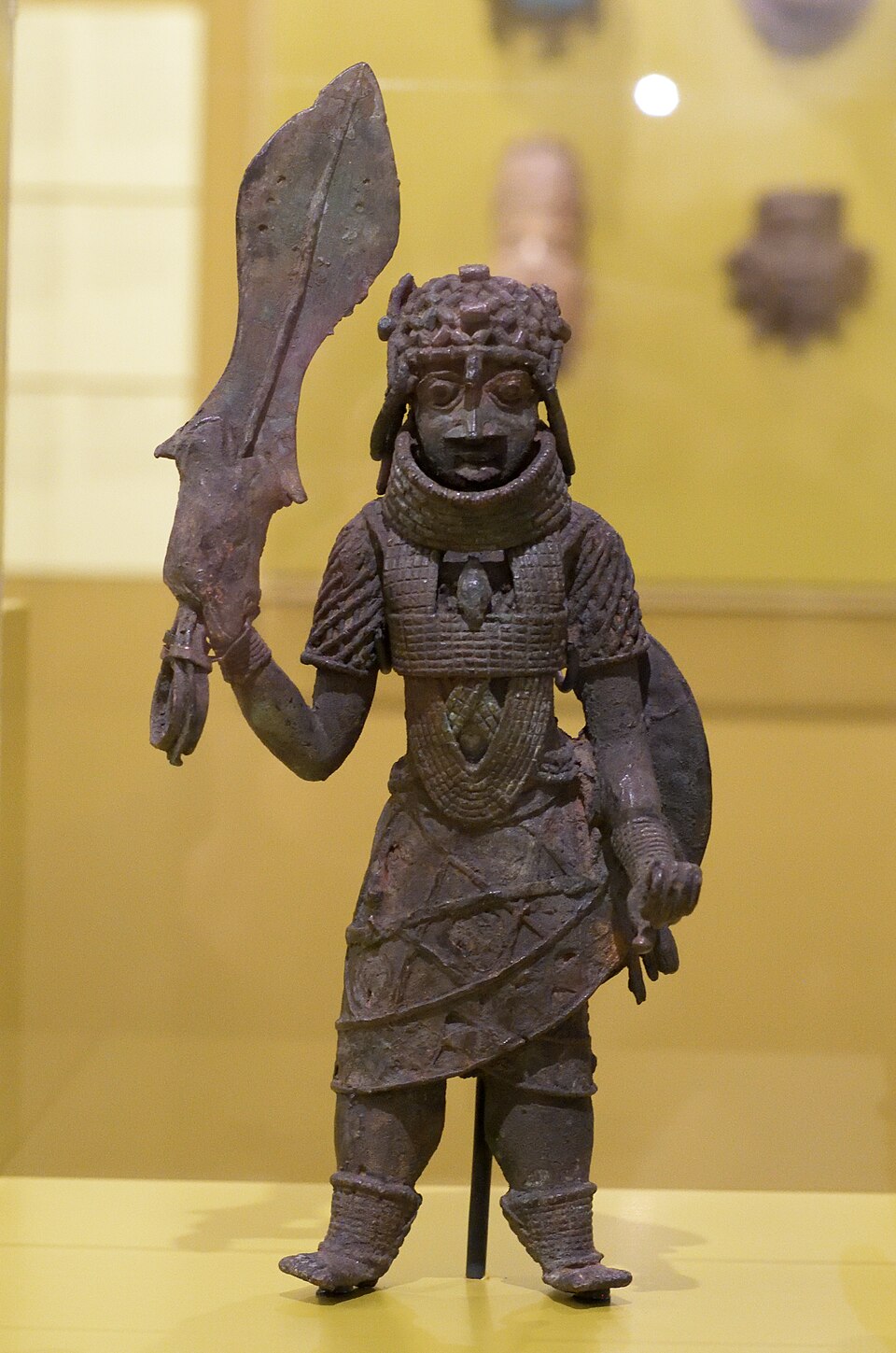
Photo credit:Andreas Franzkowiak, via Wikimedia Commons.
The Igun Eronmwon in the 1897 Resistance
- Mobilizing the Royal Workshops
When war seemed inevitable, the Oba summoned the Igun guilds to work continuously. Sources such as Dark emphasize that the guilds shifted from mainly artistic production to accelerated weapons manufacturing. This included reforging old swords and spears, producing large quantities of metal ammunition, repairing the kingdom’s old flintlock muskets, preparing bronze and iron defensive objects believed to hold protective spiritual power. The workshop area effectively became a wartime “royal arsenal.”
- Forging Weapons with Symbolic and Spiritual Power
Weapons in Benin were never purely utilitarian. The Igun Eronmwon infused swords, bells, and shields with iconography meant to invoke the Oba’s divine authority. These symbols, leopards, crocodiles, mudfish were believed to offer supernatural protection.
Thus, Benin’s resistance combined metallurgy with ritual technology. The blacksmiths engraved protective motifs on iron blades, cast bronze war bells used to coordinate troop movements, produced amulets and ritual bracelets for soldiers.
- Adapting to British Firepower
British troops entered Benin with:
Lee–Metford magazine rifles,
seven-pounder field guns,
Maxim machine guns. Although the Igun guild could not match these industrial technologies, they attempted to modify old flintlocks to fire faster and produce more smoke to disorient enemies. They increased musket output and produced large lead bullets cast in improvised molds.
Despite their efforts, the technological gap was overwhelming. Still, historical accounts testify to the bravery and determination of Benin fighters armed with locally forged weapons.
- The Arsenal as a Symbol of Sovereignty
By arming the resistance, the Igun Eronmwon reinforced the ideological foundation of Benin kingship. Their work declared the Oba’s authority to defend the kingdom, the spiritual legitimacy of the war, the unity of the guild system behind the throne. Thus, the arsenal was both a military and political institution.
The Destruction of the Guilds and Aftermath
When British forces captured Benin City in February 1897, they burned palace quarters including the Igun Eronmwon compounds, looted royal artworks, and dismantled the guild structure. These actions were deliberate attempts to break the technical capabilities of the Benin state, confiscate symbolic objects of sovereignty and eliminate the kingdom’s capacity for armed resistance.
The dispersal of the Benin Bronzes, many of which were created by the Igun guild, became the most visible legacy of the invasion. Yet, the lesser-discussed destruction of the royal arsenals represented an equally significant loss of indigenous technological heritage.
The Igun Eronmwon blacksmiths were more than artists; they were custodians of Benin’s military and political technology. Their role in the 1897 resistance demonstrates how metallurgical skill, spiritual symbolism, and political authority intersected within the kingdom’s defense systems. Although ultimately overpowered by industrial British weaponry, the guild’s efforts highlighted the resilience, innovation, and unity of a people fighting for sovereignty. Today, their legacy survives not only in museum collections of Benin art but also in historical memory as defenders of a sophisticated and once-powerful African state.
Sources and references
- Bradbury, R. E. (1957). The Benin Kingdom and the Edo-speaking peoples of South-Western Nigeria. International African Institute.
- Dark, P. (1973). An introduction to Benin art and technology. Oxford University Press.
- Home, R. (1982). City of blood: The early history of Benin City. Rex Collings.
- Nevadomsky, J. (1993). Art and the palace: Objects and authority in the Benin Kingdom. African Arts, 26(4), 32–43.
- Ryder, A. F. C. (1969). Benin and the Europeans, 1485–1897. Longman.
Cite this article
Discussion
Sign in to join the discussion
Comments are checked by an editor before they appear. Leave a source or a correction and it is read first.
Continue reading
Related histories
 Cultural HeritageEleven Days of Nwafor Ogidi: Inside the Festival Keeping an Old Igbo Tradition AliveRead history →
 Cultural HeritageIli Ji Nkpor Obododike: The Indigenous Agricultural Ritual CycleRead history →
 Cultural HeritageMusic and Drum Traditions: Tracing the “Igbo Drum” in the AmericasRead history →
No comments yet
Nothing has been approved on this record yet. Comments are checked by an editor before they appear, so one written now shows on this page after that check.