 Ozikoro
 Biography · Published history
Samuel Ikoku: The Revolutionary or Prodigal Son?
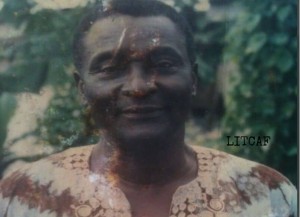
The history of Nigerian post-independence politics is replete with figures of immense intellect and ideological fervor, yet few remain as polarizing as Samuel Goomsu Ikoku (1922–1997). A socialist theoretician, a disciplined organizer, and a man of shifting political loyalties, Ikoku’s life was a masterclass in the complexities of the African nationalist movement. Often remembered as the man who famously “defeated his own father,” Alvan Ikoku, in a regional election, Samuel Ikoku’s legacy oscillates between two distinct archetypes: the principled revolutionary striving for a Marxist-Leninist transformation of Nigeria, and the “prodigal son” whose frequent political realignments left both allies and enemies in a state of perpetual bewilderment. This article explores the life, ideological shifts, and controversial legacy of a man who was both a cornerstone of the Nigerian left and a pragmatist in the corridors of power.
The written record
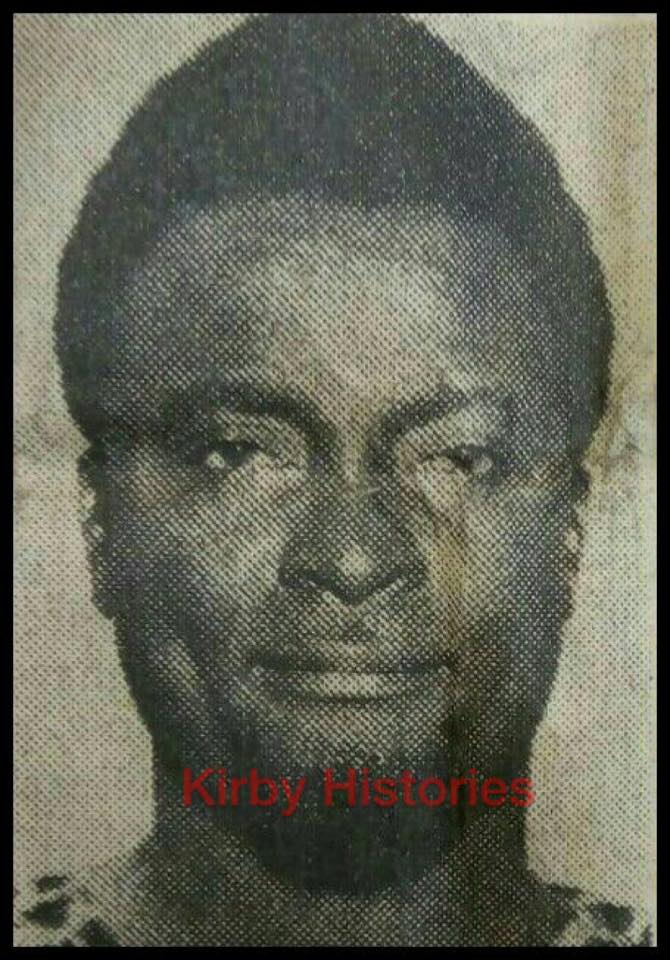
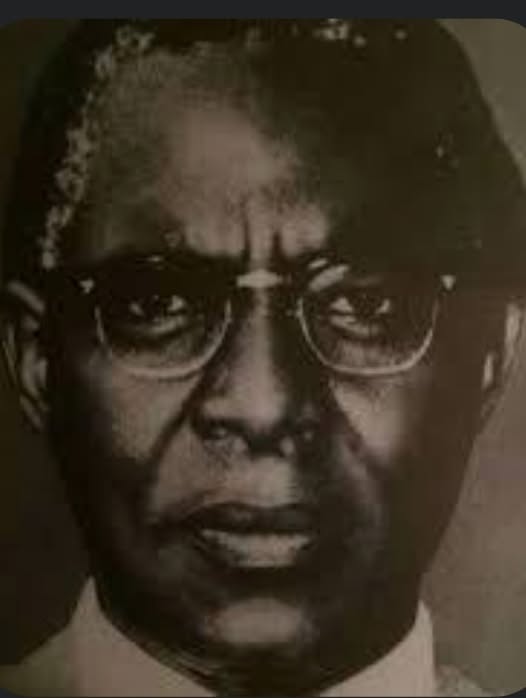
Photo Credit: Daily Times Nigeria Archive / National Archives of Nigeria.
Historical context
The Genesis of a Radical: Education and Early Ideology
Samuel Ikoku was born into the Igbo intellectual aristocracy. His father, Sir Alvan Ikoku, was a pioneering educationist and a moderate nationalist who believed in constitutional progression under the British framework;
The London Influence: Like many of his contemporaries, Ikoku’s ideological awakening occurred during his studies in the United Kingdom. At the London School of Economics (LSE), he was exposed to the biting critiques of capitalism and the rising tide of socialist thought that swept through post-WWII Europe.
The Marxist Foundation: Unlike the mainstream nationalists of the Nnamdi Azikiwe or Obafemi Awolowo schools who favored varying degrees of social democracy, Ikoku embraced a more rigorous Marxist-Leninist framework. He viewed the struggle for independence not just as a racial liberation, but as a class struggle against the “comprador bourgeoisie.”
The 1957 Election: Defeating the Father
The event that perhaps most defines Ikoku in the Nigerian popular imagination is the 1957 Eastern Region House of Assembly election;
A Conflict of Visions: Standing on the platform of the Action Group (AG), the younger Ikoku challenged his father, who led the United National Independence Party (UNIP). It was more than a familial spat; it was a clash between the “old guard” of moderate constitutionalism and the “new guard” of radical activism.
The Revolutionary Victory: Samuel Ikoku’s victory over his father was a shock to the traditional African social order, which emphasized filial piety. To his supporters, he was a “revolutionary” who put ideological conviction above blood ties. To his critics, he was the “prodigal son” who had committed a political patricide that signaled a breakdown of traditional values.
The Action Group and the Nkrumah Connection
In the early 1960s, Ikoku became the Federal Secretary of the Action Group, serving as the bridge between Chief Obafemi Awolowo and the radical socialist movements of Africa;
The Ideological Shift of the AG: Ikoku is credited with pushing the Action Group toward the policy of “Democratic Socialism.” He was instrumental in drafting the ideological documents that sought to reposition the AG as a progressive, pan-Africanist alternative to the conservative NPC-NCNC coalition.
Exile in Ghana: Following the 1962 treasonable felony trial of Awolowo, Ikoku fled to Ghana. In Accra, he became a close confidant of Kwame Nkrumah. He worked at the Winneba Ideological Institute, training a new generation of African revolutionaries. During this period, he was arguably the most “revolutionary” Nigerian on the global stage, advocating for a continental union and the total dismantling of neo-colonialism.
The Pragmatist’s Return: Post-War Realignments
The Nigerian Civil War and the subsequent military interventions saw a marked shift in Ikoku’s political trajectory, leading many to question his revolutionary credentials;
Service Under the Military: Upon his return to Nigeria after the 1966 coup in Ghana, Ikoku served as a commissioner in the East Central State under Ukpabi Asika. For a former Marxist who decried “reactionary regimes,” his willingness to work within a military administration was seen by some as a pragmatic necessity and by others as an “ideological betrayal.”
The Second Republic and the PRP: In the late 1970s, Ikoku joined Mallam Aminu Kano in the People’s Redemption Party (PRP). As the party’s Secretary-General, he helped craft the most radical manifesto of the Second Republic. Yet, even here, internal friction led to his exit, as he eventually aligned himself with the ruling National Party of Nigeria (NPN) , a party that represented everything his socialist youth had fought against.
Evaluating the “Prodigal” Tag: Loyalty to State or Self?
The charge that Ikoku was a “prodigal son” usually stems from his later years, particularly his role during the Abacha transition program in the 1990s.
The Abacha Era: Ikoku’s support for General Sani Abacha, particularly as a member of the Transitional Council, remains the most controversial chapter of his life. Pro-democracy activists, many of whom had once looked to Ikoku as a socialist mentor, felt he had lent “intellectual legitimacy” to a brutal dictatorship.
Defense of Realism: Ikoku defended his actions as “political realism.” He argued that the stability of the Nigerian state was paramount and that radicalism without power was futile. He saw himself not as a turncoat, but as a “political technician” attempting to navigate a failing state.
The Intellectual Giant of the Nigerian Left
Despite his zig-zagging political path, Samuel Ikoku’s intellectual contributions to Nigeria are indisputable;
Literature and Theory: His writings, including Nigeria for Nigerians and Economic Development of Nigeria, remain essential reading for understanding the structural economic challenges of the nation. He provided the Nigerian left with a “vocabulary of resistance” that persists today.
A Complex Heritage: Was he a revolutionary? In his commitment to structural change and pan-Africanism, yes. Was he a prodigal son? In his departure from his father’s path and his later abandonment of his own socialist comrades for the halls of power, many would argue yes.
Samuel Ikoku was a man of contradictions. He was a radical who served dictators, a Marxist who won elections in a conservative society, and a son who eclipsed his father only to find himself wandering the political wilderness. Perhaps he was neither purely revolutionary nor purely prodigal, but a reflection of the “Nigerian condition”, a state where high-minded ideology often collides with the harsh, compromising realities of survival and governance. His life serves as a cautionary tale and an inspiration: a reminder that while ideas are eternal, the men who hold them are often as flawed and fluid as the waters of the Niger.
Sources and references
- Ikoku, S. G. (1985). Nigeria’s Fourth Coup d’Etat: Options for Modern Statehood. Fourth Dimension Publishers.
- Ikoku, S. G. (1980). Economic Development of Nigeria: Socialist Perspectives. Tana Press.
- Olukoshi, A. O. (1995). The Politics of Structural Adjustment in Nigeria. James Currey Publishers. (Discussing the political landscape of Ikoku’s later years).
- Sklar, R. L. (1963). Nigerian Political Parties: Power in an Emergent African Nation. Princeto n University Press. (A primary source for Ikoku’s Action Group years).
Cite this article
Discussion
Sign in to join the discussion
Comments are checked by an editor before they appear. Leave a source or a correction and it is read first.
Continue reading
No comments yet
Nothing has been approved on this record yet. Comments are checked by an editor before they appear, so one written now shows on this page after that check.