 Ozikoro
 Biography · Published history
Sir Mathias Ugochukwu: A Post-Independence Nigerian Industrialist and Entrepreneurial Pioneer
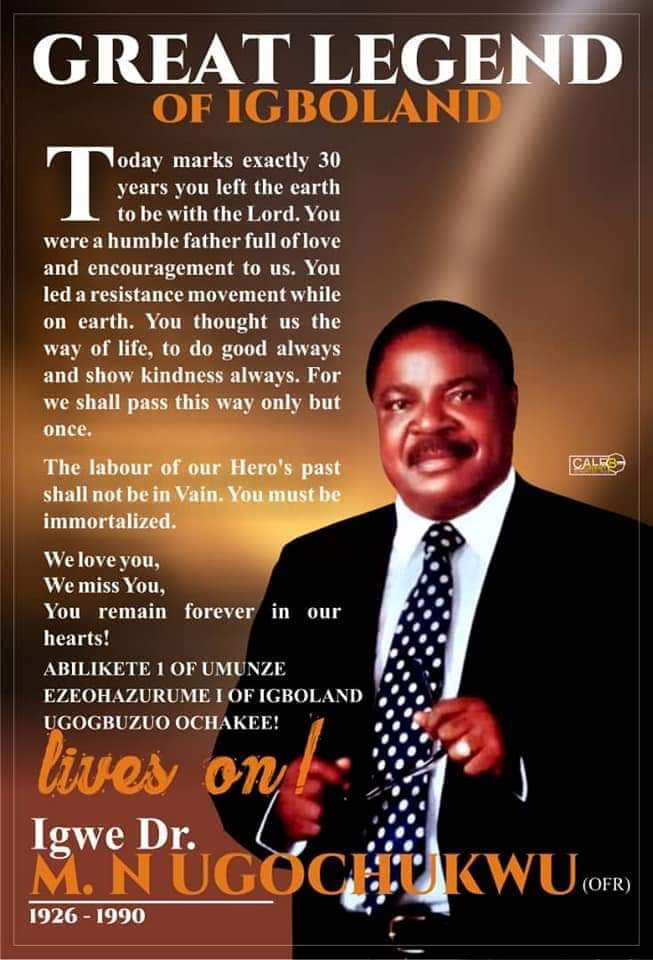
Where the historical record is thin or debated, Sir Mathias Ugochukwu occupies a notable place in Nigeria’s post-independence economic history as one of the early indigenous businessmen who expanded African participation in large-scale commerce and industry. Emerging during a period when economic power was still largely dominated by expatriate firms, Ugochukwu represented a generation of Nigerian entrepreneurs who leveraged trading networks, industrial ambition, and nationalist optimism to build indigenous enterprises. His career illustrates both the opportunities and vulnerabilities faced by African capitalists in the volatile political and economic environment of post-colonial Nigeria.
The written record
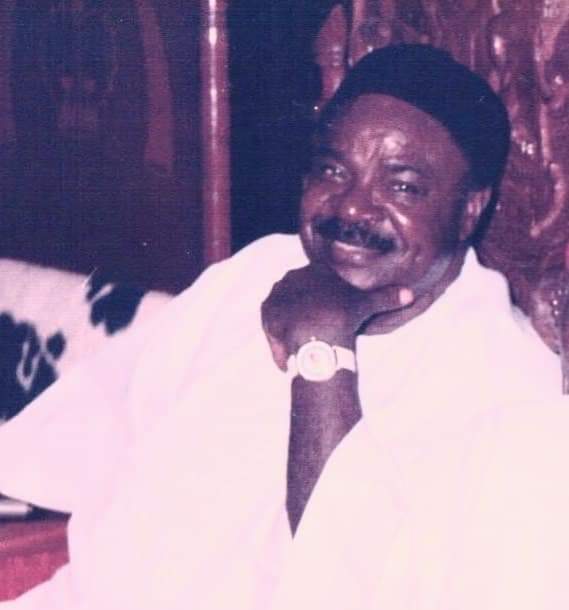
Historical context
Early Life and Entrepreneurial Foundations
Mathias Ugochukwu was born in southeastern Nigeria in the early twentieth century, a period marked by colonial economic restructuring and the rise of African middlemen in trade. Like many successful Nigerian entrepreneurs of his generation, Ugochukwu began his business life in commerce rather than manufacturing. Trading especially in imported goods offered an entry point into capital accumulation for Africans excluded from colonial industrial sectors.
By the late colonial period, Ugochukwu had established himself as a successful trader, building relationships with foreign suppliers and local distributors. These early ventures laid the foundation for his later expansion into industrial activities after Nigeria’s independence in 1960.
Expansion in the Post-Independence Economy
The years following independence were marked by strong nationalist encouragement of indigenous enterprise. Government policies, combined with rising domestic demand, created new opportunities for Nigerian businessmen. Ugochukwu capitalized on this moment by expanding beyond trading into manufacturing, assembly, and large-scale distribution.
He became particularly known for his involvement in automobile assembly and industrial importation, areas previously dominated by European firms. His company, often referred to in historical accounts as Mathias Ugochukwu & Sons Ltd., symbolized the growing confidence of Nigerian capital in heavy commercial sectors. Scholars identify him as part of an emergent African bourgeoisie that sought to challenge expatriate dominance through scale, diversification, and political engagement .
Industrial Vision and Business Strategy
Ugochukwu’s approach to business reflected a pragmatic industrial vision. Rather than pursuing small-scale production, he focused on high-capital enterprises with strong links to foreign manufacturers. This strategy allowed Nigerian firms to participate in global supply chains while maintaining local ownership.
His operations emphasized large-volume importation and assembly, employment of Nigerian labor and management, and reinvestment of profits into expanding industrial capacity.
While his enterprises relied on imported technology, they contributed to skill transfer and managerial experience among Nigerian workers, an important aspect of early post-colonial industrialization.
Political Engagement and the Nigerian Civil War
Like many prominent businessmen of his era, Ugochukwu’s career intersected with politics. Economic success in post-colonial Nigeria often required engagement with political authorities, both at regional and federal levels. This intersection became particularly consequential during the Nigerian Civil War (1967–1970).
Historical accounts indicate that Ugochukwu, an Igbo businessman, was associated with economic support for the Biafran cause. This involvement, whether ideological or pragmatic, reflected the broader mobilization of Eastern Nigerian elites during the conflict. Following the war, many Igbo entrepreneurs including Ugochukwu faced asset losses, confiscations, or severe business disruption.
Post-War Challenges and Economic Decline
The end of the civil war brought profound economic consequences for Eastern Nigerian businessmen. Policies such as abandoned property regulations and capital restrictions significantly weakened indigenous industrialists who had been active before 1967. Ugochukwu’s business empire, once among the most prominent African-owned enterprises, reportedly suffered extensive losses.
These post-war conditions illustrate the fragility of indigenous capital in politically unstable environments. Scholars argue that the collapse of many early Nigerian industrial ventures was less a failure of entrepreneurship than a consequence of structural and political disruption.
Contribution to Indigenous Capitalism
Despite these challenges, Sir Mathias Ugochukwu’s historical significance remains substantial. He demonstrated that Nigerians could operate successfully in sectors previously monopolized by foreign firms. His career helped redefine African participation in modern industry and challenged colonial assumptions about African economic capacity.
Ugochukwu’s legacy lies not only in his personal success but also in his role as a symbol of early indigenous industrial ambition. He contributed to the broader narrative of African economic self-assertion during the transition from colonial rule to independence.
Historical Assessment and Legacy
In contemporary scholarship, Ugochukwu is often cited as an example of both the promise and peril of post-independence African capitalism. His rise reflected favorable conditions created by nationalist policies and global trade networks, while his decline underscored the vulnerability of private enterprise to political conflict.
Today, his life is studied as part of Nigeria’s broader economic history, particularly in discussions of indigenous entrepreneurship, the impact of the civil war on private capital, and the challenges of post-colonial industrialization.
Although not always remembered in popular narratives, Ugochukwu remains a significant figure in understanding Nigeria’s economic past.
Sir Mathias Ugochukwu was a pioneering Nigerian businessman whose career embodied the aspirations of post-independence industrial development. Through commerce, manufacturing, and large-scale enterprise, he helped expand African participation in modern industry. His experiences also reveal the deep connections between business, politics, and national crisis in post-colonial Nigeria. As such, Ugochukwu’s story remains essential to understanding both the possibilities and limitations of indigenous capitalism in twentieth-century Africa.
Records are debated (especially wartime activities), cautious language is used.
Sources and references
- Forrest, T. (1994). The advance of African capital: The growth of Nigerian private enterprise. University of Edinburgh Press.
- Madiebo, A. A. (1980). The Nigerian revolution and the Biafran war. Fourth Dimension Publishers.
- Falola, T. (1999). The history of Nigeria. Greenwood Press.
- Onimode , B. (1982). Imperialism and underdevelopment in Nigeria. Macmillan.
Cite this article
Discussion
Sign in to join the discussion
Comments are checked by an editor before they appear. Leave a source or a correction and it is read first.
Continue reading
No comments yet
Nothing has been approved on this record yet. Comments are checked by an editor before they appear, so one written now shows on this page after that check.