 Ozikoro
 Cultural Heritage · Published history
Social and Political Structure of the Diala in Traditional Igboland
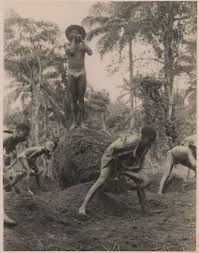
Nwata kịrị ụkwa na be nne ya, ọ gaghị asị na ọ tufuru aka.(A child who eats breadfruit at his mother’s house cannot say he lost his hand.) One who stays within his roots retains strength and identity.
The written record
In traditional Igboland, the social framework was rooted in kinship, land, and ancestral order. Within this framework, the Diala, the freeborn, formed the heart of political and social organisation. Their authority extended from the family compound to the council of elders, shaping leadership, land use, and moral order. The Diala were not a mere social label; they embodied the legitimacy of the earth itself.
Historical context
Structure of Authority among the Diala
Before colonial administration introduced chiefs and courts, political authority among the Igbo was acephalous(headless), there were no kings in the modern sense. Governance rested on the ọha na eze principle, the people and their elders. The Diala, by virtue of their lineage purity and connection to the earth goddess (Ala), held the right to sit in councils, settle disputes, and perform rituals of justice.
Family and Lineage Leadership
Every Diala lineage was headed by an Okpara, the firstborn male who functioned as priest, judge, and family spokesman.
His power derived from his right to hold the ọfọ, the sacred staff symbolising truth and ancestral authority.
Through him, the ancestors sanctioned the family’s decisions.
A non-Diala could not hold ọfọ or speak for the lineage, for that would pollute the ritual chain connecting the living to the dead.
Village and Clan Councils
At higher levels, representatives of Diala lineages formed ndi ichie councils of elders. They deliberated on land boundaries, marriage disputes, and communal safety.
Decision-making was consensus-based; age and lineage legitimacy conferred influence, not coercion.
The Diala therefore represented a meritocratic yet ancestral hierarchy leadership through worth, but bounded by birthright.
Land Rights and Communal Authority
In Igbo cosmology, land (ala) was both physical inheritance and spiritual covenant. Ownership symbolized a living connection with ancestors buried beneath it.
The Diala were therefore “ndị ala”, people of the land and not simply by name but by right.
Inheritance and Tenure
Land passed patrilineally within Diala families.
Women farmed portions of their husbands’ or fathers’ land but did not inherit directly.
Because the Osu (ritually dedicated) were considered property of shrines, they were excluded from ownership. Thus, land became a tangible mark of freedom. To own land was to affirm one’s ancestral legitimacy.
Agricultural Leadership
Agriculture was sacred labor, and yam, the “king of crops” was linked to manhood and prestige.
The New Yam Festival (Ịwa ji) was officiated by Diala elders who invoked the blessings of Ala and the ancestors for fertility of the soil.
Through these rites, the Diala reaffirmed their covenant with the land each year.
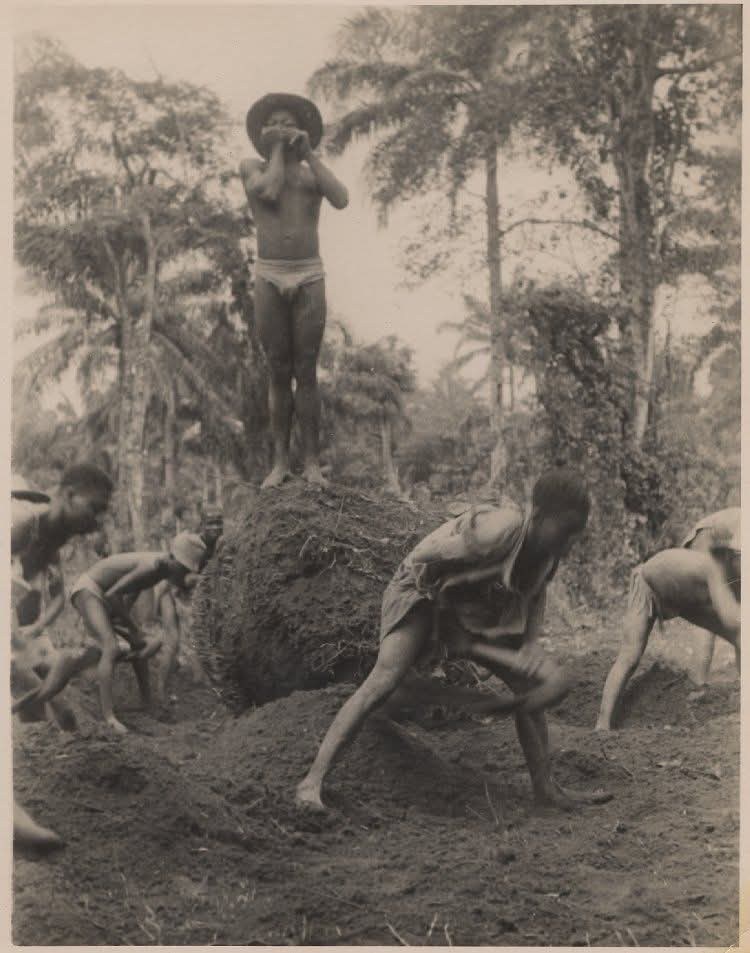
Ala bụ ụwa mmadụ, ọ bụkwa ndị mmụọ.(The earth belongs to humans and also to the spirits). Land links the living and the ancestors; to control it is to bridge both worlds.
Ritual Authority and Justice
Among the Diala, justice was sacred.
When disputes arose, elders invoked ọfọ na ogu, truth and innocence and swore by Ala. A false oath could bring illness or death, reinforcing honesty without formal courts. Diala elders also supervised purification rituals when taboos (nso Ala) were broken.
In these ways, religion and politics intertwined naturally.
Cultural Symbols of Authority
The Diala distinguished themselves through insignia of status, the ọfọ, sacred yam barns, and title symbols like Nze and Ozo.
Taking such titles required ritual purity and large feasts confirming wealth and honor. Women of Diala families also displayed status through coral beads and the ability to host communal feasts (itu ego).
These practices reinforced hierarchy while celebrating communal prosperity.
Ebe onweghị mmụọ nọ, a na-amụ ihe ọjọọ.(Where the spirit is absent, evil thrives). When ancestral order collapses, society loses harmony. The Diala system represented more than social hierarchy; it was a framework of order ensuring that the spirits were never absent from the affairs of men. The Diala in traditional Igboland formed the nucleus of authority balancing spirituality, justice, and governance. Their influence was less about domination and more about maintaining harmony between the earth, ancestors, and community.
In understanding their social and political structure, one grasps how the Igbo achieved self-regulation and communal peace long before external government systems arrived.
Sources and references
- Amalu, N. S., Abdullahi, Y., & Demson, E. (2021). Caste conflict in Nigeria: The Osu/Diala experience in Igboland, 1900–2017. Global Journal of Social Sciences, 20, 77–85.
- Jones, G. I. (1930s). Igbo photographic archive [Photographic collection]. Cambridge University.
- Thomas, N. W. (1910). Northcote Thomas collection [Photographic collection]. Museum of Archaeology and Anthropology, University of Cambridge.
- IgboGuide.org. (n.d.). Traditional Igbo proverbs.
Cite this article
Discussion
Sign in to join the discussion
Comments are checked by an editor before they appear. Leave a source or a correction and it is read first.
Continue reading
Related histories
 Cultural HeritageEleven Days of Nwafor Ogidi: Inside the Festival Keeping an Old Igbo Tradition AliveRead history →
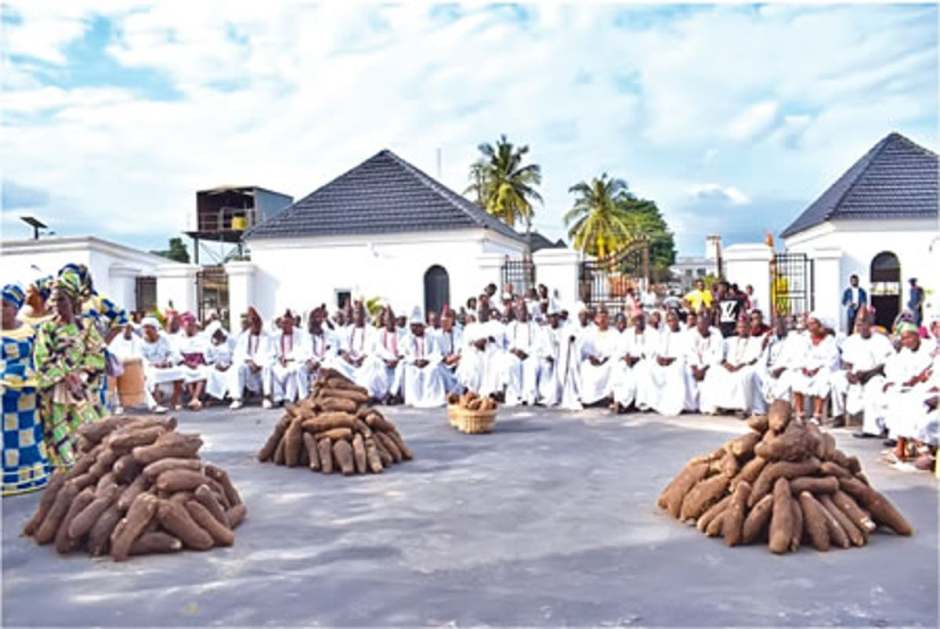 Cultural HeritageIli Ji Nkpor Obododike: The Indigenous Agricultural Ritual CycleRead history →
 Cultural HeritageMusic and Drum Traditions: Tracing the “Igbo Drum” in the AmericasRead history →
No comments yet
Nothing has been approved on this record yet. Comments are checked by an editor before they appear, so one written now shows on this page after that check.