 Ozikoro
 Biography · Published history
Sonny Okosun: Voice of Liberation and Pioneer of Conscious Music in Nigeria
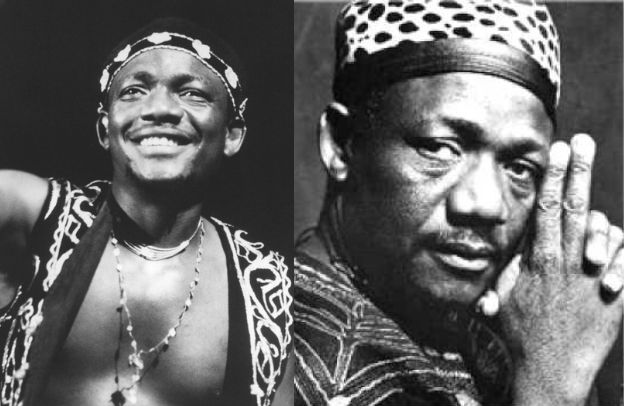
Among the legendary figures who shaped modern Nigerian music, Sonny Okosun stands out as one of the most influential. Widely recognized for his powerful voice, socially conscious lyrics, and unique fusion of reggae, highlife, Afro-pop, and indigenous rhythms, Okosun carved a niche for himself as a musical activist. Known popularly as “Ozziddi”, a term he used to describe his distinct musical style. Okosun positioned his art at the intersection of entertainment and political advocacy. His songs addressed themes such as liberation, colonial resistance, apartheid, Pan-African unity, and spirituality.
The written record
Historical context
Early Life and Musical Beginnings
Sonny Okosun was born on January 1, 1947, in Enugu, southeastern Nigeria, though his family roots trace to Edo State. Growing up in a culturally vibrant environment, he was exposed to traditional music, church hymns, and the emerging sounds of highlife and soul. At a young age, he developed a passion for singing and performance. He later formed a band called The Postmen in the late 1960s before eventually establishing the more successful Ozziddi band in the 1970s.
Through these early experiences, Okosun honed his sound and established the musical identity that would later define his career, one grounded in rhythmic richness, eclectic influences, and powerful storytelling.
The Birth of the “Ozziddi” Sound
Sonny Okosun coined the term “Ozziddi” to describe his fusion of African rhythms, reggae, funk, and highlife. The word, loosely interpreted as “progress,” reflected both his musical philosophy and ideological stance. The Ozziddi sound became a vehicle for addressing African political struggles and social injustices. It also offered a uniquely Nigerian interpretation of reggae, a genre that resonated across the continent due to its themes of resistance and liberation.
By blending reggae with distinctly Nigerian elements, Okosun created a style that was both globally recognizable and culturally rooted. His music appealed across linguistic and ethnic divides, making him a continental icon.
Music as a Tool for Liberation
Okosun was deeply committed to political liberation and social consciousness. His songs were not merely entertainment; they were calls to action. During the 1970s and 1980s, Africa was undergoing waves of political upheaval, anti-colonial struggle, and campaigns against apartheid. Okosun became one of the earliest Nigerian musicians to use his platform to openly condemn oppression in Africa.
Some of his most famous works include:
“Fire in Soweto” (1977) – A powerful critique of apartheid and racial violence in South Africa.
“Which Way Nigeria?” (1984) – A reflection on Nigeria’s political instability, corruption, and identity crisis.
“Papa’s Land” (1976) – Addressing colonial exploitation and the fight for African independence.
“No More War” (1983) – An appeal for peace across African nations.
Through these songs, Okosun solidified his reputation as one of Africa’s foremost musical activists.
Major Contributions to African Political Movements
Okosun’s music played a significant role in strengthening African solidarity movements. His anti-apartheid messages gained international attention and were embraced by human rights advocates, students, and political groups across Africa. Scholars note that music can be a powerful tool for political mobilization, especially when grounded in shared cultural and linguistic experiences. Okosun’s work exemplified this phenomenon.
During the height of apartheid resistance, his concerts often attracted large crowds who saw him as a voice of justice. His performances abroad also helped raise global awareness of African political struggles.
Spirituality and Transformation
Although widely known for political music, Okosun underwent a significant transformation in the 1990s when he shifted to gospel music. This transition reflected his growing spiritual identity and personal convictions. He founded the House of Prayer Ministry in Lagos, dedicating himself to Christian ministry.
Even in his gospel phase, his music maintained its message-driven tone, focusing on hope, redemption, and moral renewal. His spiritual evolution revealed the depth of his artistic and personal journey, illustrating his lifelong commitment to music as a tool for healing and transformation.
Influence on Contemporary Nigerian Music
Sonny Okosun paved the way for future generations of Nigerian musicians who blend entertainment with activism. Artists like Fela Kuti, Majek Fashek, Ras Kimono, and later, contemporary musicians such as Burna Boy and 2Baba, all inherited elements of Okosun’s politically conscious style.
His innovative fusion of genres also contributed to the evolution of Afro-fusion and Afro-pop. Many young musicians credit him as one of the pioneers who boldly expanded the expressive possibilities of Nigerian music.
Recognition and Awards
Throughout his career, Okosun received both national and international recognition. His albums topped charts across Africa, and his music was widely distributed in Europe and the Americas. He performed at major cultural events and collaborated with prominent African musicians. His contributions earned him honors from cultural institutions, government bodies, and African diaspora communities.
Despite his commercial success, Okosun consistently emphasized that his greatest reward was using his voice to advocate for justice and unity.
Death and Lasting Legacy
Sonny Okosun passed away on May 24, 2008, in the United States, after battling colon cancer. His death marked the end of an era, but his influence continues to echo through African music. His songs remain relevant as Nigeria and other African nations continue to grapple with political instability, inequality, and social tension.
Okosun’s body of work remains a crucial part of African musical history, an archive of resistance, cultural pride, and Pan-African consciousness. His legacy lives on through music, political discourse, and scholarship.
Sonny Okosun was more than a musician, he was a cultural ambassador, activist, and visionary whose art transcended the boundaries of entertainment. Through his “Ozziddi” sound and his fearless engagement with political themes, he championed African liberation and unity during some of the continent’s most turbulent decades. His music continues to inspire conversations about justice, national identity, and cultural renewal. Today, Okosun is remembered not only as a pioneer of conscious music but also as one of the legendary voices who shaped modern African history.
Sources and references
- Olorunyomi, S. (2005). Afrobeat! Fela and the Imagined Continent. Africa World Press.
- Veal, M. E. (2000). Fela: The Life and Times of an African Musical Icon. Temple University Press.
- Collins, J. (2001). Music-making in West Africa. In A. Stone (Ed.), The Garland Handbook of African Music (pp. 197–212). Routledge.
- Echeruo, M. J. C. (2010). Music and nationalism in modern Africa. Journal of African Cultural Studies, 22(2), 165–182.
Cite this article
Discussion
Sign in to join the discussion
Comments are checked by an editor before they appear. Leave a source or a correction and it is read first.
Continue reading
No comments yet
Nothing has been approved on this record yet. Comments are checked by an editor before they appear, so one written now shows on this page after that check.