 Ozikoro
 Cultural Heritage · Published history
Symbolism of the Four Market Days in Igbo Culture
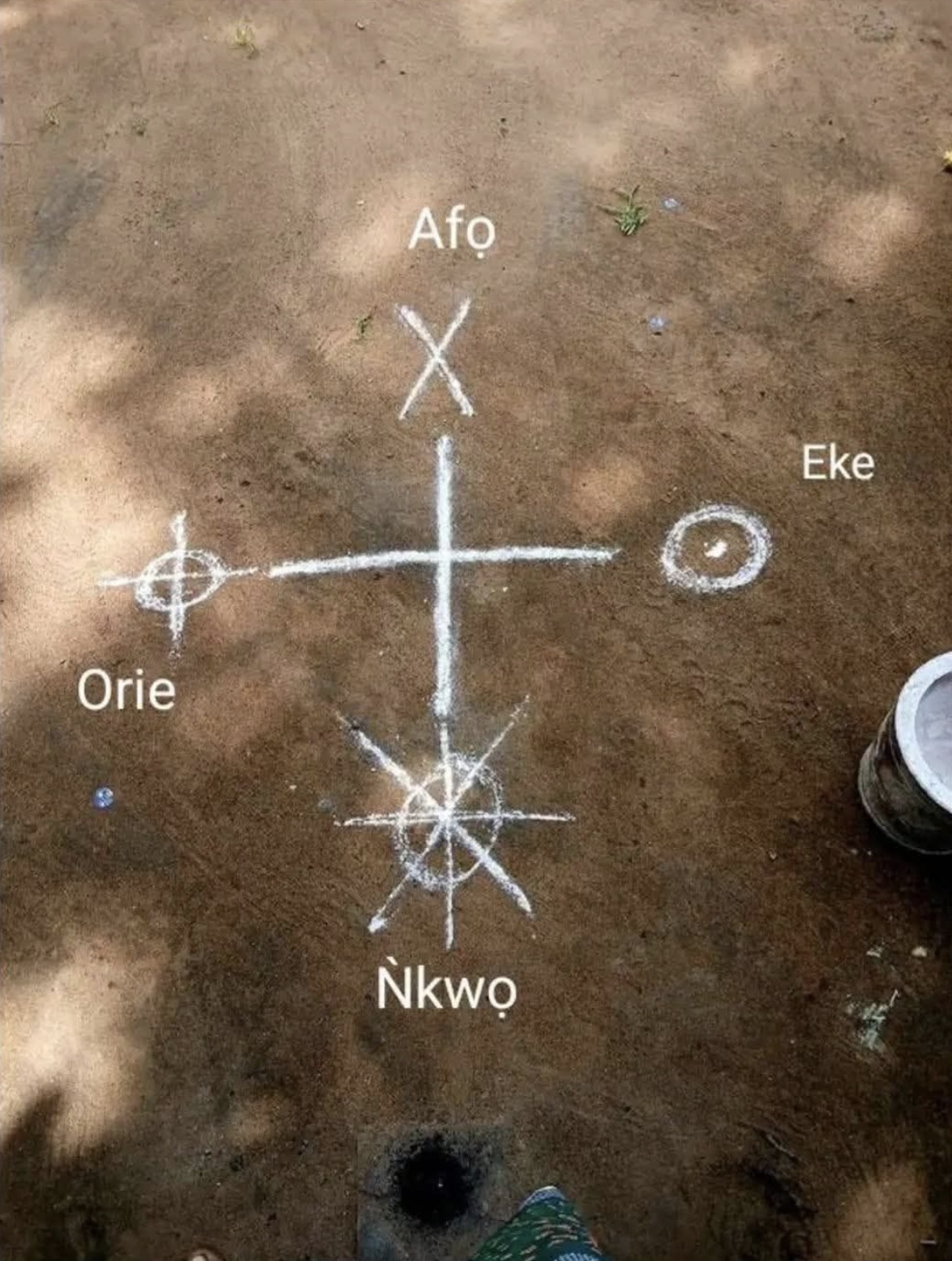
The Igbo people of southeastern Nigeria have a unique and intricate way of understanding time, rooted deeply in their cultural, spiritual, and natural worldview. Their traditional calendar is built around a four-day week, Eke, Orie (also known as Oye), Afọ, and Nkwọ. These days are far more than mere markers of time; they carry profound cosmological and spiritual significance, weaving together the elements of nature (fire, water, earth, and air) and the cardinal directions (east, west, north, and south). This article delves into the structure, meaning, and enduring relevance of the Igbo four-day market week, exploring how it shapes economic, social, and spiritual life while reflecting the Igbo’s holistic connection to the universe.
The written record
The Structure of the Igbo Four-Day Week
The Igbo calendar operates on a four-day cycle called the “market week,” distinct from the seven-day week familiar to much of the world. This system is central to organising economic activities, social gatherings, and spiritual practices, especially in rural Igbo communities where markets are vital hubs of life. Each day, Eke, Orie, Afọ, and Nkwọ has its own unique character, defined by its association with a natural element and a cardinal direction. These connections reflect the Igbo belief that time, nature, and human activity are deeply intertwined.
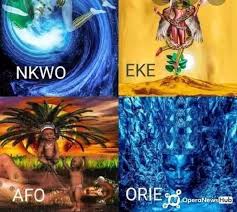
The number four is sacred in Igbo cosmology, symbolising balance, completeness, and harmony. This quadripartite system is evident in the division of the universe into four parts, each governed by a specific market day, its corresponding element, and its associated direction. The market week is not just a practical tool for scheduling; it’s a framework that mirrors the Igbo’s understanding of the cosmos as an interconnected whole.
The Market Days and Their Meanings
Each day of the Igbo market week carries distinct spiritual, cultural, and practical significance, influencing everything from daily tasks to major rituals. Below, we explore the characteristics of each day, their elemental and directional associations, and their roles in Igbo society.
Eke: The Day of Fire and Beginnings
Element: Fire
Cardinal Direction: East
Significance: Eke is the day of fire, embodying passion, creativity, and transformation. Fire represents energy and power, making Eke a day for bold actions and new ventures. It is closely linked to Amadioha, the Igbo god of thunder and lightning, who symbolises justice and divine authority. The eastward direction connects Eke to beginnings, as the east is where the sun rises, bringing light and opportunity.

Eke is a vibrant market day, filled with bustling trade and social energy. It’s considered an auspicious time for starting businesses, initiating projects, or performing rituals that require strength and courage. Many Igbo communities schedule major festivals or ceremonies on Eke to harness its fiery, transformative energy.
Orie (Oye): The Day of Water and Reflection
Element: Water
Cardinal Direction: West
Significance: Orie, also called Oye in some Igbo dialects, is associated with water, symbolising purity, fertility, and life. Water’s role in sustenance and cleansing makes Orie a day for healing, renewal, and spiritual purification. The westward direction ties Orie to introspection and the setting sun, a time for reflection and closure.
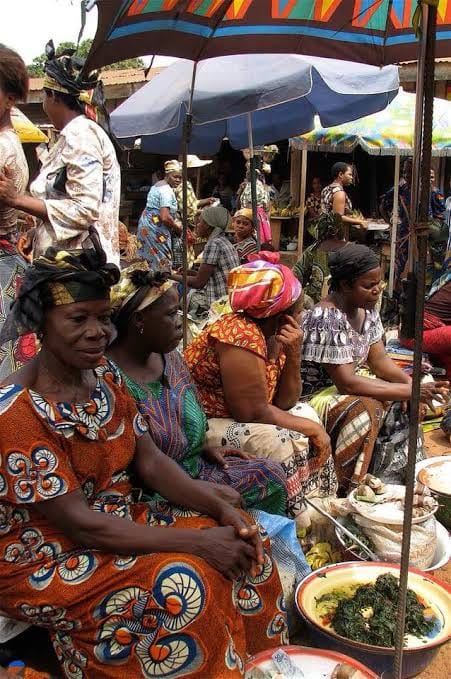
Orie/Oye is a day for calm and thoughtful activities. Communities often use it for resolving disputes, performing cleansing rituals, or honouring deities like Idemmili, the goddess of rivers and fertility. Markets on Orie tend to have a quieter, more reflective atmosphere compared to the lively Eke.
Afọ: The Day of Earth and Stability
Element: Earth
Cardinal Direction: North
Significance: Afọ represents earth, symbolising stability, nourishment, and the foundation of life. The earth is the source of food and sustenance, reflecting the Igbo’s agrarian roots. The northern direction associates Afọ with grounding and steadfastness, providing a sense of rootedness in a dynamic world.
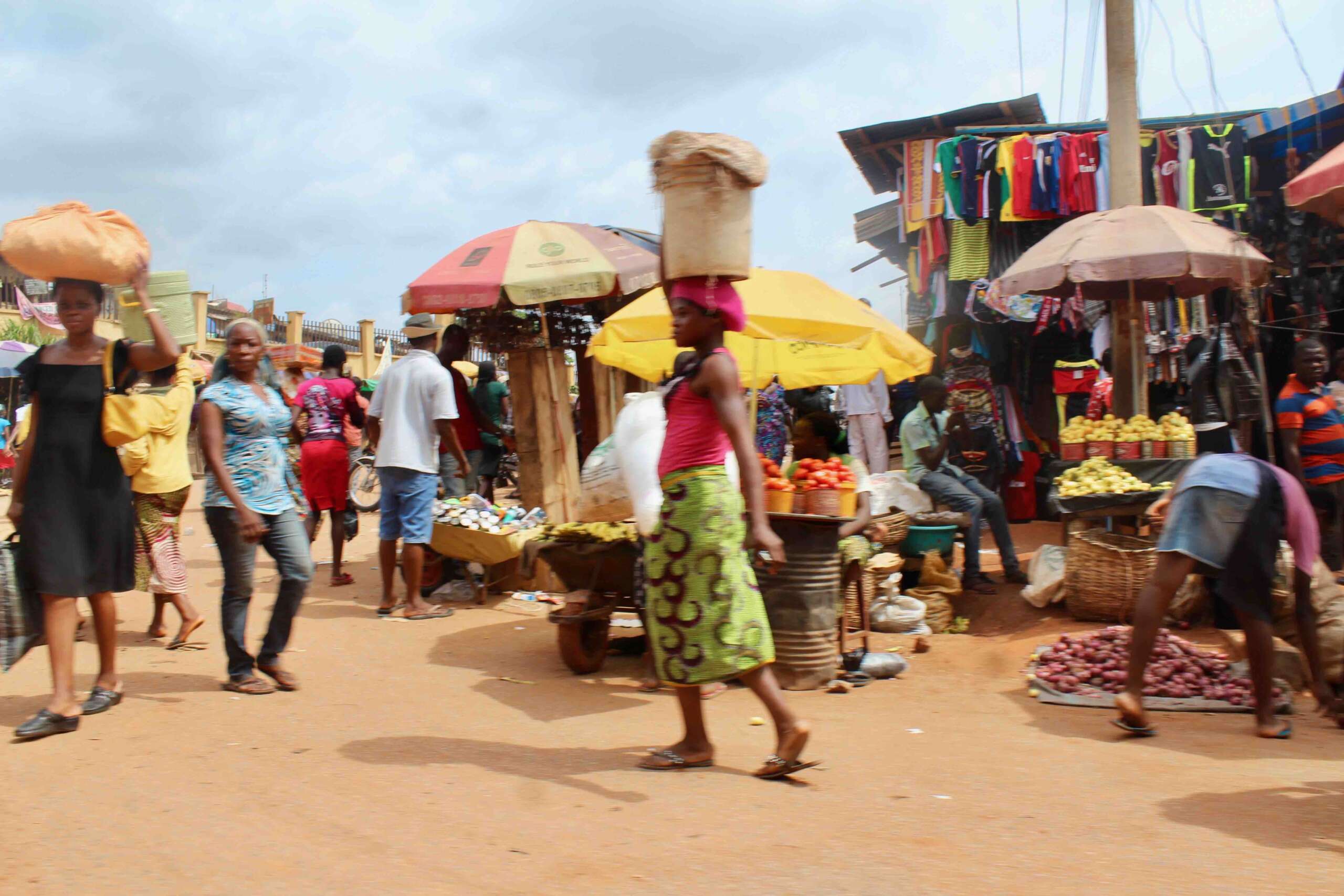
Afọ is a practical day, ideal for farming, building, or planning for the future. It’s also a time to honour Ala (or Ani), the Igbo earth goddess, who is revered as the guardian of morality and fertility. Markets on Afọ often focus on agricultural goods, with farmers trading crops and tools.
Nkwọ: The Day of Air and Connection
Element: Air
Cardinal Direction: South
Significance: Nkwọ is linked to air, representing intellect, communication, and movement. Air is the medium for ideas and connections, making Nkwọ a day for social gatherings, negotiations, and intellectual pursuits. The southern direction ties Nkwọ to progress and dynamism, symbolising growth and forward motion.
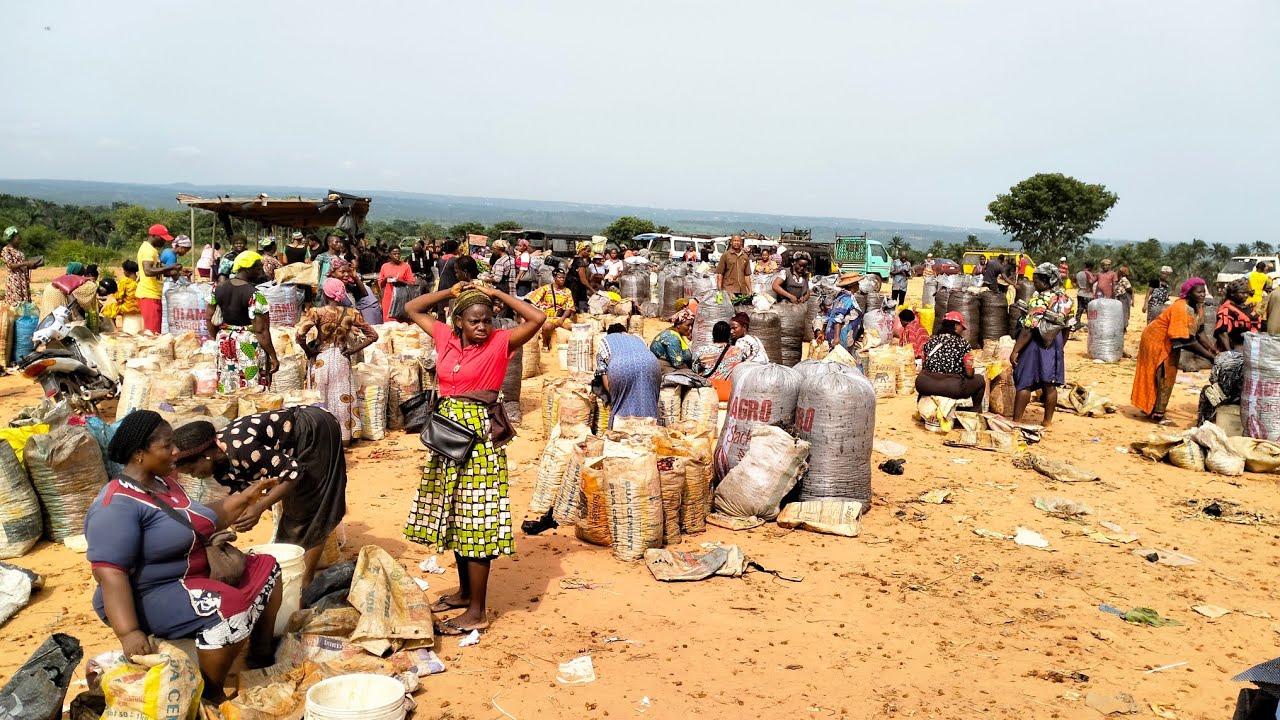
Nkwọ is one of the liveliest market days, buzzing with community interactions and vibrant exchanges. It’s a day for storytelling, trading ideas, and building relationships. Many Igbo communities choose Nkwọ for celebrations, marriages, or communal meetings, as its airy energy fosters creativity and connection.
Cosmological and Cultural Significance
The Igbo four-day week is more than a calendar; it’s a reflection of a worldview that sees time, nature, and human life as interconnected. The alignment of each day with an element and cardinal direction creates a balanced system that guides both spiritual and practical activities. The number four is central to Igbo cosmology, symbolising completeness and unity, as seen in the four corners of the universe, the four elements, and the four market days.
This system permeates many aspects of Igbo life. For example, children are often named after their birth day, such as Okeke (born on Eke) or Nwankwo (born on Nkwọ). These names carry spiritual significance, connecting individuals to the energy of their day. Rituals, festivals, and ceremonies are also timed according to the market week, with each day’s energy shaping the event’s purpose. For instance, Eke’s fiery energy is ideal for bold rituals, while Orie’s watery essence suits cleansing ceremonies.
Markets are central to Igbo economic and social life, serving as more than just places for trade. They are cultural hubs where communities exchange news, resolve conflicts, and celebrate traditions. Each market day has a unique character shaped by its elemental and spiritual associations. Nkwọ markets are lively and social, while Afọ markets emphasise agricultural exchange.
The Role of Markets in Igbo Society
The market week is deeply tied to the Igbo’s economic and social structure. In pre-colonial Igbo society, markets were the heartbeat of community life, functioning as centres for trade, socialisation, and governance. Each of the four days had its own major market, often in different towns or villages, creating a rotating cycle of activity that connected communities across Igboland. This system ensured the circulation of goods, ideas, and people, fostering unity and interdependence.
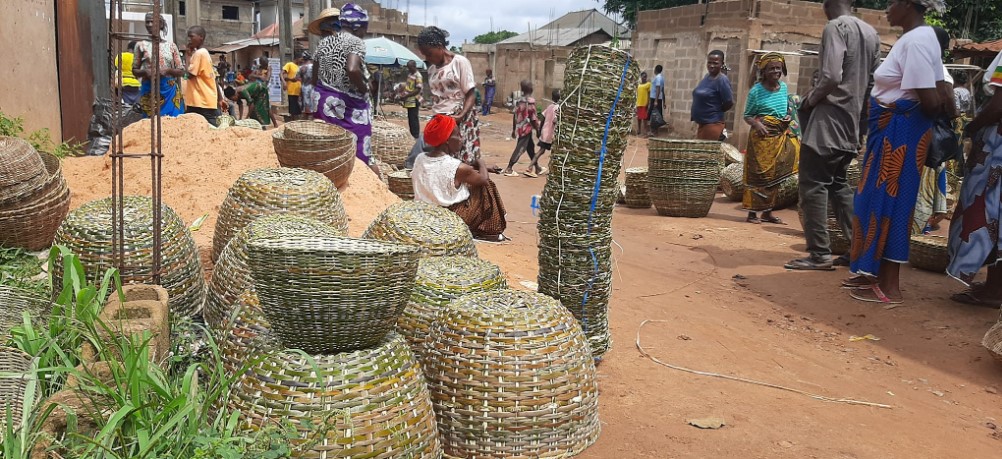
Markets also held spiritual significance. Many were dedicated to specific deities, and traders often performed rituals to seek blessings for prosperity. For example, Eke markets might include offerings to Amadioha for protection, while Afọ markets could involve prayers to Ala for a bountiful harvest. This blending of spirituality and commerce reflects the Igbo belief that material and spiritual life are inseparable.
Historical and Social Context
The Igbo market week has its roots in the community’s agrarian and trading traditions. Markets were strategically organised to align with the four-day cycle, allowing farmers and traders to plan their activities efficiently. This system also facilitated long-distance trade, as Igbo merchants travelled to neighbouring regions, exchanging goods like yams, palm oil, and crafts. The market week’s structure helped maintain social cohesion, as it brought people together regularly to strengthen communal bonds.
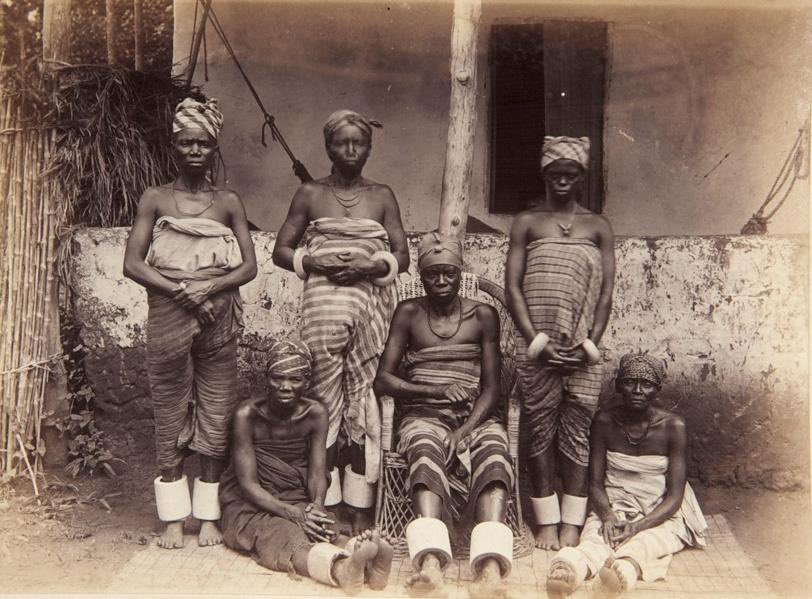
The spiritual significance of the market days also tied them to Igbo religious practices. Each day’s deity, such as Amadioha for Eke or Ala for Afọ, played a role in shaping the community’s moral and ethical framework. For example, Ala’s association with Afọ reinforced the importance of respecting the land and maintaining harmony within the community.
The Igbo Calendar in Modern Times
While the Gregorian calendar has become widespread due to modernisation, the four-day market week remains vital, particularly in rural Igbo communities. Markets, festivals, and rituals are still organised around the traditional calendar, preserving its cultural and spiritual significance. In urban areas, the market days may be less prominent, but their influence persists in naming conventions, traditional ceremonies, and community events.
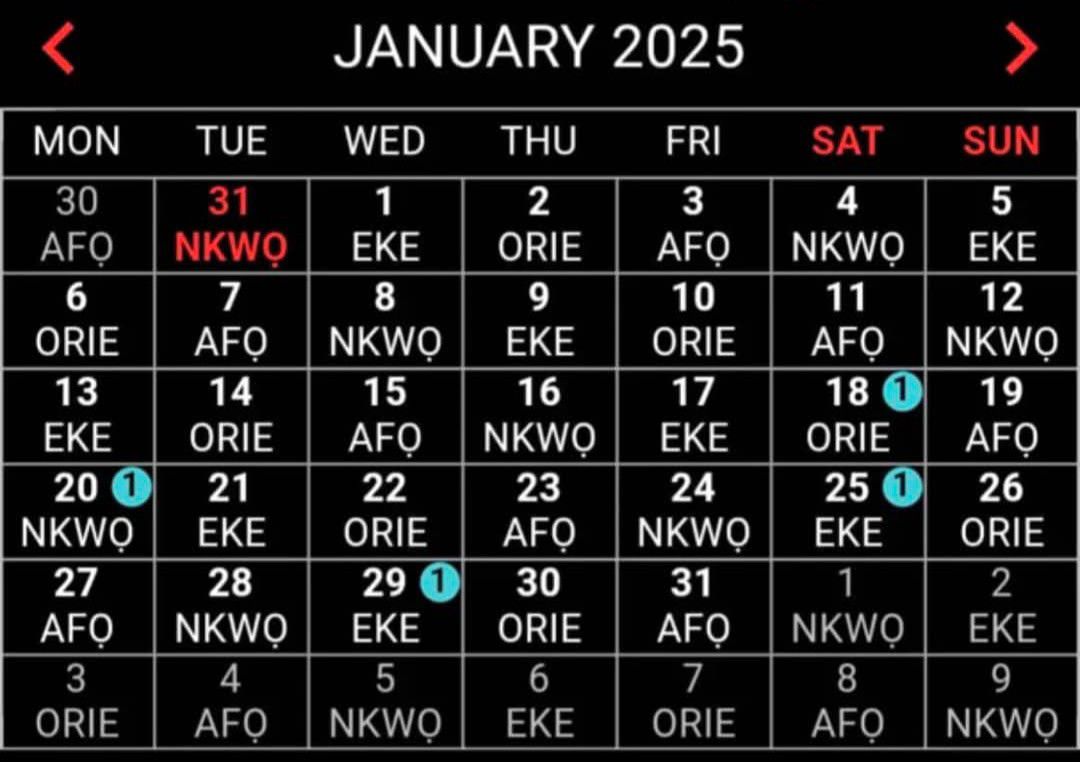
The Igbo calendar is a symbol of cultural resilience. Despite colonial disruptions and the spread of Western timekeeping, the four-day market week endures as a cornerstone of Igbo identity. Efforts to document and revive traditional practices, as seen in contemporary writings, highlight their ongoing relevance in connecting modern Igbo people to their heritage.
Historical context
Challenges and Preservation
The influence of colonial rule and Christianity has challenged the Igbo traditional calendar’s prominence. Missionaries often discouraged traditional practices, and the adoption of the seven-day week altered some aspects of Igbo life. However, the market week’s deep cultural roots have ensured its survival. Community leaders, scholars, and cultural advocates continue to promote its significance, emphasising its role in maintaining Igbo identity.
Initiatives to teach younger generations about the market week, such as through cultural festivals or educational programs, are helping preserve this tradition. For example, festivals celebrating Igbo heritage often align with the market days, reinforcing their spiritual and cultural importance.
The Igbo traditional calendar, with its four-day market week, is a powerful testament to the Igbo people’s deep connection to the natural and spiritual world. Each day, Eke, Orie, Afọ, and Nkwọ carry unique elemental and directional significance, shaping the rhythm of Igbo life. From vibrant markets to sacred rituals, the calendar weaves together time, nature, and community in a harmonious system that reflects the Igbo worldview. As a living tradition, the four-day week continues to guide economic, social, and spiritual activities, serving as a vital link to Igbo heritage and identity.
Sources and references
- Ngakudi, G. (2018, October 31). Igbo market days: Origin, sacredness and cosmology .
- Ozikoro. (2025, April). The spiritual elements and cultural rhythms of the Igbo market week .
- Sloane Angelou. (2024, October). All you need to know about Nkwo market day in the Igbo calendar .
- Uchendu, V. C. (1965). The Igbo of southeast Nigeria . Holt, Rinehart and Winston.
Cite this article
Discussion
Sign in to join the discussion
Comments are checked by an editor before they appear. Leave a source or a correction and it is read first.
Continue reading
Related histories
 Cultural HeritageEleven Days of Nwafor Ogidi: Inside the Festival Keeping an Old Igbo Tradition AliveRead history →
 Cultural HeritageIli Ji Nkpor Obododike: The Indigenous Agricultural Ritual CycleRead history →
 Cultural HeritageMusic and Drum Traditions: Tracing the “Igbo Drum” in the AmericasRead history →
No comments yet
Nothing has been approved on this record yet. Comments are checked by an editor before they appear, so one written now shows on this page after that check.