 Ozikoro
Cultural Heritage · Published history
The Ancient Roots of the Delta: Theories on Ijaw Migration and Origins
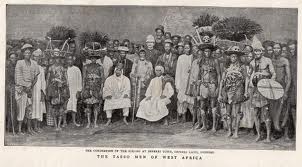
The Ijaw (Ijaw/Ijo) people are among the oldest and most culturally influential ethnic groups in the Niger Delta, occupying riverine and coastal territories across present-day Rivers, Bayelsa, Delta, Akwa Ibom, and Ondo States. Their history is deeply embedded in the waterways, mangrove swamps, and deltaic islands that shape their social and economic life. Although the Ijaw are widely recognized for their antiquity, the precise origins of the group have been the subject of extensive scholarly debate.
The written record
Historical context
The Niger Delta as an Ancient Homeland
One of the most dominant scholarly views is that the Ijaw are indigenous to the Niger Delta, having occupied the region for several millennia. Historian Alagoa states that many Ijaw communities maintain oral traditions asserting that they “have always been here,” indicating a belief in deep autochthony.
Linguistic Evidence
Linguists classify the Ijaw language cluster as a unique branch of the Niger-Congo language family. It is often considered one of the earliest linguistic groups to diverge within this family. This has led scholars to propose that the Ijaw people did not migrate into the Delta recently, but rather represent an ancient population that developed in situ.
Archaeological Indicators
Archaeological studies suggest that human habitation in the Delta dates back thousands of years. Shell middens, pottery fragments, and ancient fishing tools discovered in parts of the Western and Central Delta hint at continuous occupation consistent with Ijaw oral traditions.
Migration Theory: Movement from the Interior
In contrast to the autochthonous theory, another line of thought suggests that the Ijaw migrated into the Niger Delta from central or western Nigeria. This theory is largely based on linguistic connections and cultural similarities between the Ijaw and other Niger-Congo groups.
Possible Migration Routes
Proponents of this theory argue that the Ijaw may have traveled along river systems such as the Niger and Benue, before settling in the swampy deltaic region. Some oral histories refer to early ancestors journeying by canoe, settling first in freshwater zones before expanding into saline coastal areas.
Cultural Parallels
Certain cultural features such as kinship patterns, masquerade traditions, and ritual practices, have been identified as having similarities with inland groups. These parallels suggest past interactions or shared origins, though not conclusive proof of migration.
The Benin Connection Debate
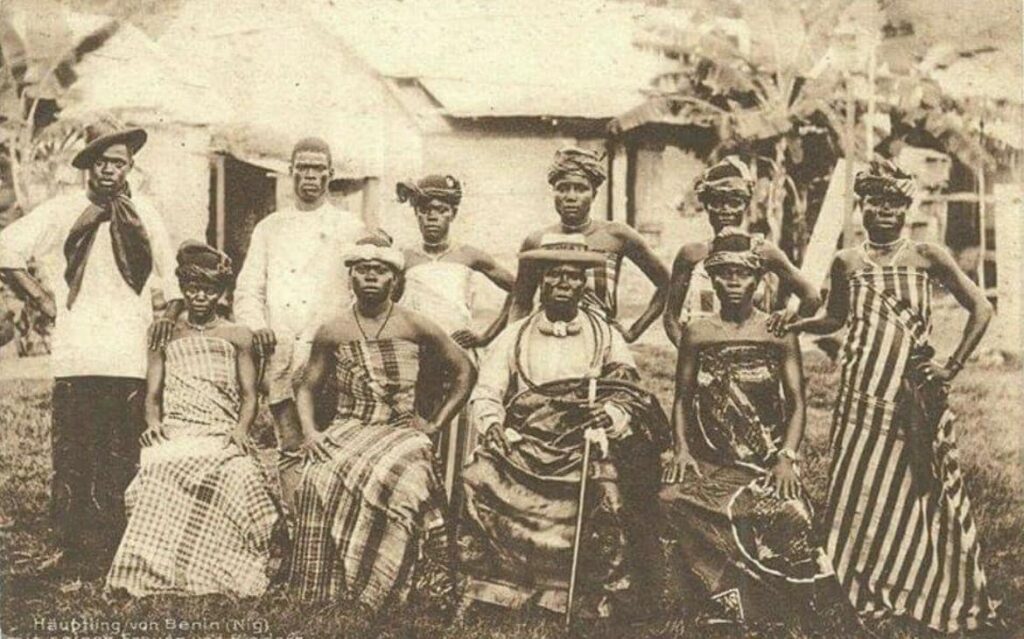
Another theory proposes that some Ijaw groups may have interacted with, or branched off from, early Benin-related populations. This perspective arose due to limited similarities in political structures and some ritual items. However, contemporary scholars emphasize that such connections are likely due to trade contact rather than direct descent.
Historians such as Alagoa dismiss widespread claims that the Ijaw “came from Benin” as oversimplifications shaped by colonial misinterpretations. Instead, interactions between the Ijaw and neighboring Edo-speaking peoples are better understood as commercial and political exchanges rather than evidence of shared ancestry.
The Eastern Origins Hypothesis
Some Eastern Ijaw groups such as the Kalabari and Okrika, preserve oral traditions describing an eastward point of origin.
These narratives explain how different Ijaw subgroups branched off, moving through the creeks and founding new city-states. For instance, Kalabari traditions speak of movements from regions east of their current location, possibly indicating internal migration rather than expatriation from outside the Delta.
These internal movements likely contributed to the political and cultural diversity within the Ijaw nation. Thus, the Eastern-origin theory is seen not as evidence of external migration but as a reflection of the dynamic settlement history within the Delta.
Theories of Coastal Adaptation and Environmental Evolution
Another approach to understanding Ijaw origins emphasizes environmental adaptation rather than migration. Scholars argue that the ancestors of the Ijaw developed specialized lifestyles, fishing, canoe-making, salt harvesting, and mangrove exploitation due to the unique landscape of the Niger Delta.
Settlement Patterns
Communities often originated on small islands or creek banks, which grew into influential polities such as Bonny, Kalabari, Nembe, and Okrika. These societies displayed high levels of political organization, suggesting long-term settlement rather than recent migration.
The deltaic environment has changed over centuries, but the continuity of Ijaw settlement patterns reinforces the belief that the group developed its distinctive identity within the Delta.
Ijaw oral traditions are central to understanding their origins. Many communities maintain stories of primordial ancestors such as Keme or Opu-Ogboin, who are regarded as the earliest settlers. These narratives often emphasize descent, the sanctity of land, and the spiritual significance of water.
“We Did Not Come From Anywhere”; A popular statement in Ijaw oral history asserts that “we did not come from anywhere,” a declaration of identity that underscores the belief in longstanding indigenous presence. This does not negate the possibility of ancient migrations, but indicates that such movements occurred so far in the past that they have become embedded in cultural memory.
Scholars generally treat oral traditions not as literal migration records but as cultural memory that reflects historical consciousness. When combined with linguistic and archaeological evidence, they paint a picture of the Ijaw as one of the oldest continuous populations of the Niger Delta.
Understanding Ijaw origins is not merely a historical exercise, it shapes modern identity, cultural revival, and political discourse. Amid debates about resource control, land rights, and regional development, the claim to ancient occupation reinforces Ijaw communities’ moral and political arguments.
Efforts to preserve the Ijaw language, festivals such as Nembe Ogidiga and Kalabari regattas, and traditional knowledge systems draw strength from the belief in deep ancestral roots. Migration theories also influence internal unity. Shared origins, whether through migration or ancient settlement, reinforce collective identity across diverse Ijaw subgroups.
The origins of the Ijaw people encompass a rich blend of linguistic, archaeological, environmental, and oral evidence. While multiple theories exist ranging from indigenous development in the Delta to ancient migrations from inland regions, scholars widely agree that the Ijaw represent one of West Africa’s oldest populations. Their long-standing adaptation to the Niger Delta environment, complex culture, and enduring oral traditions highlight a heritage deeply rooted in the waterways that define their world. Theories of Ijaw origins, therefore, not only illuminate the past but also strengthen contemporary identity and cultural continuity.
Sources and references
- Alagoa, E. J. (1999). The uses of hagiography: A study of Ijo oral tradition. University of Port Harcourt Press.
- Alagoa, E. J. (2005). A history of the Niger Delta: An historical interpretation of Ijo oral tradition. Port Harcourt: Onyoma Research Publications.
- Dapper, T. (2011). Peoples and cultures of the Niger Delta. Port Harcourt: M&J Grand Orbit.
- Williamson, K. (1989). “Niger-Congo overview.” In Bendor-Samuel, J. (Ed.), Th e Niger-Congo languages (pp. 3–45). University Press of America.
Cite this article
Discussion
Sign in to join the discussion
Comments are checked by an editor before they appear. Leave a source or a correction and it is read first.
Continue reading
Related histories
 Cultural HeritageEleven Days of Nwafor Ogidi: Inside the Festival Keeping an Old Igbo Tradition AliveRead history →
 Cultural HeritageIli Ji Nkpor Obododike: The Indigenous Agricultural Ritual CycleRead history →
 Cultural HeritageMusic and Drum Traditions: Tracing the “Igbo Drum” in the AmericasRead history →
No comments yet
Nothing has been approved on this record yet. Comments are checked by an editor before they appear, so one written now shows on this page after that check.