 Ozikoro
 Cultural Heritage · Published history
The Architecture and Symbolism of the Obi (Main House) in Igbo Homesteads
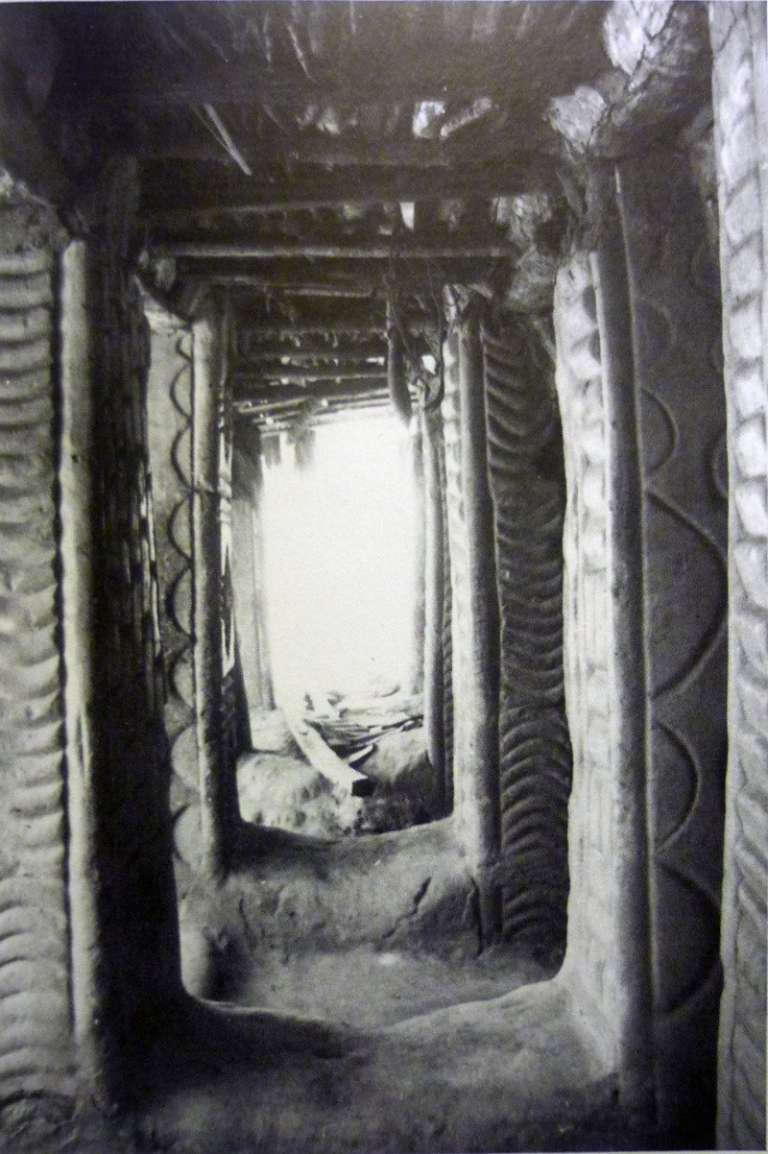
In the traditional socio-spatial organization of the Igbo people of Southeastern Nigeria, the homestead (ezi na ulo) is not merely a collection of shelters but a physical manifestation of the lineage’s spiritual and social hierarchy. At the geometric and metaphysical center of this compound stands the Obi. The Obi is the “main house” or “ancestral reception hall” belonging to the patriarch (Okpala or Di-ji). It is the most significant structure in an Igbo man’s life, serving as the bridge between the living members of the family and the deified ancestors. Unlike the private sleeping quarters (nkolo) of wives or the domestic kitchen areas, the Obi is a public-facing, sacred space where governance, ritual, and hospitality converge. This article examines the architectural ingenuity, the deep-seated spiritual symbolism, and the evolving role of the Obi in contemporary Igbo society.
The written record
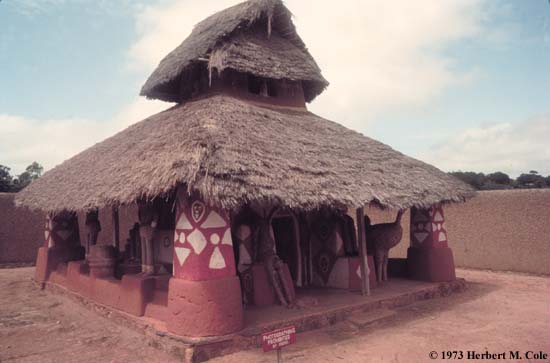
Photo Credit: G.I. Jones Archives / Museum of Archaeology and Anthropology, University of Cambridge.
Historical context
The Physical Structure: Engineering for Climate and Status
The traditional architecture of the Obi was a masterclass in utilizing local materials to create a comfortable, dignified environment;
Spatial Positioning: The Obi is almost always positioned to face the main entrance gate (ama) of the compound. This placement allows the patriarch to monitor all movements into and out of his domain, symbolizing his “watchful protection” over the family.
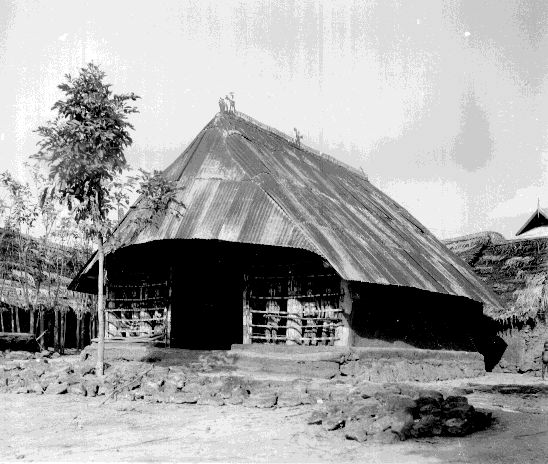
Materials and Construction: Historically, the Obi was constructed using “puddled mud” (laterite) for the walls, which provided excellent thermal mass against the tropical sun. The roof was typically steeply pitched and thatched with palm fronds (ngwo) or grass, designed to shed the heavy rains of the Niger Delta and the rainforest belt.
The Open-Front Design: A defining feature of the Obi is its “semi-open” frontage. Usually, the front wall is either low or non-existent, replaced by carved wooden pillars (ofolo). This design ensures maximum ventilation and reflects the “transparency of justice” administered within its walls.
The Internal Sacred Geography
The interior of the Obi is not a random open space; it is divided into specific zones that dictate the behavior of its occupants;
The Patriarch’s Throne (Ukpo): At the rear or side of the Obi is a raised earthen platform, often covered with leopard skins or woven mats, known as the Ukpo. This is where the head of the family sits. It is “taboo” for any other person to sit on the Ukpo, as it represents the authority of the lineage.
The Ancestral Altar (Ihu-Ani or Aro): Often located near the center or against the back wall, the Obi houses the family’s sacred symbols, including the Ofo (the staff of authority) and carvings representing the ancestors. This makes the Obi a “living shrine.”
Seating for Elders and Guests: Carved stools or built-in mud benches run along the sides, strictly organized by “seniority.” Guests are seated according to their status, with the most titled men sitting closest to the patriarch.
The Symbolism of Authority and Hospitality
The Obi is the physical embodiment of the Igbo concept of “manhood and responsibility”;
- The “Face” of the Family: To have a well-maintained Obi is a sign of a “successful man” (Ogaranya). Conversely, a dilapidated Obi suggests a decline in the family’s fortunes or the patriarch’s “loss of grip” on his responsibilities.
- The Ritual of Kola Nut: Every significant social interaction in the Obi begins with the “breaking of the kola nut.” As the patriarch welcomes guests into his Obi, the sharing of the nut symbolizes “peace, life, and mutual respect.” It is said that “he who brings kola brings life,” and the Obi is the theater where this life is celebrated.
- Conflict Resolution: The Obi serves as the “Supreme Court” of the family. Disputes between wives, children, or neighboring kindreds are brought to the Obi for the patriarch to adjudicate. The presence of the “ancestral spirits” in the Obi ensures that the truth is spoken and justice is served.
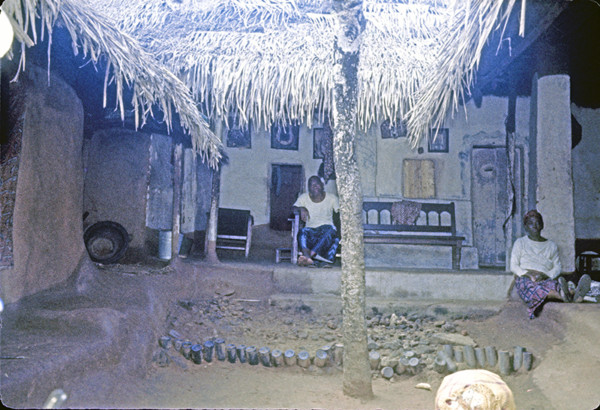
Photo Credit: Pitt Rivers Museum, University of Oxford / Historical Photographic Collection.
Artistic Expression: Carvings and Uli
Architecture in Igboland was never separated from art. The Obi was the primary canvas for “communal and personal expression”;
The Carved Pillars: In the homes of titled men (Ozo), the pillars supporting the Obi roof were often intricately carved. These carvings depicted symbols of “strength (the leopard),” “wisdom (the tortoise),” or “agricultural success (yam tendrils).”
Uli Wall Decorations: In some sub-groups, the wives of the patriarch would decorate the mud walls of the Obi with Uli motifs, ephemeral, dark-pigmented designs that conveyed “spiritual messages” and enhanced the beauty of the sacred space.
The Threshold Gates: Some larger Obis featured “carved wooden doors” that were only opened on special ceremonial days, symbolizing the “mystery and exclusivity” of the highest titles.
The Obi in the Diaspora and Modern Era
As the Igbo people moved into urban centers and adopted Western architectural styles, the form of the Obi changed, but its “functional essence” remained;
- Transition to Cement and Zinc: Modern Obis are now built with “concrete blocks and aluminum roofing.” While the materials have changed, the “open-porch” layout is often preserved to maintain the traditional aesthetic of the reception hall.
- The “Obi” as a Political Concept: In modern Nigerian politics, the term “Obi” is often used metaphorically to refer to the “core interests” or the “leadership council” of the Igbo people. It remains a symbol of “collective identity.”
- Rural Homecoming: Even for Igbo people living in Lagos, London, or New York, the construction of a “befitting Obi” in their ancestral village remains a mandatory requirement. It is the “physical link” that ensures they are recognized as legitimate members of the kindred.
The Obi is far more than an “architectural relic”; it is the “beating heart” of the Igbo homestead. Its design incorporating climate-sensitive materials and open-plan spatiality reflects a culture that values “transparency, hierarchy, and ancestral connection.” As a site of ritual, law, and social bonding, the Obi ensures that the “wisdom of the past” is continuously integrated into the “actions of the present.” While the mud and thatch of the 19th-century Obi may be giving way to modern stone and steel, the symbolism of the Obi as the “throne of the patriarch” and the “altar of the ancestors” continues to define the essence of what it means to be Igbo. It remains the “sacred threshold” where the family meets the world and where the living meet the dead.
Sources and references
- Aniakor, C. C. (1978). The Igbo House: A Study of Ritual Space. African Arts, 12(1).
- Cole, H. M., & Aniakor, C. C. (1984). Igbo Arts: Community and Cosmos. Los Angeles: Museum of Cultural History, University of California.
- Dmochowski, Z. R. (1990). An Introduction to Nigerian Traditional Architecture: Vol. 3 South-Eastern Nigeria. Ethnographica Ltd.
- Nzimiro, I. (1972). Studies in Ibo Political Systems: Chieftaincy and Politics in Four Niger States. University of California Press.
- Oliver, P. (1997). Encyclopedia of Vernacular Architecture of the World. Cambridge University Press.
- Umeh, J. A. (1999). Af ter God is Dibia: Igbo Cosmology, Divination & Sacred Science. Karnak House.
Cite this article
Discussion
Sign in to join the discussion
Comments are checked by an editor before they appear. Leave a source or a correction and it is read first.
Continue reading
Related histories
 Cultural HeritageEleven Days of Nwafor Ogidi: Inside the Festival Keeping an Old Igbo Tradition AliveRead history →
 Cultural HeritageIli Ji Nkpor Obododike: The Indigenous Agricultural Ritual CycleRead history →
 Cultural HeritageMusic and Drum Traditions: Tracing the “Igbo Drum” in the AmericasRead history →
No comments yet
Nothing has been approved on this record yet. Comments are checked by an editor before they appear, so one written now shows on this page after that check.