 Ozikoro
 Biography · Published history
The Ark of Ijala: The Symbolic Vessel that Transported the Benin Princes to the Riverine Territories

The migration of Benin princes into the Niger Delta during the late 15th century remains one of the most symbolically significant episodes in the history of the Warri Kingdom and the broader Itsekiri cultural sphere. Central to this narrative is the “Ark of Ijala”, a symbolic or literal vessel said to have transported Prince Ginuwa and his entourage from the Benin Empire into the riverine territories where they eventually founded the Itsekiri monarchy. Although interpretations vary across oral traditions, the “Ark” functions both as a historical artifact and a cultural metaphor representing royal legitimacy, divine sanction, and the birth of a new kingdom.
The written record

Photo credit; Dotun55 via Wikimedia Commons.
Historical context
Historical Background
- The Benin Royal Lineage and the Princes’ Migration
According to Itsekiri and Benin oral histories, the migration of Benin princes especially Prince Ginuwa occurred during the reign of Oba Olua in the late 15th century. Entries on the Warri Kingdom and Oba of Benin confirm that Prince Ginuwa, son of Oba Olua, later became the founder and first Olu of Warri around c.1480.
The exodus followed political tensions surrounding royal succession, particularly opposition from the Uzama (Benin kingmakers). As these tensions escalated, the departure of Ginuwa was framed as both a political necessity and a divinely guided migration.
- Ijala as a Sacred Landing Point
Ijala, located near modern-day Warri, is revered as the place where Prince Ginuwa and his entourage first settled upon reaching the Delta. It later became the royal burial ground for successive Itsekiri kings. The symbolic vessel that brought the prince to this site is remembered in traditions as the “Ark of Ijala,” linking the migration to ideas of sacred transport and ordained kingship.
The “Ark” in Historical and Cultural Context
- Literal and Metaphorical Interpretations
The “Ark of Ijala” appears in oral traditions as both:
A literal vessel, likely a large royal canoe or multi-paddled boat used by Benin and Niger Delta elites; and
A metaphorical symbol, akin to the Biblical “Ark,” representing preservation, transition, and divine purpose. Among riverine peoples of the Niger Delta Ijaw, Itsekiri, and Urhobo large canoes were used for long-distance movement, trade, and warfare. The vessel that carried Prince Ginuwa was therefore not unusual in form, but extraordinary in cultural meaning.
Symbolism of the Vessel
- The vessel symbolizes:
Royal continuity: It carried a prince to establish a new dynasty.
Divine sanction: Priests and oracle consultations reportedly accompanied the voyage.
Cultural rebirth: The “Ark” represents the beginning of Itsekiri nationhood.
Protection and transition: Much like other sacred vessels in African mythology, it shielded travelers during a politically turbulent period.
This symbolic framing explains why the vessel is still referenced in Itsekiri traditional narratives, songs, and coronation rituals.

Photo credit; Wikimedia Commons/ Public Domain
The Journey from Benin to the Rivers
- Departure from the Benin Empire
Historical accounts describe a royal entourage departing from the palace after Oba Olua’s attempts to place Ginuwa on the throne proved unsuccessful. According to Egharevba, the prince left with royal insignia beads, swords, and ceremonial items symbols of his legitimate claim to kingship.
- Passage Through the Creek Networks
From Benin, the group moved southwards, eventually entering the western Niger Delta through river channels. Canoes played a central role in long migrations, and the “Ark” would have been the lead vessel carrying the prince, his priests, and his attendants.
Oral traditions state that the journey involved navigating dense mangrove swamps, avoiding hostile groups, relying on spiritual rituals for protection, using experienced paddlers and navigators familiar with water routes. This long and carefully orchestrated movement reinforces why the vessel became such a revered part of the story.
- Arrival at Ijala
When the group arrived at Ijala, they established temporary settlement structures before Ginuwa eventually expanded his political authority. The landing at Ijala is celebrated in Itsekiri history as the “birth” of the kingdom. The vessel, preserved in cultural memory as the Ark of Ijala, became part of the founding myth.
Political and Cultural Significance
- Legitimation of the Itsekiri Monarchy
The story of the Ark strengthens the monarchy by connecting the Olu dynasty to Benin royal heritage, sacred migration narratives, divine purpose and selection.
This reinforces the political authority of the Olu of Warri and maintains continuity between the ancient Benin Empire and the Itsekiri kingdom.
- Foundations of Itsekiri Identity
The narrative helps explain the unique cultural fusion that developed in Warri Benin royal traditions, Yoruba linguistic influences (through trade and intermarriage) and Portuguese-Christian connections beginning in the 16th century.
Thus, the Ark of Ijala not only transported a prince it symbolically carried a new culture into existence.
- Resonance with Niger Delta Migration Patterns
Historically, Niger Delta societies often formed through migration led by charismatic leaders. The Ark narrative parallels other founding stories among Ijaw, Urhobo, and other delta peoples. This positions the Itsekiri within broader regional patterns of state formation.
Was the Ark Real or Metaphorical?
Historians differ, Some argue it was simply a royal canoe while others believe the story has been mythologized to elevate the sacred nature of the Itsekiri monarchy. Both interpretations coexist in Itsekiri oral tradition.
- Did Ginuwa Leave Voluntarily or Under Pressure?
Benin and Itsekiri traditions differ on whether the prince’s departure was; A diplomatic relocation, or A survival strategy due to internal conflict. These variations influence how the Ark is interpreted.
- Influence of Christian Imagery
Some scholars suggest the term “Ark” gained popularity after Christianization in Warri (from the 16th century onward), giving the story biblical connotations.
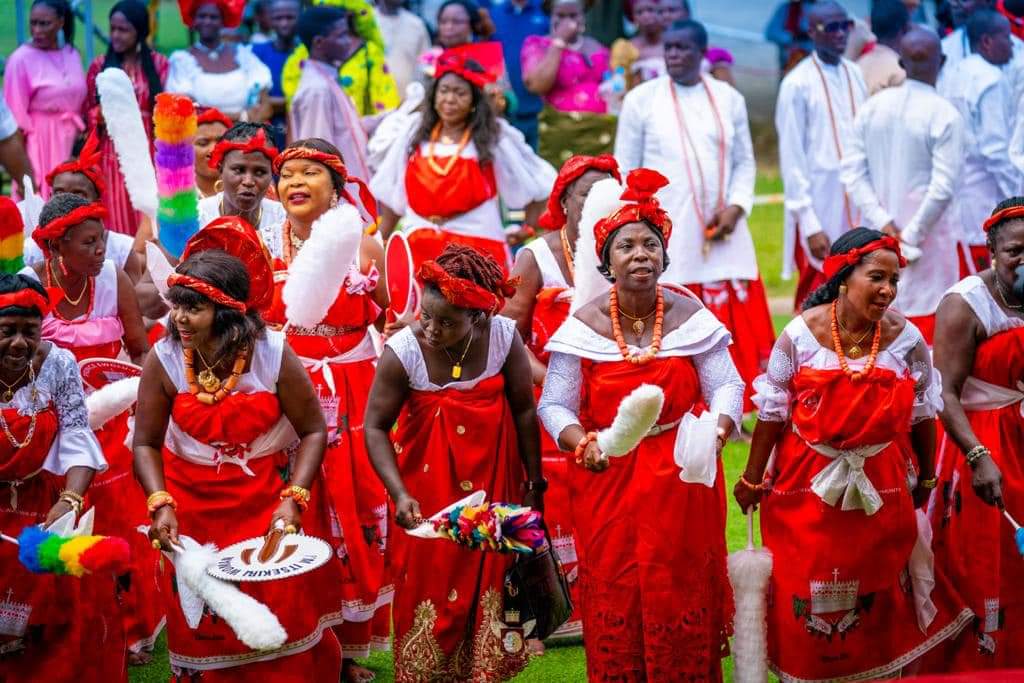
The “Ark of Ijala” represents far more than a physical vessel; it is a central symbol in the political and cultural history of Itsekiri. Whether viewed as a literal royal canoe or a metaphorical container of divine destiny, the Ark emphasizes the sacred character of Prince Ginuwa’s migration and the founding of the Warri Kingdom. By linking Benin royal heritage with Niger Delta geography, the narrative serves as a foundation for Itsekiri identity, monarchy, and historical memory. Through oral tradition, academic interpretation, and cultural continuity, the Ark of Ijala remains a powerful symbol of origin, legitimacy, and transformation.
Sources and references
- Egharevba, J. U. (1968). A Short History of Benin. Ibadan University Press.
- Ikime, O. (1969). Niger Delta Rivalry: Itsekiri, Urhobo and Ijaw in Warri District. Longman.
- Okojie, C. G. (1960). Esan Native Laws and Customs. London: Frank Cass.
- Talbot, P. A. (1926). The Peoples of Southern Nigeria. Oxford University Press.
Cite this article
Discussion
Sign in to join the discussion
Comments are checked by an editor before they appear. Leave a source or a correction and it is read first.
Continue reading


No comments yet
Nothing has been approved on this record yet. Comments are checked by an editor before they appear, so one written now shows on this page after that check.