 Ozikoro
Cultural Heritage · Published history
The City-States of the Eastern Delta: Brass, Bonny, and Kalabari
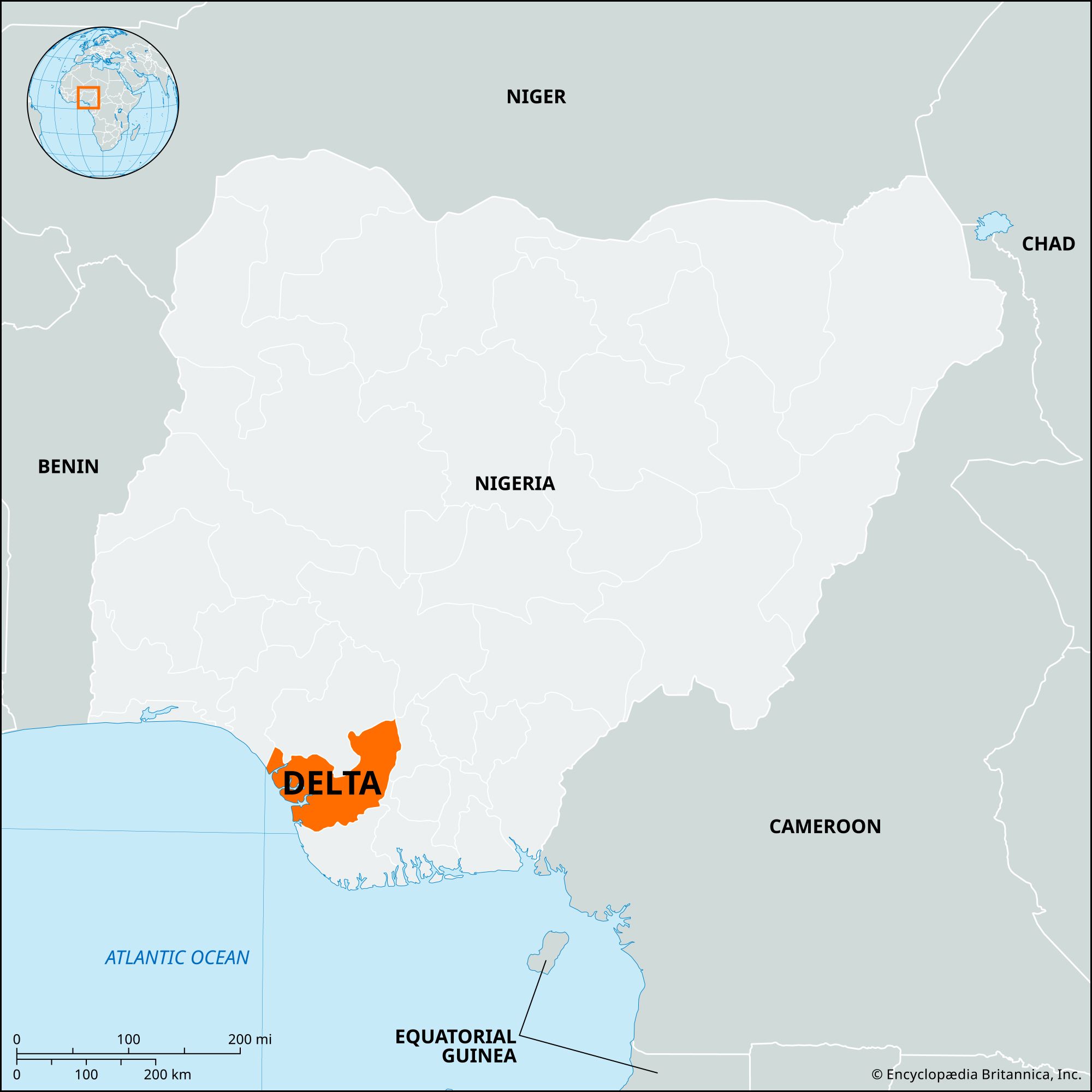
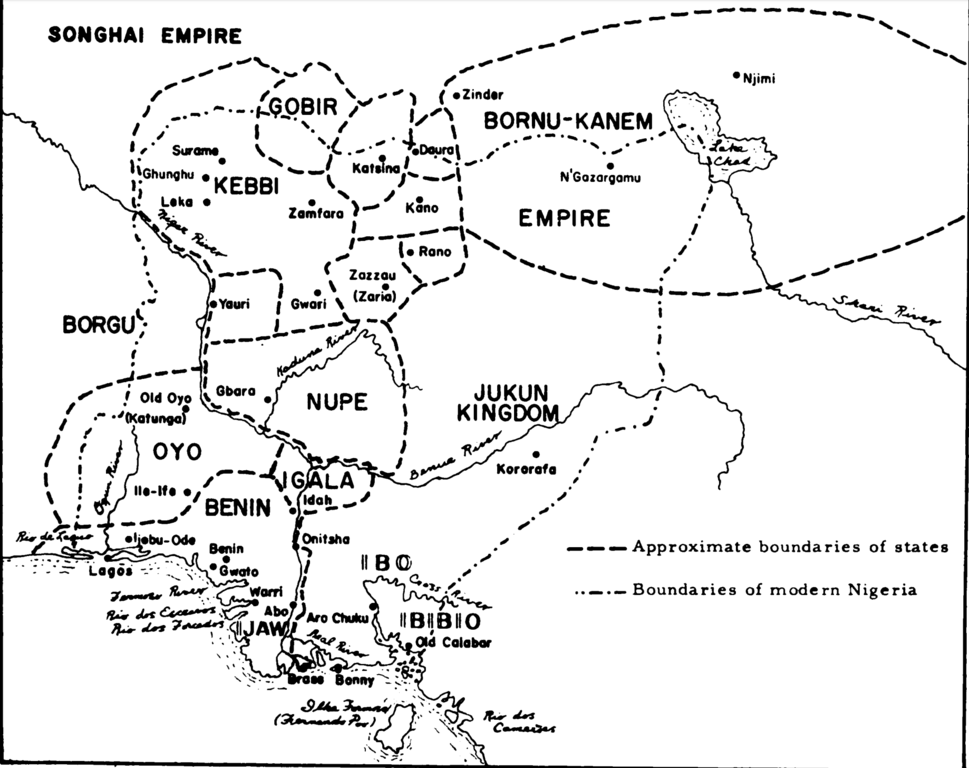
The Eastern Niger Delta region of Nigeria has long been home to some of the most politically sophisticated and economically dynamic city-states in West Africa. Among these are Brass (Nembe), Bonny (Ibani), and Kalabari, three Ijaw-speaking polities whose histories are deeply intertwined with commerce, diplomacy, migration, and cultural evolution. Their emergence as powerful city-states between the 15th and 19th centuries reflects the adaptability and ingenuity of their leaders, especially in responding to the Atlantic trade, internal migrations, and evolving local political structures.
The written record
Historical context
Origins and Early Formation of the Eastern Delta City-States
Although each of these city-states developed its own identity, they share broad historical and cultural origins rooted in the Ijaw people, one of Nigeria’s oldest ethnic groups. Oral traditions suggest that the ancestors of Brass, Bonny, and Kalabari migrated through the creeks and islands of the Eastern Delta in waves, establishing settlements based on fishing, canoe-building, and riverine trade.
Brass (Nembe)
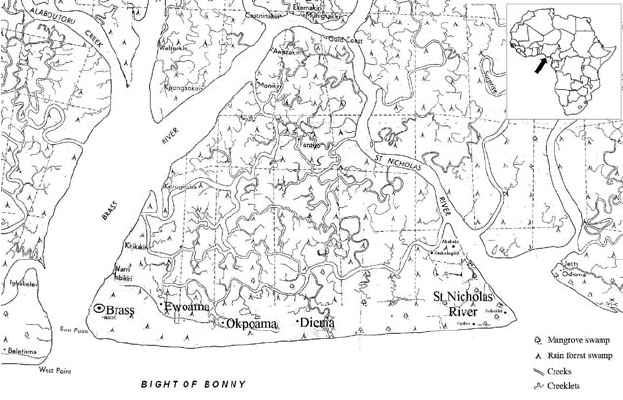
Brass emerged from early Ijaw settlements along the Brass River. Historical accounts suggest its founding clans coalesced into a centralized polity by the 15th century. Its advantageous location near the coastline made it a strategic hub for trade with European merchants.
Bonny (Ibani)
Bonny’s origins are linked to Ijaw migration, though the city-state later absorbed Ibani-speaking groups. By the 16th century, Bonny had grown into a formidable maritime kingdom with strong institutions and a centralized monarchy led by the Amanyanabo (king).
Kalabari
Kalabari tradition traces its roots to successive migrations from west of the Delta. As skilled traders and canoe-builders, the Kalabari people established influential settlements such as Elem Kalabari, Abonnema, and Buguma. Unlike some neighboring polities, Kalabari political structure balanced power between royal houses, merchant families, and councils.
Political Organization and Governance
The three city-states each developed unique political systems shaped by geography, trade, and internal dynamics.
Brass:
A Confederation of Houses; Brass politics revolved around powerful war-canoe houses, which functioned as political, economic, and military units. Authority was distributed among leading houses, with the Amanyanabo of Nembe serving as the supreme leader. Brass maintained a strong culture of autonomy and kinship-based governance.
Bonny:
Centralized Monarchy and House System; Bonny evolved one of the most centralized systems in the Niger Delta. Governance centered on the Amanyanabo, supported by influential houses such as the Annie Pepple and Manilla Pepple houses. Bonny’s political unity strengthened its dominance in regional trade, though power struggles in the 19th century later caused internal divisions.
Kalabari: (A Balance of Royal and Merchant Power)
Kalabari governance combined monarchical authority with a strong council of chiefs known as the Owu Ogbo. Merchant houses played a critical role in decision-making, ensuring that commercial interests shaped political direction. This structure fostered diplomatic flexibility, especially in times of conflict.
Economic Foundations: Trade, Rivers, and the Atlantic World
The city-states flourished through their strategic positions along navigable creeks and access to European merchants.
The Rise of Commerce;
Between the 16th and 19th centuries, Brass, Bonny, and Kalabari acted as intermediaries between inland producers and European traders. Their economies initially revolved around salt, fish, textiles, and local goods before shifting to the Atlantic slave trade and later the palm oil trade.
Bonny as a Major Trade Power;
Bonny was among the first Delta states to dominate the trans-Atlantic trade. Its deep-water access made it a preferred port for European ships. Even after the decline of the slave trade, Bonny adapted quickly, becoming a major exporter of palm oil.
Kalabari and the Merchant Houses;
Kalabari merchants maintained vast trade networks across the Delta. Their emphasis on diplomacy helped them remain influential even during regional conflicts. Trade towns like Abonnema and Buguma became major commercial centers in the 19th century.
Brass and Resistance to Colonial Pressure;
Brass also grew wealthy through the palm oil trade. However, unlike Bonny and Kalabari, Brass became known for resisting British economic domination. The famous Akassa Raid of 1895, where Brass forces attacked a Royal Niger Company station, symbolizes their struggle against colonial intrusion.
Cultural Identity and Social Organization
Despite their commercial focus, the city-states preserved strong cultural traditions tied to their Ijaw heritage.
Religion and Spirituality;
Each city-state maintained a complex spiritual system involving water deities, ancestral veneration, and ritual specialists. Bonny revered deities such as Okoloama, while Kalabari honored Owemenakaso, often interpreted as a deity representing justice and commerce. Brass had powerful ancestral cults tied to clan identities.
Social Life and Family Structures;
The house system played a major role in defining kinship, inheritance, and social responsibility. These structures supported military defense, trade ventures, and community welfare.
War and Diplomacy;
Conflicts such as the Bonny-Kalabari Wars in the 19th century resulted from competition over trade routes and alliances with European merchants. At other times, diplomacy prevailed, leading to alliances against external threats, including colonial powers.
Colonial Impact
British intervention in the late 19th century altered the political landscape, reducing the autonomy of these city-states and reshaping their governance under colonial administration.
Today, Brass, Bonny, and Kalabari remain culturally vibrant communities within Rivers and Bayelsa States. Their traditions, festivals, kingship institutions, and languages reflect centuries of resilience and adaptation. Their historical experiences continue to shape regional politics, identity, and cultural pride in the Niger Delta.
The city-states of Brass, Bonny, and Kalabari stand as powerful testimonies to the ingenuity and sophistication of Eastern Niger Delta societies. Their rise through maritime trade, unique political systems, and cultural resilience illustrate the complexity of African coastal civilizations prior to colonialism. In examining their histories, we gain deeper insight into the dynamic interplay between commerce, governance, and identity within the Niger Delta world.
Sources and references
- Alagoa, E. J. (2005). A history of the Niger Delta: An historical interpretation of Ijo oral tradition. Port Harcourt: Onyoma Research Publications.
- Dike, K. O. (1956). Trade and politics in the Niger Delta, 1830–1885. Oxford University Press.
- Horton, R. (1969). “From fishing village to city-state .” In M. Douglas & R. L. Harding (Eds.), Man in Africa (pp. 37–58). Tavistock.
Cite this article
Discussion
Sign in to join the discussion
Comments are checked by an editor before they appear. Leave a source or a correction and it is read first.
Continue reading
Related histories
 Cultural HeritageEleven Days of Nwafor Ogidi: Inside the Festival Keeping an Old Igbo Tradition AliveRead history →
 Cultural HeritageIli Ji Nkpor Obododike: The Indigenous Agricultural Ritual CycleRead history →
 Cultural HeritageMusic and Drum Traditions: Tracing the “Igbo Drum” in the AmericasRead history →
No comments yet
Nothing has been approved on this record yet. Comments are checked by an editor before they appear, so one written now shows on this page after that check.