 Ozikoro
 Cultural Heritage · Published history
The decline of traditional Igbo linen (Akwa Ọcha) weaving
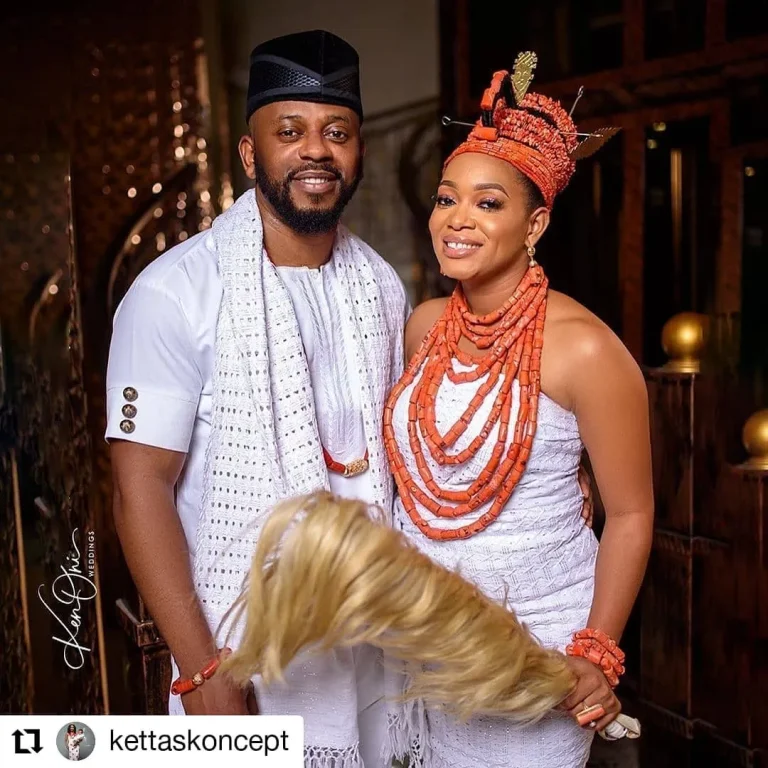
The cultural identity of the Anioma people the Western Igbo of present-day Delta State is inextricably woven into the threads of a pristine, white hand-loomed textile known as Akwa Ọcha. Literally translating to “white cloth,” Akwa Ọcha is more than mere attire; it is a “social parchment” that records the purity, status, and communal belonging of its wearer. For centuries, the rhythmic thud of the hand-loom was the heartbeat of towns like Akwukwu-Ishiagu, Ubulu-Uku, and Asaba. However, the late 20th and early 21st centuries have witnessed a precipitous “decline in the production and mastery” of this ancient craft. What was once a thriving cottage industry and a mandatory skill for young women has moved toward the brink of obsolescence. This article explores the historical significance of Akwa Ọcha, the intricate processes of its creation, and the complex socio-economic factors that have led to the decline of traditional Igbo linen weaving.
The written record
Historical context
The Historical and Symbolic Essence of Akwa Ọcha
Akwa Ọcha represents the “pinnacle of Igbo textile aesthetics,” distinguished by its stark white color and sophisticated structural patterns;
- The Symbolism of Purity: In Igbo cosmology, the color white (ọcha) is associated with “truth, sanctity, and the world of the ancestors.” Consequently, Akwa Ọcha became the required regalia for traditional rulers (the Obis), Olinzele chiefs, and participants in sacred rites such as the Iwaji (New Yam) festival.
- Gendered Craftsmanship: Traditionally, Akwa Ọcha weaving was a gender-specific labor. While men grew the cotton and sometimes constructed the looms, the actual “alchemy of weaving” was the domain of women. It was a craft passed from mother to daughter, serving as a “form of domestic education.”
- The Mark of the Anioma: While other Igbo groups are known for Akwaete (vibrant, multi-colored cloths), the Western Igbo prioritized the “understated elegance” of the all-white linen, often decorated with embossed geometric motifs that tell stories of family lineage and achievement.
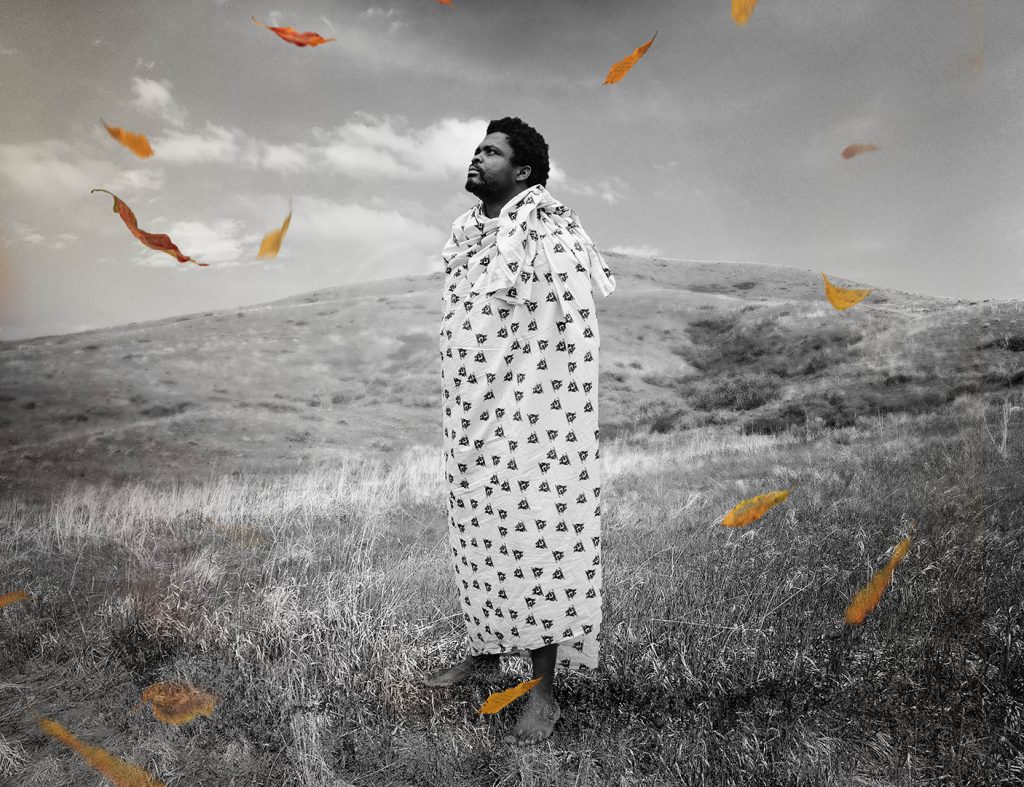
‘MOURNING AS REMEMBRANCE’. Asogwa puts on the mourning cloth and places himself in the frame. ‘I had to ask myself a lot of questions. It was like blowing on something covered with dust and everything just flies up. The narrative of Ekumeku has accumulated a lot of dust because nobody is talking about it’. Photograph by Nnaemezie Asogwa.
The Architecture of the Loom: Traditional Weaving Techniques
The decline of the craft is partly due to the “labor-intensive nature” of the traditional production process, which modern technology has struggled to replicate with the same soul;
The Vertical Loom: Unlike the horizontal treadle looms introduced by Europeans, the Igbo utilized a “vertical broadloom.” This required the weaver to sit or stand in front of a stationary frame, manually interlacing the warp and weft threads with a wooden shuttle.
Raw Material Sourcing: Historically, the linen was made from “locally grown cotton” (ụlụ). The process involved ginning (removing seeds), carding (straightening fibers), and spinning the cotton into thread using a drop spindle. This preparatory stage alone could take weeks before the first thread touched the loom.
Patterning and Brocading: What makes Akwa Ọcha unique is the “embossed patterns” woven into the cloth. These are not printed; they are created by varying the tension and thickness of the weft threads, creating a 3D effect that changes as the wearer moves in the light.
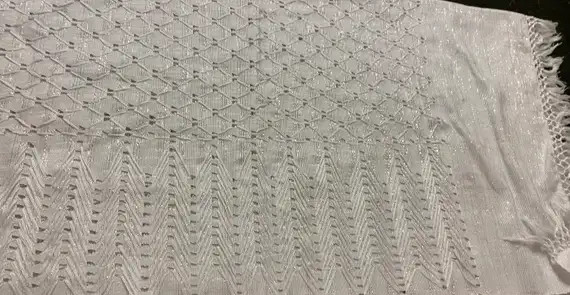
Photo Credit: National Commission for Museums and Monuments, Nigeria / Textile Heritage Collection.
Factors Driving the Decline of Traditional Weaving
The erosion of Akwa Ọcha weaving is the result of a “perfect storm” of colonial displacement and modern economic shifts;
- The Influx of “Manchester” Textiles: During the colonial era, the British flooded the Nigerian market with “cheap, factory-made cotton prints.” These imported fabrics were marketed as signs of “modernity,” leading to a psychological shift where hand-woven linen was viewed as “primitive” or “rural.”
- The Abandonment of Cotton Cultivation: As the Nigerian economy shifted toward petroleum in the 1960s and 70s, “indigenous agriculture” suffered. The local varieties of cotton specifically suited for Akwa Ọcha weaving became rare, forcing the few remaining weavers to rely on inferior, industrially processed synthetic yarns that lack the “texture and breathability” of traditional linen.
- Education and Rural-Urban Migration: The “inter-generational transmission” of weaving skills was broken by modern schooling and urbanization. Young Anioma women, who would have traditionally learned the craft at home, migrated to cities for education and corporate jobs, leaving the looms to the elderly who could no longer sustain the physical rigors of production.
The Loss of “Ritual Pedagogy”
In traditional Igbo society, weaving was a “pedagogical tool” used to instill values of “patience, precision, and communal history”;
- The Death of Apprenticeship: In towns like Onitsha and Asaba, the “weaving sheds” were social hubs where history was told through oral tradition while the looms worked. The decline of weaving has also meant the “silencing of these stories,” leading to a loss of oral history among the younger generation.
- The “Slow Fashion” Paradox: Traditional Akwa Ọcha is a form of “slow fashion”, a single piece can take a month to complete. In a contemporary society dominated by “fast fashion” and instant gratification, the economic incentive to spend weeks on a single loom has largely vanished.
- Spiritual Desacralization: As many Igbo people converted to Christianity, the “ritual associations” of Akwa Ọcha were sometimes viewed with suspicion. This “desacralization” removed the mandatory religious demand for the cloth, further shrinking the market for authentic, hand-loomed pieces.
Contemporary Efforts at Revival and “Modern Re-imagining”
Despite the decline, there is a burgeoning movement to “rescue the thread” of Akwa Ọcha weaving from total extinction;
- Government and NGO Intervention: In Delta State, various “skills acquisition programs” have been launched to train young people in traditional weaving. Some cooperative societies have sought to provide “modernized looms” that are faster but still preserve the hand-loomed quality.
- The Luxury Market: Designers are now positioning Akwa Ọcha as a “high-end luxury textile.” By using it for contemporary fashion suits, evening gowns, and accessories they are creating a new demand among the Nigerian elite and the diaspora, which allows weavers to charge prices that reflect their labor.
- Cultural Festivals as Preservation: The persistence of festivals like the Igwa-ji and the “Anioma Cultural Festival” ensures that there is still a seasonal “peak demand” for the cloth, providing a lifeline for the few remaining traditional guilds.
The decline of traditional Igbo linen (Akwa Ọcha) weaving is a “cultural tragedy” that reflects the broader challenges of preserving indigenous knowledge in a globalized world. Akwa Ọcha is not just a piece of clothing; it is the “canvas of Anioma history.” When a loom falls silent, it is not just an industry that dies, but a “visual language” that becomes unreadable. However, the current “renaissance of African identity” offers a glimmer of hope. If Akwa Ọcha can be successfully transitioned from a domestic necessity to a “symbol of global luxury and heritage,” the rhythmic sound of the weaver’s shuttle may once again be heard across the Western Niger Delta. To save the weaving is to save the “soul of the people,” ensuring that the “white cloth” continues to represent the purity and resilience of the Igbo spirit for generations to come.
Sources and references
- Aronson, L. (1980). History of Cloth Trade in the Niger Delta: A Study of Diffusion. Textile History, 11(1), 89-107.
- Dibia, A. (2014). Textiles and Identity: The Case of Akwa-Ocha in Anioma Culture. Journal of African Cultural Studies.
- Isichei, E. (1976). A History of the Igbo People. London: Macmillan. (Contextualizing the economic shifts in Igboland).
- Nwafor, O. (2021). Threads of Resilience: Traditional Weaving and the Politics of Identity in Nigeria. University of Ibadan Press.
- Picton, J., & Mack, J. (1989). African Textiles. British Museum Press. (Detailing the technical aspects of the vertical broadloom).
- Renne, E. P. (1995). Cloth that Does Not Die: The Meaning of Cloth in Bụnu Yoruba Culture. University of Washing ton Press. (Comparative study on the decline of West African hand-weaving).
Cite this article
Discussion
Sign in to join the discussion
Comments are checked by an editor before they appear. Leave a source or a correction and it is read first.
Continue reading
Related histories
 Cultural HeritageEleven Days of Nwafor Ogidi: Inside the Festival Keeping an Old Igbo Tradition AliveRead history →
 Cultural HeritageIli Ji Nkpor Obododike: The Indigenous Agricultural Ritual CycleRead history →
 Cultural HeritageMusic and Drum Traditions: Tracing the “Igbo Drum” in the AmericasRead history →
No comments yet
Nothing has been approved on this record yet. Comments are checked by an editor before they appear, so one written now shows on this page after that check.