 Ozikoro
 Ethnohistory · Published history
The Emergence of Sapele and Koko: Itsekiri Port Towns as Hubs of Global Commerce
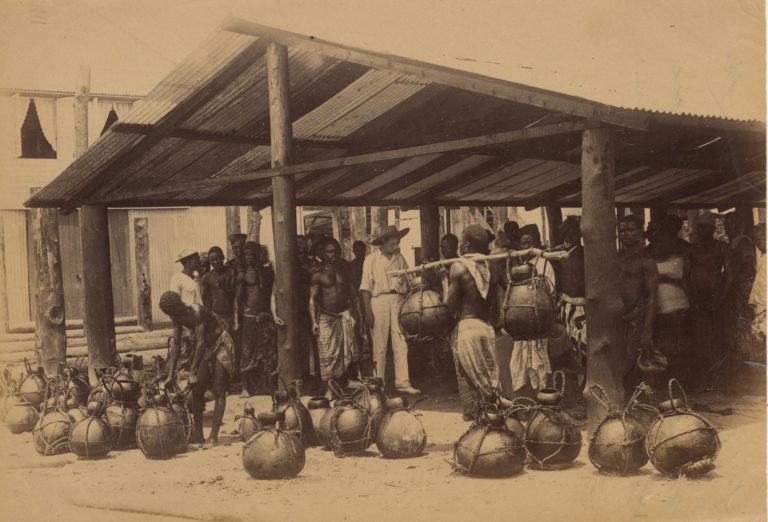
The maritime geography of the Niger Delta has long been the theater for some of the most dynamic economic transformations in West African history. Among the various settlements that dot the labyrinthine waterways of the “Benin River” and the “Ethiope River,” the towns of Sapele and Koko stand out as quintessential examples of the “commercial empire” established by the Itsekiri people. Originally small fishing and trading outposts, these towns evolved into sophisticated hubs of global commerce during the late 19th and early 20th centuries. Their rise was not merely a matter of geographical luck but was driven by the strategic ingenuity of Itsekiri merchant-princes and the shifting demands of the industrializing Western world. As the trade in palm oil, timber, and rubber intensified, Sapele and Koko transitioned from local riverine communities to vital nodes in the British colonial economy, connecting the Nigerian hinterland to the markets of Liverpool, Hamburg, and New York.
The written record
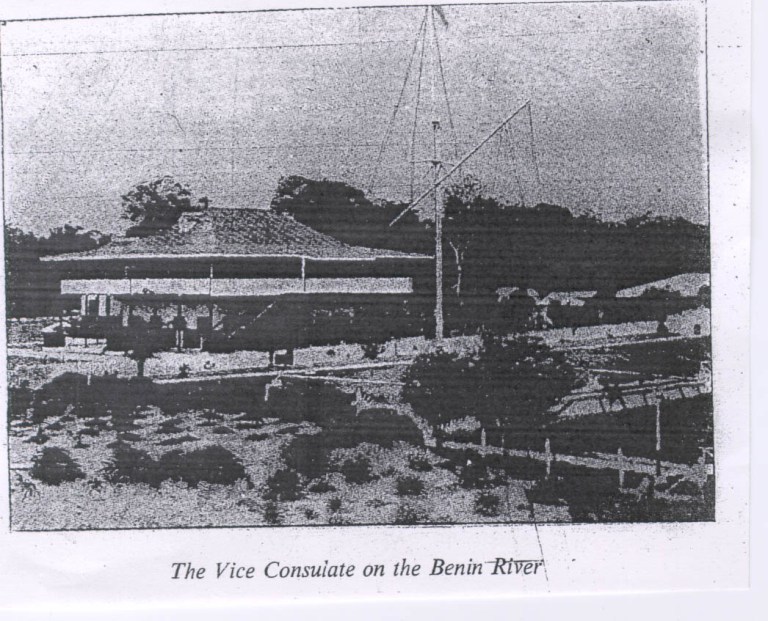
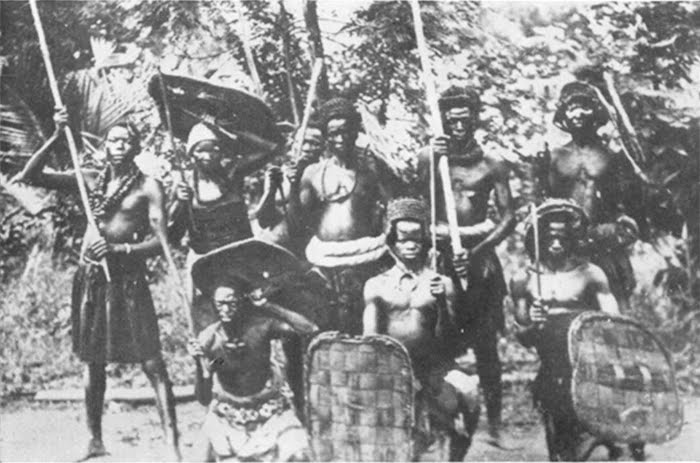
Photo Credit: The National Archives (UK) / Colonial Office Collection.
Historical context
The Strategic Geography of the Itsekiri Coastline
The rise of Sapele and Koko cannot be understood without acknowledging their unique physical positioning. The Itsekiri, a coastal ethnic group, acted as the indispensable “middlemen” between the interior producers and the European ships;
Confluence and Accessibility: Sapele is situated at the confluence of the Ethiope and Jamieson rivers. This location provided a deep-water harbor that allowed large ocean-going vessels to sail nearly 100 miles inland from the sea, a rarity in the shallow Delta creeks.
The Proximity to Resources: Koko, located on the Benin River, served as a natural gateway for the “palm oil” and “timber” flowing out of the Edo and Urhobo forest belts. Its position made it a preferred station for European firms looking to bypass the congested ports of the outer coast.
Koko: The Administrative and Commercial Bastion
In the late 1800s, Koko rose to prominence largely due to the influence of the Olomu family. It became a focal point for the “Governor of the Benin River” and a primary site for the “trust system” of credit;
- The Gateway of the Benin River: Koko was the operational base for many European trading houses, such as the African Association and Miller Brothers. These firms established “factories” , warehouses and residences along the Koko waterfront to collect produce for export.
- A Center of Political Diplomacy: Because of its accessibility, Koko was often the site where “Treaties of Protection” were negotiated between British Consuls and local leaders. It was the administrative heartbeat of the district before the center of gravity shifted further inland.
- Modern Legacies: Even in modern history, Koko’s status as a port town has remained significant, notably housing the Nana Living History Museum, which preserves the artifacts of the commercial empire that once dominated the river.
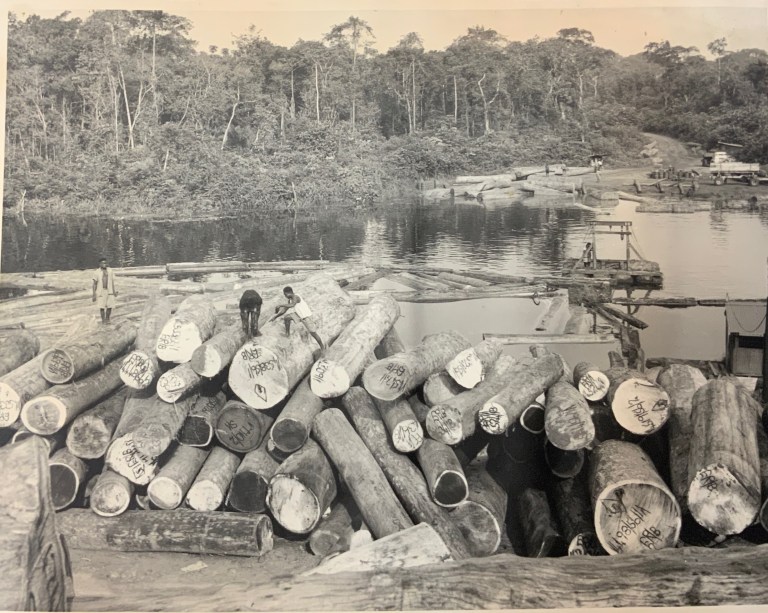
Logs being floated down the Ethiope River toward the Sapele sawmills, a primary driver of the town’s global commercial status.
Photo Credit: United Africa Company (UAC) Archives / Unilever PLC.
Sapele: The Timber and Rubber Metropolis
While Koko was the traditional gateway, Sapele emerged as an industrial powerhouse, particularly after the formal establishment of British colonial rule in the 1890s;
- The “Sapele Mahogany” Boom: By the early 20th century, the demand for West African hardwoods skyrocketed. Sapele gave its name to a specific type of timber Entandrophragma cylindricum (Sapele wood) which became a staple in the global furniture and shipbuilding industries.
- Industrialization of the Port: Unlike many other Delta towns, Sapele saw the early introduction of heavy industry. The United Africa Company (UAC) established one of the world’s largest plywood and veneer mills in Sapele (the African Timber and Plywood company, or AT&P). This transformed the town into a “modern industrial hub,” attracting labor from across West Africa.
- The Rubber Factor: The hinterland around Sapele proved ideal for rubber cultivation. The port became the primary exit point for “sheet rubber,” further diversifying its commercial portfolio beyond the traditional palm oil trade.
The “Middleman” Economy and the House System
The commercial success of Sapele and Koko was built on the indigenous “House System.” This social and economic structure allowed Itsekiri leaders to organize large-scale labor forces;
- Logistics of the Empire: The “Houses” were essentially corporate entities. A Chief would command hundreds of “canoes” and “pawn laborers” who would travel into the Urhobo and Isoko hinterlands to purchase oil and timber.
- Regulation of Trade: The Itsekiri merchants in these port towns utilized secret societies and “customary laws” to ensure that trade debts were paid. This provided a level of “commercial security” that encouraged European firms to invest heavily in the region.
- The Struggle for Monopoly: The rise of these towns was marked by a constant tension between the Itsekiri’s desire to maintain their “monopoly” and the British “free trade” policies which sought to allow European traders direct access to the interior markets.
- Social and Cultural Transformation in the Port Towns
The influx of global wealth and diverse populations turned Sapele and Koko into “cosmopolitan melting pots;
- Architectural Evolution: The wealth generated from the ports led to the construction of magnificent “palatial residences” and European-style administrative buildings. The fusion of Itsekiri traditional aesthetics with Victorian influences created a unique coastal architectural style.
- Education and Westernization: As hubs of global contact, these towns were among the first in the region to receive missionary schools. This created a new class of “literate Itsekiri clerks” and traders who could navigate the complexities of international law and shipping manifests.
- Population Diversity: The economic boom attracted Urhobos, Igbos, Edos, and Europeans, making Sapele, in particular, one of the most ethnically diverse towns in the Southern Protectorate.
Decline and Persistence: The Port Towns in the 20th Century
The mid-20th century brought challenges to the dominance of Sapele and Koko;
- The Rise of Lagos and Port Harcourt: As the British colonial government centralized its rail and road networks, trade began to bypass the traditional river ports in favor of the larger, state-sponsored harbors in Lagos and Port Harcourt.
- Siltation and Technological Shifts: The increasing size of modern cargo ships made the winding creeks of the Benin River difficult to navigate. The “siltation” of the river mouths also reduced the accessibility that had once made these towns so attractive.
- Historical Continuity: Despite the decline in shipping volume, Sapele remains a significant center for the timber and petroleum industries, while Koko has seen attempts at revitalization through its designation as a “Free Trade Zone.”
The history of Sapele and Koko is a testament to the “entrepreneurial spirit” of the Itsekiri people and the profound impact of global trade on local societies. These towns were more than just collection points for raw materials; they were the “nerve centers” of a commercial empire that bridged the gap between traditional African governance and the modern global economy. From the “timber mills” of Sapele to the “historic warehouses” of Koko, the legacy of these port towns continues to define the economic identity of the western Niger Delta. They stand as enduring symbols of an era when the “Benin River” was a primary artery of the world’s industrial heart.
Sources and references
- Dike, K. O. (1956). Trade and Politics in the Niger Delta, 1830-1885: An Introduction to the Economic and Political History of Nigeria. Oxford University Press.
- Ikime, O. (1969). Niger Delta Rivalry: Itsekiri-Urhobo Relations and the European Presence 1884-1936. Longmans.
- Lloyd, P. C. (1963). The Itsekiri. International African Institute.
- Nair, K. K. (1972). Politics and Society in South Eastern Nigeria, 1841-1906.
- Ca ss. Sagay, I. (1980). The Itsekiri: A History of the Warri Kingdom. Togbi Press.
Cite this article
Discussion
Sign in to join the discussion
Comments are checked by an editor before they appear. Leave a source or a correction and it is read first.
Continue reading
Related histories
 EthnohistoryGbam, Chai, Ewo: How Igbo Expressions Became the Language of Nigerian Pop CultureRead history →
 EthnohistoryAro Merchant Network: Historical Trade Integration in the Cross-Niger RegionRead history →
 EthnohistoryTransition to Commodities in the aro confederacy(e.g., Palm Oil, Ivory, Cloth)Read history →
No comments yet
Nothing has been approved on this record yet. Comments are checked by an editor before they appear, so one written now shows on this page after that check.