 Ozikoro
 Ethnohistory · Published history
The Enugu-Ezike Migration from Enugwu-Ukwu
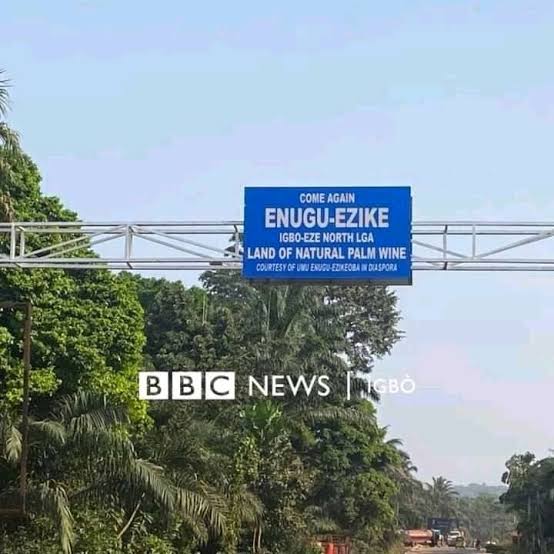
Nestled in the northern part of Enugu State, Nigeria, lies Enugu-Ezike, a community renowned for its rich cultural heritage and historical significance. With a population exceeding 300,000 and comprising over 36 villages, Enugu-Ezike stands as one of the largest single communities in Sub-saharan Africa. Its origins, deeply rooted in Igbo history, trace back to Enugwu-Ukwu, a prominent town in present-day Anambra State. This narrative explores the migration journey of the Enugwu-Ezike people from Enugwu-Ukwu, shedding light on their ancestral connections, cultural evolution, and enduring legacy.
The written record
Historical context
Ancestral Origins in Enugwu-Ukwu
Enugwu-Ukwu, situated on the hilly terrains of Anambra State, is historically recognized as the first son of the UmuNri clan, a lineage central to Igbo civilization. Oral traditions and historical accounts affirm that the Enugu-Ezike people originated from Uruekwo village in Enugwu-Ukwu over 700 years ago. They initially settled in a place known as “Ofia Ezike” before embarking on their migratory journey to their current location in Enugu State .
The bond between Enugwu-Ezike and Enugwu-Ukwu remains palpable. In 1935, nine elders from Enugu-Ezike traveled to Awka to testify in a land dispute between Enugwu-Ukwu and Enugwu-Agidi. Their testimony emphasizes the historical ties and ancestral lineage connecting the two communities .
The Migration Journey
The migration from Enugwu-Ukwu to the present-day Enugu-Ezike was not a singular event but a series of movements influenced by various factors, including the search for fertile land, communal expansion, and socio-political dynamics. The journey spanned several regions, with the migrating groups traversing through parts of present-day Kogi State, including Idah, before settling in the hilly terrains of Nsukka.
Upon reaching the Ugwueke hills in Amube, the migrants found a conducive environment for settlement. The elevated landscape provided strategic advantages, including natural defense and fertile land for agriculture. This new settlement was named “Elugwu Ezike,” meaning “hill of Ezike,” signifying both the geographical feature and the ancestral lineage.
Formation of Clans and Villages
Ezike Oba, the progenitor of the Enugwu-Ezike people, had multiple wives, but it was through Ayigwa and Osegbe that he bore four sons: Ezzodo, Itodo, Essodo, and Ozzi. These sons became the patriarchs of the four primary clans that constitute Enugwu-Ezike. Over time, these clans expanded, giving rise to numerous villages, each maintaining its unique identity while preserving the collective heritage.
The major villages include:
1. Aguibeje
2. Aji
3. Amachalla
4. Amaja
5. Amube
6. Amufie
7. Ezzodo
8. Ezillo
9. Igbele
10. Igogoro
11. Ikpamodo
12. Ikpuiga
13. Imufu
14. Inyi
15. Isugwu
16. Itodo
17. Nkpamute
18. Ogbodu
19. Ogurute
20. Okata
21. Okpo
22. Olido
23. Onicha Enugu
24. Owerre Eze
25. Ozzi
26. Uda
27. Ufodo
28. Ugbaike
29. Umachi
30. Umuagama
31. Umuida
32. Umuogbo Agu
33. Umuogbo Ekposhi
34. Umuogbo Inyi
35. Umuogbo Ulo
36. Umuopu
37. Umuopu Agu
38. Uroshi
These villages, while distinct, share common cultural practices, dialects, and traditions, reinforcing their shared ancestry.
Cultural Heritage and Traditions
Enugu-Ezike is renowned for its vibrant cultural practices, many of which have been preserved through generations. The community places significant emphasis on oral traditions, with folklore, proverbs, and songs serving as vessels for transmitting history and values.
One notable aspect of Enugwu-Ezike’s cultural heritage is its traditional leadership system. Unlike centralized monarchies, Enugwu-Ezike operates a gerontocratic system, where the eldest male, known as the “Onyishi,” holds spiritual and administrative authority. This system emphasizes wisdom, experience, and communal consensus.
The community also celebrates various festivals that highlight its rich traditions. These festivals often involve masquerades, dances, and rituals that pay homage to ancestors and deities, reinforcing communal bonds and cultural identity.
Interactions with Neighboring Communities
Over the centuries, Enugwu-Ezike has interacted with neighboring communities, including the Igala people of present-day Kogi State. These interactions have led to cultural exchanges, evident in shared musical instruments like the Ariwa and similar traditional music forms such as Okanga and Okeregwu .
Despite these exchanges, Enugwu-Ezike has maintained its distinct Igbo identity, with its customs, language, and traditions reflecting its unique historical trajectory.
Contemporary Developments
In recent times, Enugu-Ezike has witnessed significant developments in infrastructure, education, and commerce. The community has produced notable figures in various fields, including politics, academia, and business. Efforts have been made to document and preserve its rich history, ensuring that future generations remain connected to their roots.
The migration of the Enugwu-Ezike people from Enugwu-Ukwu is a testament to the resilience, adaptability, and unity of the Igbo people. From their ancestral origins in the hills of Enugwu-Ukwu to their establishment in the valleys of Nsukka, the Enugu-Ezike community embodies a rich tapestry of history, culture, and tradition. By preserving their heritage and embracing progress, they continue to honour their ancestors while charting a path for future generations.
Sources and references
- Igwe Sir Ralph Ekpeh. (2014, December 12). The Umunri-Enugwu Ukwu Ancestral Connection: A Historical Perspective. Academia.edu.
- Enugu-Ezike. (n.d.). In Wikipedia. Retrieved June 5, 2025,.
- History of Enugu-Ezike. (2015, March 8). Journal of History.
- Enugwu-Ukwu. (n.d.). In Wikipedia. Retrieved June 5, 2025,
- Enugu-Ezike. (n.d.). Ugwuanyi.net.
Cite this article
Discussion
Sign in to join the discussion
Comments are checked by an editor before they appear. Leave a source or a correction and it is read first.
Continue reading
Related histories
 EthnohistoryGbam, Chai, Ewo: How Igbo Expressions Became the Language of Nigerian Pop CultureRead history →
 EthnohistoryAro Merchant Network: Historical Trade Integration in the Cross-Niger RegionRead history →
 EthnohistoryTransition to Commodities in the aro confederacy(e.g., Palm Oil, Ivory, Cloth)Read history →
No comments yet
Nothing has been approved on this record yet. Comments are checked by an editor before they appear, so one written now shows on this page after that check.