 Ozikoro
 Cultural Heritage · Published history
The Fluid Frontier: Cooperation and Conflict in the Ijaw-Itsekiri Mangrove Ecosystem
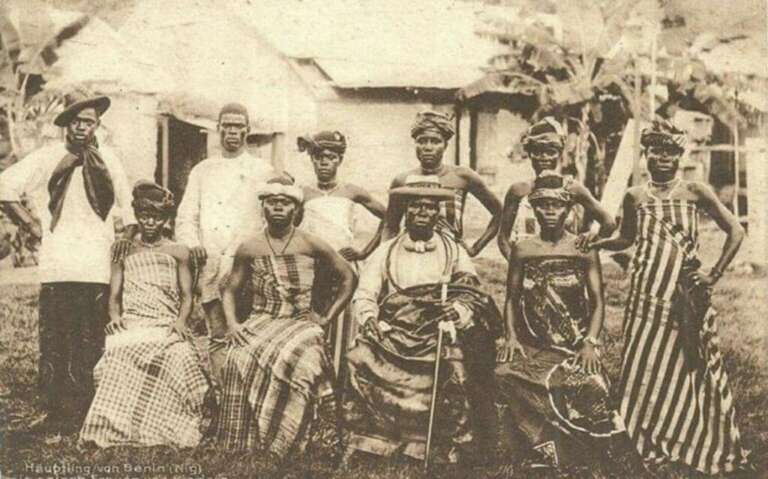
The Niger Delta’s western fringe is a labyrinthine world of salt-water creeks, dense mangrove forests, and seasonal swamps. This unique ecological niche has, for centuries, been the shared home of two of Nigeria’s most prominent maritime ethnic groups: the Ijaw and the Itsekiri. Their history is not a simple story of enmity, but rather a complex “fluid frontier” where the lines between cooperation and conflict have shifted according to the demands of trade, politics, and the environment. While the Ijaw are widely regarded as the “autochthonous” lords of the water, spanning the entire length of the Delta, the Itsekiri established a centralized “commercial empire” centered around the Warri Kingdom and the Benin River. This essay examines the multifaceted interactions between these two groups, exploring how a shared ecosystem fostered both an intimate symbiosis and a fierce rivalry over the “gateways of global commerce.
The written record
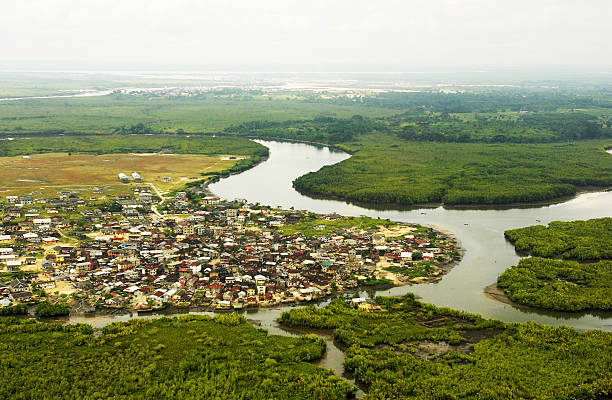
Photo Credit: National Commission for Museums and Monuments, Nigeria.
Historical context
Ecological Foundations: A Shared Maritime Identity
Both the Ijaw and the Itsekiri are “water-people,” whose lives are dictated by the ebb and flow of the tides. This shared environment necessitated a baseline of cooperation for survival;
- Masters of the Craft: The Ijaw and Itsekiri shared and competed in the art of “canoe-building.” The massive dug-out canoes, carved from tropical hardwoods, were the “engines of the Delta,” used for everything from small-scale fishing to the transport of heavy artillery.
- The Salt and Fish Trade: In the pre-colonial era, both groups participated in the “salt-boiling” industry. They often utilized the same mangrove resources to produce “native salt,” which was a critical trade commodity for hinterland groups like the Urhobo and Edo.
- The Common Enemy: Nature itself often acted as a unifying force. Both groups had to contend with the “shifting silt” of the river mouths and the encroachment of the Atlantic Ocean, leading to shared traditional knowledge regarding navigation and coastal preservation.
The Rise of the Itsekiri “Middleman” Monopoly
The dynamics of Ijaw-Itsekiri interactions shifted dramatically with the advent of the “Atlantic Trade.” Itsekiri’s centralized political structure allowed them to dominate the role of “middlemen” between European merchants and the interior;
- The Warri Kingdom Advantage: Unlike the more decentralized Ijaw “House” or “Village” structures, the Itsekiri had a centralized monarchy (the Olu). This allowed them to speak with a “single voice” when negotiating “Treaties of Protection” and trade agreements with the British and Portuguese.
- Commercial Hegemony: By the 19th century, leaders like Chief Nana Olomu had established a “commercial empire” that effectively taxed the waterways. Ijaw traders, despite their superior numbers and geographic spread, often found themselves forced to pay “customary dues” to Itsekiri governors to access the lucrative European “factories” at the coast.
- The Friction of “Trust”: The Itsekiri often used their wealth to provide “trust” (credit) to Ijaw fishing communities, creating a “debtor-creditor” relationship that sometimes blurred the lines between cooperation and exploitation.
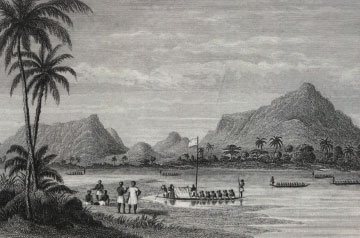
Photo Credit: Pitt Rivers Museum / University of Oxford.
The 1884 Treaty and the Hardening of Boundaries
The colonial intervention of the late 19th century transformed “fluid interactions” into “rigid legal disputes”;
- The British “Protectorate”: When the British established the “Oil Rivers Protectorate,” they frequently relied on Itsekiri intermediaries to administer the region. This perceived “British favoritism” toward the Itsekiri sowed seeds of resentment among the Ijaw, who felt their ancestral lands were being “administered” by their rivals.
- Land and Water Litigation: British law required “ownership” to be clearly defined. This led to a century of “litigation” over who owned the “riverbeds” and “creek-sides.” While the Ijaw claimed “ancestral occupation,” the Itsekiri often presented “colonial treaties” as proof of sovereign right.
- The Shift in Trade Centers: As the British moved their administrative centers from the Benin River to Warri, the competition for “urban space” in these burgeoning port towns intensified the rivalry between the two groups.
Cultural Symbiosis: The Intertwined Bloodlines
Despite political and economic friction, the Ijaw and Itsekiri have engaged in a “biological and cultural merger” that makes “pure” ethnic distinctions nearly impossible in many Delta families;
Marriage as Diplomacy: Inter-ethnic marriages were common among the elite and commoners alike. Many Ijaw “House” heads married Itsekiri women to gain access to “coastal credit,” while Itsekiri men married Ijaw women to secure “fishing rights” in Ijaw-controlled creeks.
Religious Overlap: Both groups share a deep reverence for “water spirits” (Owuberu in Ijaw and Umale-Okun in Itsekiri). The masquerade traditions of the two groups often share aesthetic elements, such as the use of “mirrored headpieces” and “aquatic motifs.”
Linguistic Borrowing: The Ijaw and Itsekiri languages have exchanged numerous terms related to “maritime technology” and “European trade goods,” reflecting centuries of daily interaction in the markets.
Conflict in the Modern Era: Resources and Politics
In the late 20th and early 21st centuries, the “symbiosis” was severely tested by the discovery of “crude oil” and the subsequent struggle for “political representation”;
- The Warri Crisis: In the late 1990s and early 2000s, disputes over the “relocation of local government headquarters” sparked violent conflict. This “Warri Crisis” was a modern manifestation of the old struggle for “middleman” status this time, acting as the intermediary between the “oil majors” and the local population.
- Resource Control: The Ijaw, under the banner of movements like the “Ijaw Youth Council” (IYC), began to challenge the “Itsekiri legal dominance” over the coastal areas, demanding a “fairer share” of the royalties from oil wells located in their ancestral fishing grounds.
- The Path to Reconciliation: In recent years, traditional rulers from both sides including the Olu of Warri and Ijaw Pere (Kings) have made concerted efforts to return to the “pre-colonial symbiosis,” recognizing that “perpetual conflict” only benefits external interests.
The interactions between the Ijaw and the Itsekiri are a testament to the “paradox of the Delta.” They are two groups bound by a “common destiny” and a “shared ecology,” yet often divided by the “politics of access.” From the cooperative “salt-boiling” camps of the 1700s to the fierce “legal battles” of the colonial era, their relationship has shaped the very fabric of the Western Niger Delta. While “conflict” often makes the headlines, the “silent cooperation” of inter-marriage, shared rituals, and economic interdependence remains the true “foundation” of life in the mangroves. Understanding the “Ijaw-Itsekiri interactions” is essential to achieving lasting peace in a region where the “water” belongs to everyone, but the “land” remains a point of contention.
Sources and references
- Alagoa, E. J. (1972). A History of the Niger Delta: An Historical Interpretation of Ijo Oral Tradition. Ibadan University Press.
- Dike, K. O. (1956). Trade and Politics in the Niger Delta, 1830-1885. Oxford: Clarendon Press.
- Ikime, O. (1969). Niger Delta Rivalry: Itsekiri-Urhobo Relations and the European Presence 1884-1936. Longmans.
- Ikime, O. (2006). History, the Historian and the Nation: The Voice of a Nigerian Historian. Heinemann Educational Books.
- Okpu, B. (1977). Et hnic Minorities in Nigerian Politics, 1960-1965. University of Uppsala.
Cite this article
Discussion
Sign in to join the discussion
Comments are checked by an editor before they appear. Leave a source or a correction and it is read first.
Continue reading
Related histories
 Cultural HeritageEleven Days of Nwafor Ogidi: Inside the Festival Keeping an Old Igbo Tradition AliveRead history →
 Cultural HeritageIli Ji Nkpor Obododike: The Indigenous Agricultural Ritual CycleRead history →
 Cultural HeritageMusic and Drum Traditions: Tracing the “Igbo Drum” in the AmericasRead history →
No comments yet
Nothing has been approved on this record yet. Comments are checked by an editor before they appear, so one written now shows on this page after that check.