 Ozikoro
 Cultural Heritage · Published history
The Foundation of Okere: Ekpenede’s Legacy and the Cosmopolitan Evolution of the Warri Kingdom

The history of the Warri Kingdom is often narrated through the prism of its central monarchy and the “Olu” lineage. However, the foundational narrative of Okere, one of the oldest and most significant settlements in the Warri metropolis, provides a more nuanced view of the kingdom’s “multicultural origins.” The settlement of Okere represents a crucial intersection of Benin military expansion and the indigenous social structures of the Niger Delta. Established by the legendary Benin warrior Ekpenede (often referred to as Ekpen) in the late 15th century, Okere has evolved from a military outpost into a symbol of “inter-ethnic integration.” This article explores the history of Ekpenede, the settlement of the Okere lands, and how the community served as a “melting pot” for diverse groups within the burgeoning commercial empire of the Itsekiri people.
The written record
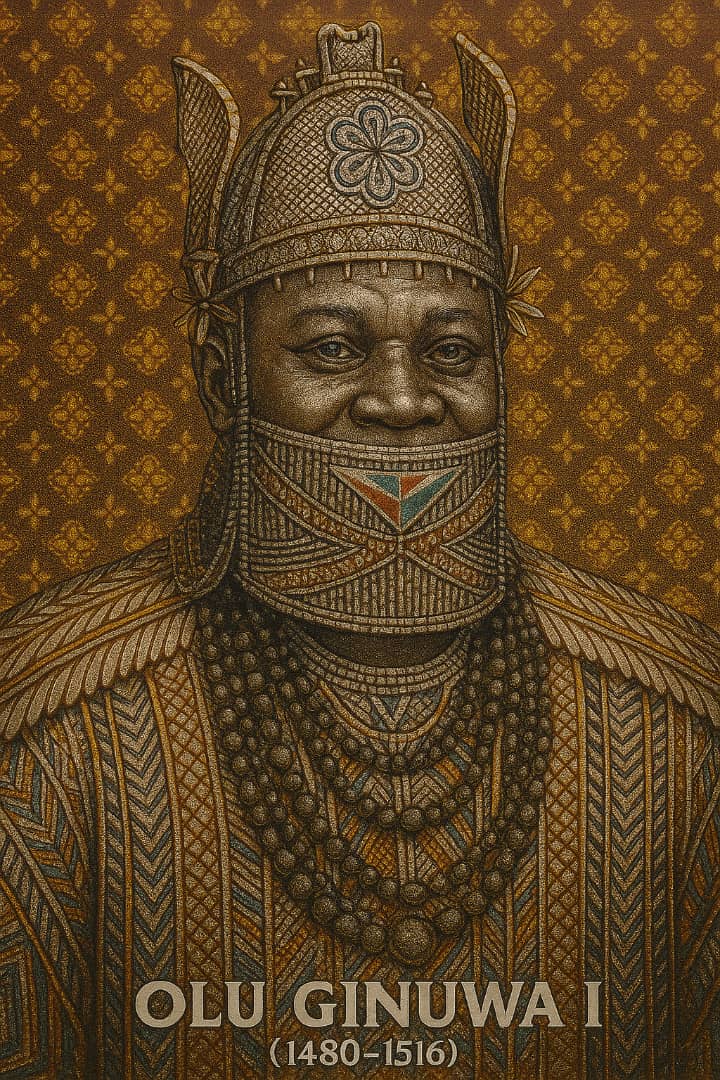
Photo Credit: Delta State Archives / Ministry of Culture and Tourism.
Historical context
The Migration of Ekpenede: A Benin Warrior’s Quest
The origins of Okere are inextricably linked to the military campaigns of the Benin Empire during the reign of Oba Olua;
- The Military Expedition: According to oral tradition and historical records, Ekpenede was a high-ranking Benin general sent by the Oba to accompany Prince Ginuwa (the first Olu of Warri) during his exodus from Benin. While Ginuwa eventually settled at Ode-Itsekiri, Ekpenede led a separate contingent that sought strategic control of the hinterland waterways.
- The Choice of Okere: Ekpenede’s scouts identified a fertile and strategically elevated land mass along the Okere River. This location was ideal for “security and surveillance,” allowing the settlers to monitor movements between the Benin River and the interior forest belts.
- The “Lion” of Okere: The name “Ekpen” is often associated with the “Leopard” or “Lion” in the Edo and Itsekiri languages, symbolizing the “strength and ferocity” of the founder. To this day, the descendants of Ekpenede maintain a distinct identity within the broader Warri social fabric.
The Internal Structure of the Okere Settlement
As Okere grew, it developed a sophisticated administrative structure that balanced its Benin heritage with the emerging “Itsekiri national identity;
- The Three Primary Branches: The community is traditionally divided into three lineages or “quarters” descended from the children of Ekpenede; Oshodi, Olodi, and Ighogbadu. These lineages have collectively managed the “Okere lands” for centuries, maintaining a high degree of autonomy while remaining loyal to the Warri Crown.
- The Oghuvwie and the Olare-Aja: Okere utilizes a traditional administrative system led by the Olare-Aja (the oldest man in the community) and the Oghuvwie (the military spokesperson or leader of the youth). This structure ensured that “law and order” were maintained even during periods when the central monarchy was in interregnum.
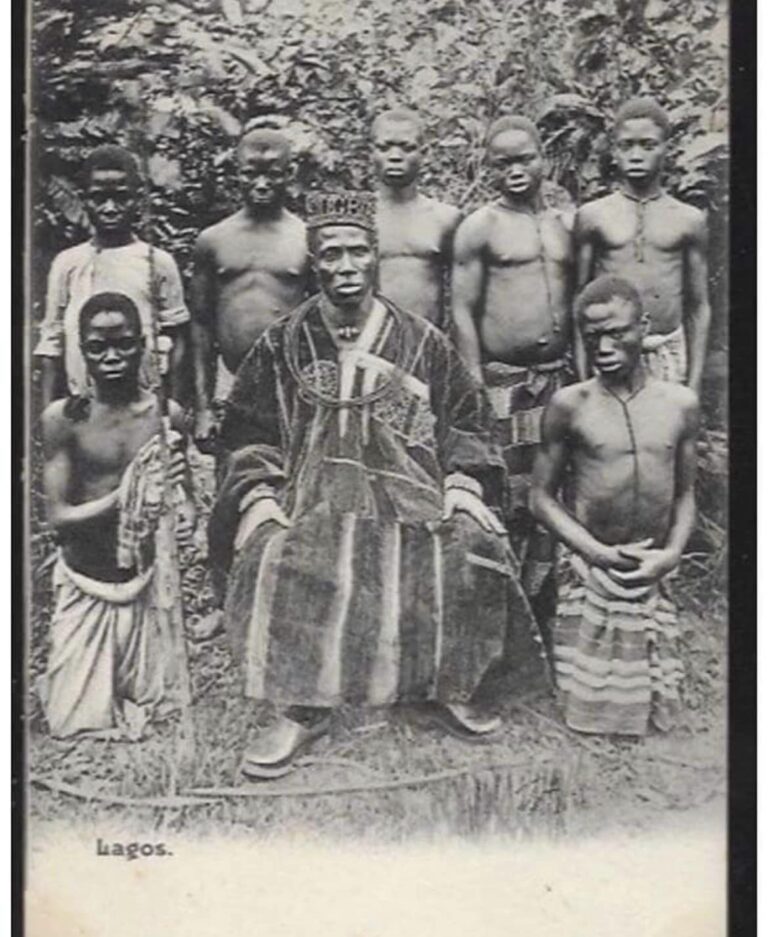
Photo Credit: Foreign and Commonwealth Office Archival Collection / The National Archives (UK).
The Integration of Diverse Groups: A Melting Pot
One of the most remarkable features of Okere is its history of “incorporating outsiders.” The settlement became a sanctuary for various groups seeking “protection and trade opportunities;
- Absorption of the Urhobo and Ijaw: Because of its location at the “frontier” between the salt-water and fresh-water zones, Okere naturally attracted Urhobo and Ijaw settlers. Rather than expelling these groups, the leaders of Okere utilized “marital and commercial alliances” to integrate them into the community.
- The “Agbassa” Connection: The relationship between Okere and neighboring Urhobo settlements, such as Agbassa, has been one of both “symbiosis and complex litigation.” Historically, these groups shared the “Okere markets,” leading to a blurring of linguistic and cultural lines.
- The Role of the “House System”: Like the commercial empire of Chief Nana Olomu, Okere adopted the “House System,” which allowed for the “legal adoption” of strangers into the family lineage. This ensured that the population remained robust and the workforce for “palm oil production” stayed consistent.
Cultural Syncretism and the Awankere Festival
The integration of diverse groups into Okere is most visibly expressed through its “festivals and religious rites,” which have become a cornerstone of Warri’s cultural tourism;
The Awankere (Okere Juju) Festival: This is arguably the most famous festival in the region. It is a “fertility and purification” rite that traces its origins back to the founding of the community. The festival involves masked dancers representing various “water and forest spirits.”
A Shared Celebration: While the festival is led by the descendants of Ekpenede, it is celebrated by all residents of Warri, regardless of their ethnic origin. This serves as a “unifying force,” reminding the diverse population of their “shared historical space” in the Okere district.
Linguistic Blending: The prayers and songs used in Okere rituals often contain a mixture of “archaic Benin (Edo) terms and modern Itsekiri,” reflecting the linguistic journey of the settlers over 500 years.
Conflict, Land, and the British Colonial Era
The “open-door policy” of Okere’s integration was severely tested by the arrival of British colonial administration and the subsequent “legalization of land ownership”;
The “Warri Land” Disputes: In the 20th century, Okere became the center of significant “legal battles” regarding who owned the land beneath the growing city of Warri. The British preference for “paternalistic monarchy” often clashed with the “communal land-holding” traditions of the Okere elders.
The 1970s Legal Landmark: A landmark Supreme Court case (Ometan vs. Dore Numa) and subsequent litigations involving the “Okere-Urhobo” and “Okere-Itsekiri” communities highlighted the “fluidity of ethnicity” in the region. Many families found themselves on opposite sides of a courtroom despite having “shared grandparents.”
Urbanization and Encroachment: As Warri grew into an “oil city,” the traditional lands of Ekpenede were subsumed by urban sprawl. This led to a transition from an “agrarian economy” to a “rental and commercial economy,” further changing the social dynamics of the settlement.
The Legacy of Ekpenede in Modern Warri
The history of Okere is a testament to the fact that the “Warri Kingdom” was never a monolithic entity but a “dynamic confederation of lineages.” Ekpenede’s settlement survived for half a millennium not through isolation, but through the “integration of diverse groups” and the ability to adapt to changing political tides. Today, Okere stands as the “heart of Warri,” its streets and markets vibrant with the descendants of warriors, traders, and migrants. The story of the “Ekpenede legacy” is a reminder that the true strength of a “commercial empire” lies in its ability to turn “strangers into kin,” creating a “resilient social fabric” that can withstand the pressures of both colonialism and modern ethnic politics.
Sources and references
- Dike, K. O. (1956). Trade and Politics in the Niger Delta, 1830-1885. Oxford: Clarendon Press.
- Egharevba, J. U. (1968). A Short History of Benin. Ibadan University Press. (Detailing the expansionist period of Oba Olua).
- Ikime, O. (1969). Niger Delta Rivalry: Itsekiri-Urhobo Relations and the European Presence 1884-1936. Longmans.
- Lloyd, P. C. (1963). The Itsekiri. International African Institute.
- Nair, K. K. (1972). Politics and Society in South Eastern Nigeria, 1841-1906.
- Sagay, I. (1980). The Itsekiri: A History of the Warri Kingdom. Togbi Press.
Cite this article
Discussion
Sign in to join the discussion
Comments are checked by an editor before they appear. Leave a source or a correction and it is read first.
Continue reading
Related histories
 Cultural HeritageEleven Days of Nwafor Ogidi: Inside the Festival Keeping an Old Igbo Tradition AliveRead history →
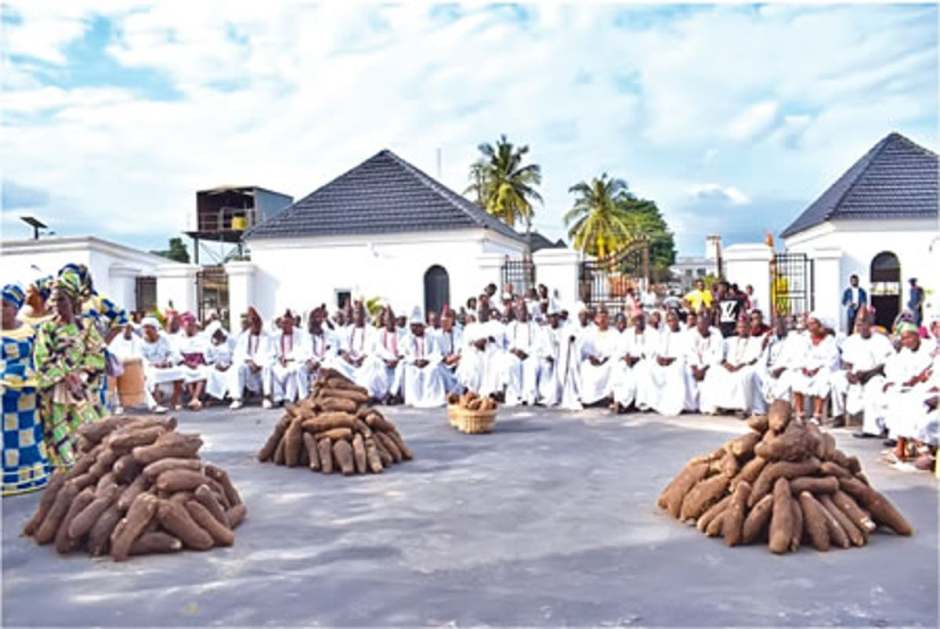 Cultural HeritageIli Ji Nkpor Obododike: The Indigenous Agricultural Ritual CycleRead history →
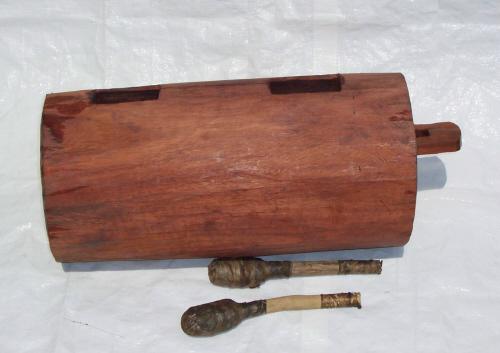 Cultural HeritageMusic and Drum Traditions: Tracing the “Igbo Drum” in the AmericasRead history →
No comments yet
Nothing has been approved on this record yet. Comments are checked by an editor before they appear, so one written now shows on this page after that check.