 Ozikoro
 Biography · Published history
The Heart of a Pioneer: The Life and Legacy of Professor Fabian Anene Ositadimma Udekwu
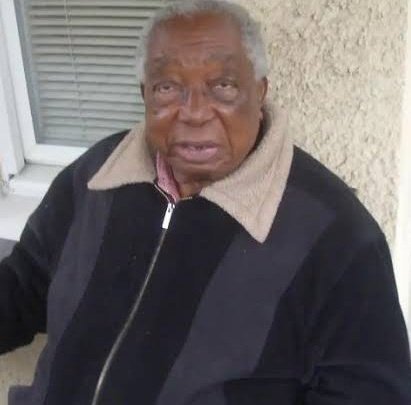
In the annals of African medical history, few names resonate with as much “gravitas and pioneering spirit” as that of Professor Fabian Anene Ositadimma Udekwu. A man of immense intellectual depth and surgical precision, Udekwu was not merely a doctor; he was a “visionary who dared to venture into the most delicate chambers of the human body” at a time when such feats were deemed impossible on the continent. As Nigeria’s first cardiothoracic surgeon and the man who led the first open-heart surgery in Sub-Saharan Africa, his contributions laid the foundational stones for modern cardiovascular medicine in Nigeria. Today marks exactly 19 years since his passing, providing a poignant moment to reflect on a life dedicated to “mercy, science, and national development”.
The written record
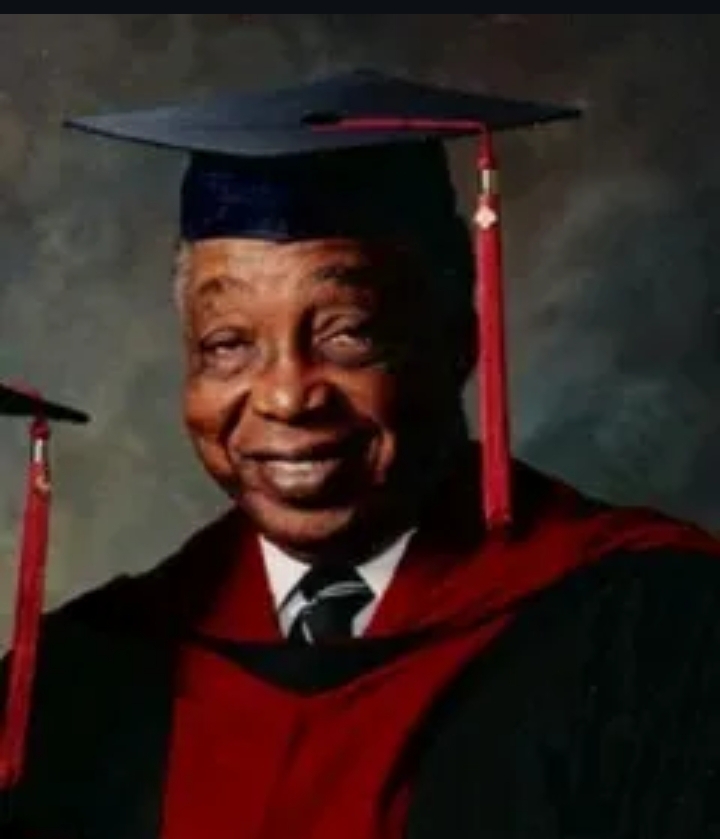
Historical context
Early Life and the Pursuit of Excellence
Fabian Udekwu was born in 1928 in Enugwu-Agidi, in present-day Anambra State, Nigeria. His journey from a rural village to the “pinnacle of global surgical excellence” is a testament to the Igbo philosophy of Onye kwe, Chi ya ekwe (If a man agrees, his spirit agrees).
- Educational Foundation:
Udekwu’s academic journey began in Nigeria but soon took him across the Atlantic. He attended Loyola University Chicago and later the Stritch School of Medicine, where he earned his medical degree. His time in the United States was marked by “exceptional academic performance,” which allowed him to secure residency in general surgery and subsequently specialize in the then-nascent field of cardiothoracic surgery.
- The Call of Home:
Despite having lucrative opportunities to remain in the West, Udekwu felt a profound “patriotic obligation” to return to Nigeria. He arrived back in a newly independent nation, joining the University College Hospital (UCH), Ibadan, and later the University of Nigeria Teaching Hospital (UNTH), Enugu, where his true “pioneering work” would begin.
The 1974 Milestone: Africa’s First Open-Heart Surgery
The defining moment of Professor Udekwu’s career and indeed African medical history occurred on February 1, 1974. This was the day he led a multidisciplinary team to perform the first successful open-heart surgery in Nigeria and Sub-Saharan Africa.
- Breaking the “Surgical Ceiling”:
Before this date, patients in Nigeria with congenital or acquired heart defects had two options: “seek expensive treatment abroad or succumb to the ailment.” Udekwu’s feat proved that with “indigenous talent and strategic collaboration,” high-end specialized medicine was possible on African soil.
- The UNTH Enugu Legacy:
The surgery was performed at the University of Nigeria Teaching Hospital, Enugu. Under Udekwu’s leadership, UNTH became the “Mecca of cardiac care” in West Africa. He did not work in isolation; he collaborated with international experts and mentored a generation of Nigerian surgeons who would go on to lead departments across the globe.
- Technical Challenges:
Performing such a procedure in the 1970s required more than just “steady hands.” It required the improvisation of equipment and the rigorous training of nurses, anesthesiologists, and technicians. Udekwu was known to be a “perfectionist,” insisting that the “standards in Enugu must match the standards in Chicago or London.”
Academic Leadership and Institutional Building
Professor Udekwu was as much an “administrator and educator” as he was a surgeon. He understood that for cardiac surgery to survive him, he had to build institutions.
- Dean of Medicine:
He served as the Dean of the Faculty of Medicine at the University of Nigeria, Nsukka (Enugu Campus). During his tenure, he revamped the curriculum to emphasize “clinical excellence and research.” According to Wikipedia contributors, his leadership style was characterized by “integrity and an unwavering commitment to student welfare.”
- Research and Publications:
Udekwu authored numerous papers on thoracic and cardiovascular conditions specific to the African tropics. His research into “endomyocardial fibrosis” and other regional heart pathologies provided “critical data” that helped global medicine understand how heart disease manifests in black populations.
- The “Udekwu School” of Surgery:
His mentees often speak of the “Udekwu School” a methodology that prioritized “pre-operative planning and post-operative vigilance.” He believed that a surgeon’s job did not end when the last stitch was placed, but when the patient “walked out of the hospital gates.”
Philosophy and Personal Character
To understand Fabian Udekwu, one must look beyond the “white coat.” He was a man of deep faith and “philosophical conviction.”
- The Humanitarian Surgeon:
Udekwu often treated patients who could not afford the “astronomical costs” of heart surgery. He was known to waive his fees and use his personal influence to source “pro-bono medical supplies” for the needy. His life was a reflection of the “sanctity of human life.”
- Artistic and Cultural Interests:
Interestingly, Udekwu was a “polymath.” He had a deep appreciation for Igbo culture and classical music. This “balance between science and the arts” gave him a unique perspective on healing, viewing it as both a “biological necessity and a spiritual restoration.”
Death and the “19-Year Echo” of His Legacy
Professor Fabian Udekwu passed away on November 17, 2006. As we mark the 19th anniversary of his transition, his absence is still felt in the Nigerian medical community.
- The Current State of Cardiac Surgery:
While Nigeria has made strides, the “brain drain” (Japa syndrome) has threatened the very foundation Udekwu built. Many commentators argue that the best way to honor him is by “revitalizing the teaching hospitals” he so dearly loved.
- Posthumous Honors:
Udekwu has been honored in various ways, including the naming of wards and lecture halls after him. However, his “greatest monument” remains the thousands of hearts that continue to beat today because of the “surgical techniques and institutional frameworks” he established.
Professor Fabian Anene Ositadimma Udekwu was a “titan of the 20th century.” He dismantled the “myth of African medical inferiority” and placed Nigeria on the global map of cardiothoracic excellence. His life serves as a “blueprint for the modern African professional”: excel globally, but “invest locally.” Nineteen years after his death, his legacy is not just a memory but a “living heartbeat” in every cardiac unit across Nigeria. He remains, quite literally, the “Father of the Nigerian Heart.”
Sources and references
- Anyanwu, C. H. (1994). The Development of Cardiothoracic Surgery in Nigeria. Nigerian Medical Journal. (Providing historical data on the 1974 surgery).
- Ezedum, S. (2007). Tribute to a Surgical Giant: Fabian Udekwu. UNN Alumni Publications.
- Nwafor, I. A., & Anyanwu, C. H. (2014). The History and Evolution of Cardiac Surgery in Nigeria. Journal of Cardiology and Cardiovascular Medicine.
- Udekwu, F. A. O. (1971). Thoracic Surgical Problems in Nigeria. International Surgery, 55(1), 22-30.
Cite this article
Discussion
Sign in to join the discussion
Comments are checked by an editor before they appear. Leave a source or a correction and it is read first.
Continue reading
No comments yet
Nothing has been approved on this record yet. Comments are checked by an editor before they appear, so one written now shows on this page after that check.