 Ozikoro
 Cultural Heritage · Published history
The Ikolo: A Sacred Sonic Symbol of Aguleri’s Cultural and Spiritual Heritage
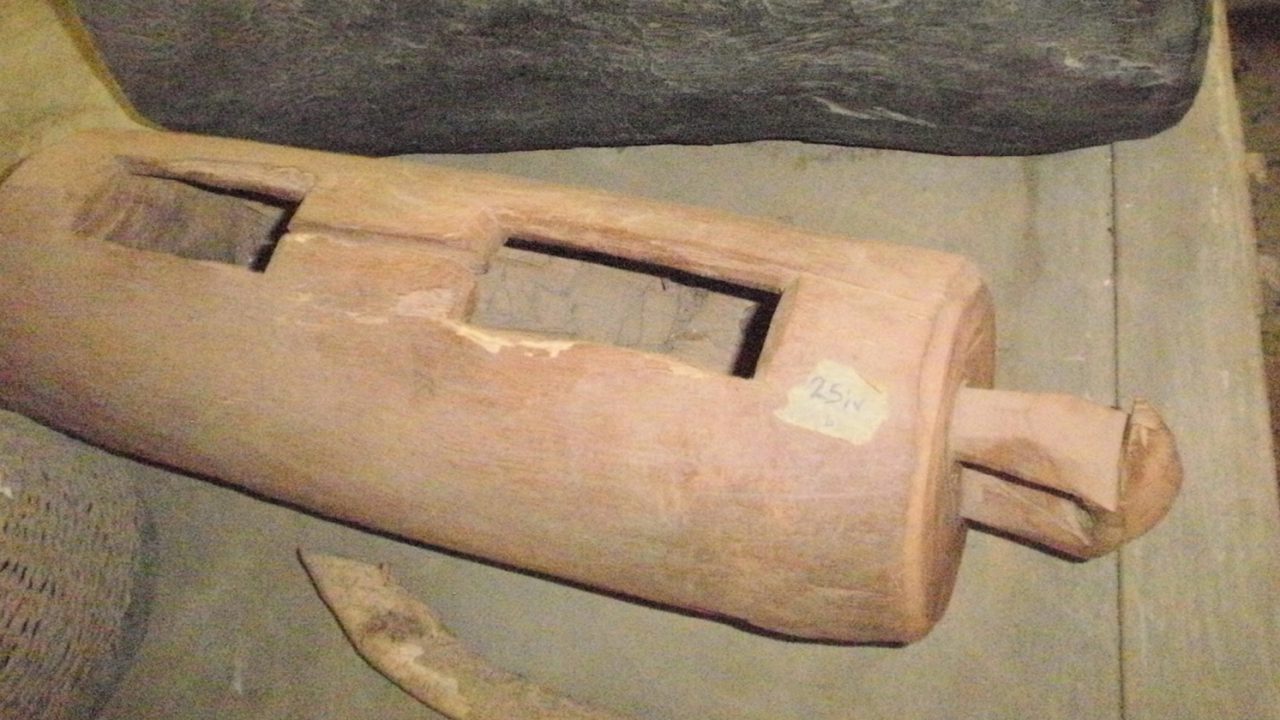
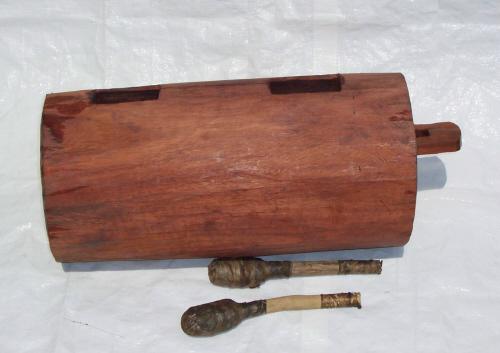
In the heart of Igbo land, within the ancient kingdom of Aguleri, on the Omambala River side in Southeastern Nigeria, the Ikolo sacred drum beats as a powerful symbol of cultural identity, spiritual power, and community unity. It was carved from the hollow trunk of the mahogany tree. This untuned idiophone, which they make from yellow or red wood to make it, is not just an ordinary musical instrument. The Ikolo is a “fine furniture, elegant and full of detail,” which they beat with two sticks to produce a sweet sound that has a lot of meaning. It is more than just a fine look; it is a big part of the Igbo religion and social life.
The written record
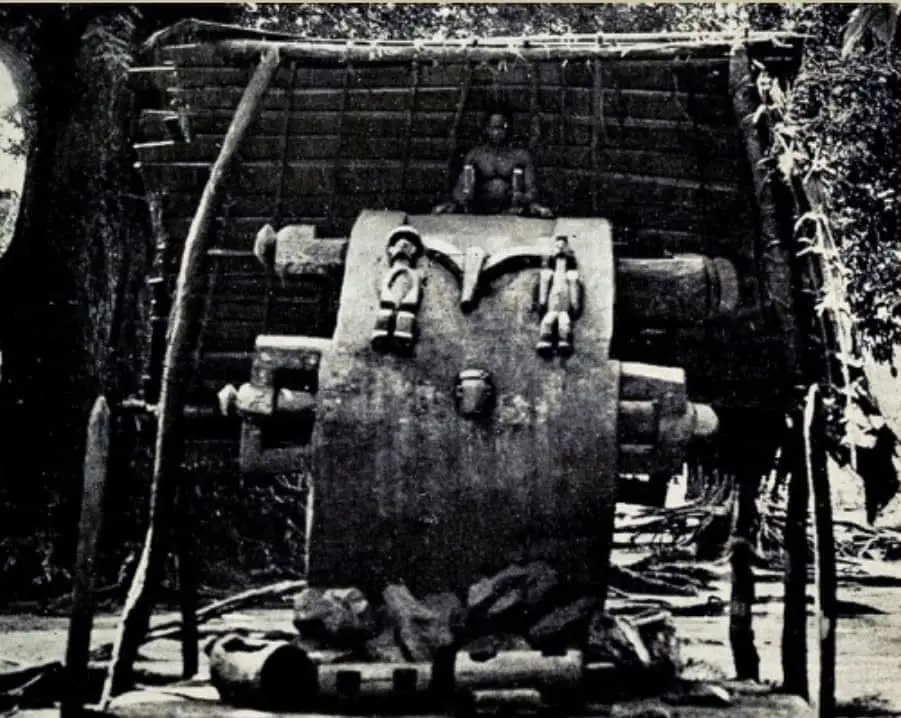
The Mythic Origins of the Ikolo
The story of Ikolo originated from the Aguleri people’s oral tradition, which seamlessly blends myth and history. The first Ikolo comes from Eri, who they believe is the original father of the Igbo people, who settled in the Anambra basin. One big mahogany tree that ants have hollow fall, and when Eri and his children knock, it gives a kind of powerful sound that travels far. Eri said he would carve the wood and carry it to their village, and that is how Ikolo began as an instrument used to pass messages and for rituals. This myth is not fixed; it changes to align with the identity of the Aguleri people. It is like a “chain of events” that each step helps the culture grow.
Historical context
Initially, Eri uses the Ikolo to call a meeting with the Eze-in-council, marking the beginning of its role as a tool for leadership and organization. As time passed, different types of Ikolo were available, ranging from small to large, each with distinct sounds and specific roles. It can call people for worship, hunting, or an emergency. The ikolo is better than the xylophone in size, structure, and importance; it is the “king” of idiophones.
Craftsmanship and Ritual Consecration
To make Ikolo is not easy. It is a serious job that requires skill and spiritual understanding. Firstly, they would look for a good mahogany tree, then cut it, dry it, carve it, and scoop out the inside. Every step is a risk, and they test it periodically to ensure it sounds correctly. They would even carve a human head or a community sign on top of the drum to give it more power and beauty. This design has a profound meaning that combines the physical with the spiritual.
Before using the Ikolo, a special ritual would be conducted, where the top priest of Aguleri would lead, as it is known as the “cosmological code.” They would sacrifice a chicken, use the blood and feathers, rub the drum to give it voice and power. The sticks used to beat it, along with the feathers, are meant to protect and connect it to the ancestors. In Aguleri belief, if a person who does not have the right touches it, especially a woman who is menstruating, it is taboo; it can spoil the spiritual power or even cause harm. This restriction still shows how the drum helped maintain male authority.
The Ikolo as a Communicative and Ritual Instrument
The primary function of Ikolo is to convey a message from a great distance. But sadly, phones and other new technology have replaced it in many places. For Aguleri, trained drummers know how to beat a message into the Ikolo. They would send a cult message, religious matter, or call people for community events. Only people who know the language of the drum can understand what it is saying. Ikolo was called a “vehicle” that carries deep ideas into life, uniting the spirit and the real world.
In festivals or prayers, the Ikolo helps people connect; it carries people from just watching to real participation. In the ceremony, this sound is like a prayer, representing respect, unity, and togetherness. It does not follow Western music beat, so it is hard for foreign scholars to understand it.
However, in Aguleri, the Ikolo is akin to a musical form that conveys knowledge; it is a “musical epistemology” that tells stories, embodies beliefs, and preserves traditions.
Onyekomeli Idigo and the Ikolo’s Rediscovery
In the 1800s, Onyekomeli Idigo brought Ikolo back to prominence, as the Aguleri people faced challenges following the collapse of the Aguve dynasty. As a leader who intended to bring unity, Onyekomeli carried the Ikolo with him, using it again, especially when he traveled. One of his wives uses a big Ikolo to signal for him to come back home if something is wrong. Later, they started using it to mark morning or a special time in the Idigo family. This move made Ikolo become a link between the forest and the village, a sound that goes farther than a human voice.
Onyekomeli used the Ikolo show that it has power and identity. Only special people can understand what the sound means. So, it is like an opening for all, but still kept secret from outsiders.
Missionary Encounters and Cultural Dissonance
When colonial people and missionaries arrived in the 18th and 19th centuries, Ikolo entered another chapter. Onyekomeli Idigo joined the Catholic church and moved to the Christian village. He carried the Ikolo alongside, and they started using it like a church bell to call people for service. However, this new use confused people; one side is a traditional ritual, while the other is a Christian prayer.
Missionaries do not like the Ikolo that much. They said the loud sound and dancing are not suitable for Christianity. They banned drumming for the church. Even though Ikolo still maintains its presence, the strong ritual significance has begun to wane. It now beats for small things like prayer time. The colonial people even built the Onyekomeli palace three miles from the church village so they wouldn’t hear the drum too much. The issue is about who would control the sacred space. Ikolo represents old beliefs, while missionaries want to chase the new way.
The Ikolo’s Enduring Legacy
Even with all the problems, Ikolo still stands strong as the Aguleri identity and spiritual symbol. Its sacredness stems from the Eri story, and all the rituals remain strong to this day. He has changed roles many times, from leadership tool to message carrier to ritual voice, but he still holds ground. However, some scholars argue that since it has remained relatively unchanged with new technology, people may start to perceive it as the only thing that does not evolve.
Still, the story of Ikolo illustrates the coexistence of tradition and change. Traditional festivals give people spiritual joy. Ikolo is not just a wood in which they carve; it is a profound object that possesses beauty, meaning, and holiness. In Aguleri, Ikolo serves as a link to the ancestors, a call for peace, and a testament to the enduring power of traditional knowledge in today’s world.
Sources and references
- Madukasi, F. C . (n.d.). Ikolo: An Igbo idiophone of indigenous religious sacred sound among the Aguleri people of Anambra State, Nigeria.
Cite this article
Discussion
Sign in to join the discussion
Comments are checked by an editor before they appear. Leave a source or a correction and it is read first.
Continue reading
Related histories
 Cultural HeritageEleven Days of Nwafor Ogidi: Inside the Festival Keeping an Old Igbo Tradition AliveRead history →
 Cultural HeritageIli Ji Nkpor Obododike: The Indigenous Agricultural Ritual CycleRead history →
 Cultural HeritageMusic and Drum Traditions: Tracing the “Igbo Drum” in the AmericasRead history →
No comments yet
Nothing has been approved on this record yet. Comments are checked by an editor before they appear, so one written now shows on this page after that check.