 Ozikoro
Cultural Heritage · Published history
The Ikpirikpi-ogu War Dance: A Symbol of Bravery and Culture
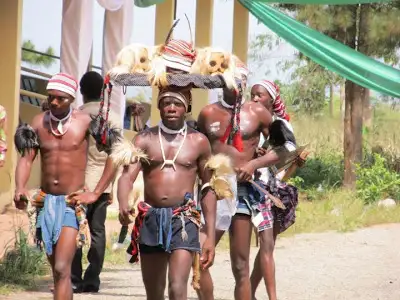
The Ikpirikpi-ogu War Dance, also called the Ohafia War Dance, is a famous traditional dance in Eastern Nigeria. It comes from the Ohafia people of Abia State and is a way to show bravery, strength, and history. Strong men perform it to remember their ancestors’ victories in battle and to display their courage.
The written record
Historical context
Origins of the Ikpirikpi-ogu War Dance
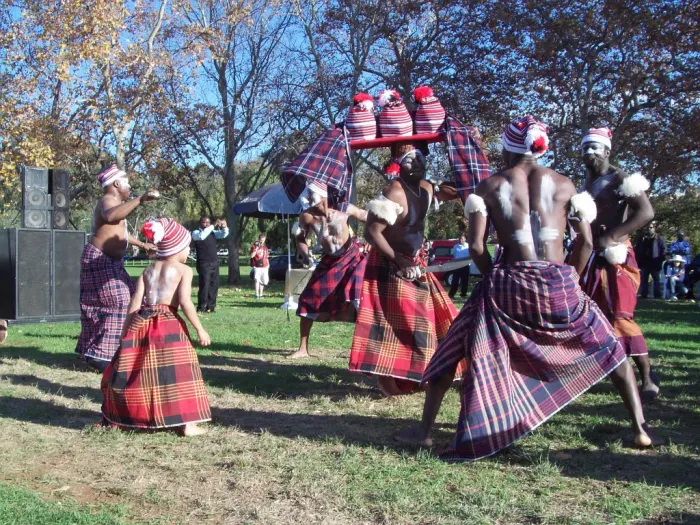
According to oral history, the Ohafia people were great warriors who were always on the lookout for wars to take part in.
War was not just about survival but also about honour and respect. The Ohafia warrior tradition is linked to the practice of ikpirikpi-ogu, which means cutting off the head of a fallen enemy. Having a human skull was proof of a warrior’s strength. Only men who brought home a skull could join the Ogbu-Isi society, a special group of warriors, and wear an eagle’s feather, which was a symbol of courage.
How the Dance is Performed
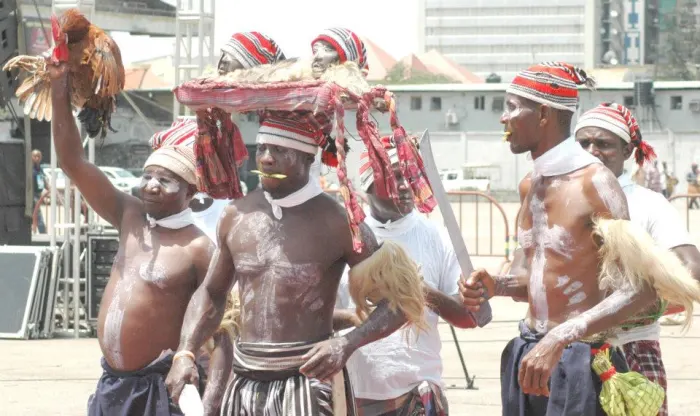
The Ohafia War Dance is more than just a performance; it is a way of remembering past battles. The dance is led by a chief dancer, who carries a basket filled with symbolic skulls, holds a cutlass, and has a small palm shoot in his mouth. Other dancers, dressed as warriors, act out the beheading of an enemy while dancing to the beat of traditional akwatankwa musical instruments.
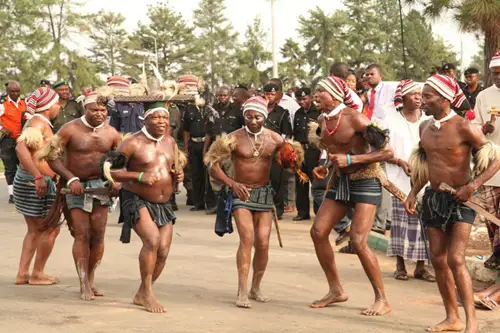
The Ikpirikpi-ogu War Dance has Different Meanings:
- It honours brave warriors who protected their people.
- It brings the community together and builds pride.
- It is a rite of passage for young men.
- It is used to celebrate personal achievements.
The Dance in Today’s World
Today, the Ikpirikpi-ogu War Dance is performed for more than just war. Now, it is seen at:
- Cultural festivals like the New Yam Festival and weddings.
- Government and national events to show Igbo culture.
- Entertainment purposes, such as movies and tourism events.
Even though the dance is no longer about war, it still symbolises bravery and tradition. The dancers wear:
- Bare chests to show their strength.
- Long red and white striped caps.
- Black skirts or shorts.
- Raffia arm bands, neck chains, and wristbands.
- Cutlasses and decorations to look like warriors.
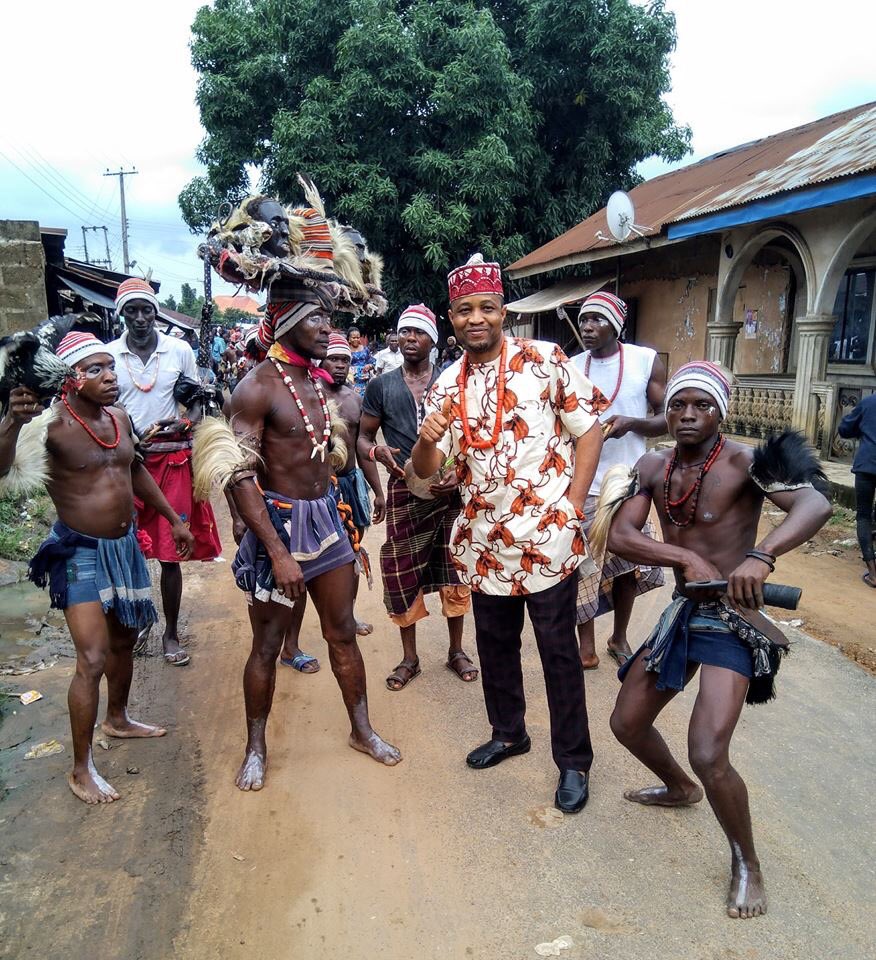
The Ikpirikpi-ogu War Dance is not just a dance—it is a way of keeping history alive. With its strong movements, warrior outfits, and deep meaning, it continues to show the bravery and unity of the Ohafia people. When performed at festivals and big events, it keeps the warrior spirit of the past alive for future generations.
The Ikpirikpi Ogu dance (Ohaofia War Dance) By Njenje Media
Ikpirikpe Ogu War Dance by Adamazi TV
Sources and references
- Isichei, E. (1976). A History of the Igbo People . Macmillan Press.
- Okafor, R. C. (1991). Music in Nigerian Culture . University Press Limited.
- Nwachukwu, F. (2001). Traditional Dance Forms in Igbo Society . African Cultural Heritage Publications.
- HubPages. (n.d.). Igbo traditional dances .
Cite this article
Discussion
Sign in to join the discussion
Comments are checked by an editor before they appear. Leave a source or a correction and it is read first.
Continue reading
Related histories
 Cultural HeritageEleven Days of Nwafor Ogidi: Inside the Festival Keeping an Old Igbo Tradition AliveRead history →
 Cultural HeritageIli Ji Nkpor Obododike: The Indigenous Agricultural Ritual CycleRead history →
 Cultural HeritageMusic and Drum Traditions: Tracing the “Igbo Drum” in the AmericasRead history →
No comments yet
Nothing has been approved on this record yet. Comments are checked by an editor before they appear, so one written now shows on this page after that check.