 Ozikoro
Cultural Heritage · Published history
The Onowu Iyasele Dynasty of Umueri: A Legacy of Tradition and Leadership
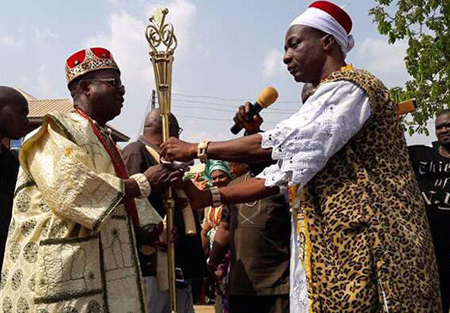
The Onowu is one of the most prominent and highly respected traditional institutions in Igbo communities, particularly in places with centralised, monarchical systems. The Onowu serves as the traditional Prime Minister, playing a critical role in governance, culture, and community administration. The history of this institution is deeply intertwined with the establishment and governance of the Umueri kingdom.
The written record
Historical context
Origin and Historical Context
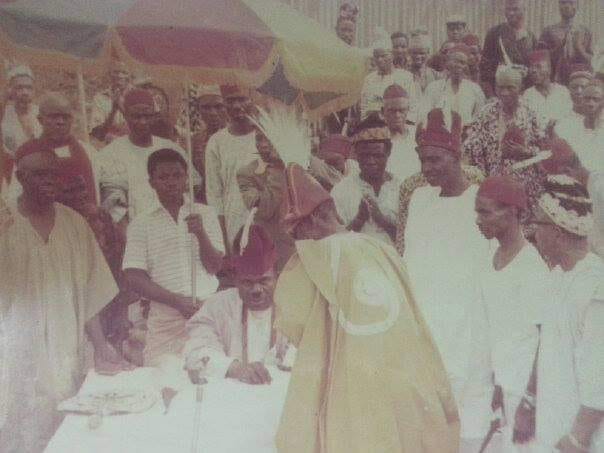
In Umueri, the Onowu Iyasele dynasty title is part of a complex traditional administrative structure that blends indigenous Igbo Onowu customs and the Benin Kingdom Iyasele (Iyase) custom. In Umueri, the Onowu Iyasele dynasty was established by Ilorah Nnamoke, a descendant of Namoke, an ancient ruler of Umueri.
Ilorah was among three young individuals (two boys and a girl) taken to the Benin Kingdom to assist the empire in prosecuting its numerous wars of conquest. Following his service, he was appointed and decorated as “Iyase Umueri” in Benin. Upon their return, the trio was celebrated throughout the community, and Ilorah received the Ofor (Staff of Office), formally installing him as Onowu Umueri, the traditional Prime Minister of the newly formed kingdom. Blending the Benin Iyase and the Igbo Onowu, the title becomes “Onowu Iyasele.” Iyase was Igbonised to “Iyasele,”
Establishment of the Dynasty
The descendants of Ilorah, which include the two kindred clans of Umuejizu and Irukwu, became the royal custodians of the Onowu dynasty. These clans are responsible for providing successors to the throne. The first Onowu Iyasele, Ilorah, ascended the throne in 1540, and the incumbent, Chief Mike Ekweonu, is the 13th Onowu Iyasele, maintaining an unbroken lineage that spans over 480 years.
Chronological List of Onowu Iyasele of Umueri
- Onowu Iyasele I – Ilorah (1540–1585)
- Onowu Iyasele II – Ememu (1585–1621)
- Onowu Iyasele III – Akah (1622–1670)
- Onowu Iyasele IV – Okwonwa (1670–1717)
- Onowu Iyasele V – Onukpolu (1717–1769)
- Onowu Iyasele VI – Izummuo (1769–1802)
- Onowu Iyasele VII – Onwebe (1804–1851)
- Onowu Iyasele VIII – Onyevene (1851–1883)
- Onowu Iyasele IX – Anierobi (1883–1907)
- Onowu Iyasele X – Ivekwu Ivedozie (1907–1928)
- Onowu Iyasele XI – Nzekwesi (1928–1956)
- Onowu Iyasele XII – Nnaluo Ekweonu (1958–1981)
- Onowu Iyasele XIII – Ezeakonobi Mike Ekweonu (1992–present)
Notable reigns include Ilorah, who ruled for over 45 years, and Onukpolu, the fifth Onowu, who reigned for 52 years and was rumoured to have travelled back to Benin after his installation.

Roles and Functions of the Onowu Iyasele
Traditionally, the Onowu Iyasele was more than a symbolic figure; the role carried significant political, cultural, and judicial responsibilities:
- Traditional Prime Minister: The Onowu is the most senior chief and principal advisor to the monarch (the Obi or Eze).
- Government and Administration: As head of the council of chiefs (Ndi Ichie), the Onowu relays the feelings and ideas of the populace to the ruler and oversees communal administration.
- Succession: The Onowu plays a crucial ceremonial role in the coronation and crowning of a new Obi.
- Judicial Functions: The institution historically settled land disputes, social misconduct, and other communal issues through the Izu Ani (land assembly) and other traditional mechanisms.
- Cultural Preservation: The Onowu is the chief custodian of cultural festivals, including the New Yam Festival, and issues official declarations, such as the “Ika Mmuo.”
- Astronomical Observations: Traditionally, the Onowu was responsible for sighting the moon, which had cultural and ritual significance.
Evolution of the Institution
The Onowu Iyasele institution has evolved in response to social, political, and colonial changes:
- Pre-colonial Era: The Onowu held significant political and judicial power, balancing the monarch’s authority with the council of elders.
- Colonial Era: British administrators sometimes misunderstood or sidelined traditional structures. In centralised kingdoms like Umueri and Onitsha, however, the Onowu institution largely persisted. For instance, Onowu Nzekwesi (11th Onowu) was appointed a sub-warrant chief by colonial authorities in 1930.
- Post-colonial Era: Today, the Onowu Iyasele serves mainly as a cultural custodian and advisor, preserving traditions and guiding community development, with limited direct political authority.
Interregnum and Modern Challenges
A critical moment in the dynasty’s history occurred between 1981 and 1992, following the death of Onowu Nnaluo Ekweonu. A dispute over succession led to a decade-long interregnum. During this period, Mr Raphael Nnameka Nwaorakwe from Irukwu acted as regent and custodian of the stool.
When the rightful heir, Ezeakonobi Mike Ekweonu, was chosen in 1992, Nwaorakwe initially refused to step down but died the following day, allowing the new Onowu to ascend in 1993.
Significance
The Onowu Iyasele institution is a cornerstone of governance, tradition, and culture in Umueri and other Igbo communities. It bridges the past and present, ensuring that traditional authority, cultural heritage, and communal cohesion are maintained while adapting to the modern Nigerian state.
Sources and references
- Diboh, B. (2022). A history of Umueri town: The historical nexus of Igbo origin. Publisher.
- Diboh, B. (2024, August 4). History of Onowu Umueri . Akụkọ Eri.
Cite this article
Discussion
Sign in to join the discussion
Comments are checked by an editor before they appear. Leave a source or a correction and it is read first.
Continue reading
Related histories
 Cultural HeritageEleven Days of Nwafor Ogidi: Inside the Festival Keeping an Old Igbo Tradition AliveRead history →
 Cultural HeritageIli Ji Nkpor Obododike: The Indigenous Agricultural Ritual CycleRead history →
 Cultural HeritageMusic and Drum Traditions: Tracing the “Igbo Drum” in the AmericasRead history →
No comments yet
Nothing has been approved on this record yet. Comments are checked by an editor before they appear, so one written now shows on this page after that check.