 Ozikoro
 Cultural Heritage · Published history
The Osu Institution in Igbo Society: Outcasts, Priestly Functions, and the Atlantic Slave Trade
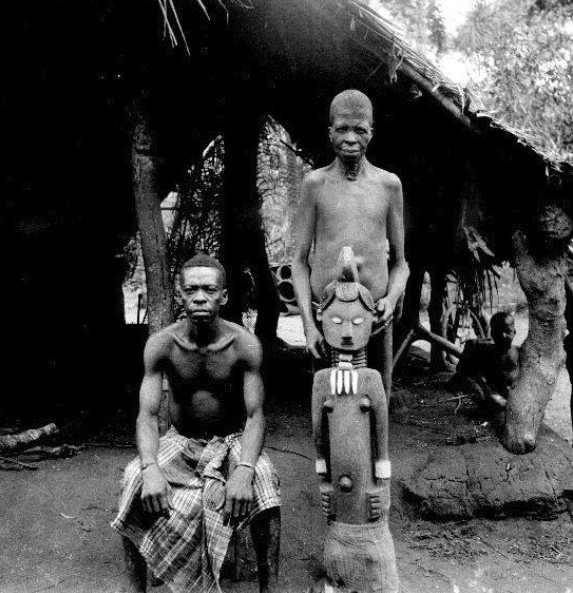
In different Igbo societies, Osu are seen as outcasts or are part of a caste system. It has made people known as Osu discriminated against, especially in terms of who they can marry and can not, and even restricted from taking certain political posts. Osu gained protection from divinities, which protected them from slavery during the Atlantic slave trade in particular. To the extend that it was exempt from being charged for certain social duties and crimes.
The written record
Historical context
Osu in Names and Religious Devotion
In Igbo names, osu is used in the sense of devotee of a deity, such as Osunjoku and Osuala. The concept of being linked with people cursed, such as being associated with good things like fame and beauty, doesn’t align with those who are treated as an outcast group. The perspective of the OSU Foundation seems to be the same as that of some Igbo titles, such as Igwe and eze.
Social Death and Exclusion
When Osu’s life was spared, he was considered dead in all social life. This led to a situation where anyone associated with him was assumed to have a ritual impurity, resulting in social contamination. This is the belief that he could not have anything to do with the living, and could also not attend the assembly of free-born. Osu, as a sacrifice, meant that they were avoided as ritually ‘dead’ people whom the ‘living’ should avoid.
The Osu and the Atlantic Slave Trade
Osu treatment was very different. For example, osu was not given full burials in so many places due to the belief, of which is that they were disconnected from a lineage and an afterlife. Wealthy people who were titled had large funerals and were the icons of their lineages. A lot of people who became OSU were during the Atlantic slave trade due to the inflow of people seeking sanctuary from slavery. It has a high chance of revealing the extent to which the current function of a group of people seen as osu is a legacy of that particular era.
Priestly Functions of the Osu
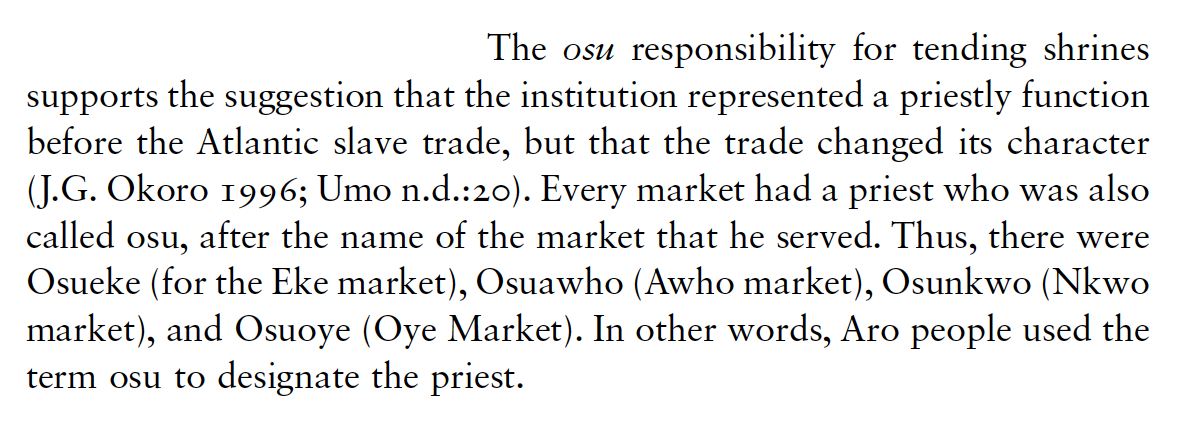
Osu’s responsibility for tending shrines and rendering the suggestion that the institution presented a priestly function even before the Atlantic slave trade, but then the trade turns out to change its character. After the market that Osu served, every market had a priest who was also called Osu, after the name of the market that he served. At the same time, there were Osuoke (for the Eke market), Osunkwo (Nkwo market), Osuawho (Awho market), and Osuoye (Oye market). In words, the Aro people used the term osu to designate the priest. And this is how they all sum it up.
It was recorded that OSU was not treated badly for the community development leveis or paying tax; this wasnt because they were niether well-off to pay but was because they were neither been asked to pay nor disturbed for failure to do so, this was the immunity that the ”osu” appreciated that gave them the zeal sometimes to indulge with peoples property and go free, since there was nobody to make such a demand.
![Okeke, H. C. (2020). The spirituality of the Igbo People of Nigeria (p. 88). [Publisher].](/media/ozikoro/7101-chukwudi-okeke.png)
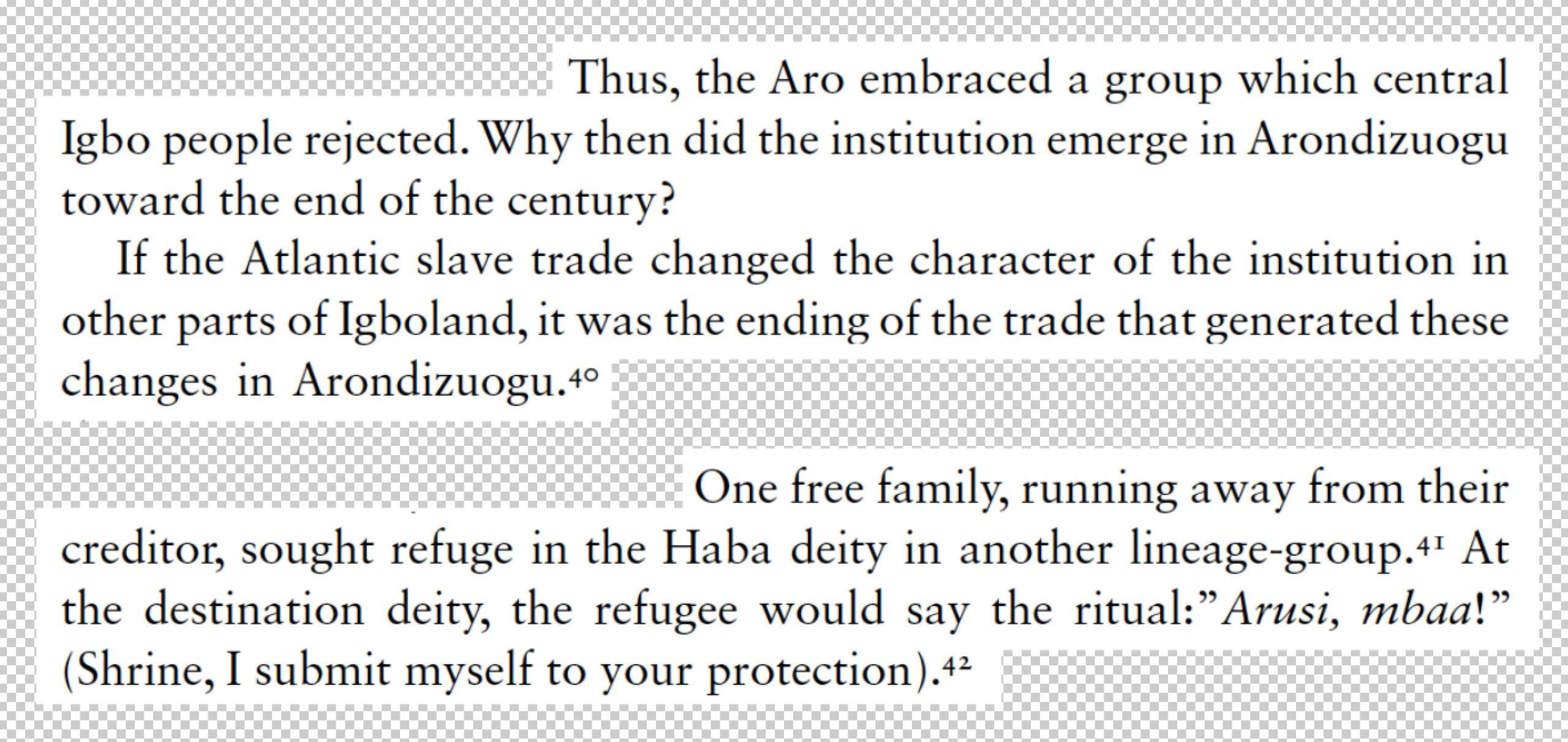
As an example of how some attitudes towards people may have been different, OSU was singled out as a discriminated or outcast group. The fact that he is different from others is just how people perceive him. Cause he’s been seen as an outcast. This was why, in all aspects of social, OSU was considered dead, even when the life of OSU was spared.
There’s a history of people who were not considered OSU living near or incorporating those considered OSU. The people of Idemmili and most of the towns surrounding the Nri Kingdom did not actually practice the Osu system, as everyone was considered equal in their religious belief, which is the Nri Igbo cosmology. The protection OSU gained from divinity protected them from being sold into slavery. So this was that the Atlantic slave trade may have a hand in bringing about or making worse the discrimination against Osu.
Sources and references
- Okeke, H. C. (2020). The spirituality of the Igbo People of Nigeria (p. 88). [Publisher].
- Nwokeji, G. U. (2010). The slave trade and culture in the Bight of Biafra: An African society in the Atlantic world (p. 199). Cambridge University Press.
- Ezeanya, S. N. (1967). The Osu (Cult-Slave) System in Igbo Land. Journal of Religion in Africa, 1(1), 35–45.
- Ukpuru. (2019, March 4). Òsu [Blog post]. Òsu
Cite this article
Discussion
Sign in to join the discussion
Comments are checked by an editor before they appear. Leave a source or a correction and it is read first.
Continue reading
Related histories
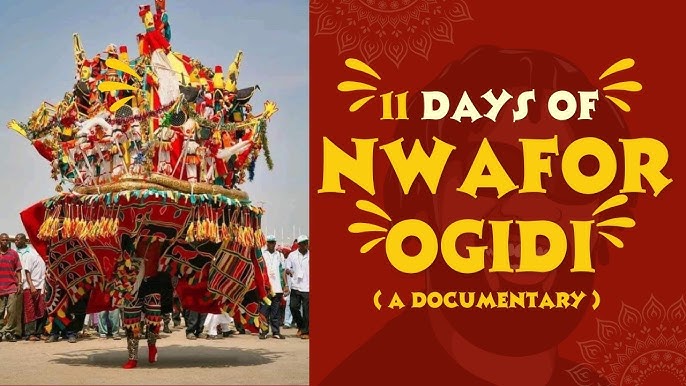 Cultural HeritageEleven Days of Nwafor Ogidi: Inside the Festival Keeping an Old Igbo Tradition AliveRead history →
 Cultural HeritageIli Ji Nkpor Obododike: The Indigenous Agricultural Ritual CycleRead history →
 Cultural HeritageMusic and Drum Traditions: Tracing the “Igbo Drum” in the AmericasRead history →
No comments yet
Nothing has been approved on this record yet. Comments are checked by an editor before they appear, so one written now shows on this page after that check.