 Ozikoro
 Ethnohistory · Published history
The Red Cope and White Alb: The Papal-Style Vestments Worn by the Olus of Warri
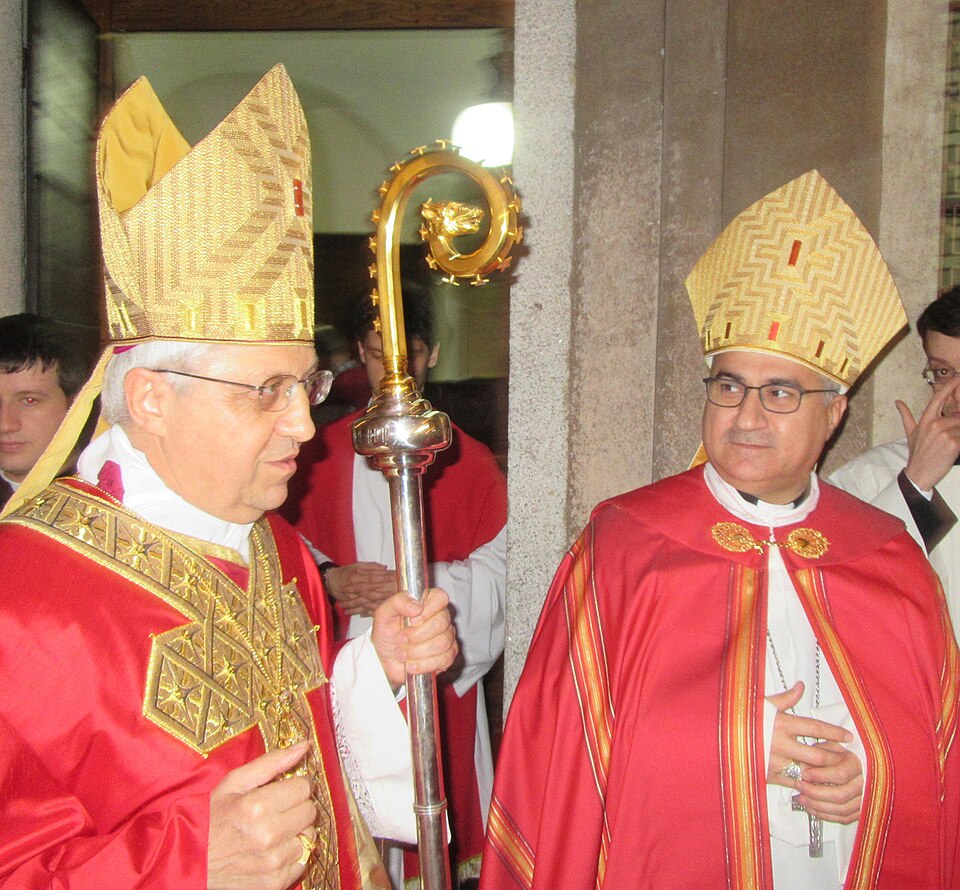
Among the monarchies of West Africa, the Warri Kingdom (Iwere Kingdom) stands out for its early and enduring encounter with European Christianity. One of the most visible legacies of this engagement is the distinctive royal attire of the Olus of Warri, particularly the red cope and white alb vestments that bear a striking resemblance to papal and ecclesiastical garments used in Roman Catholic liturgy. These vestments are not mere aesthetic preferences; they symbolize centuries of Itsekiri–Portuguese relations, Christianization, and the blending of African and European court traditions.
The written record
An icon representation of a papal alb, part of traditional Catholic clerical dress illustrating the white garment component of papal-style vestments adopted symbolically in some Olu regalia.Photo: Wikimedia Commons / public domain.
Historical context
Origins of Ecclesiastical Influence on the Warri Monarchy
- Portuguese Missionary Contact
The Itsekiri were among the first West African ethnic groups to establish long-term diplomatic and religious connections with Portugal. As recorded in historical analyses and summarized articles on the Warri Kingdom, Portuguese contact began in the late 15th century. Missionaries particularly Dominican and Jesuit priests accompanied traders and diplomats, aiming to establish Christian footholds in coastal kingdoms.
The Itsekiri royal family embraced Christianity early, beginning with the reign of Olu Ginuwa’s successors and reaching a high point under Olu Atorongboye (Sebastião I) and Olu Atuwatse I (Dom Domingos), who was educated at the University of Coimbra. This ecclesiastical relationship shaped not only the religion of the court but also its ceremonial aesthetics.
- Introduction of Vestments
Portuguese missionaries brought liturgical garments such as the alb (“alva”) and cope (“capa magna”). These vestments, traditionally worn by bishops and high-ranking clergy, were potent symbols of Christian leadership, purity, and divine authority. Over time, the Olus of Warri began to incorporate these garments into their regalia, transforming them into symbols of royal and spiritual sovereignty.
Character and Symbolism of the White Alb
- Description of the Alb
The alb is a long, white linen garment worn by clergy in Catholic liturgy. Its name derives from the Latin “albus,” meaning “white.” The Olus adapted this garment into royal attire, while retaining its symbolic associations with purity and sacred leadership.
- Symbolic Adaptation in the Warri Kingdom
In Itsekiri tradition, white has strong spiritual connotations, often associated with purity, legitimacy, and divine favor. The introduction of the alb aligned seamlessly with existing cultural values. In the Warri court, the alb represented:
Spiritual authority,
The Christian identity of the Olu,
Purity of leadership,
The blending of Itsekiri and Christian ceremonial traditions,
This symbolic layering allowed the alb to become both a Christian and culturally indigenous garment.
- Historical Usage
Accounts from early Portuguese travelers and missionaries reported that Itsekiri monarchs wore white linen robes during major ceremonies. These accounts supported by Ryder suggest that the alb was integrated into royal fashion as early as the 16th century. The use of this garment persisted even through the decline of formal missionary presence in the 18th and 19th centuries, illustrating its lasting cultural relevance.
The Red Cope: A Symbol of Authority and Royal Sovereignty
- Ecclesiastical Origins
In Catholic liturgy, the red cope (a cape-like garment) signifies the authority of a bishop or cardinal and is often worn during solemn processions. The color red represents the Holy Spirit, martyrdom, and power. Portuguese prelates who visited the Niger Delta frequently wore these garments, and their symbolic prestige made them attractive to African monarchs seeking to project both temporal and spiritual authority.
- Adoption into Itsekiri Royal Regalia
The red cope entered the Warri court’s ceremonial attire through diplomatic exchange. Oral traditions claim that Portuguese priests gifted red capes and similar vestments to early Christian Olus, signifying their role as Christian monarchs. These vestments were gradually customized with Itsekiri embroidery, Court insignias, and Ornamental crosses.
This hybridization created a uniquely Itsekiri variation of a European garment.
- The Cope as a Political Statement
Wearing the red cope allowed the Olu to project an image of Christian kingship, Connection to European monarchies, Legitimacy as a modernizing ruler and Global diplomatic sophistication
By the 17th century, Itsekiri kings were recognized by European traders as Christian rulers whose court etiquette mirrored aspects of Iberian monarchical culture.
A cope (cloak-like liturgical vestment) from Catholic tradition richly decorated and worn over the alb in solemn occasions, resembling the ceremonial capes sometimes seen in Warri royal dress.Photo credit; Wikimedia Commons /public domain.
Cultural Hybridization and Royal Identity
- Synthesis of African and European Aesthetics
The Itsekiri monarchy did not simply copy Portuguese fashion; it incorporated Christian vestments into existing cultural patterns of kingship. Ryder and Thornton note that African kingdoms often adopted foreign symbols while infusing them with indigenous meaning. For Itsekiri rulers, the alb and cope became part of a broader aesthetic identity rooted in Elite Christian education, Portuguese diplomatic alliances, Maritime trade networks and Local spiritual authority.
The result was a form of courtly hybridity distinct in West Africa.
- Reinforcement of the Olu’s Spiritual Authority
By wearing vestments associated with European ecclesiastical hierarchy, the Olu projected himself not only as a political ruler but as a quasi-spiritual leader. This dual symbolism reinforced the king’s role as mediator between the Itsekiri people and the divine, a role that corresponded with both Catholic and traditional Itsekiri cosmology.
Continuity and Modern Usage
- Surviving Tradition in the 20th and 21st Centuries
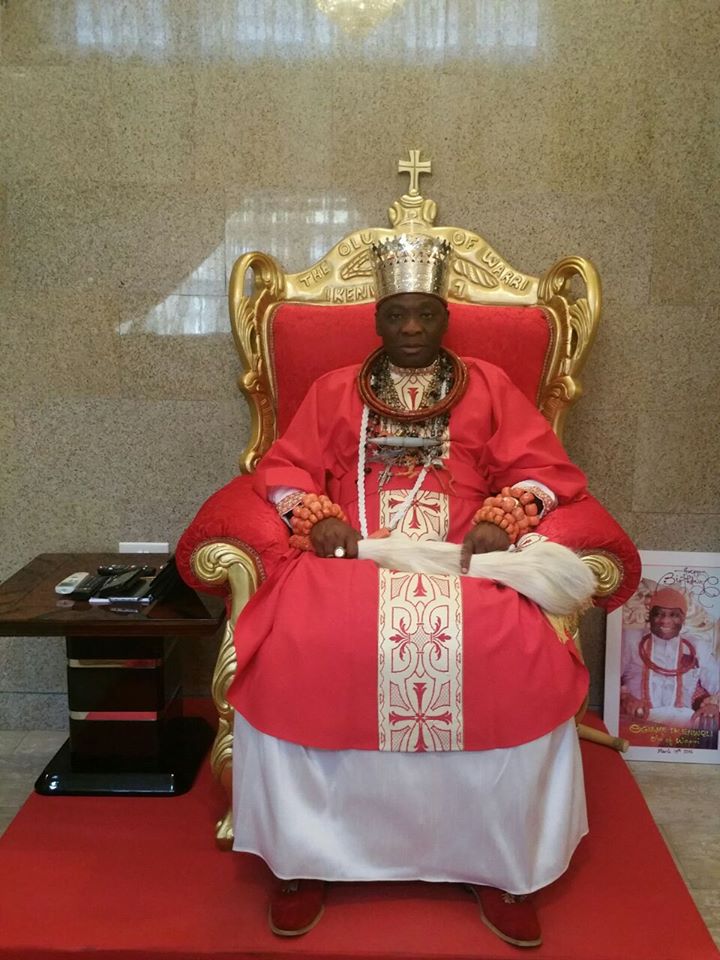
Even after the decline of Portuguese influence and the rise of Protestant missions, the royal vestments continued as part of the coronation and ceremonial attire of Itsekiri kings. Photographs of 20th-century Olus including Erejuwa II and Atuwatse II show the continued use of these garments.
- Modern Interpretation Under Ogiame Atuwatse III
Today, under Ogiame Atuwatse III, the red cope and white alb remain potent symbols of Itsekiri identity. Although they are sometimes modernized in tailoring, the underlying tradition persists reflecting a history of international diplomacy, Christianization, and cultural adaptation.
The red cope and white alb worn by the Olus of Warri are more than ceremonial garments; they embody centuries of Itsekiri–Portuguese engagement, spiritual transformation, and cultural synthesis. Introduced through missionary contact and diplomatic exchange, these vestments became powerful symbols of royal authority, Christian identity, and cross-cultural hybridity. Their continued use in the 21st century highlights the enduring legacy of the Itsekiri Kingdom’s unique position at the crossroads of African tradition and European influence.
Sources and references
- Ryder, A. F. C. (1969). Benin and the Europeans, 1485–1897. Longman.
- Thornton, J. (1998). Africa and Africans in the Making of the Atlantic World, 1400–1800 (2nd ed.). Cambridge University Press.
- Silva, M. (2001). The Portuguese Empire and Religious Orders. Lisbon: Instituto Camões.
Cite this article
Discussion
Sign in to join the discussion
Comments are checked by an editor before they appear. Leave a source or a correction and it is read first.
Continue reading
Related histories
 EthnohistoryGbam, Chai, Ewo: How Igbo Expressions Became the Language of Nigerian Pop CultureRead history →
 EthnohistoryAro Merchant Network: Historical Trade Integration in the Cross-Niger RegionRead history →
 EthnohistoryTransition to Commodities in the aro confederacy(e.g., Palm Oil, Ivory, Cloth)Read history →
No comments yet
Nothing has been approved on this record yet. Comments are checked by an editor before they appear, so one written now shows on this page after that check.