 Ozikoro
 Cultural Heritage · Published history
The Rhythmic Identity of Southeastern Nigeria: A Comparative Analysis of Atilogwu, Nkwa Umuagbogho, and Abigbo Dance Forms
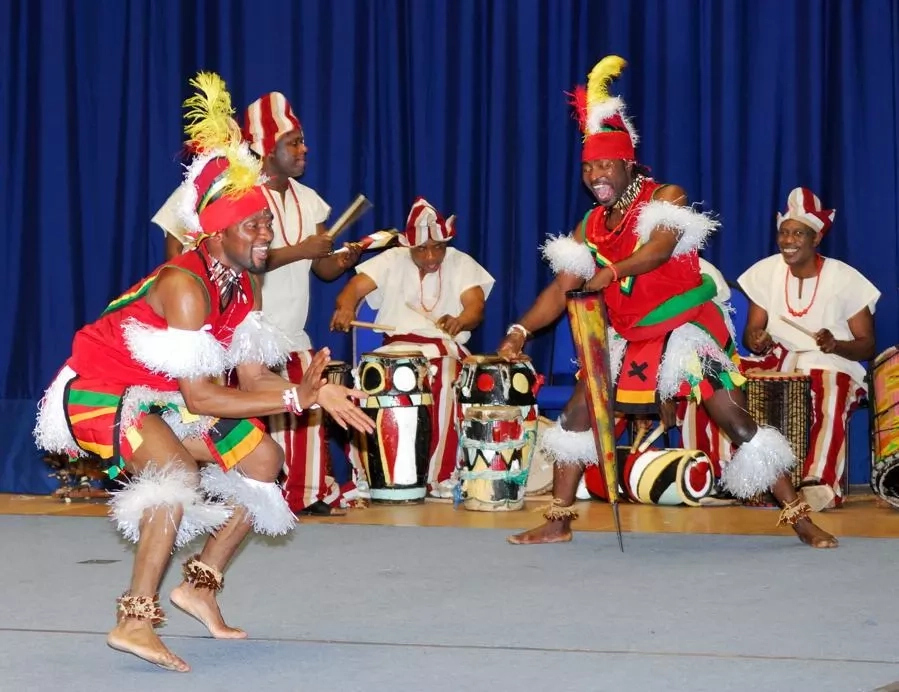
In the cultural landscape of the Igbo people of Southeastern Nigeria, dance is far more than a “recreational activity.” It is a sophisticated language that communicates history, social values, and communal identity. As noted by various ethnomusicologists, Igbo traditional dance is characterized by its “polyrhythmic complexity and physical vigor.” This article examines three distinct dance forms Atilogwu, Nkwa Umuagbogho, and Abigbo highlighting their regional nuances, symbolic meanings, and the structural differences that define their unique places in Igbo heritage.
The written record
Historical context
Atilogwu: The Acrobatic Prowess of the Northern Igbo
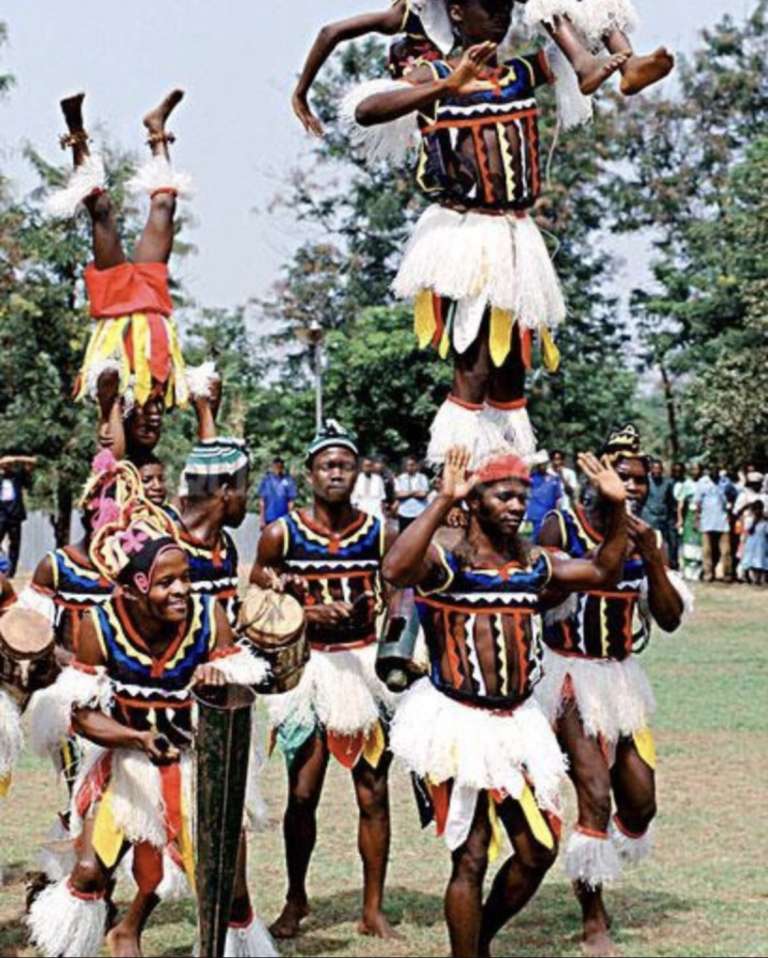
Originating primarily from the Enugwu and Anambra regions, Atilogwu is perhaps the most globally recognized Igbo dance. The name itself translates roughly to “Is there magic involved?” (Ati: “is it”; Ogwu: “magic/medicine”), a testament to the gravity-defying stunts performed by the dancers.
- Mechanics and Choreography:
The dance is characterized by high-intensity acrobatics, including flips, human pyramids, and rapid footwork. Unlike other forms that may focus on grace, Atilogwu prioritizes “stamina and technical precision.” The performers are often young men who undergo rigorous training from childhood to master the timing required to sync with the “Ogene” (metal gong) and “Opi” (flute).
- Musical Accompaniment:
The rhythm is fast-paced. Instrumentation typically includes the Igba (cylinder drum), Ogene, and Ichaka (shakers). The Opi lead singer or flutist acts as the “conductor,” signaling transitions in movement with specific melodic cues.
- Social Significance:
Historically, Atilogwu was performed during festivals like the New Yam Festival (Iri Ji). According to Wikipedia contributors, the dance evolved from “purification rituals and youth celebrations” into a competitive art form that showcases the strength and “vitality of the community’s youth.”
Nkwa Umuagbogho: The Grace of the Afikpo Maidens
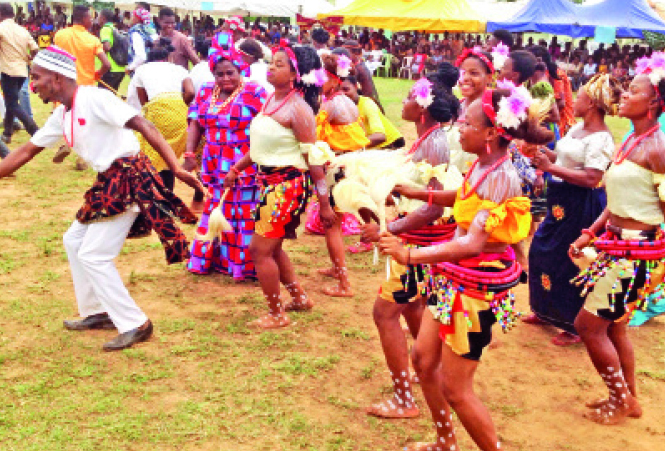
Moving eastward to the Ebonyi State region, specifically among the Afikpo (Ehugbo) people, we encounter Nkwa Umuagbogho. Translated as the “Dance of the Maidens,” this form stands in sharp contrast to the aggressive athleticism of Atilogwu.
- Aesthetic and Movement:
The focus here is on “feminine elegance and matrimonial readiness.” The dancers emphasize the flexibility of the waist and chest. The “vibrant shaking of the torso” is designed to show that the young women are healthy, nimble, and of age.
- Costume and Symbolism:
Dancers typically wear waist beads (Jigida), colorful wrappers, and leg rattles. The exposure of the midriff is not merely aesthetic; it is a cultural “statement of purity and physical fitness.” It serves as a rite of passage, transitioning girls into womanhood.
- Regional Distinction:
While Atilogwu is about “defying gravity,” Nkwa Umuagbogho is about “honoring the earth.” The movements are grounded, rhythmic, and fluid, reflecting the agrarian and communal values of the Ebonyi people. It is often performed to celebrate successful harvests or the homecoming of illustrious sons.
Abigbo Mbaise: The Satirical Voice of the Southern Igbo
In the heart of Imo State, the Mbaise people developed Abigbo, a dance form that blends rhythmic movement with “potent social commentary.” Unlike the first two, Abigbo is as much about the lyrics as it is about the dance.
- The Role of Satire:
Abigbo serves as the “traditional mouthpiece of the people.” During performances, the lead singer uses “witty lyrics and proverbs” to praise virtuous leaders or, more famously, to criticize social vices, corruption, and bad governance. As noted in local historical records, it is a “democratic tool” wrapped in entertainment.
- Choreographic Structure:
The dance is usually performed by men in a circular or semi-circular formation. The steps involve a rhythmic “shuffling of the feet and calculated body sways” that synchronize with the heavy beat of the Igba drum. It is less about high-jumping and more about “deliberate, masculine poise.”
- Philosophical Underpinnings:
Abigbo represents the “intellectualism of Igbo dance.” In Mbaise culture, a good Abigbo session leaves the audience thinking. It reinforces the Igbo philosophy of Onye kwuo, uche ya adia (“When one speaks, his mind is cleared”), using the communal space to address grievances through “artistic rebellion.”
Regional Differences and Comparative Analysis
The divergence between these three forms is rooted in the “geographic and social priorities” of their respective sub-groups.
- Physicality vs. Lyricism:
Atilogwu (Northern) focuses on the “superhuman body,” Nkwa Umuagbogho (Eastern) focuses on the “fertile body,” and Abigbo (Southern) focuses on the “political body.”
- Gender Dynamics:
While many Igbo dances are becoming more inclusive, Atilogwu and Abigbo have historically been male-dominated in their professional execution, whereas Nkwa Umuagbogho remains a “celebration of the female essence.”
- Instrumentation:
While all three use the Igba and Ogene, the Abigbo uses a larger lead drum to provide a deep, conversational bassline that accompanies the satirical chanting, whereas Atilogwu relies heavily on the high-pitched Opi to cut through the air during acrobatic leaps.
The “diversity within Igbo dance” reflects the democratic and fragmented nature of traditional Igbo society. Whether it is the “aerial maneuvers” of the Anambra youth, the “supple waist movements” of the Afikpo maidens, or the “poetic criticisms” of the Mbaise elders, these dances ensure that the history of the people is not just told, but performed. Protecting these art forms is essential for maintaining the “cultural equilibrium” of the Igbo nation in a rapidly modernizing world.
Sources and references
- Achebe, C. (1958). Things Fall Apart. Heinemann. (Contextualizing the role of music and dance in Igbo society).
- Enekwe, O. O. (1991). Igbo Masks: The Oneness of Ritual and Theatre. Nigeria Magazine.
- Nwaru, C. I. (2011). The Abigbo Choral and Dance Tradition of Mbaise. Journal of African Culture and Heritage.
- Ugolo, C. E. (2007). Aesthetics in African Traditional Dan ce. Journal of the Association of Nigerian Theatre Arts Practitioners.
Cite this article
Discussion
Sign in to join the discussion
Comments are checked by an editor before they appear. Leave a source or a correction and it is read first.
Continue reading
Related histories
 Cultural HeritageEleven Days of Nwafor Ogidi: Inside the Festival Keeping an Old Igbo Tradition AliveRead history →
 Cultural HeritageIli Ji Nkpor Obododike: The Indigenous Agricultural Ritual CycleRead history →
 Cultural HeritageMusic and Drum Traditions: Tracing the “Igbo Drum” in the AmericasRead history →
No comments yet
Nothing has been approved on this record yet. Comments are checked by an editor before they appear, so one written now shows on this page after that check.