 Ozikoro
 Cultural Heritage · Published history
The role of women in Igbo traditional religion, including priestesses (Lolo Mmụọ or similar) and female Alusi worship.
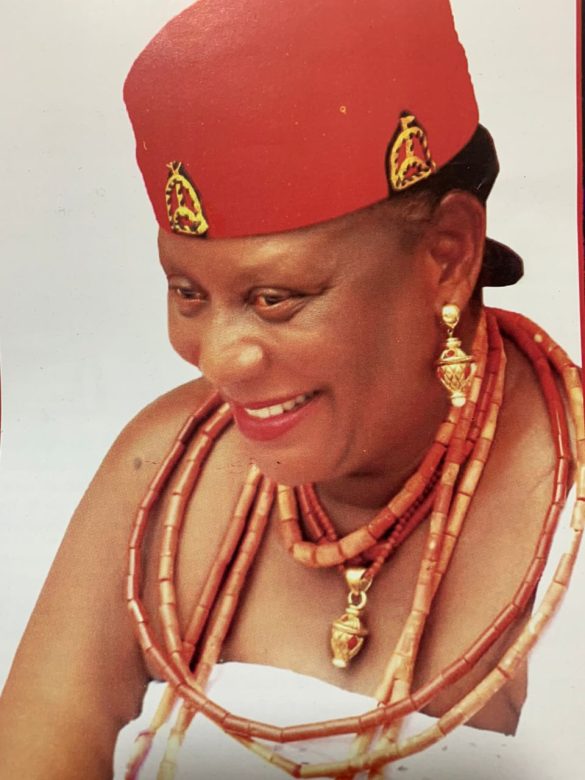
In the traditional cosmology of the Igbo people of Southeastern Nigeria, spirituality is not a male-dominated hierarchy but a “balanced duality.” The Igbo worldview operates on the principle of complementarity, where the masculine and feminine forces must coexist to maintain “Universal Harmony.” Central to this spiritual ecosystem is the indispensable role of women. While historical narratives often focus on the male Dibia (priest/doctor) or the Eze (king), women have historically functioned as the “spiritual bedrock” of the community. As priestesses (Lolo Mmụọ), diviners, and custodians of the most powerful female Alusi (deities), women wielded significant “metaphysical authority.” Their influence was rooted in the belief that women possess a natural “biological and spiritual proximity” to the Earth and their ancestors. This article explores the various dimensions of female participation in Igbo traditional religion, the specific roles of priestesses, and the worship of female-centric deities.
The written record
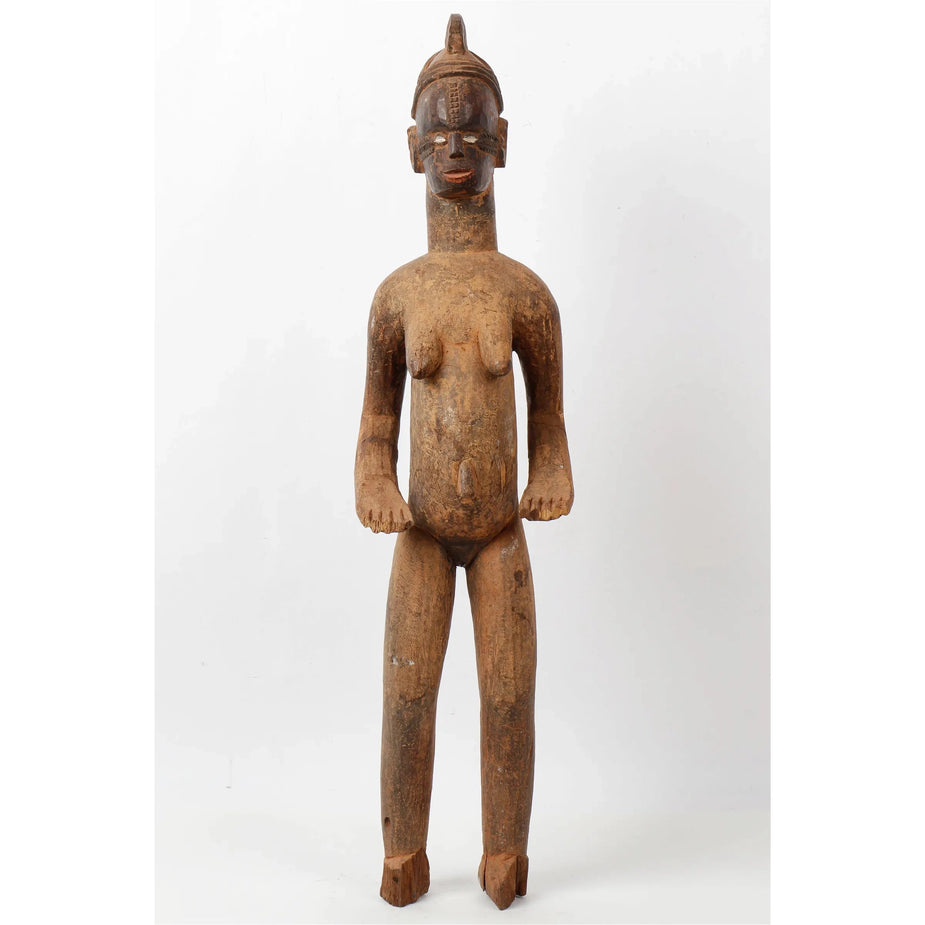
Photo Credit: Material Culture
Historical context
The Feminine Principle in Igbo Cosmology
To understand the role of women in Igbo religion, one must first recognize the “feminine nature” of the Igbo universe;
- Ala: The Supreme Earth Goddess: The most important deity in the Igbo pantheon is Ala (also known as Ani or Ana), the Earth Mother. She is the “owner of the land,” the source of fertility, and the “judge of morality.” Because the Earth is female, women are viewed as her “natural representatives” on the physical plane.
- Duality and Balance: The Igbo concept of Ikenga (masculine strength) is balanced by the concept of Nne (motherhood/femininity). No major sacrifice or communal ritual is considered complete without the “symbolic or physical presence” of the feminine energy.
- The Spiritual Power of Procreation: The ability to bring life into the world is seen as a “divine mandate.” This grants women a unique status as “portals between the spirit world and the human world,” making them naturally suited for roles as intermediaries with the Alusi.
Priestesses and Spiritual Leaders: Lolo Mmụọ and Beyond
The “Lolo Mmụọ” (literally “Queen of Spirits”) and other female religious specialists hold positions of immense power and “ritual sanctity’;
- The Call to Service: Becoming a priestess is rarely a choice. Like their male counterparts, women are often “claimed” by a particular Alusi through dreams, illnesses, or signs from the Afa (divination). Once called, the woman undergoes a “rigorous initiation” to become the human mouthpiece of the deity.
- Custodians of Shrines: Many of the most dreaded and respected shrines in Igboland were traditionally overseen by women. A priestess is responsible for “maintaining the ritual purity” of the shrine, offering daily libations, and interpreting the will of the deity to the community.
- The Omu (Queen of the Water): In the Western Igbo (Anioma) areas, the Omu is a female monarch with profound “religious and political duties.” She is the “mother of the community” and the lead priestess of the marketplace. It is believed that the Omu possesses “mystical eyes” that can see spirits, allowing her to protect the town from spiritual attacks.
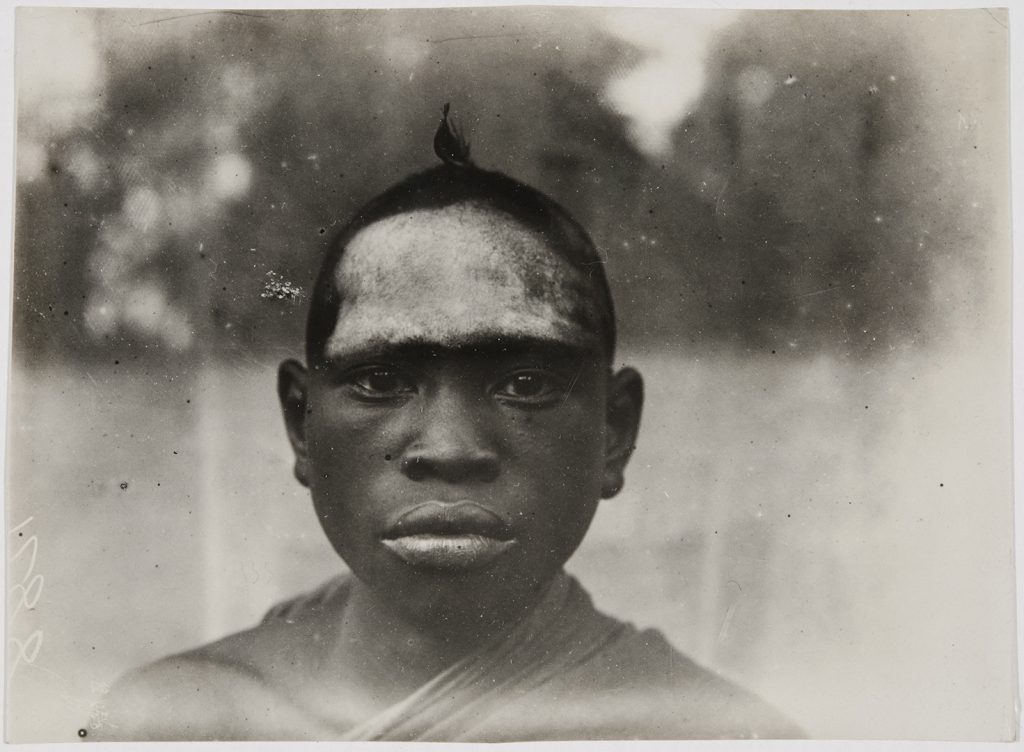
A priestess in the 1930s with sacred Nzu markings, prepared for a consultation at a local shrine.
Photo Credit: G.I. Jones Archives / Museum of Archaeology and Anthropology, University of Cambridge.
Female Alusi Worship and Devotional Practices
While Ala is the most prominent, there are numerous other female Alusi whose worship is primarily managed by women;
- Water Deities (Nne Mmiri/Anyim): Deities associated with rivers and lakes are almost exclusively feminine. Worship of these “Water Mothers” involves elaborate rituals near the banks of rivers. Women devotees, often dressed in “pristine white cloth,” offer sacrifices to ensure fertility and protection for their children.
- Uhamiri and Ogbuide: In the Oguta and riverine regions, the worship of Uhamiri (the Lady of the Lake) is a central religious practice. Her priestesses are wealthy, influential women who “mediate between the goddess and the people,” ensuring that the community remains in favor with the “waters of life.”
- The Cult of Njoku Ji: While yams are the “king of crops” (masculine), the spirit of the yam, Njoku Ji, has a feminine counterpart, Ifẹjiọkụ, who is often propitiated by women to ensure the “sustenance and growth” of the household’s food supply.
Women as Moral Guardians and Arbitrators
In Igbo traditional religion, the priestesses and elder women (Umuada) act as the “supreme court” of the land in matters of morality and taboo;
- Cleansing the Land: When a “taboo” (nso ala) is committed, such as incest or the killing of a sacred animal, the priestess of Ala must oversee the “cleansing ritual” (Ikpu Alu). Without her intervention, it is believed the land will become “barren” and the community will suffer.
- The Power of the Umuada: The Umuada (daughters of the lineage) hold a “sacred collective power.” During communal disputes, they can “invoke the spirits of the ancestors” to bring peace. Their collective curse is feared by even the most powerful men, as it is believed to be “backed by the authority of the Earth Mother.”
- Divination (Afa): Though more men are known as Dibia, many women practice as Dibia Afa. These female diviners use seeds, mirrors, or water to “diagnose spiritual ailments,” providing a unique perspective on the “emotional and domestic” dimensions of communal health.
Symbolism and Regalia of Female Religious Authority
The “visual identity” of a woman in traditional religious service is heavy with symbolic meaning;
- The White Cloth (Akwa Ọcha): Priestesses of water deities or Ala often wear white, symbolizing “purity, transparency, and the spirit world.” This serves as a “visual barrier” that marks them as consecrated individuals.
- Body Adornments: The use of Odo (yellow camwood) and nzu (white chalk) on the eyes or body signifies that the woman has “spiritual sight.” It is a “marking of the chosen,” indicating she is currently in communication with the Mmụọ (spirits).
- The Sacred Fan and Staff: Titled priestesses carry a “leather fan” (Akupe) or a “bronze staff,” which are not just symbols of rank but “spiritual tools” used to bless the faithful or ward off malevolent forces.
Modern Challenges and the Displacement of Female Power
The “encroachment of Western Christianity” and colonial structures has significantly altered the role of women in Igbo religion;
- Patriarchal Shift: Colonial administration favored male “Warrant Chiefs,” ignoring the traditional dual-authority systems. Similarly, many Christian denominations “relegated women to the background,” contrasting sharply with their “frontline roles” in traditional religion.
- The Stigma of “Idolatry”: As traditional practices were labeled “pagan” or “evil,” the priestesses, who were once the “protectors of the community,” were often marginalized as “witches.” This led to a “decline in the public practice” of female-led rituals.
- Resilience and Survival: Despite these pressures, female religious roles have survived in the form of “Prayer Mothers” in Indigenous African Churches (Aladura/Cherubim) and in the secret, “private devotion” to female Alusi that continues in many rural heartlands.
The role of women in Igbo traditional religion is a “testament to the essentiality of the feminine” in the African spiritual experience. As priestesses (Lolo Mmụọ), protectors of the market, and custodians of the Earth’s morality, women were never “subordinate” to men in the metaphysical realm; they were “equal partners” in the management of the cosmos. The worship of female Alusi and the ritual authority of the Omu or the Umuada remind us that in the Igbo world, “power is shared,” and spirituality is the thread that weaves both genders into a single, functional fabric. To understand Igbo religion without acknowledging the “priestess” is to see only half of the sky. As modern Igbo society seeks to reclaim its identity, the “re-evaluation of female spiritual authority” remains a vital step in honoring the “ancient wisdom” of the ancestors and the “eternal grace” of the Earth Mother.
Sources and references
- Achebe, C. (1958). Things Fall Apart. London: Heinemann. (Providing insights into the priestess Chielo and the Oracle of the Hills and Caves).
- Amadiume, I. (1987). Male Daughters, Female Husbands: Gender and Sex in an African Society. London: Zed Books. (A foundational text on the religious and social power of Igbo women).
- Aniakor, C. C. (1984). Igbo Arts: Community and Cosmos. Los Angeles: University of California.
- Arinze, F. A. (1970). Sacrifice in Ibo Religion. Ibadan University Press. (Contextualizing the role of women in ritual offerings).
- Henderson, R. N. (1972). The King in Every Man: Evolutionary Trends in Onitsha Ibo Society and Culture. Yale University Press.
- Jell-Bahlsen, S. ( 2008). The Water Goddess in Igbo Cosmology: Ogbuide of Oguta Lake. Africa World Press.
Cite this article
Discussion
Sign in to join the discussion
Comments are checked by an editor before they appear. Leave a source or a correction and it is read first.
Continue reading
Related histories
 Cultural HeritageEleven Days of Nwafor Ogidi: Inside the Festival Keeping an Old Igbo Tradition AliveRead history →
 Cultural HeritageIli Ji Nkpor Obododike: The Indigenous Agricultural Ritual CycleRead history →
 Cultural HeritageMusic and Drum Traditions: Tracing the “Igbo Drum” in the AmericasRead history →
No comments yet
Nothing has been approved on this record yet. Comments are checked by an editor before they appear, so one written now shows on this page after that check.