 Ozikoro
 Cultural Heritage · Published history
The Strong Role The Igbo Women Played In our Pre-Colonial Time To Boost The Igbo Economy Through Farming
Before the time of the white men (pre-colonial period) in Igbo land, agriculture was the backbone of everything — from food, to how people lived together, to how they saw themselves. As one scholar, Vincent Uchendu, said, agriculture is an “Igbo staff of life.” It covers many things like planting crops, food processing, keeping small animals, fishing, and gathering. Not everyone farms, but most people, both men and women, were involved in agriculture. It has a big respect as the main work that everybody looks up to. Inside the farming world, Igbo women played a very strong role. They used their power, brains, and experience to plant, process food, and engage in other activities to boost the economy. 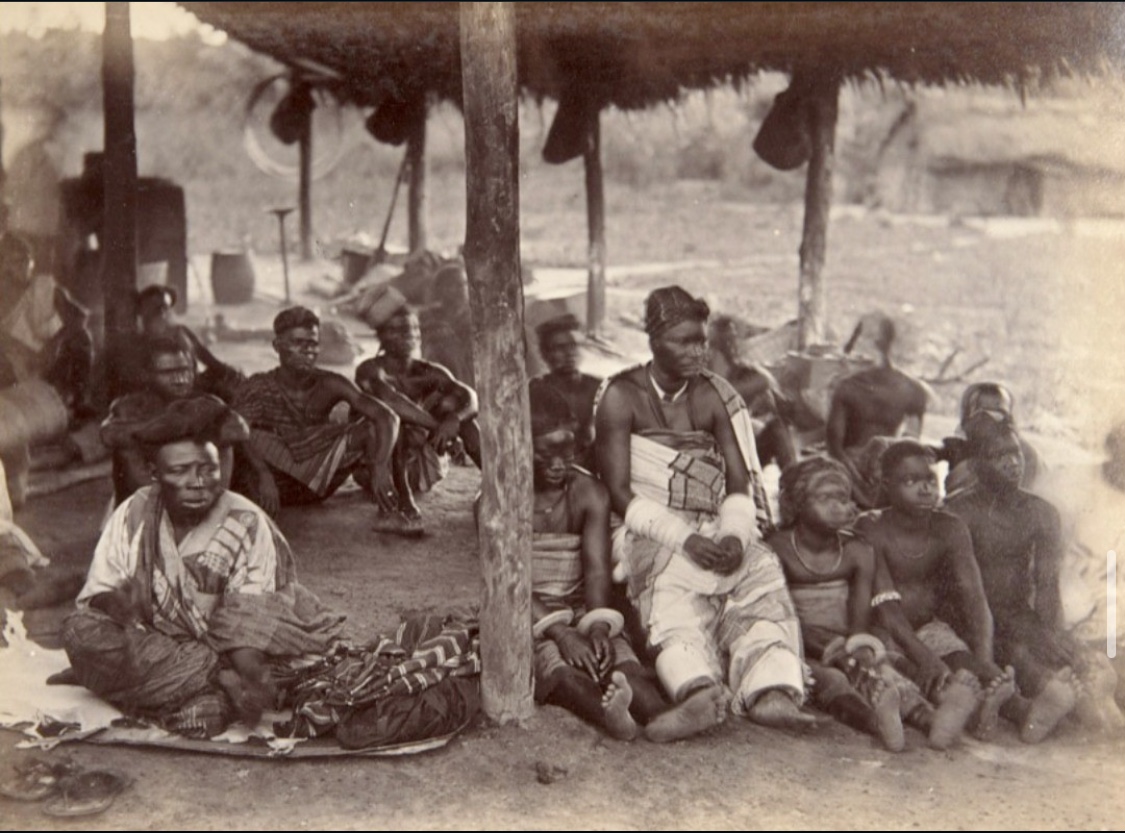
The written record
This picture taken c. 1889, possibly by G. F. Packer credited with other photos from the Niger and Onitsha (and of Onitsha trading women), is annotated as ‘Trader from Timbuctou’ on the left and ‘Rich Trading Woman’ on the right.The Igbo economy has three big parts: farming (Ndi-Ọlụgbo), handwork like craft or tools (Ndi-Ọlụaka), and business/trade (Ndi-Ahia). Farming is prevalent in farming areas like Ngwa, Abakaliki, Aguleri, and Nsukka. Women of Ndi-Ọlụgbo, especially in palm belt areas like Ngwa and Owerri, have a serious hand in agriculture. They plant crops that match the wet, rich land near the Niger, Anambra, Cross River, and Imo Rivers. One of the most important crops is cocoyam — they call it “female crop” — and women mainly cultivate it. Another one is cassava, which got to the Igbo land between the 1700s and 1800s. At first, only women planted cassava.
Historical context
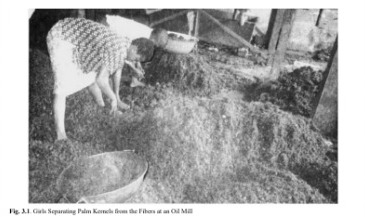
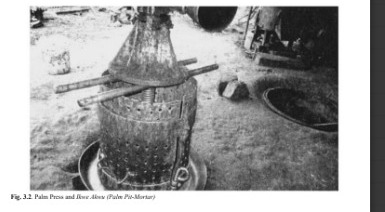
Cocoyam, second only to yam, is everyone’s food, and women champion it. Any woman who knows how to grow cocoyam well can have a big title like Eze or Irueze Ede (big cocoyam farmer). Casava was also a game changer. It is hard to die, but it can survive in bad conditions, help people not starve, and bring plenty of food they can sell. In Ngwa, women also had a strong hand in processing palm oil and kernel — these things that the British and coastal traders carried to Europe from the 1800s. The work of the women is what helped towns like Aba and Umuahia to grow as business centers.
But women did not just stop at planting. They still weed the farm, harvest crops, and carry food to the house or market. How they divide work between a man and a woman is not fixed; it’s flexible. For example, a man will clear the bush, mound yams, and stake them, but a woman weeds and harvests; that’s heavy work too. For places like Mgbowo, women form work groups like Iriohu society (about 10–12 women) to help each other. They help to weed, plant, and harvest together without pay —it is just food they will eat on the person’s farm. This type of work system is called ofe-ọlụ or onwe ọrụ, which shows that women can organize and make sure that farms are productive. This type of team spirit helps boost the economy.
In river areas and towns like Oguta, women still help with fishing, especially in fish ponds, while men fish in big rivers. Women use traps and pond draining to catch fish—this helps to give the family meat and protein, but it also brings little money. Women also gather things like fruits, mushrooms, and leaves—this helps very well during food scarcity times like famine (uganị or ụmvụ). Even if it is a side job to farming, it still has economic value.
However, one challenge that women faced was the land problem. Land is a big economic resource; they see it as a goddess (Earth Goddess). But the society men control the land. As the palm oil business grew in the 1800s, women with money, like big traders in Onicha mmili and Aboh, started buying land, which helped them have more control. Palm trees in the past didn’t have enough value, and women managed them, even though the land was meant for men. However, when palm oil became a hot commodity, women’s work helped the Igbo people join global trade.
Igbo farming is not just planting and harvesting—it also has plenty of rituals and festivals, like Ahiajoku or Ifejiọkụ (the new yam festival). Cocoyam also has spirit (Njọkụ ede) and special rules for planting and eating it. Women are responsible for ensuring these rules are not broken because the spirit can get provoked if one does. The women’s role tied their work to the people’s spiritual life.
Women do not do much farming for trade towns like Oguta and Onitsha. Instead, they plant small vegetables close to the house or engage in trade and food processing, like making palm oil. At Nsukka, women do more of palm oil work, pottery, weaving, and small trading. Men still plant yams and cocoyams there. This variety shows that what people do depends on something that seems easy and life in that place. But no matter how, women who process food and sell things are still important — they help to carry food from the farm to the market and keep money moving.
Women also raised animals like goats, sheep, and fowl. Even if they could not do it in a big way because of the tsetse fly, which kills animals, they still tried. Livestock brought food, manure, money, and even respect. Sometimes, women will enter into agreements to raise another person’s animal and share the profit when the animals multiply—this helps support the family and gives women small social power.
Farming in Igbo land is hard because they only have tools like a hoe and a cutlass. So the effort women put in—from group work, fishing, and food processing to planting strong crops like cassava, cocoyam, and palm produce—carries the economy.
In the pre-colonial Igbo society, women were a strong pillar in agriculture and the economy. They plant crops like cassava and cocoyam and process palm oil. They also weed, harvest, fish, gather food, and raise animals. They are good at organizing work groups, handling new crops, and running things that support a big population and business. Even if they don’t get plenty of land like men, they find a way into the market, buy land, and boost their economic power. They were the ones who helped the Igbo land prosper. Their story shows they are not just in the background — they are real movers and shakers of the Igbo society before colonialism.
Sources and references
- Chuku, Gloria. Igbo Women and Economic Transformation in Southeastern Nigeria, 1900–1960 . Routledge, 2005.
- Uchendu, V. C. The Igbo of Southeast Nigeria . Holt, Rinehart and Winston, 1965.
- Amadiume, Ifi. Male Daughters, Female Husbands: Gender and Sex in an African Society . Zed Books, 1987.
Cite this article
Discussion
Sign in to join the discussion
Comments are checked by an editor before they appear. Leave a source or a correction and it is read first.
Continue reading
Related histories
 Cultural HeritageEleven Days of Nwafor Ogidi: Inside the Festival Keeping an Old Igbo Tradition AliveRead history →
 Cultural HeritageIli Ji Nkpor Obododike: The Indigenous Agricultural Ritual CycleRead history →
 Cultural HeritageMusic and Drum Traditions: Tracing the “Igbo Drum” in the AmericasRead history →
No comments yet
Nothing has been approved on this record yet. Comments are checked by an editor before they appear, so one written now shows on this page after that check.