 Ozikoro
 Cultural Heritage · Published history
Traditional Igbo calendar and lunar/solar alignments
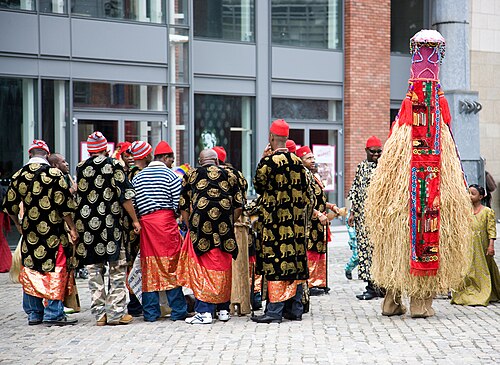
The traditional Igbo calendar, known as Iguafo n’Igbo, is one of the most sophisticated and culturally significant indigenous time-keeping systems in West Africa. Far from being a primitive method of tracking days, it is a complex “astronomical and mathematical construct” that aligns the rhythms of human life with the celestial movements of the moon and the seasonal cycles of the sun. The Igbo people, historically agrarian and deeply spiritual, required a calendar that could accurately predict the “planting and harvesting seasons” while simultaneously scheduling the intricate cycles of festivals, title-taking ceremonies, and market days. Rooted in a lunar-based logic but reconciled through solar observations, the Igbo calendar defines the “temporal identity” of the people, ensuring that the community remains in harmony with the cosmos. This article explores the structural components, the lunar-solar mechanics, and the socio-religious significance of the traditional Igbo calendar.
The written record
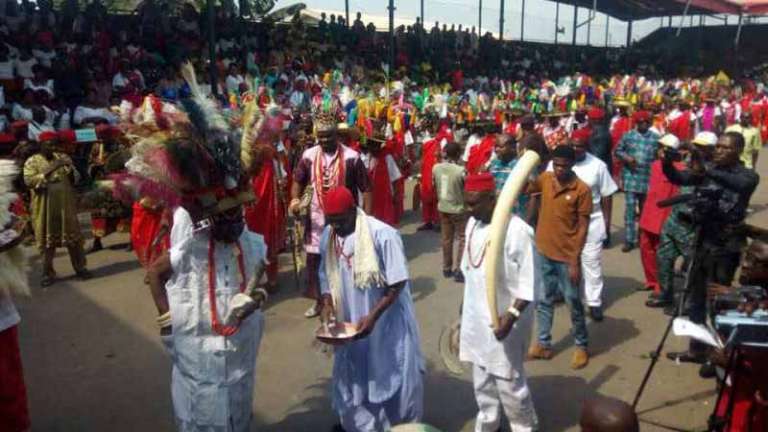
Photo Credit: National Commission for Museums and Monuments, Nigeria .
Historical context
The Mathematical Foundation: The Four-Day Week
At the core of the Igbo temporal system is the “four-day week,” which serves as the fundamental building block of the calendar. Unlike the Western seven-day week, the Igbo week reflects a “quadripartite cosmic order”;
- The Eke, Orie, Afo, and Nkwo: These are the four market days (Ubochi Ahia) that constitute one Igbo week (izu). Each day is dedicated to a specific deity or “market spirit” and is associated with a cardinal point: Eke (East), Orie (West), Afo (North), and Nkwo (South).
- The Double Week: Seven sets of these four days (28 days) constitute one “Igbo Month” (Onwa). This 28-day cycle is the closest approximation to the “lunar synodic period,” reflecting the moon’s orbit around the earth.
- Economic and Social Synchronization: The four-day week is not just for counting time; it is an “economic rotation.” Major markets are scheduled on specific days across different communities, ensuring a constant flow of trade and “inter-community interaction” throughout the region.
Lunar Alignments: The Thirteen-Month Year
While the Gregorian calendar utilizes twelve months, the traditional Igbo calendar is primarily “lunar-centric,” consisting of thirteen months in a year;
- The 28-Day Month: Because each month consists exactly of 28 days (four weeks of seven days, or seven weeks of four days), the Igbo year (Arọ) totals 364 days.
- The Moon as the Timekeeper: Each month begins with the “sighting of the new moon.” The Igbo people were keen observers of the “lunar phases,” using the wax and wane of the moon to dictate the timing of rituals. The moon is seen as the “governess of fertility,” and its cycle is inextricably linked to the biological rhythms of women and the growth of crops.
- The Names of the Months: The months are often named after the “prevailing agricultural activity” or the major festival occurring during that period. For instance, Onwa Agwu (the month of the Agwu deity) or Onwa Ilo Mmuo (the month of the harvest festival).
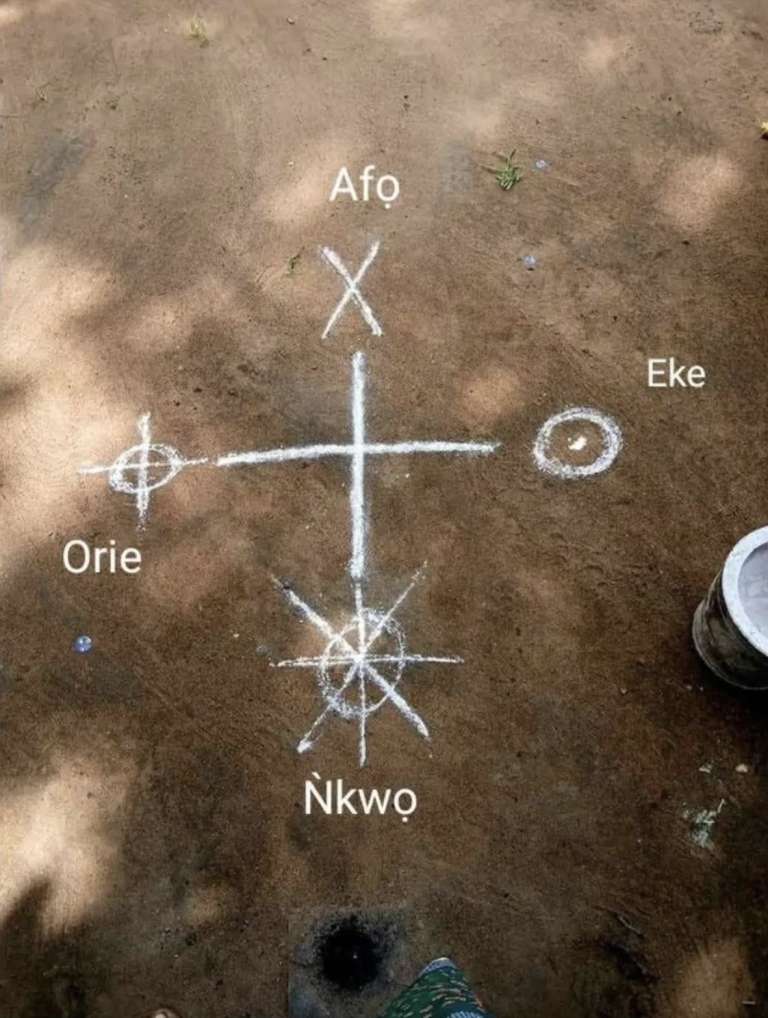
Photo Credit: Center for Igbo Studies / Historical Ethnography Archive.
Solar Alignments and the Intercalary Reconciliation
A year of 364 days creates a discrepancy with the “solar year” (approximately 365.24 days). To ensure the calendar did not drift away from the agricultural seasons, the Igbo developed a “solar reconciliation” method;
- Agricultural Synchronization: Since yams (the king of crops) require specific rainfall patterns, the calendar had to remain aligned with the “equinoxes and solstices.” The Igbo elders, particularly the priests of the Earth Goddess (Ala) and the “time-keeping priests” of the Nri Kingdom, monitored the sun’s position.
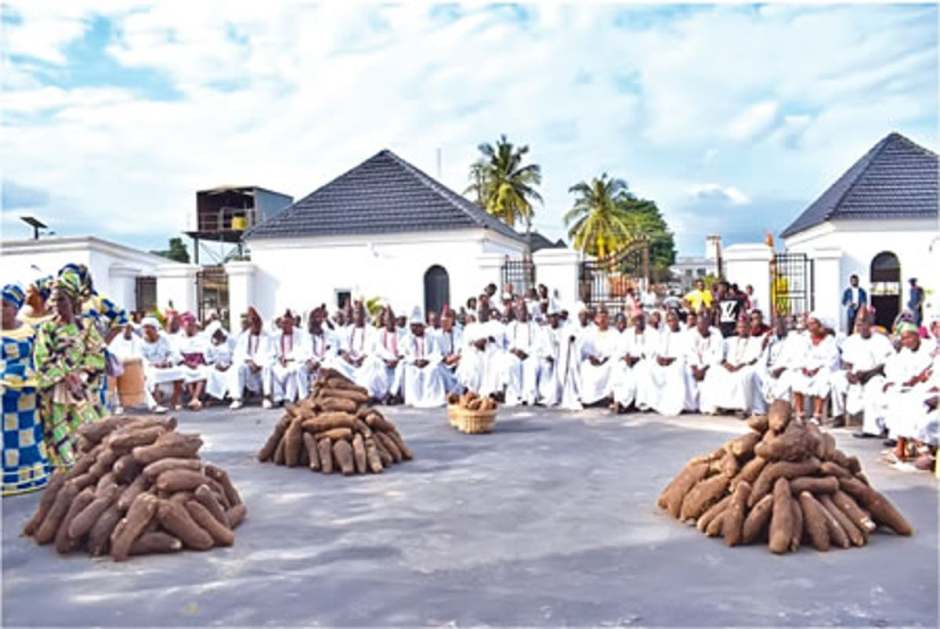
- The Intercalary Period: To account for the missing day and the leap year fractions, the Igbo calendar utilizes a “floating period” or an intercalary adjustment. This is often handled by adding a “thirteenth month” or extending the duration of the final month of the year. This ensures that the “New Yam Festival” (Iri Ji) always coincides with the actual harvest time.
- The Zenith and the Shadows: Traditional timekeepers used the “length of shadows” cast by specific trees or shrines at high noon to determine the “peak of the solar cycle,” effectively aligning their lunar count with the solar reality.
The Role of the Nri Kingdom as the “Greenwich” of Igboland
Historically, the Nri Kingdom (the ancestral heart of Igbo culture) acted as the “central authority” for the Igbo calendar;
- The Eze Nri’s Proclamation: It was the duty of the Eze Nri (the priest-king) to officially “count the months” and proclaim the beginning of the year. This ensured a “standardized temporal order” across the fragmented Igbo communities.
- The Year of the King: The Igbo year officially begins with the “Igu Aro” ceremony. During this event, the King counts the 13 months and offers sacrifices for a “fruitful agricultural season.”
- Spiritual Governance: By controlling the calendar, the Nri priests controlled the “spiritual rhythm” of the people. They determined when it was “taboo” to work the earth and when the ancestors were most accessible for communication.
Socio-Religious Significance: Festivals and Life Cycles
The Igbo calendar is not a secular tool; it is a “liturgical document” that guides the spiritual life of the community;
- Festival Scheduling: Major festivals like Ilo Mmuo (honoring the spirits) and Aju are precisely scheduled according to the lunar count. These festivals are essential for “communal bonding” and the “purification of the land.”
- Naming Ceremonies and Age Grades: A child’s identity is often linked to the “market day” they were born on (e.g., Mgbeke for a girl born on Eke, or Okafor for a boy born on Afo). Furthermore, the “Age Grade” system (Otu Ogbo) utilizes the calendar to track the transition of youths into adulthood.
- Market Day Taboos: Certain market days are considered “holy” or “heavy,” during which specific activities like burials or noisy celebrations are forbidden. This “rhythmic rest” ensures the psychological well-being of the community.
Modern Challenges and the Resilience of Iguafo
With the introduction of the Gregorian calendar by British colonialists and Christian missionaries, the traditional Igbo calendar faced a period of “marginalization”;
- The “Seven-Day” Disruption: The shift from a four-day market cycle to a seven-day “Western week” caused significant “economic and ritual confusion.” Many communities responded by running “parallel systems,” using the Gregorian calendar for government/school business and the Igbo calendar for “village life and traditional rites.”
- The Role of the Church: Early missionaries often discouraged the use of the Igbo calendar, viewing the market days as “pagan.” However, modern Igbo Christians have largely reconciled the two, often scheduling “harvest thanksgivings” in churches to align with the traditional New Yam period.
- Digital and Academic Revival: Today, there is a “resurgence of interest” in the traditional calendar among the Igbo diaspora and scholars. Digital versions of the Iguafo n’Igbo are now available, helping modern Igbo people keep track of their “cultural time” alongside global time.
The traditional Igbo calendar and lunar/solar alignments represent a “pinnacle of indigenous African science.” It is a system that understands time not as a linear, mechanical progression, but as a “cyclical dialogue” between the earth and the heavens. By balancing the 28-day lunar month with the solar agricultural seasons through the “Igu Aro” mechanism, the Igbo people created a temporal framework that served their “commercial, spiritual, and social needs” for centuries. The four-day market week remains the “heartbeat” of the Igbo hinterland, proving that while empires may fall and new governments may rise, the “celestial clock” of the ancestors continues to tick. To understand the Igbo calendar is to understand the “soul of a people” who have always known that “timing is the essence of life.”
Sources and references
- Achebe, C. (1958). Things Fall Apart. London: Heinemann. (Providing context on the importance of market days and seasons).
- Achebe, N. (2011). The Female King of Colonial Nigeria: Ahebi Ugbabe. Indiana University Press. (Discussing indigenous power and temporal structures).
- Aniakor, C. C. (1984). Igbo Arts: Community and Cosmos. Los Angeles: University of California.
- Henderson, R. N. (1972). The King in Every Man: Evolutionary Trends in Onitsha Ibo Society and Culture. Yale University Press.
- Onwuejeogwu, M. A. (1981). An Igbo Civilization: Nri Kingdom and Hegemony. Ethnographica. (The primary source for the Nri time-keeping system).
- Umeh, J. A. (1 999). After God is Dibia: Igbo Cosmology, Divination & Sacred Science. Karnak House.
Cite this article
Discussion
Sign in to join the discussion
Comments are checked by an editor before they appear. Leave a source or a correction and it is read first.
Continue reading
Related histories
 Cultural HeritageEleven Days of Nwafor Ogidi: Inside the Festival Keeping an Old Igbo Tradition AliveRead history →
 Cultural HeritageIli Ji Nkpor Obododike: The Indigenous Agricultural Ritual CycleRead history →
 Cultural HeritageMusic and Drum Traditions: Tracing the “Igbo Drum” in the AmericasRead history →
No comments yet
Nothing has been approved on this record yet. Comments are checked by an editor before they appear, so one written now shows on this page after that check.