 Ozikoro
 Cultural Heritage · Published history
Traditional Igbo justice systems, village councils (Amala), and trial by ordeal methods
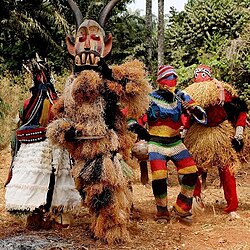
The traditional Igbo justice system is a profound manifestation of “republicanism and communal democracy.” Unlike the centralized, monarchical legal systems found in other parts of West Africa, the Igbo developed a decentralized, multi-layered approach to jurisprudence. This system was designed not merely to punish offenders but to “restore communal equilibrium” and ensure that the “will of the ancestors” was upheld. At the heart of this legal framework are the village councils, known as the Amala, and a series of spiritual mechanisms, including trial by ordeal, intended to uncover the truth where human evidence failed. In Igbo cosmology, justice is a sacred duty; to subvert it is to commit an abomination against the Earth Goddess, Ala. This article explores the structural components of the Igbo legal system, the democratic role of the Amala, and the controversial but historically significant methods of trial by ordeal.
The written record
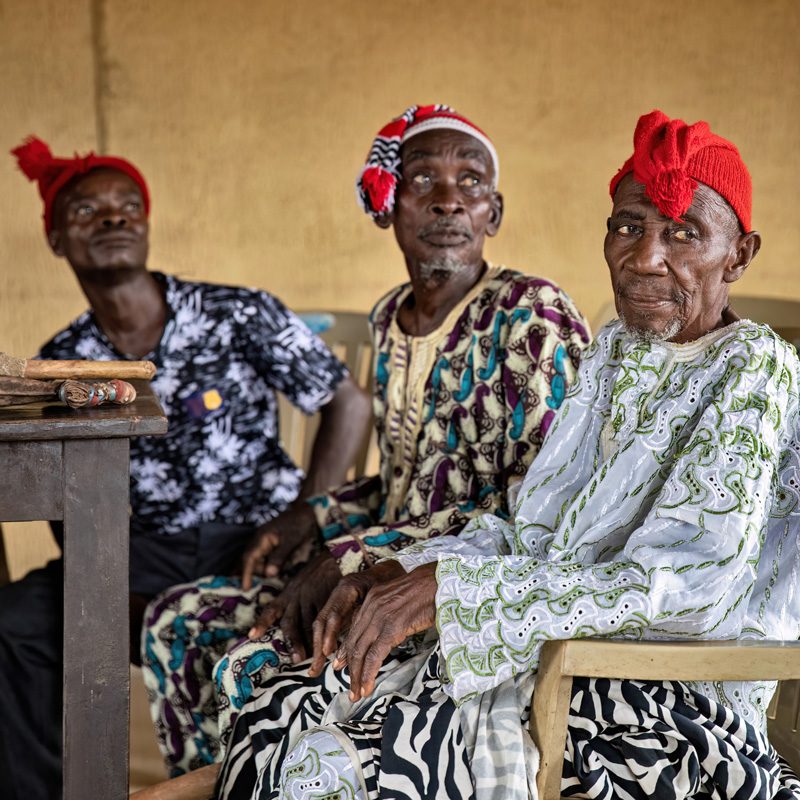
Photo Credit: Last Places
Historical context
The Hierarchy of Justice: From the Family to the Town
The Igbo legal system operates on the principle of “subsidiarity,” where cases are handled at the most immediate level possible before being escalated;
The Umunna (Kindred): The first level of justice occurs within the Umunna. Disputes between siblings or close relatives regarding boundaries or inheritance are settled by the family elders. The focus here is on “reconciliation” rather than litigation.
The Village Assembly: If a case cannot be resolved by the kindred, it moves to the village level. This is a “public forum” where every adult male has a right to speak. The consensus of the community acts as the verdict.
Inter-Village Tribunals: For crimes involving different villages, such as homicide or theft across boundaries, a joint council of elders from both communities is formed to prevent “inter-communal warfare” and negotiate reparations (Igụ-ala).
The Village Council (Amala): The Heart of Democracy
The Amala (Council of Elders) represents the “collective wisdom” of the community. It is the legislative and judicial engine of the Igbo town;
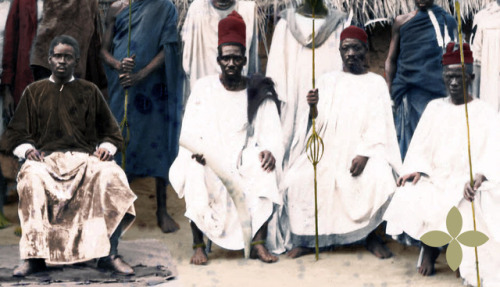
Membership and Authority: The Amala is composed of titled men (Ozo or Nze), lineage heads (Okpara), and men of proven integrity. While they lead the discussion, they do not act as “autocrats.” Their authority is derived from their role as “custodians of tradition” and their proximity to their ancestors.
Deliberation and Consensus: The Amala sessions are held in the village square (Oru or Ama). Witnesses are called, and “proverbs” are used as legal precedents to argue cases. A unique feature of the Amala is the “recess” (Ịgba izụ), where the elders withdraw to a private corner to deliberate before announcing a unanimous verdict.
The Role of the Age-Grades: Once the Amala reaches a decision, the “executive arm” the age-grades (Ọgbo) is responsible for enforcing the punishment, whether it be a fine, public service, or ostracization.
Trial by Ordeal: The SSpiritual Search for Truth
When human testimony was contradictory or “oath-taking” failed to yield a confession, the Igbo turned to “supernatural intervention” known as trial by ordeal;
The Logic of the Ordeal: It was believed that a person who was innocent would be “protected by the deities,” while the guilty would be exposed. This served as a “powerful psychological deterrent” against perjury and secret crimes like poisoning or witchcraft.
Methods of Ordeal: Common methods included the Imi Mmiri (immersion in water), where a suspect was required to swim across a crocodile-infested river, or the Ira Igwe (licking a red-hot iron). If the suspect remained uninjured, they were declared innocent.
The Bitter Water (Igba Ekpene): In some regions, suspects were made to drink a concoction made from “poisonous herbs or barks.” If the suspect vomited the liquid, they were innocent; if they died or became bloated, their guilt was confirmed, and their body was often denied a traditional burial.
The Role of the Oracle and Oath-Taking (Ịṅụ Iyi)
The “fear of divine retribution” was the ultimate guarantee of truth in the traditional Igbo justice system;
The Sacred Oath: Taking an oath (Ịṅụ iyi) was a common way to end a dispute. A person would swear on a powerful Alusi (deity) or an Ofo (symbol of authority). It was believed that if the person lied, the deity would strike them down within a “specific time frame,” usually one lunar year.
The Long Juju of Arochukwu: For cases of extreme gravity that the local Amala could not solve, the Igbo utilized the “Central Oracles.” The Ibin Ukpabi of Arochukwu was the most famous. Litigants would travel hundreds of miles to seek a final verdict from the “voice of the spirits.”
The Agbala of Awka: Similarly, the Agbala oracle served as a “supreme court” for many Igbo sub-groups, providing a spiritual resolution to land disputes and allegations of “unseen crimes.”
Crimes and Punishments: Restorative vs. Retributive Justice
Igbo law distinguished between “offenses against individuals” and “abominations against the Earth” (Nso Ala);
Restitution for Theft: A thief caught in the act was often “subjected to public shaming,” paraded through the village with the stolen goods. They were required to return the item and pay a “multiple-fold fine” to the victim.
Homicide and Blood Money: Intentional murder usually resulted in the “execution or exile” of the offender. However, in cases of manslaughter (Ochu), the offender could avoid death by “fleeing the community” for a set period and paying “blood money” to the victim’s family to prevent a cycle of revenge.
Excommunication (Ịfụ-apụ): The most feared social punishment was being “cut off from the community.” An excommunicated person could not buy or sell in the market, attend meetings, or receive help. In a communal society, this was often a “death sentence in all but name.”
The Impact of Colonialism and the Decline of Traditional Systems
The arrival of British colonial rule in the early 20th century led to the “systematic dismantling” of the traditional Igbo justice system;
The Introduction of Warrant Chiefs: The British, failing to understand the democratic Amala, appointed “Warrant Chiefs” to oversee native courts. These chiefs often became “corrupt autocrats,” a stark contrast to the traditional elders who were checked by the community.
The Prohibition of Ordeals: The “Witchcraft Ordinance” and the abolition of trial by ordeal were seen by the British as humanitarian acts, but many Igbo felt it allowed “poisoners and criminals” to escape justice because the “spiritual eyes” of the community had been blinded.
The Persistence of the Amala: Despite the dominance of modern courts today, many Igbo villages still rely on the Amala and kindred meetings to solve “land and marital disputes.” The traditional system remains the “first point of call” for rural Igbo people who seek a justice that is “culturally resonant.”
Traditional Igbo justice systems, village councils (Amala), and trial by ordeal methods represent a “holistic approach” to law that integrated the social, the political, and the spiritual. The system thrived on “transparency, public participation, and a deep-seated fear of the divine.” While trial by ordeal may seem harsh to the modern mind, it functioned within a worldview where the “spirit was as real as the flesh.” The Amala remains a symbol of the “Igbo democratic spirit,” proving that for centuries, these communities maintained order without the need for prisons or a standing police force. Understanding this history is crucial for the development of “customary law” in modern Nigeria, as it reminds us that true justice is not just about the “letter of the law,” but about the “restoration of peace” within the human family.
Sources and references
- Achebe, C. (1958). “Things Fall Apart”. London: Heinemann. (Providing essential literary and historical context for the role of the Egwugwu and the Amala).
- Basden, G. T. (1921). “Among the Ibos of Nigeria”. London: Seeley, Service & Co. (Detailing early European observations of Igbo trial by ordeal and legal customs).
- Elias, T. O. (1954). “Groundwork of Nigerian Law”. London: Routledge & Kegan Paul.
- Isichei, E. (1976). “A History of the Igbo People”. London: Macmillan.
- Nzimiro, I. (1972). “Studies in Ibo Political Systems: Chieftaincy and Politics in Four Niger States”. University of California Press.
- Onwuejeogwu, M. A. (1981). “An Igbo Civilization: Nri Kingdom and Heg emony”. Ethnographica. (On the ritualized justice and political influence of the Nri).
Cite this article
Discussion
Sign in to join the discussion
Comments are checked by an editor before they appear. Leave a source or a correction and it is read first.
Continue reading
Related histories
 Cultural HeritageEleven Days of Nwafor Ogidi: Inside the Festival Keeping an Old Igbo Tradition AliveRead history →
 Cultural HeritageIli Ji Nkpor Obododike: The Indigenous Agricultural Ritual CycleRead history →
 Cultural HeritageMusic and Drum Traditions: Tracing the “Igbo Drum” in the AmericasRead history →
No comments yet
Nothing has been approved on this record yet. Comments are checked by an editor before they appear, so one written now shows on this page after that check.