 Ozikoro
 Cultural Heritage · Published history
Traditional Igbo money: Cowries, manillas, brass rods – uses and value
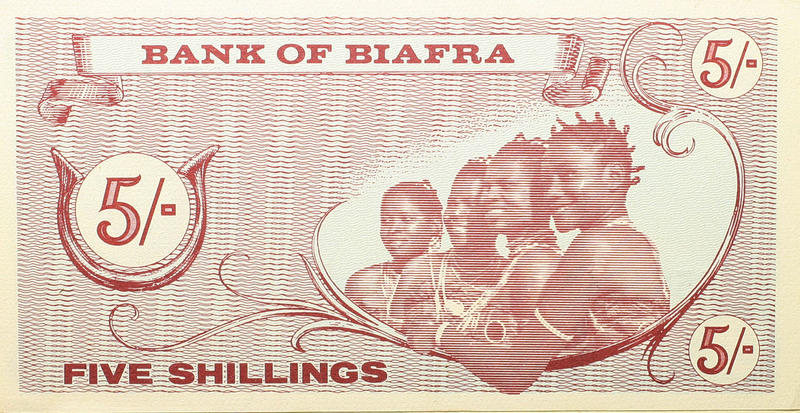
Before the imposition of the British pound and the modern naira, the Igbo people of Southeastern Nigeria operated within a sophisticated and multifaceted economic system. This system was supported by various forms of “commodity money” that facilitated local trade, regional exchange, and the “commercial empire” of the Niger Delta hinterland. The evolution of Igbo currency moving from the delicate cowrie shell to the heavy, metallic manillas and brass rods is not merely a story of economics; it is a narrative of global trade, colonial intervention, and the resilience of indigenous financial logic. These currencies were more than units of account; they were “social markers” that dictated rank, ritual validity, and familial wealth. This article explores the historical uses, relative values, and cultural significance of cowries, manillas, and brass rods in the traditional Igbo economy.
The written record
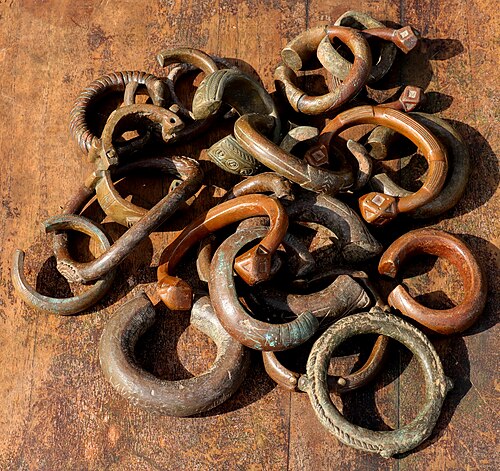
Photo Credit: The British Museum / African Ethnographic Collection
Historical context
The Cowrie Shell (Ego Ayolo): The Ancient Unit of Account
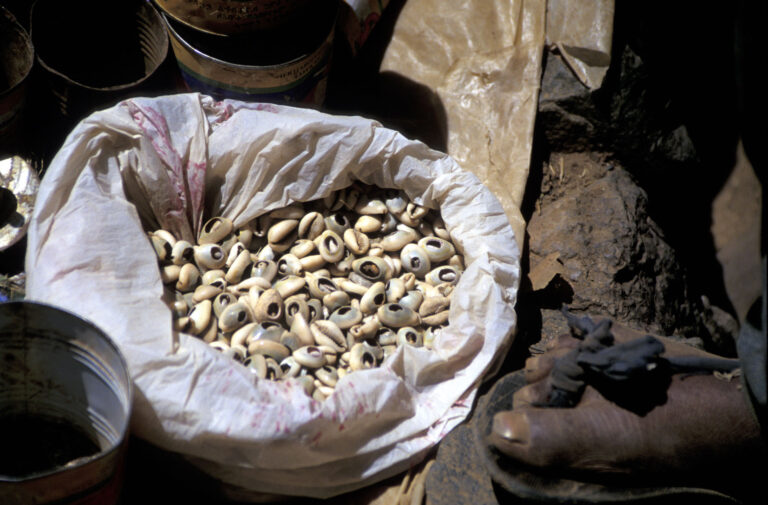
The cowrie shell (Cypraea moneta), known in many Igbo dialects as Ego Ayolo or Ego Amiri, remains the most iconic of all traditional African currencies;
- Origins and Global Trade: Although they are marine snails native to the Indian Ocean (specifically the Maldives), cowries arrived in Igboland through ancient trans-Saharan trade routes and later via European ships. Their “small size and durability” made them an ideal fractional currency.
- The Counting System: The Igbo developed a complex mathematical system for cowries. They were often strung in groups of six or ten. Higher denominations included the akpa (bag), which could contain up to 20,000 shells. This system required high-level “mental arithmetic” among traders in major markets like Onitsha and Uburu.
- Ritual and Aesthetic Value: Beyond the market, cowries were “sacred.” They decorated the shrines of the Earth Goddess (Ala) and were sewn into the garments of priests and titled men. Their value was thus both “monetary and metaphysical,” representing fertility and divine favor.
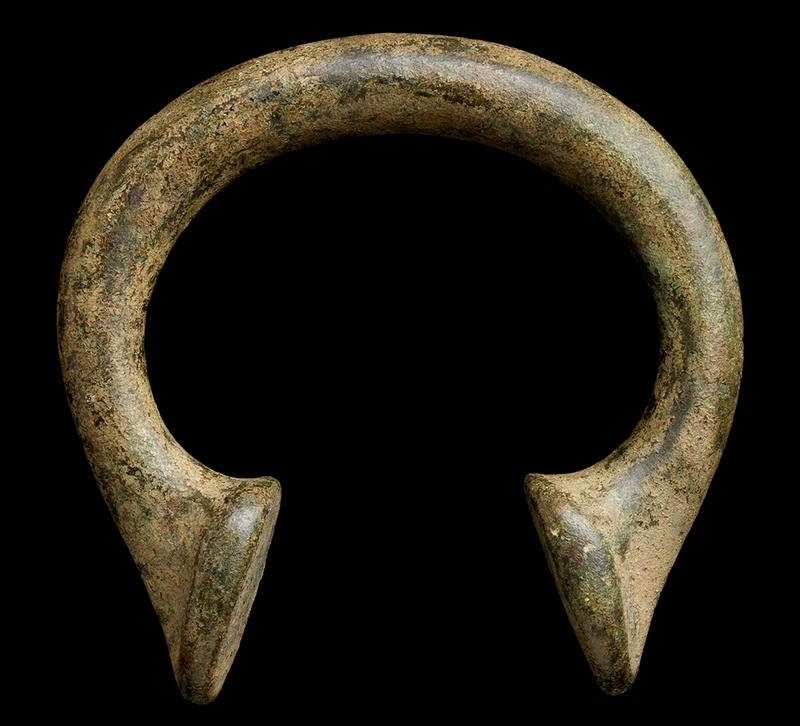
Photo Credit: National Commission for Museums and Monuments, Nigeria / Monetary History Archive.
Manillas (Okwogho): The Currency of the Atlantic Era
As trade with European merchants intensified from the 16th century onward, the “Manilla”, a C-shaped piece of bronze or copper became a dominant medium of exchange;
- The “Horseshoe” Money: Manillas were originally designed to resemble bracelets or “neck rings.” In Igboland, particularly in the southern regions and the Cross River axis, they were known as Okwogho. They were valued based on their “weight and the ring they produced” when struck.
- Standardization of Value: There were various types of manillas, such as the nkpukpu and the aburo. During the peak of the palm oil trade, manillas became the “standard currency” for high-volume transactions. European “factories” on the coast would exchange goods for manillas, which Itsekiri and Ijaw middlemen would then take into the Igbo hinterland to buy oil.
- Social Status: Like cowries, manillas were used in “bridewealth” negotiations. A man’s wealth was often measured by the number of manilla-filled chests in his Obi (main house).
Brass Rods and Wires (Ego Igwe): The Industrial Currency
Brass rods and wires (Ego Igwe) represented a more “utilitarian” form of money that bridged the gap between currency and raw material;
- Dual Purpose: Brass rods were roughly a foot long and could be easily transported. Their value was dual: they could be used as “direct payment” for goods or melted down by the famous Awka blacksmiths to create “prestige items” like the Njikota (anklets) or ceremonial bells.
- The “Small Change” of Wires: For smaller transactions, brass wires were used. These were often coiled for portability. In some regions, a specific length of wire was pegged to a specific number of yams or a certain volume of salt.
- Regional Dominance: While manillas were more popular in the southern Delta-fringe, brass rods saw significant use in the “Northern Igbo” heartland (Nri and Awka), where the local metalworking guilds influenced the economic value of copper-based alloys.
Comparative Value and Market Dynamics
The traditional Igbo economy was “bi-monetary” or even “tri-monetary,” where different currencies were used simultaneously depending on the scale of the trade;
- The Exchange Rate: Historically, there was a fluctuating “exchange rate” between cowries and manillas. For instance, in the 19th century, one manilla might be worth several hundred cowries. This required traders to be “expert speculators” in currency value.
- Inflation and the Colonial “Demonetization”: The influx of millions of cowries by British merchants eventually led to “hyper-inflation,” where a single bag of salt required thousands of shells. This prompted the British colonial government to pass “Manilla Ordinances” in the early 20th century to forcibly replace indigenous money with the British pound.
- The “Operation Manilla” (1948): One of the most significant economic events in Southeastern Nigeria was the 1948 “Operation Manilla,” where the government sought to withdraw all manillas from circulation. Despite this, many Igbo communities continued to use them for “traditional title fees” long after they ceased to be legal tender.
Social and Ritual Uses: More Than Money
The “value” of traditional Igbo money was never strictly limited to what it could buy in the market; it was deeply embedded in the “spiritual and social contract”;
- Bridewealth and Alliances: In Igbo marriage customs, the Ime Ego (bridewealth) was paid in specific combinations of cowries and manillas. This was not a “purchase” but a “symbolic bond” that used the community’s highest forms of value to seal the union between two lineages.
- Title-Taking (Ozo and Lolo): Taking a title requires “enormous financial liquidity.” A candidate had to prove his success by distributing thousands of cowries and hundreds of manillas to the existing title-holders. This functioned as a “redistribution of wealth” that prevented extreme economic inequality.
- Burial Rites: Money was often buried with the dead or used to decorate the “mbari” houses. This reflected the belief that the “spirit world” operated on similar economic principles, and the deceased needed “capital” to transition successfully to the realm of the ancestors.
The history of cowries, manillas, and brass rods reveals a society that was “economically sophisticated and globally connected” long before the colonial era. The Igbo people used these currencies to build a “commercial empire” that stretched from the Atlantic coast to the northern savannahs. While the British pound eventually won the “currency war” through legal force, the legacy of traditional Igbo money persists in the language of the people where the word for money (Ego) still carries the weight of the cowrie and the ring of the manilla. These ancient forms of “commodity money” remind us that value is a “social construct,” defined as much by communal trust and ritual sanctity as by market demand.
Sources and references
- Basden, G. T. (1921). Among the Ibos of Nigeria. London: Seeley, Service & Co.
- Dike, K. O. (1956). Trade and Politics in the Niger Delta, 1830-1885. Oxford: Clarendon Press.
- Ekejiuba, F. I. (1967). The Aro System of Trade in the Nineteenth Century. Journal of the Historical Society of Nigeria.
- Herbert, E. W. (1984). Red Gold of Africa: Copper in Precolonial History and Culture. Madison: University of Wisconsin Press.
- Kirk-Greene, A. H. M. (1960). The Major Currencies in Nigerian History. Journal of the Historical Society of Nigeria.
- Ofonagoro, W. I. (1979). Trade and Imperialism in Southern Nigeria, 1881-1929. Nok Publishers.
Cite this article
Discussion
Sign in to join the discussion
Comments are checked by an editor before they appear. Leave a source or a correction and it is read first.
Continue reading
Related histories
 Cultural HeritageEleven Days of Nwafor Ogidi: Inside the Festival Keeping an Old Igbo Tradition AliveRead history →
 Cultural HeritageIli Ji Nkpor Obododike: The Indigenous Agricultural Ritual CycleRead history →
 Cultural HeritageMusic and Drum Traditions: Tracing the “Igbo Drum” in the AmericasRead history →
No comments yet
Nothing has been approved on this record yet. Comments are checked by an editor before they appear, so one written now shows on this page after that check.