 Ozikoro
 Cultural Heritage · Published history
Traditional Rites and Modern Relevance: The Ogbanigbe Festival of Ukwu-Nzu Community
“Olukumi” means “my friend.” Some people say Olukumi is a Yoruba dialect, but the people in Ukwu-Nzu and Ugbodu do not agree that they are Yoruba. They believe they migrated from Yoruba land, passing through Benin, before settling in the Delta State. But even with that, they do not identify as Yoruba. That is why the Olukumi language has mixed up a little with Yoruba, Igbo and Bini, which is unclear to the Yoruba people.
The written record
The people in Ukwu-Nzu and Ugbodu speak the Olukumi language. They are part of the Igbo people in Aniocha Northside, and there are eight communities close to the River Niger, popularly called the Odian Clan in Anioma land. The Olukumi people are surrounded by Enuani-speaking people from Aniocha North, South, and Oshimili. Because of that, Olukumi is a special language that stands out among Igbo-speaking people in the area.
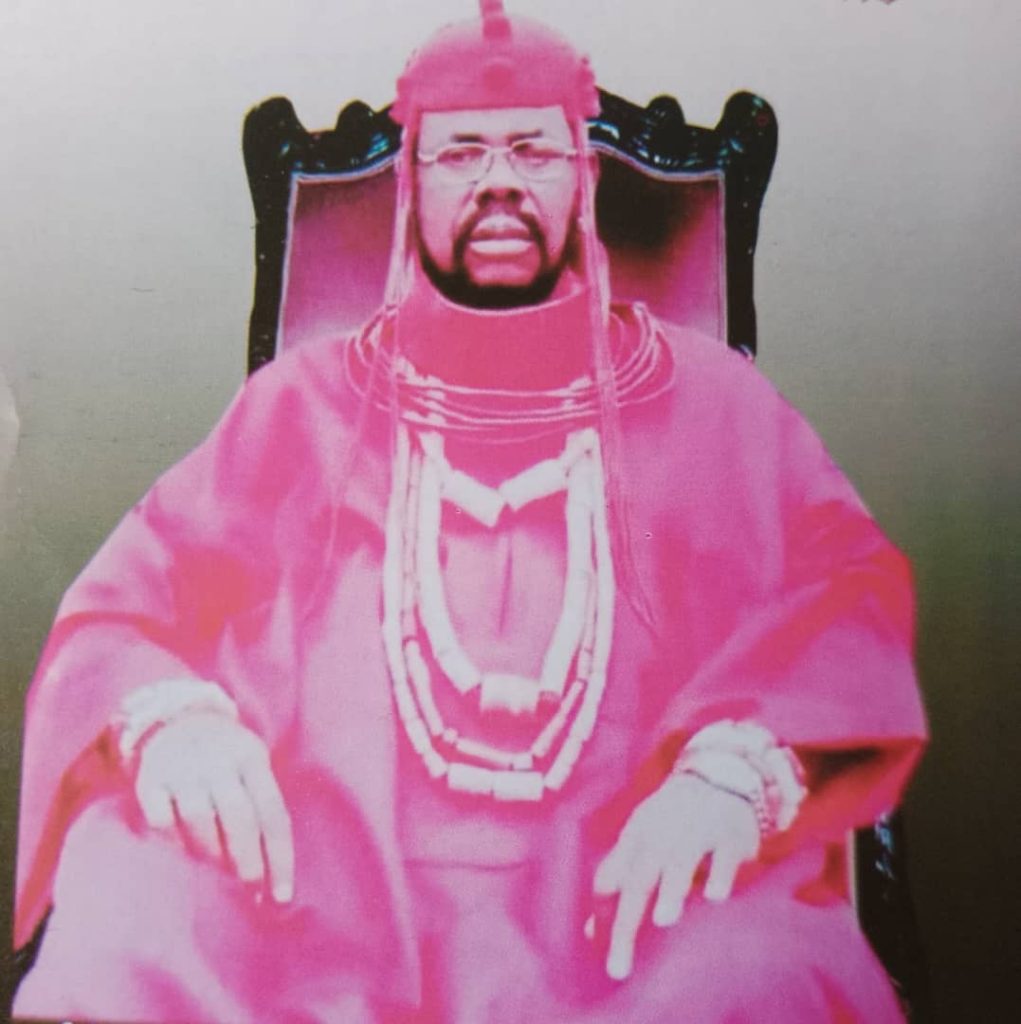
Ukwu-Nzu is a town in Aniocha North Local Government Area in Delta State. In the past, people called it Eko Efun, the traditional headquarters of the Olukumi people. The Obi of Ukwu-Nzu ruled the community, and the present Obi is H.R.M. Obi Ogoh I.
Historical context
Ukwu-Nzu has seven villages: Idumu-Okakwu, Ogbe-Agidi, Ekocha, Odo, Ogbe-Okwe, Inyogo, and Idumu-Afor.
Ogbanigbe Festival: A Celebration of Harvest, Heritage, and Harmony
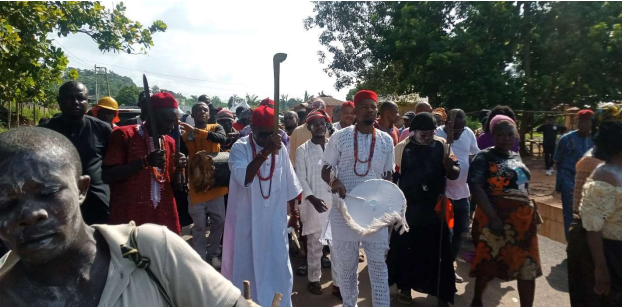
Before the Ogbanigbe festival, the people would go to the shrine at the farm road entrance to beg the gods for a good harvest. Music and traditional songs would accompany them. The red cap chiefs would prepare for five days. On the fifth day, the head of the red cap chiefs would carry them and walk through the town; this one is the Imo-osi-si, which is a sign that the festival has started.
Ogbanigbe Festival is a big cultural festival in the Ukwu-Nzu community that happens every year around September. It marks the beginning of the farming season and a New Year for the people. The festival is a time to thank God for a good harvest and protection and to pray for a good planting season ahead. It is also a time to celebrate life and community achievements.
A fun part of the festival is when men dress like women, and women dress like men, but nobody would get upset because it was part of the festival play. After that, all the red-cap chiefs paid homage to the Obi before 12 noon. From there, they followed him to Ogbe Shrine (Ogwa omo eko). The king would sit there, and chiefs would stand by him, but the O-ge-ne would go to control the shrine.
The Obi would walk to Odo village to greet the Buzugbe family, where the Diokpa (eldest man) led. The Ewue family children, with O-ge-ne in front, would lead them to the Ogwa Oba shrine for the final rite. After everything, they would dance back to the village square to start the main festival.
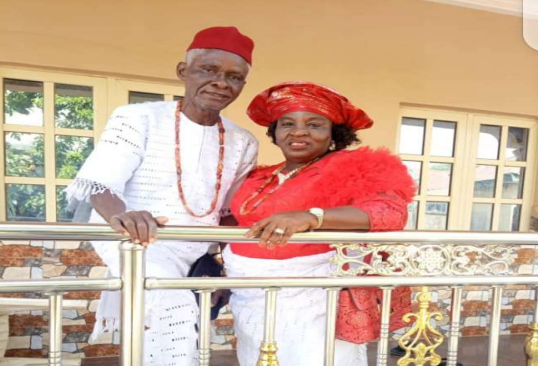
Festival. Photo by Chukwuma Marian Edohan
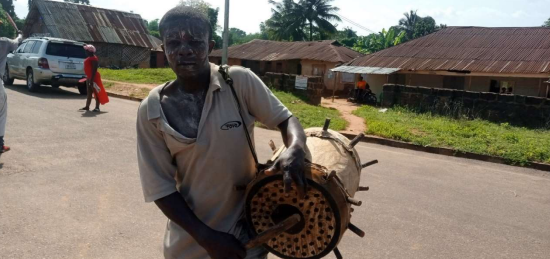
Regarding the time for a serious ritual, only titled men and selected dancers can go to the bush with drums; strangers are not allowed. After they are through, they would return home in silence.
They would give yams to the gods and ancestors before anybody ate them. The oldest man, king or big title holder does this ritual. They would thank the supreme god for not allowing anyone to die of hunger and for providing enough food. After prayer, they would eat the first yam. The yam offering is a sign of appreciation to the gods for a good harvest.
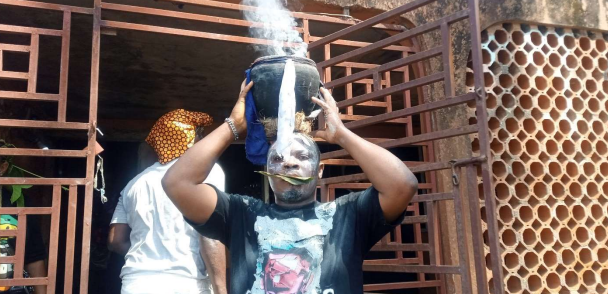
From the second to fourth day, there is music, dance and walking to different places for enjoyment. People visit their loved ones, eat and drink well. On the fifth day, junior title men lead dancers and later hand them over to the Iyase (chief priest). The Iyase then carries everybody to greet important elders and heads of villages. People from nearby communities come to join because the celebration is very interesting.
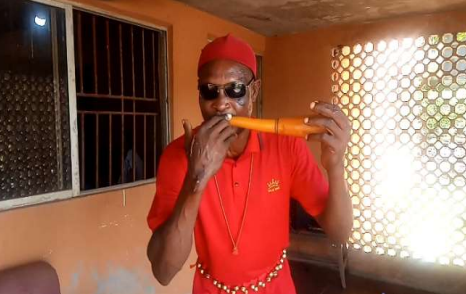
Masqueraders over 20 would perform from different parts of Anioma. They would wear colourful costumes, dance, and perform acrobatics when the elders finished their performance.
The Ukwu-Nzu people’s history is full of journeys, culture and tradition. The Ogbanigbe festival is a party and a deep celebration of life, harvest and unity. It helps keep the culture of the Olukumi people alive and shows that tradition is still strong in the community’s heart.
Sources and references
- Ehiwario, M. O. (2005). Music in Nigerian festivals with particular reference to Osieji festival of Owa Land. Journal of the Association of Nigerian Musicologist (JANIM) , 1(2), 64–65.
- Euba, A. (1969). Music in traditional society. In L. Allagoa (Ed.), Nigeria: A catalogue of selected archival (Magazine No. 101, July/September). Lagos.
- Chukwuma Marian Edohan. The Significance of Music in African Culture: A Study of Ogbanigbe Festival in Ukwu-Nzu Aniocha Local Government, Delta State.
Cite this article
Discussion
Sign in to join the discussion
Comments are checked by an editor before they appear. Leave a source or a correction and it is read first.
Continue reading
Related histories
 Cultural HeritageEleven Days of Nwafor Ogidi: Inside the Festival Keeping an Old Igbo Tradition AliveRead history →
 Cultural HeritageIli Ji Nkpor Obododike: The Indigenous Agricultural Ritual CycleRead history →
 Cultural HeritageMusic and Drum Traditions: Tracing the “Igbo Drum” in the AmericasRead history →
No comments yet
Nothing has been approved on this record yet. Comments are checked by an editor before they appear, so one written now shows on this page after that check.