 Ozikoro
Biography · Published history
Vincent Chukwuemeka Ike: Preserving Igbo Wisdom Through Storytelling

In the rich tapestry of African storytelling, one name stands like a steadfast tree by the banks of memory: Vincent Chukwuemeka Ike. A novelist, scholar, and monarch, Ike bridged the world of tradition and modernity through stories that spoke in the familiar rhythm of Igbo proverbs, laughter, and humanity.
The written record
Born in Ndikelionwu, Anambra State, in 1931, Ike’s life was as layered as his prose; disciplined yet humorous, moral yet forgiving, deeply local yet universal. His novels were not just books; they were living repositories of Igbo culture, moral philosophy, and social satire, the continuation of the ụwa okwu, the world of spoken wisdom. “Okwu bu ndụ,” the Igbo say (Words are life). Through his words, Chukwuemeka Ike gave life to a generation.
Historical context
From Oral Tradition to Novel
Long before pen touched paper, the Igbo people told stories under moonlight (akụkọ n’egwu nta), tales filled with wit, morals, and ancestral wisdom. Ike inherited this oral rhythm and transposed it onto the printed page. His writing voice, though formal in English, always carried the cadence of home, ụzọ ndị Igbo si ekwu okwu, the Igbo way of speaking.
His debut novel, Toads for Supper (1965), captured the awkward dance between love and tradition in postcolonial Nigeria, while The Potter’s Wheel (1973) became a rite-of-passage tale filled with humour and discipline. Each story reflected the deep structure of Igbo morality, respect for elders, the importance of integrity, and the belief that ihe onye metere, ọ na-ahụ ya (whatever a person does, they will face it).
Ike’s novels are vibrant classrooms where humour teaches, and laughter corrects. Like Chinua Achebe, his contemporary and friend, Ike saw fiction not as entertainment alone but as a vessel for preserving identity amid rapid change. “He who does not know his mother’s song will find the drumbeat confusing.”
Through satire and realism, Ike taught a generation to remember their song.
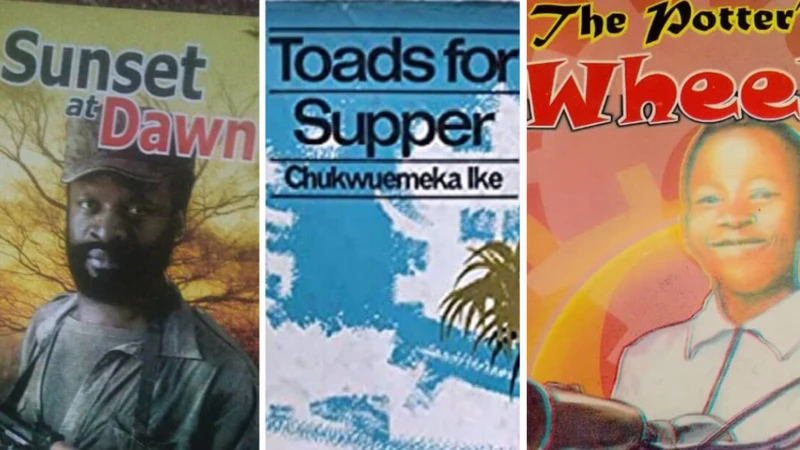
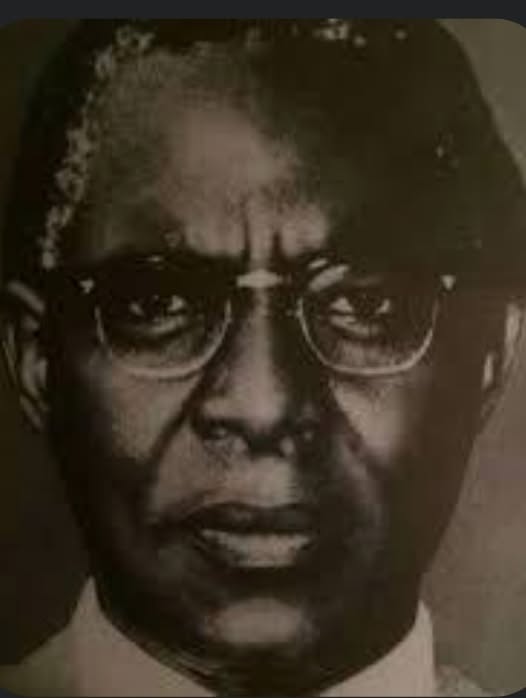
The Satirist with a Moral Compass
If Achebe was the chronicler of Igbo tragedy, Ike was its comic philosopher. His fiction danced between laughter and lament, wielding satire like a blade wrapped in velvet. In Our Children Are Coming (1990) and Expo ’77 (1980), Ike critiqued Nigeria’s education system, corruption, and moral decay with wit sharper than sermonizing could ever be. He painted professors, priests, and politicians with both humour and empathy, showing that the flaws of society mirrored those of the human heart.
His world was neither good nor evil; it was ndụ (life); messy, hopeful, ever turning. And behind every jest was an ancestral whisper reminding the reader: “Ọ bụghị ihe niile a na-akụ n’ụlọ mmadụ ka a na-ekpughe n’ụlọ ọzọ.” (Not every wisdom taught at home should be shouted in the market). Ike’s mastery lay in saying much while appearing to say little, a technique inherited from the Igbo nsụka (wise saying) tradition.
The Monarch Who Wrote
In 2008, Ike became Eze Ndikelionwu XI, merging his literary calling with traditional leadership. Yet, kingship did not silence his pen. Instead, it deepened his voice, turning him from observer to custodian.
His palace became an archive of memory, a place where ndị be anyi (our people) came not only to seek counsel but to hear the stories that defined their being. As both ruler and writer, he embodied the Igbo belief that mmadụ bụ akụkọ, “a person is a story.”
For Ike, writing was never separated from life. His characters, students, teachers, lovers, and elders, were drawn from the soil of experience. In them, we find not only Nigeria’s moral struggles but the heart of Igbo resilience: the ability to laugh, to learn, and to live again.
A Legacy of Cultural Preservation
Chukwuemeka Ike passed away in January 2020 at the age of 88, leaving behind a literary inheritance that continues to shape African consciousness.
He taught that storytelling was not a dying art but a living covenant between generations. Through his novels, young Nigerians rediscover the wisdom of umunna (kinship), the discipline of humility, and the humour of survival.
His approach to satire and morality remains a model for African writers seeking to preserve authenticity in a changing world. In the classroom and in the palace, Ike reminded all who listened that culture must adapt, but it must never vanish.
“A kọrọ akụkọ, ewere ndụ mụta ihe.” (Stories are told so that life may learn.) Today, each page of his writing beats like an ancestral drum calling the Igbo people and all Africans to remember who they are.
Sources and references
- Brittle Paper. (2020, January). Chukwuemeka Ike, Nigerian Novelist, Professor, Monarch, Passes On at 88. Retrieved from https://brittlepaper.com/2020/01/chukwuemeka-ike-nigerian-novelist-professor-monarch-passes-on-at-88/
- Chukwuemeka Ike. (n.d.). Wikipedia. Retrieved from https://en.wikipedia.org/wiki/Chukwuemeka_Ike
- Ezeigbo, T. A. (2007). Satire and Moral Vision in Chukwuemeka Ike’s Novels. Journal of African Cultural Studies , 19(2), 123–137. https://doi.org/10.1080/21674736.2007.11690068
- Igbo People Biography Project. (2024). Chukwuemeka Ike (1931–2020). Retrieved from https://biography.igbopeople.org/biography/chukwuemeka-ike-1931-2020/
Cite this article
Discussion
Sign in to join the discussion
Comments are checked by an editor before they appear. Leave a source or a correction and it is read first.
Continue reading

No comments yet
Nothing has been approved on this record yet. Comments are checked by an editor before they appear, so one written now shows on this page after that check.