 Ozikoro
Anthropology and Ethnography · Published history
A “Stateless” Society: The Republican Nature of Pre-Colonial Igbo Governance
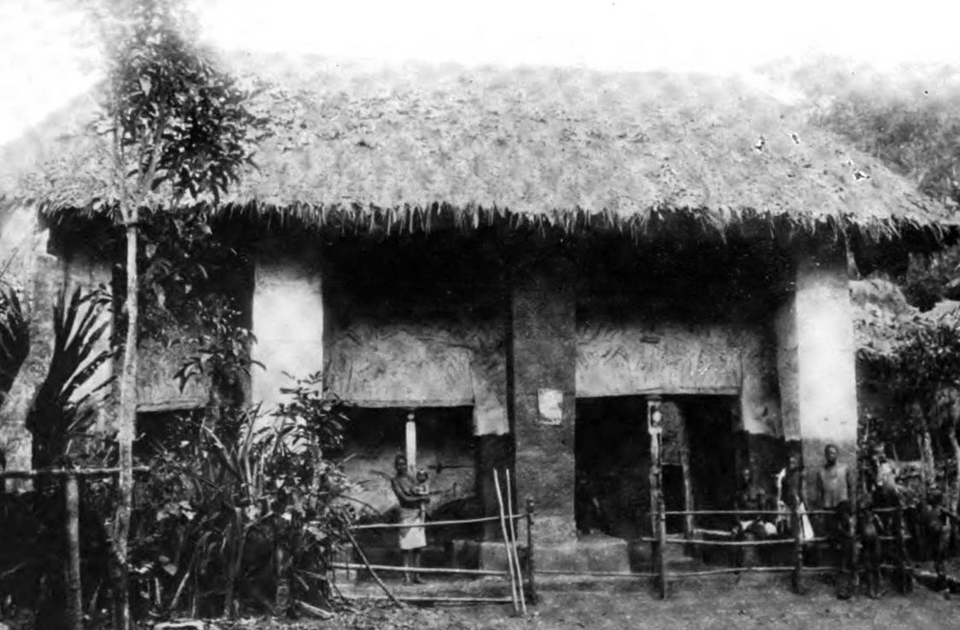
When people talk about pre-colonial African societies, they often imagine kings, chiefs, and empires. But the Igbo of southeastern Nigeria were different. They didn’t have kings or centralized rulers like their neighbors. Instead, they had what many scholars describe as a “stateless” or republican system, where power was shared among the people rather than concentrated in one leader. It was a society built on equality, dialogue, and community decision-making.
The written record
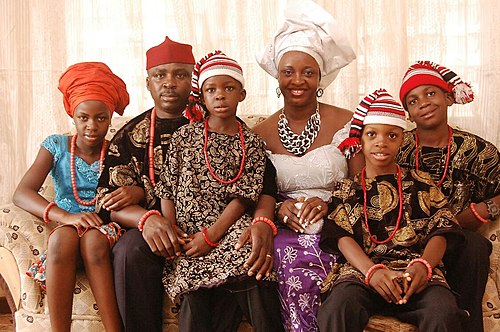
Pre-colonial Igbo society, located in southeastern Nigeria, has long fascinated anthropologists and historians due to its distinct political structure. This unique structure prioritized communal consensus, diffused power, and avoided the formation of powerful monarchs or centralized administrative hierarchies.
Historical context
Defining “Statelessness” and Decentralization
The term “stateless” in this context does not mean a lack of political organization, but rather a lack of a centralized, hierarchical administrative apparatus. Igbo society was an example of an acephalous or segmentary lineage system, where political authority was not vested in a single individual or institution but was deliberately dispersed among various groups and associations.
The Igbo political setup was basically a grassroots democracy long before that term even existed. Each village or community governed itself through assemblies of elders, titled men, age grades, and sometimes women’s groups. Decisions were made collectively, not handed down from above.
According to Afigbo, “the Igbo had no kings in the European sense; authority was diffused among a number of institutions.” This meant that everyone, or at least every family had a voice in how the community was run. The village assembly was the highest authority, and its meetings were open to adult males who wished to speak on matters affecting the community.
The core principle was the diffusion of power to prevent tyranny. Authority was spread across several different institutions, ensuring checks and balances:
Family/Lineage: this is the foundational unit of government, responsible for daily order and morality.
Age Grades: Associations of people born within a few years of each other, responsible for community labor, public works, and enforcing decisions.
Title Societies: Such as the highly respected “Ozo” society, whose titled members held moral authority and performed judicial roles.
Village Assembly (Umunna): The democratic meeting of all adult males, which served as the ultimate legislative and judicial body.
Republican Characteristics of Governance
The political processes of the pre-colonial Igbo displayed strikingly republican characteristics, emphasizing participation, consensus, and accountability.
The Role of Age Grades and Councils
One of the coolest things about the Igbo system was the way different age groups had specific responsibilities. Age grades (called ogbo in some areas) helped maintain order, repair roads, and enforce community decisions. Then you had the council of elders, wise men whose experience gave them influence, though not absolute power.
Women also played significant roles through groups like the Umuada (daughters of the lineage) and the Otu Nwanyị (women’s assembly). As Ifemesia put it, “the Igbo political system was remarkably inclusive, giving both men and women a say in communal matters”. The process was fundamentally democratic, embodying the spirit of “Igbo enwe eze” (The Igbo have no king).
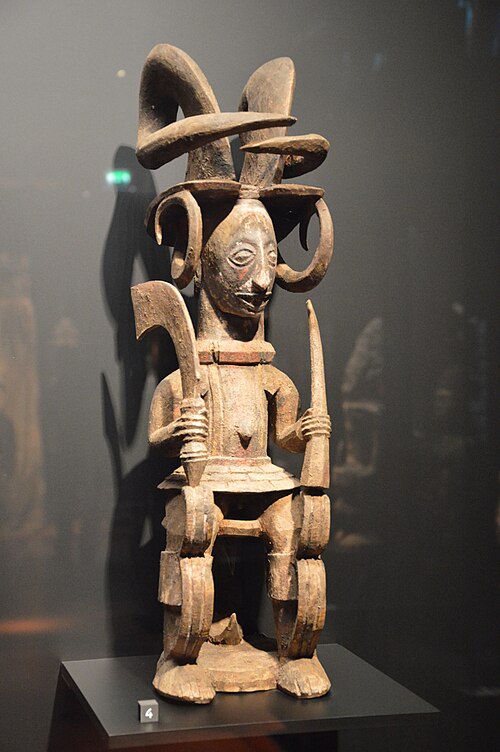
Checks, Balances, and Collective Leadership.
Unlike centralized monarchies, Igbo governance thrived on checks and balances. Nobody ruled alone, and everyone was accountable. The Ofọ, a sacred staff symbolizing truth and justice, guided moral authority. Those who held it were expected to act fairly and uphold community values.
This system prevented tyranny and encouraged participation. As Uchendu observed, “the Igbo believed that all men were free and equal under Ala (the Earth goddess),” meaning no one could claim divine or absolute power.
The moral authority of title holders, particularly members of the Ozo society, acted as a check on rash decisions. These men were respected for their integrity and wealth and played a vital role in mediation.
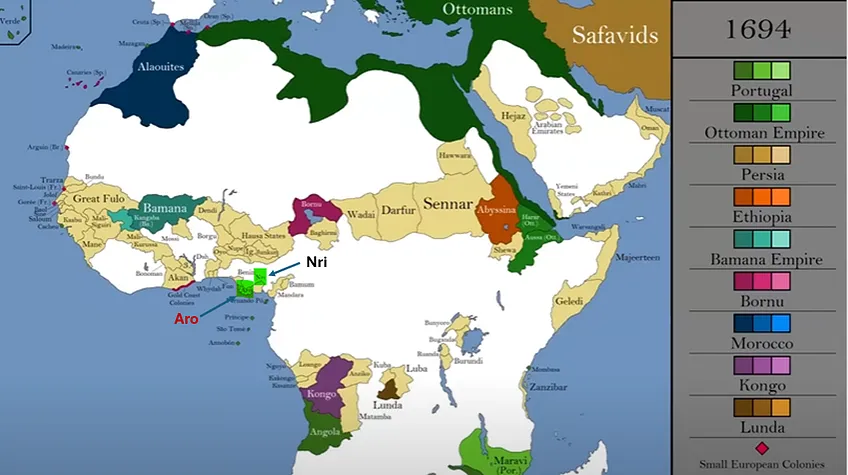
Furthermore, in some sub-groups, the influence of powerful spiritual entities, such as the Ibini Ukpabi (Long Juju) Oracle (as seen in the Aro Confederacy), served as a trans-local judicial and political arbiter, providing a form of overarching structure without centralizing secular power.
Religion and Morality in Governance
Religion was deeply woven into governance. The Igbo believed that the gods and ancestors watched over the community, ensuring fairness and justice. Oaths were taken in the name of deities, and decisions were believed to have spiritual consequences. In this way, religion wasn’t separate from politics,it was part of it.
Achebe famously described the Igbo as “a people who preferred dialogue to decrees and consensus to compulsion.” This moral and religious grounding helped maintain social order even without a central authority.
The British Misunderstanding
When the British arrived, they found this political landscape bewildering, they were totally confused by this system.They were used to dealing with kings and chiefs, not communities that ran themselves. Unable to identify a single chief or king to rule through (a system known as Indirect Rule), they erroneously created Warrant Chiefs, individuals given artificial power to represent the people. This imposition of centralized authority violated the fundamental republican principles of Igbo governance and directly led to widespread resistance, most famously the “Women’s War” of 1929 (also known as the Aba Women’s Riot).
The Spirit of Equality
The pre-colonial Igbo system was far from perfect, but it worked for its time. It promoted equality, community spirit, and accountability. Everyone had a role to play, and leadership was viewed as service, not privilege. As Nzimiro noted, “in Igbo political life, the ruler and the ruled were one and the same.”
This republican structure had profound implications for social mobility and economic activity:
Social Mobility: Power was achieved, not inherited. Any ambitious, hardworking, and successful man could rise to prominence through the acquisition of wealth and titles, a system often termed “achieved status”. This meritocratic opportunity fueled innovation and industry.
Trade and Markets: The decentralized nature of power allowed for a vibrant, safe network of local and long-distance markets, as power-holders (chiefs) were often local and accountable to the market community itself, not a distant king.
So yes, the Igbo were “stateless,” but that didn’t mean they were disorganized. Their republican structure showed that order doesn’t always come from kings or centralized governments. It can come from shared values, moral authority, and collective decision-making. The Igbo model remains a reminder that democracy, in its purest form, has deep African roots.
Sources and references
- Horton, R. (1971). “Stateless Societies in the Political Anthropology of Africa”. In M. Douglas & P. M. Kaberry (Eds.), Man in Africa (pp. 7-86). Anchor Books.
- Uchendu, V. C. (1965). The Igbo of Southeast Nigeria. Holt, Rinehart and Winston.
- Isiche i, E. (1976). A History of the Igbo People. Macmillan Press.
Cite this article
Discussion
Sign in to join the discussion
Comments are checked by an editor before they appear. Leave a source or a correction and it is read first.
Continue reading
Related histories
 Anthropology and EthnographyThe Demography of Biafran Slave Exports (1650–1850)Read history →
 Anthropology and EthnographyMasquerade Traditions from Igboland to the Caribbean (Jonkonnu, Mocko Jumbie)Read history →
 Anthropology and EthnographyMapping Igbo Destinations in the Americas: A Comparative AnalysisRead history →
No comments yet
Nothing has been approved on this record yet. Comments are checked by an editor before they appear, so one written now shows on this page after that check.